Why Did Iran Launch a Surprise Attack on U.S. Bases in Jordan?
Tehran is using a risky strategy that's based on the idea that deterrence now requires demonstrating a willingness to accept the risks of total war.
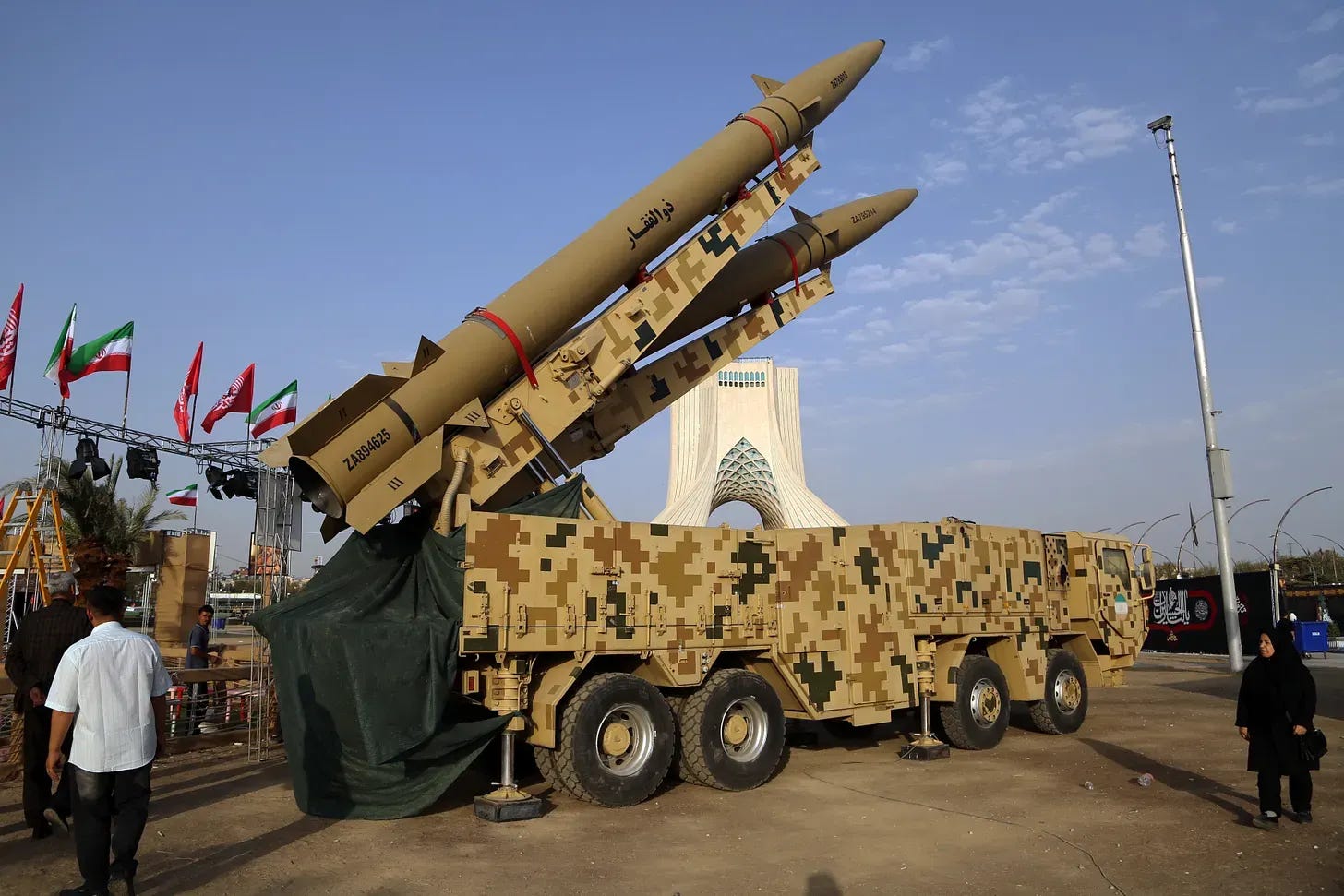
Just an hour after CENTCOM began a wave of strikes on several Iranian cities in the south of the country, Mehdi Hasan’s Zeteo had published a piece from me explaining the likely logic behind Iran’s surprise attack on US bases in Jordan yesterday - and why Iran was not deterred by the US’s likely retaliation.
Bottom line is that to Tehran, an informal ceasefire is not a ceasefire at all. Simply put, the current situation serves Washington better than it serves Tehran. The de facto ceasefire that has emerged in recent weeks has lowered oil prices, easing one of the principal economic pressures on the Trump administration while leaving most of the sanctions and military pressure on Iran intact. In Tehran’s view, an informal pause in fighting allows Washington to reap the energy market benefits of de-escalation without making any political or diplomatic commitments in return.
Secondly, Iran likely intended to signal its willingness to conduct preemptive military action rather than simply retaliate after being attacked. Iranian officials privately argue they acted on intelligence indicating that the United States was preparing military operations against Iran, citing the movement of additional American military assets into the region. Whether that intelligence was accurate matters less than the strategic message Tehran intended to send. Iran wanted Washington to understand that it no longer assumes the first strike must come from the United States.
Consequently, the immediate target was not simply American military infrastructure: It was the strategic assumptions underpinning current U.S. policy.
But most importantly, the strike appears intended as a warning against a broader American escalation that Tehran believes Netanyahu – and perhaps Zelensky as well – were advocating during their meetings in Washington.
There is an obvious paradox here. Attempting to prevent American escalation by attacking American forces risks producing precisely the escalation Iran says it seeks to avoid. Yet from Tehran’s perspective, allowing Washington to believe it could escalate without facing immediate costs may be even more dangerous.
It is, to say the least, an extraordinarily risky strategy. It seeks to compel diplomacy by increasing the perceived costs of military escalation. Yet it simultaneously raises the probability of the very conflict it is ostensibly designed to prevent.
But as I write in the piece, there is still a narrow path out of this disaster.
You can read the full piece here:


I feel like I understand why Iran would view this action as necessary - Washington cannot currently be negotiated with given its pattern of exploiting "negotiation periods" as cover for preparing further aggression **and** attempts at recalibrating/ resupplying from losses sustained as a result of its latest round of aggression. Secondly, it's difficult to imagine Iran finding any value in allowing Washington to continue dictating the timing of when this conflict is hot and when it is cold.
I assume Iran doesn't benefit by permitting Washington to call a "timeout" whenever things get tough. It can never be overstated just how catastrophic to diplomacy Washington's absence of any credibility truly is.
This is what long term hot,cold on,off within minutes or days war looks like. This will likely not change until it is prompted by an unexpected outside/or inside force pushing. Maybe the people in all three countries will rise up against leaderships and demand an end in some form. End of Governing forces? end of War?