Controversy erupts over Nobel Peace Prize for Venezuela’s Maria Corina Machado
Praised as 'champion of peace,' Venezuelan opposition leader is now under fire for her past alliance with Israel’s Likud party and calls for foreign intervention in her country
Gizem Nisa Demir |11.10.2025 - Update : 11.10.2025
A file photo dated January 24, 2015 shows Venezuelan Opossition leader Maria Corina Machado delivers a speech during an anti-government protest in Caracas- Photo:Cristian Hernandez/ Anadolu Agency
ISTANBUL
Venezuelan opposition leader Maria Corina Machado, who was awarded the 2025 Nobel Peace Prize on Friday for her fight to restore democracy in Venezuela, is now at the center of controversy over her past support for Israel and her calls for foreign intervention in her country.
The Nobel Committee hailed Machado as a “champion of peace” and a “key, unifying figure in a political opposition once divided.”
Committee Chair Jorgen Watne Frydnes said Machado’s courage had “kept the flame of democracy burning in Venezuela amid growing darkness.” He praised her for “remaining in the country despite serious threats against her life,” calling her a symbol of resistance to authoritarianism.
Criticism, however, quickly followed.
NDTV World reported Saturday that many pointed to Machado’s past statements backing Israel and Prime Minister Benjamin Netanyahu’s Likud party, accusing her of supporting the genocide in Gaza.
In one resurfaced post, Machado wrote, “The struggle of Venezuela is the struggle of Israel,” later calling Israel a “genuine ally of freedom.”
Bjornar Moxnes, a Norwegian lawmaker, noted that Machado had signed a cooperation document with Likud in 2020, saying this “makes the award inconsistent with Nobel’s purpose.”
The Council on American-Islamic Relations (CAIR) also condemned the selection, calling it an “unconscionable decision” that “undermines the Nobel Committee’s reputation.”
Machado has also been criticized for a 2018 letter to Israeli and Argentinian leaders urging support to “advance in the dismantling of the criminal Venezuelan regime.”
The backlash intensified after US President Donald Trump – whose administration earlier accused the Nobel Committee of “placing politics over peace,” as Trump promoted himself as deserving of the prize – said he was “happy for her” when Machado dedicated her award to him.
Protesters marching in Rome, on October 3.GIORGIO GRAPPI
Honest, paywall-free news is rare. Please support our boldly independent journalism with a donation of any size.
It seemed impossible for Italy to strike for Palestine more successfully than it did the first time, yet it happened: 2 million people returned to the streets on October 3, blocking everything again. The second general strike was called by Si Cobas labor union on September 18, and circulated broadly after September 22, the date of the first strike.
After Israel attacked the Global Sumud Flotilla on the evening of October 1, CGIL (the biggest Italian union) and USB (the union that called the earlier general strike) joined the call. This landmark event marked the first time that all the leftist labor unions in the country decided to go on strike together.
The days preceding the strike were filled with constant mobilization. People took to the streets as soon as the attack on the flotilla was reported through media channels. A spontaneous rage and a will to act took over, with people rushing to the main squares in different Italian cities. After two years of genocide witnessed through phone and laptop screens, people of all ages gathered together physically in continuous and heterogeneous demonstrations. On October 2, the day after the attacks, people were in the streets again, in a diffuse vibrant and electric atmosphere that foreshadowed what would happen over the next two days.
Stay in the loop
Never miss the news and analysis you care about.
As Marika Giati — a PhD student at the University of Pisa and part of the Women’s Assembly of the Migrants Coordination in Bologna — told Truthout, “In these demonstrations, a new consciousness could be felt — one that exploded and connected with the massive mobilizations stretching from Spain to France, Germany, the Netherlands, Greece, Tunisia, Mexico, and Morocco.”
People were enraged by the Italian government as well. Deputy Prime Minister Antonio Tajani, speaking about Israel’s illegal control of the international waters adjacent to Gaza, said that international law is important, “but does not always matter” — justifying both the Israeli blockade, and the fact that the Italian frigate accompanying the flotilla abandoned the flotilla while it was being attacked and while Italian citizens were being illegally arrested by Israel.
In the meantime, Prime Minister Giorgia Meloni openly opposed the strike and the protests, claiming that the strikers only wanted a longer weekend and didn’t want to work. Such comments purposely overlooked the conditions under which workers are striking, as if people were paid to be on strike. The Strike Guarantee Commission, the Italian regulatory authority on the right to strike, also attempted to hinder the strike, labelling it illegitimate and claiming that the unions didn’t provide enough advance notice.
“For Gaza we block everything!!!” Protesters in the streets of Rome during the general strike.GIORGIO GRAPPI
Matteo Salvini, Meloni’s other deputy prime minister, argued that heavier fines were needed for those striking illegally. This was an attempt to scare many workers, who, if they went on strike under illegitimate conditions, risked having to pay a fine (up to 1000 euros), as there is already a measure in Italian law set up for this. As Domenico Conte, a USB organizer, told Truthout, “the Commission of Guarantee acted politically rather than as a neutral guarantor, weakening the strike.”Luckily in Italy, though, if one labor union (Si Cobas in this case) calls for a general strike, members of other unions can also join, and CGIL confirmed the strike was legitimate, and said they will take action against the decision of the Commission.
Despite Salvini’s new security law, which introduced criminal penalties of up to two years in jail for blocking roads and railways, hundreds of thousands of people across Italy continuously blocked stations, ports, and highways. “The marches [during the strike day and the previous days] were composed of industrial workers, students, migrants, and second-generation migrants,”continued Conte.“There was an incredible, never-before-seen diversity. Even small bar owners, people outside the unions, everyone stood side by side in a multiethnic crowd. This is the Italy we love, standing against the racism of Meloni and Salvini.”
“Enjoying the long weekend.” Protesters ironically respond to Meloni’s statements during the march in Bologna on general strike day.STELLA CHIRDO
“Participation, however, neutralized this attempt to undermine the movement,” continued Conte. “The strikes on the 22nd and especially on the 3rd gave new strength and momentum.” The massive participation in the strike, with more than 80 percent of workers striking in some factories and national libraries, effectively carried forward the movement that began with the dockworkers in Genoa. Such high participation was hard to expect, as workers who decided to go on strike for the second time in less than two weeks had two days deducted from their salary. In Giati’s words:
Many people went on strike for the first time in their lives. They did so despite an economic crisis that is eroding their wages, aware that this impoverishment stems from the effects of a war that goes even beyond Gaza: one that directly concerns us because it is transforming European societies themselves, driving an unprecedented surge in rearmament and militarism.… Through the political tool of the strike, students, factory workers, hospital workers, public service employees, teachers, high school and university students, and activists filled the streets with unstoppable and astonishing crowds. The feeling, both in Bologna on October 3 and even more so in Rome on October 4, was one of growing awareness: that war is not something that must simply be endured, that it is not an inevitable sacrifice, that we can refuse it and its costs.
Protesters in Bologna blocking the highway on October 3.
Matilde Ciolli, an activist with the Transnational Migrants Coordination and postdoctoral fellow at the University of Aosta Valley who was present at the demonstrations, told Truthout, “In Rome, on the 3rd, around 60 percent of workers went on strike. It wasn’t only an act of solidarity with Palestine and a call to end the occupation and genocide — the recent absurd Trumpian ‘peace negotiations’ were also connected to the broader war scenario taking shape in Europe, of which Palestine represents the most acute expression. For this reason, workers used the strike as a tool to declare that they are no longer willing to accept the living and working conditions produced by war.”Many people are increasingly aware not just of the genocide but also of the Italian government’s contradictions and incapacities.
The far-right Meloni government, in fact, not only allowed another state to detain Italian citizens illegally, but even denied the use of state flights for activists imprisoned and then released by Israel. On the other hand, Italy has in the past provided generous accommodations for Israelis, like allowing Israeli soldiers on holiday at the Italian seaside to be escorted by the Italian police, or allowing Mossad itself to manage the security at an Italy-Israel football match happening on October 14 in Udine.
Protesters in Rome on October 4. “Show Israel the red card.”LORENZO DELFINO
Gianplacido Ottaviani, a union organizer from FIOM-CGIL at the Bonfiglioli Riduttori factory in Bologna, said, “The results were even greater than those of strikes over labor contracts. And this was a strike not directly related to wages. The government was afraid; it did not issue a back-to-work order, showing its fear of possible future strikes in reaction to a heavier repression…. The strike mobilized all those who refuse to be complicit, both in the genocide and in a government that in these days is showing all its hypocrisy.” Ottaviani added that the strike “was characterized more by being against the government than in support of the unions.”
Conte confirmed: “The strike is the most important tool to overturn the government’s paradigm and decisions.”
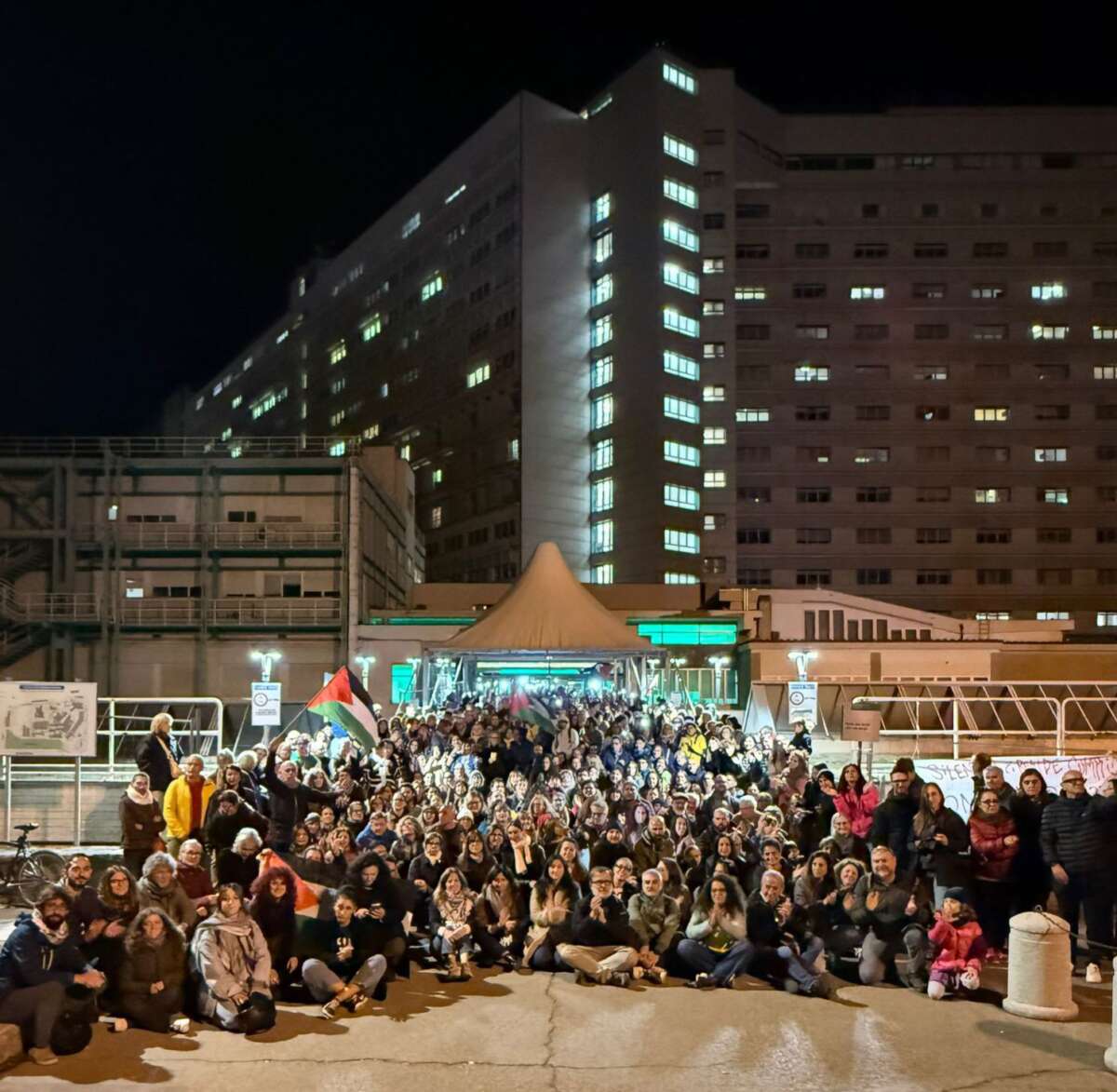
Medics and hospital workers striking and posing in fron of “Ospedale Maggiore” hospital in Bologna on October 3.DIEGO CHECE
The day after the strike, on October 4, one million people gathered for a national demonstration in Rome. Conte went:“There was a tense atmosphere: police carried out sweeping checks on buses arriving from outside the city. The right wing, rooted in a neo-fascist tradition, showed its true nature — its reaction to full squares was repression. They tried to criminalize the demonstrations and sow division, but they failed, because what emerged was unity and massive popular participation: the Italian people standing against genocide.”
Giati and Ciolli, who were also in Rome, noted the historic turnout. “The city was once again flooded with people — it was the most widely attended mobilization I have ever seen in Italy. The crowd was so large that it was nearly impossible to walk,” Ciolli said. By the time people reached the end of the march, there were still participants standing at the starting point.”
Protesters march in Rome on October 4 with the banner “On-land crew against the economy of war – stop genocide.”GIORGIO GRAPPI
Ciolli added,“On the 4th as well, unions, workers, students, and schools of all levels took part. Despite the continuous mobilizations in the preceding days, participation did not wane — it revealed an enormous capacity to keep taking to the streets until the genocide stops. This generated irritation within the government majority, yet it became clear that the government was forced into a corner and compelled to confront the issue.”
Protesters blocking one entrance of the train station in Milan on strike day.FRANCESCA DELLA SANTA
The Meloni government is still trying to squash pro-Palestine movements, for example, with a new proposed law on antisemitism, which equates it with anti-Zionism and could prevent teachers and professors from talking freely about Palestine. However, after the second strike and subsequent demonstrations, Meloni issued a ban and a withdrawal of licenses on arms exports to Israel for the first time in the past two years.
Though a ceasefire has been reached, Ciolli warns that“The government’s agreements envision a future of even greater subordination and poverty for Palestinians in Gaza.” This story is not yet finished; for this reason, the words of the dockworkers from Ravenna that we previously interviewed, who spoke of establishing “a durable project capable of halting the arms trade as a whole,” resonate even more.
As Conte said:
Here and now, the demand is for an end to the genocide and a solution that guarantees Palestine’s self-determination. But there must be continuity: we must fight against the war economy, European rearmament, and the ‘dual-use’ industry shift. This must be done at the European level. If industries transition from civilian to military production, we must build total opposition. ‘We don’t work for war’ is our slogan.
Two women at the window supporting the demonstration on the general strike day in Turin.MATTEO ROSSI
PRESS FREEDOM IS UNDER ATTACK
As Trump cracks down on political speech, independent media is increasingly necessary.
Truthout produces reporting you won’t see in the mainstream: journalism from on the ground in Gaza, interviews with grassroots movement leaders, high-quality legal analysis and more.
Our work is possible thanks to reader support. Help Truthout catalyze change and social justice — make a tax-deductible monthly or one-time donation today.
On 9 October 2025, I was on the “Deep Dive” with Lt. Col. (ret.) Danny Davis. We talked mainly about Trump’s Gaza plan, which will hopefully shut down the genocide for good, but which promises no hope for settling the conflict. The reason is simple: Israel will not allow the Palestinians to have a viable state of their own. To put it in different words, Israel will not allow the Palestinians to exercise self determination. There is no political horizon for the Palestinians, as points 19 and 20 of Trump’s 20-point plan make clear. The Israelis, of course, have a political horizon for the people of Gaza: expulsion via genocide. But thankfully, it appears for the moment at least that the genocide has been halted and the Palestinians will not be expelled from their homeland.
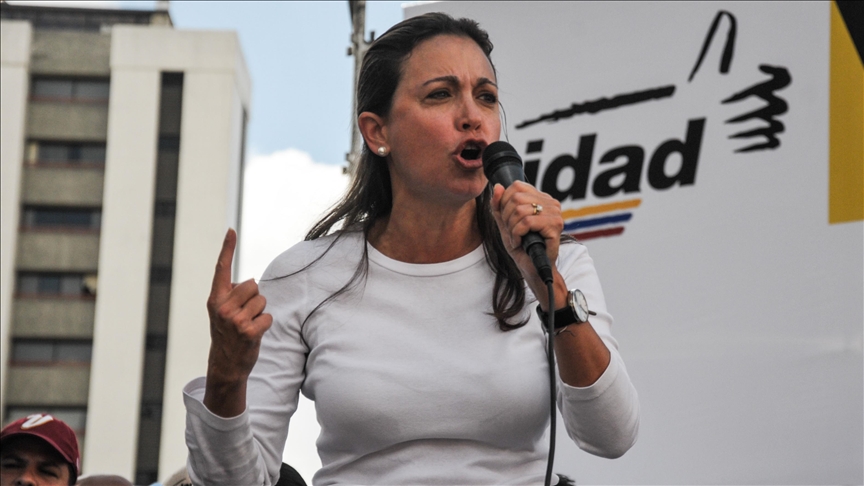 A file photo dated January 24, 2015 shows Venezuelan Opossition leader Maria Corina Machado delivers a speech during an anti-government protest in Caracas- Photo:Cristian Hernandez/ Anadolu Agency