Zoeken in deze blog 🔎🔎

woensdag 30 september 2020

Chris Kijne en de Gesubsidieerde Onwetendheid 12


In 2011 zette de Amerikaanse socioloog Morris Berman uiteen dat de:


American demand for drugs is the inevitable result of a virulent form of cowboy capitalism that we practice in the United States, and which has turned our society into a war of all against all. In addition, the American Dream has not worked out, and Americans are now leading empty lives. Actually, they always were, but now they are more or less aware of it.


Hij schreef dit in het essay ‘A Farce Called Hillary,’ dat is opgenomen in zijn boek Are we there yet? Essays & Reflections, 2010-2017. De gerenommeerde Berman behoort tot de categorie grote cultuurcritici als Alexis de Tocqueville die in zijn verslag ‘Journey to America’ over een historisch bezoek aan de Verenigde Staten in 1831-1832  opmerkte:  


The future of the New World belongs [to] a restless, calculating, adventurous race which sets coldly about deeds that can only be explained by the fire of passion, and which trades in everything, not excluding even morality and religion. A nation of conquerors that submits to living the life of a savage without ever letting itself be carried away by its charms, that only cherishes those parts of civilization and enlightenment which are useful… and presses forward to the acquisition of riches, the single end of its labors…


It is a wandering people whom rivers and lakes cannot hold back, before whom forests fall and prairies are covered in shade; and who, when they have reached the Pacific Ocean, will come back on its tracks to trouble and destroy the societies which it will have formed behind.


Tocqueville’s beschouwingen over de VS zijn veel diepzinniger dan de quatsch die Geert Mak over de ‘promised land’ te berde brengt. Zo beweerde mijn oude vriend in Vrij Nederland van 3 november 2012 met grote stelligheid dat de ‘Verlichting is bedacht in Europa, maar Amerika heeft het uitgevoerd, als real life experiment.’ Met andere woorden: het uitroeien van naar schatting 7 tot 10 miljoen Indianen, en het vervolgens opsluiten in concentratiekampen van de 237.000 overlevenden van deze genocide, moeten in de ogen van de bestsellerauteur worden gezien als ‘een real life experiment’ van de  ‘Verlichting.’ Zijn standpunt verraadt het diepgewortelde racisme van de domineeszoon en zijn publiek, want Mak zou dit natuurlijk nooit hebben beweerd over de genocide van 5 tot 6 miljoen joodse Europeanen. Indianen tellen in zijn mens- en wereldbeeld nog steeds niet mee. Zijn opvatting sluit eerder naadloos aan bij het negentiende eeuwse geloof van de witte man dat de ‘American Indians were doomed to extinction.’ Dit determinisme verklaart tevens waarom ‘de populairste geschiedenisleraar’ van Nederland in augustus 2012, zonder enige ophef te veroorzaken, zijn achterban kon laten weten dat ‘Als je invloed en macht wilt hebben, moet je groots zijn. Dat is iets wat we in Europa van ze (Amerikanen. svh) kunnen leren.’ Kortom, degenen die niet bereid zijn om permanent massaal geweld in te zetten om de neoliberale elite nog rijker te maken, kunnen het schudden, die zullen nooit ‘groots zijn.’ Zij blijven immers te stupide om van de Amerikanen te kunnen leren. Typerend is dat de alom door de kleinburger bewonderde Mak een fan is van The New York Times-columnist Thomas Friedman. Deze woordvoerder van de neoliberale Amerikaanse elite klinkt ‘lekker upbeat’ in Mak’s oren, ‘hij is zo’n man die altijd wel een gat ziet om een probleem op te lossen.’ Wat Friedman zo ‘lekker optimistisch’ maakt zijn onder andere uitspraken als deze:


The hidden hand of the market will never work without a hidden fist. McDonald's cannot flourish without McDonnell Douglas, the designer of the F-15. And the hidden fist that keeps the world safe for Silicon Valley's technologies to flourish is called the US Army, Air Force, Navy and Marine Corps. 


Friedman was als uitgesproken voorstander van Washington’s ‘dirty work,’ een fanatieke voorstander van de illegale en desastreuze ‘2003 invasion of Iraq, writing that the establishment of a democratic state in the Middle East would force other countries in the region to liberalize and modernize.’ Het spreekt voor zich dat de ‘hidden fist has to come out of hiding with some regularity, if it’s going to make its point,’ zoals Ellen Meiksins Wood opmerkte in de essaybundel Masters of the Universe?: NATO's Balkan Crusade (2000). Deze Amerikaanse historica  constateerde terecht dat de 'defence of the "abstract system of globalization" knows no bounds.' 


De liberal Friedman is dan ook als ‘gatekeeper’ van de rijke elite en haar ‘deep state,’ voorstander om overal waar het neoliberale globalisme hapert de ‘US Army, Air Force, Navy and Marine Corps’ met maximale terreur in te zetten. Tot enthousiasme van ondermeer de NRC-opiniemaker Bas Heijne die benadrukt dat dit ‘Amerika’ een werkelijk ‘in alle opzichten superieure’ grootmacht is. Om deze boodschap met de regelmaat van de klok te verspreiden, kreeg zijn collega-opiniemaker Hubert Smeets bijna 300.000 euro aan belastinggeld toegezegd van het voormalige Nederlandse kabinet van liberalen en sociaal-democraten om met zijn anti-Russische propaganda-website een tweede Koude Oorlog aan het publiek te verkopen. Een nieuwe wereldoorlog is voor het huidige kapitalisme onvermijdbaar omdat: 


  1. de neoliberale geloofwaardigheid in een diepe crisis verkeert, vergelijkbaar met die tijdens het interbellum, toen een groot deel van de Europese bevolking de oude elite niet meer vertrouwde, en het fascisme en nazisme begon te steunen. 
  2. het neoliberale kapitalisme in een ‘system-crisis’ is beland, doordat een aanzienlijk deel van de werkende bevolking in het Westen overtollig is geworden, als gevolg van het uitbesteden van arbeid naar de lage lonen landen, terwijl de dienstensector op grote schaal is geautomatiseerd. 
  3. De Verenigde Staten door China wordt voorbijgestreefd, en 'Amerika' niet langer 'the only superpower' is.


Een in toenemende mate fascistische mentaliteit manifesteert zich al geruime tijd in de westerse mainstream-media, zoals valt op te maken uit onweersproken en zelfs toegejuichte uitspraken als ‘[t]he hidden hand of the market will never work without a hidden fist,’ en bijvoorbeeld Ian Buruma’s advies aan de Europese elite dat ‘we too must do the dirty work, and take the risk of being held accountable.’ Dit zijn onverbloemde oproepen om de ruimte te geven aan het fascisme, dat allereerste wordt gekenmerkt door het met massaal geweld onderwerpen van anderen. Fascisme is op de keper beschouwd het met ‘hidden fist dirty work’ uitvoeren, dat onvermijdelijk is om de status quo, die de huidige neoliberale globalisering heeft gecreëerd, in stand te houden. Het feit dat de Erasmus-jury in 2008 dit soort opvattingen beloonde door de Erasmusprijs aan Ian Buruma te verlenen, demonstreert hoe ontvankelijk eveneens de Hollandse bourgeoisie is voor het postmoderne fascisme. Het geweld van de neoliberale ‘democratieën’ beperkt zich niet tot het buitenland. Begin 2013 gaf de Canadees/Amerikaanse hoogleraar Henry A. Giroux in antwoord op de vraag: 


In your writings, you also talk of the ‘neoliberal terror’ and the politics of disposability that has taken hold over American society, suggesting that there is a new form of class warfare directed against the poor and the working class,


het volgende antwoord:  


In the US there is an institutionalized regime of neoliberal violence directed against low income people, poor minorities, immigrants, the disabled, and others now considered disposable under a ruthless and savage fanatical capitalism that luxuriates in the poisonous dream worlds of commodification, deregulation, consumption, and privatization. Within this regime of neoliberal violence, the politics of disposability (overtolligheid. svh) is shored up by the assumption that some lives and social relationships are not worthy of a meaningful social existence, empathy and social protections. For instance, those considered ‘others’ because of their lack of capital, consuming power, or alleged refusal to accept the unethical grammar of an Atlas Shrugged winner-take-all ethos are now relegated to zones of abandonment and terminal exclusion. Lacking social protections, such populations increasingly are addressed within the growing reach of the punishing state, as a source of entertainment, or are relegated to what the French philosopher Etienne Balibar (sterk beïnvloed door de filosofie van Spinoza. svh) calls the ‘death zones of humanity.’


In a culture defined by excessive inequality, suffering, and cruelty, the protective covering of the state, along with the public values and the formative culture necessary for a democracy is corrupted, increasingly dismantled, and held in contempt. And the disposable are not merely those populations caught in extreme poverty. Increasingly, they are individuals and groups now ravaged by bad mortgages, poor credit and huge debt. They are the growing army of the unemployed forced to abandon their houses, credit cards and ability to consume — a liability that pushes them to the margins of a market society. These are the groups whose homes will not be covered by insurance, who have no place to live, no resources to fall back on, no way to imagine that the problems they will be facing are not just personal, but deeply structural, built into a system that views the social contract and the welfare state as a lethal disease.


In this economic Darwinist measure of value, those marginalized by race and class, who might detract from (afbreuk doen aan. svh), rather than enlarge another’s wealth are not only demonized, but are also viewed as problematic in that they become burdens to be disposed of, rather than a valuable and treasured human resource in which to invest. The discourse of disposability is not limited to right-wing politicians, but it is also built into the vocabulary of neoliberal governmental policy. Market societies are ruled by a predatory form of economic Darwinism in which greed and avarice are legitimated through a war-against-all, survival-of-the-fittest mentality that embraces a near sociopathic lack of interest in others and provides few social protections against individual and collective misfortune while at the same time dismissing the value of social provisions. As the sociologist Elliott Currie has pointed out, neoliberal societies have become criminogenic in that they destroy peoples’ livelihoods, withdraw public supports, create massive extremes of economic inequality, erode social bonds while creating debilitating forms of atomization, promote materialistic values that produce a culture of callousness, corrupt the political process, and market a form of normalized brutality evident in the massive rise of corporate crime and a culture of corruption. 


Neoliberalism represents a full-fledged assault on democratic values, relations, and public spheres and does so by universalizing its own ideology, policies, and modes of governance. Its logic of disposability reduces citizenship to the logic of consumerism, reinforces the dominance of public life by giant corporations, and produces what the anthropologist João Biehl calls a ‘machinery of social death.’ In fact, the ‘machinery of social death,’ is fed by corporate investments in the organized production of violence for profit and I am not just talking about industries that make big profits as part of the military-industrial complex. As New York Times journalist Andrew Ross Sorkin states, what has been overlooked in the recent debate about gun worship in the United States is that some of the biggest gun makers are ‘owned by private equity funds run by Wall Street titans.’ For instance, Cerberus Capital Management, Science Capital Management, and Mid Ocean Partners make big profits selling everything from AK-47s to military-grade night-vision goggles. The technology of death is a big profit maker for Wall Street and makes clear that neoliberalism is actively engaged in the production of a dystopian society in which people, resources, and goods are now considered throwaways, just as moral responsibility is detached from actions, and politics is removed from the promise of a substantive democracy.

https://www.truthdig.com/articles/violence-is-deeply-rooted-in-american-culture/ 


Het is juist de ‘corporate press’ die dit neoliberalisme voortdurend predikt. Door dit systeem wordt een almaar groeiend deel van de westerse bevolking ‘disposable,’ dat wil zeggen: veel burgers zijn niet meer noodzakelijk om het systeem draaiende te houden. Sterker nog: de overtolligen vormen een steeds groter obstakel in de neoliberale heilstaat.  ‘Market societies’ zijn ‘een roofzuchtige vorm van economisch Darwinisme waarin hebzucht en gierigheid’ worden gerechtvaardigd door de ‘war-against-all, survival-of-the-fittest mentality.’ Het is een houding die grenst aan een ‘sociopathisch gebrek aan belangstelling voor anderen.’ Daardoor is een ‘mentaliteit’ ontstaan die in permanente staat van oorlog verkeert met ‘democratische waarden, relaties,’ en het hele maatschappelijke bestel zoals die vóór de komst van het neoliberalisme bestond. De neoliberale logica van nut en efficiency die een groeiend deel van de wereldbevolking overtollig maakt, ‘reduceert het burgerschap tot de logica' van 'het consumentisme,' en 'versterkt de overheersing van gigantische concerns in het publieke leven. Het gevolg is datgene wat de Braziliaanse hoogleraar antropologie aan de prestigieuze Princeton Universiteit, João Biehl, de ‘machinery of social death’ noemt. Die ‘technologie van de dood’ is een: 


grote winstmaker voor Wall Street en maakt tevens duidelijk dat neoliberalisme actief betrokken is bij de productie van een dystopische maatschappij waarin mensen, grondstoffen en goederen vandaag de dag worden beschouwd als dingen die kunnen worden weggegooid. 


Deze realiteit wordt nu door de meerderheid van de mensheid als kwaadaardig ervaren. Maandag 21 januari 2019 berichtte The Guardian:  


The growing concentration of the world’s wealth has been highlighted by a report showing that the 26 richest billionaires own as many assets as the 3.8 billion people who make up the poorest half of the planet’s population.


In an annual wealth check released to mark the start of the World Economic Forum in Davos, the development charity Oxfam said 2018 had been a year in which the rich had grown richer and the poor poorer.


It said the widening gap was hindering the fight against poverty, adding that a wealth tax on the 1% would raise an estimated $418bn (£325bn) a year — enough to educate every child not in school and provide healthcare that would prevent 3 million deaths.


Oxfam said the wealth of more than 2,200 billionaires across the globe had increased by $900bn in 2018 — or $2.5bn a day. The 12% increase in the wealth of the very richest contrasted with a fall of 11% in the wealth of the poorest half of the world’s population.


As a result, the report concluded, the number of billionaires owning as much wealth as half the world’s population fell from 43 in 2017 to 26 last year. In 2016 the number was 61.


Among the findings of the report were:


In the 10 years since the financial crisis, the number of billionaires has nearly doubled.


Between 2017 and 2018 a new billionaire was created every two days.

The world’s richest man, Jeff Bezos, the owner of Amazon, saw his fortune increase to $112bn. Just 1% of his fortune is equivalent to the whole health budget for Ethiopia, a country of 105 million people.


The poorest 10% of Britons are paying a higher effective tax rate than the richest 10% (49% compared with 34%) once taxes on consumption such as VAT are taken into account.

https://www.theguardian.com/business/2019/jan/21/world-26-richest-people-own-as-much-as-poorest-50-per-cent-oxfam-report 


Dit is het resultaat van de neoliberale politiek van begeerte, waarvoor, volgens zowel de liberalen als de sociaal democraten, ‘geen alternatief’ bestond, en het dus ‘geen enkele zin’ had ‘daar naar te streven,’ zoals de PVDA-premier Wim Kok eind vorige eeuw beweerde. Hij was voorstander van de ideologie die in Oliver Stone’s speelfilm Wall Street door de beursspeculant Gordon Gekko als volgt werd aangeprezen:


The richest one percent of this country owns half our country's wealth, five trillion dollars. One third of that comes from hard work, two thirds comes from inheritance, interest on interest accumulating to widows and idiot sons — and what I do, stock and real estate speculation. It's bullshit. You got ninety percent of the American public out there with little or no net worth. I create nothing. I own. We make the rules, pal. The news, war, peace, famine, upheaval, the price per paper clip. We pick that rabbit out of the hat while everybody sits out there wondering how the hell we did it. Now, you're not naive enough to think we're living in a democracy, are you, Buddy? It's the free market. And you're a part of it. You've got that killer instinct. Stick around, pal, I've still got a lot to teach you.


De kern van het neoliberale geloof wordt door Gekko als volgt toegelicht:


Well, ladies and gentlemen, we're not here to indulge in fantasy, but in political and economic reality. America, America has become a second-rate power. Its trade deficit and its fiscal deficit are at nightmare proportions. Now, in the days of the free market, when our country was a top industrial power, there was accountability to the stockholder. The Carnegies, the Mellons, the men that built this great industrial empire, made sure of it because it was their money at stake. Today, management has no stake in the company!


Het zijn de bankiers en speculanten, die met fiat money, niet bestaand geld, een handel in lucht op gang hebben gebracht, en gedreven worden door louter en alleen ‘begeerte,’ of zoals Gekko zegt:


The point is, ladies and gentlemen, that greed, for lack of a better word, is good. Greed is right, greed works. Greed clarifies, cuts through, and captures the essence of the evolutionary spirit.


Iedere mainstream-opiniemaker waar ook ter wereld dient daarom allereerst zijn opdrachtgevers te behagen, de mensen die een onlosmakelijk onderdeel vormen van deze ‘world of greed.’ De speelruimte van bijvoorbeeld Chris Kijne, Geert Mak, Bas Heijne, Hubert Smeets, Ian Buruma, en alle andere collega’s, die ik op deze weblog regelmatig bekritiseer, is uiterst beperkt. Dit verklaart waarom iemand als mijn oude vriend Buruma zonder enige gêne in juni 2017 in NRC Handelsblad kon beweren dat met het oog op het naderend ‘einde’ van wat hij de ‘Pax Americana’ noemde, ‘we ons moeten voorbereiden op een tijd waarin we met weemoed terugkijken op het betrekkelijk goedaardige imperialisme uit Washington.’ Een jaar later, op 2 augustus 2018, stelde Buruma in dezelfde krant de retorische vraag: ‘Herkennen we de signalen voordat het te laat is?’ Gezien de opkomst van wat de liberal Buruma de ‘populisten’ noemt, schreef hij:


Er zijn veel manieren om de werkelijkheid te negeren. En juist op dat punt kunnen we lering trekken uit de jaren dertig in Europa. Een aanzienlijk aantal Duitse zakenlieden en industriëlen, die conservatief waren maar geen nazi’s, konden best met Hitler leven, zolang zij dachten dat zij er financieel belang bij hadden. Zijn manieren lieten te wensen over, dat wel, maar zij zouden hem wel naar hun hand zetten. Dit bleek een illusie te zijn,


om vervolgens na deze parallel te hebben getrokken te concluderen:


Hoe dan ook zal vrijheid verdedigd moeten worden. Dit kan alleen als we de gevaren scherp onder ogen zien. Pas als mensen gaan geloven dat zij niets meer kunnen doen om aan de grote en kleine demagogen weerstand te bieden, dan weten we zeker dat het te laat is. 


Maar de vraag blijft: welke ‘freedoms must be defended,’ zoals Buruma in het Engels schreef, anders blijft zijn waarschuwing slechts een collectie holle woorden. Is het de ‘vrijheid’ van wat oud-president Jimmy Carter de Amerikaanse ‘Oligarchy With Unlimited Political Bribery’ betitelt, en de parlementaire democratie heeft uitgehold? Is het de ‘vrijheid’ van de Amerikaanse elite voor wie — in de woorden van Henry Kissinger uit 2015 — het ‘uiteen laten vallen van Rusland een doel is geworden’? Of is het de ‘vrijheid’ van de Amerikaanse deep state om wereldwijd met geweld een neoliberale wanorde af te dwingen die nu 26 individuen zo rijk heeft gemaakt dat zij  evenveel bezitten als de helft van de hele mensheid tezamen? Heeft Buruma het wellicht over de ‘vrijheid’ van het Amerikaanse militair-industrieel complex om ruim de helft van de Federale Begroting, die het Congres kan toewijzen, op te slokken, ten koste van het welzijn van zowel de Amerikaanse bevolking zelf als de volkeren die gebukt gaan onder het niet aflatende geweld dat Washington en Wall Street genereren? Het is een belangrijke kwestie ‘als we,’ zoals Ian opmerkte, ‘de gevaren scherp onder ogen’ willen ‘zien.’ Deze vragen kunnen niet achteloos terzijde worden geschoven, zelfs niet door propagandisten van de ‘oligarchie’ die zich momenteel publiekelijk afvragen of ‘we de signalen [herkennen] voordat het te laat is?’ 

https://www.project-syndicate.org/commentary/how-to-tell-democracy-is-in-peril-by-ian-buruma-2018-07

https://www.nrc.nl/nieuws/2018/08/02/herkennen-we-de-signalen-voordat-het-te-laat-is-a1611967  


Wanneer de Erasmusprijs-winnaar van 2008 moeten geloven dan ‘zagen’ de ‘meeste mensen het verval van de democratie in de jaren dertig niet.’ Ik betwijfel dit, net zoals ik denk dat de meeste mensen vandaag de dag wel degelijk beseffen dat ‘wij’ opnieuw aan de vooravond staan van grote, desastreuze oorlogen. Sterker nog, ik weet dat de meeste mensen die ik spreek zich realiseren dat de commerciële massamedia momenteel de geesten rijp maken voor een oorlog tegen Rusland en China. Ian Buruma zelf is één van de sprekende voorbeelden van de hetze die de westerse ‘corporate press’ voert tegen deze, in de woorden van Buruma, ‘mafia societies.’ Meer over die levensgevaarlijke hetze de volgende keer. 


dinsdag 29 september 2020

Julian Assange

I Had Convinced Myself That They Were Ok' Ex-Prison Warden Tells Assange Hearing on Detainee Regime

Get short URL
by 
Subscribe

Detainees subjected to Special Administrative Measures in the US can expect around 23 hours a day or more confined to a prison cell, without any contact of other prisoners, surveilled and intercepted communications and high levels of anxiety and depression, the Old Bailey was told on Tuesday.

Julian Assange faces a bleak future should he be detained in the US under Special Administrative Measures (SAMs) the Old Bailey heard on 29 September 2020.

Maureen Baird, a former employee of the US Bureau of Prisons and former Warden at the Metropolitan Correctional Center in New York City, told the Old Bailey on Tuesday that based on her experience, and review of Mr Assange's case file, the WikiLeakspublisher is likely to be subjected to SAMs.

Ms Baird has been a warden at multiple institutions for seven years and is familiar with the SAMs regime. Those subject to SAMs normally spend between 23 to 24 hours per day in their cells and are not permitted to communicate with inmates "at all" Ms Baird told Edward Fitzgerald QC for the defence.

Prisoners under SAMs:

"Had the opportunity to come out of their own cell and into another cell we considered the recreation cell. There was no exercise equipment in there at all. I had an exercise bike put in there. It was just an empty cell. Always alone.", Ms Baird explained.

Additionally phone calls are "always monitored" by FBI agents who require two weeks notice before each phone call and "All mail coming in or going out any SAM assigned inmate is screened before it ever gets to the recipient", Ms Baird said.

Ms Baird explained that prison wardens have no authority to make any changes to the SAMs regime and that "very, very few" requests for amending SAMs "are ever approved for any reason".

"It's not discretionary. It can’t be changed by a warden or anybody at the BOP. It is more of a directive. It is very black and white. There is no grey area with SAMS. If someone is in pre-trial for terrorism or a different type of case they would be subjected to the same measures", Ms Baird told the court.

"I agree that it was not supposed to be punitive. But the consequences and results very much feel like they are punitive", Ms Baird said, adding that, "It is more isolated than what you would refer to, or other people would refer to, as restrictive housing", Ms Baird said 

The former warden further explained that from her own experience the SAMs regime causes severe depression, "it causes anxiety, it causes paranoia, in some weight loss, detriment to their physical health [and] severe detriment to their mental health".

Furthermore, post-conviction, if Mr Assange is subjected to SAMs, "the only place for him to go is in ADX [maximum-security facility] Florence, [Colorado] unless there is severe change in his medical status", Ms Baird says adding that “You have to be almost dying, for lack of another description.”

If sentenced to a lengthy sentence there is also a "real risk" that Mr Assange could spend his life in the H-Unit at the ADX prison. Crucially, Ms Baird also explained that "SAMs inmates are not entitled to group participation", countering evidence given by Assistant United States Attorney Gordon Kromberg that inmates under SAMs could socialise in programmes with other inmates. 

There are likely "very few inmates" that make it to phase three, which theoretically permit inmates under SAMs to engage with other prisoners, "because it completely defeats the purpose of what SAMs is for", Ms Baird said.

Prosecution Challenges the Former Prison Warden

Clair Dobbin, barrister for the prosecution, challenged the idea that everyone subjected to SAMs experiences the same regime and she also challenged the idea that Ms Baird could offer any insight into whether SAMs would be imposed onto Mr Assange, or the nature of the regime if they were applied.

Mr Assange is being charged "with an espionage crime and its believed that he continuous to have involvement or he is familiar with people who have involvement with disclosing classified information", Ms Baird said, explaining why she believes SAMs would be applied to the award-winning journalist.

Ms Dobbin also put it to Ms Baird that because the former prison warden had never served in the ADX she could not testify as to the nature of the SAMs regime at the ADX, which is where it is expected Mr Assange would be held if he is convicted post-trial in the US.

When challenged as to whether she had any experience of deciding whether a prisoner is transferred to the ADX Ms Baird responded "one of my jobs, over the course for many years, is that I was the designator [...] I made the determination as to where a person would be sent".

Ms Dobbin asked Ms Baird if, as a prison warden, she had ever told her correction officers to engage in discussions with inmates subjected to SAMs, and Ms Baird responded in the negative.

"That’s not something that a warden does. I may want them to do that but [...] they are all in a union, if I told them they had to confer with inmates they would say it is not in their job description", Ms Baird replied.

"If conditions were worrying as you suggest wouldn't you tell your staff to have conversations with the inmates?" Ms Dobbin asked. 

"No, that’s not something that is done in a prison. I’m sorry that I’m not answering the way that you want me to. I am answering it the way that it is. What I want is not what I can enforce", Ms Baird insisted.

She also confirmed that she never complained to judges or to other officials in the Bureau of Prisons regarding the treatment under SAMs.

Ms Dobbin put it to Ms Baird that the conditions of SAMs didn’t cause her "that much concern at the time" and asserted that it is only now that Ms Baird is testifying for the defence that she is concerned about the regime.

"They did cause me concern, but I had convinced myself that they were ok", Ms Baird replied.

US Failed to Fulfil Representations in a Prior Extradition Case

In the afternoon US lawyer Lindsay Lewis, testifying for the defence, also explained that in her experience Mr Assange would be subjected to SAMs and would also be transferred to the ADX should he be convicted. She also described the severe nature of the restrictions of the regime. Ms Lewis also noted that in the case of suspected terrorist Abu Hamza, the US government secured his extradition from England after making representations to the English courts and the European Court of Human Rights that Abu Hamza would not spend much time, if any, at the ADX. Despite those representations Abu Hamza remains in the ADX, and subjected to SAMs, since October 2015.

Mr Assange faces to up to 175 years in prison if he is convicted of all of the charges levied against him in the US. The indictment almost entirely relates to his role in publishing the Iraq and Afghanistan war logs, Guantanamo Bay detainee files and diplomatic cables that revealed war crimes as well as other criminality and abuse committed by the US government and US-backed forces around the world. The substantive hearings are due to finish on Friday, with the defence's closing arguments to follow four weeks thereafter.

https://sputniknews.com/uk/202009291080611393-i-had-convinced-myself-that-they-were-ok-ex-prison-warden-tells-assange-hearing-on-detainee-regime/


The Rights Forum Nieuwsoverzicht


Beste lezer,

Na een periode van bijna vijftien jaar zijn de rivaliserende Palestijnse facties Fatah en Hamas overeengekomen om verkiezingen te houden in de Palestijnse gebieden. Volgens vertegenwoordigers van beide partijen zullen de verkiezingen binnen zes maanden gefaseerd plaatsvinden. Eerst zullen er parlementaire verkiezingen gehouden worden, gevolgd door presidentsverkiezingen van de Palestijnse Autoriteit (PA) en tenslotte verkiezingen voor de centrale raad van de Palestijnse Bevrijdingsorganisatie (PLO).


De overeenkomst werd op 24 september aangekondigd tijdens een overleg tussen Fatah en Hamas-functionarissen in de Turkse stad Istanbul. Hoewel de details nog uitgewerkt moeten worden zijn de verschillende facties hoopvol voor wat betreft een succesvolle toenadering tussen beide partijen. Hussein al-Sheikh, lid van het Centraal Comité van Fatah, omschreef de dialoog op Twitter als ‘een belangrijke stap op weg naar verzoening en partnerschap’. De Palestijnse premier Mohammed Shtayyeh gaf aan dat de PA er klaar voor is om van de verkiezingen een succes te maken en daarmee de nationale eenheid te verstevigen.

De laatste keer dat er in de Palestijnse gebieden verkiezingen werden gehouden was in 2006. Hamas won toen van Fatah, de partij van president Abbas. Na mislukte pogingen om een eenheidsregering te vormen, brak er een hevige strijd uit tussen de twee facties.  Sindsdien regeert Hamas over Gaza, terwijl de door Fatah geleide PA regeert over de bezette Westelijke Jordaanoever. Beide partijen hebben het afgelopen decennium talloze keren geprobeerd (en gefaald) om tot nationale verzoening te komen en verkiezingen te organiseren.

20 jaar Tweede Intifada

Het is vandaag twintig jaar geleden sinds de Tweede Intifada begon. Op verschillende manieren werd in de Palestijnse gebieden en in Israël aandacht besteed aan de opstand, die in 2000 begon en zo’n 1.000 Israëli’s en 3.000 Palestijnen het leven kostte. Leden van verschillende Palestijnse politieke facties en het publiek namen deel aan een herdenkingsmars door de straten van Ramallah. In een artikel over zijn ervaringen van de Tweede Intifada schrijft de Israëlische journalist Gideon Levy: ‘twintig jaar later is de situatie [voor Palestijnen] erger, wanhopiger dan voor de uitbarsting van de Al-Aqsa Intifada en grimmiger dan ooit: alleen tijdens de Nakba, de ramp van 1948, was hun situatie nog zwaarder en hopelozer.’ Bashir Abu-Manneh, docent aan de Universiteit van Kent, beschrijft hoe in de twee decennia na het begin van de Tweede Intifada Israël de oorlog tegen de Palestijnen voortzet. Amos Harel, journalist van Haaretz, beschrijft hoe de Tweede Intifada de Israëlische politiek voorgoed heeft veranderd.

Financiële problemen UNRWA

UNRWA, het VN-agentschap voor Palestijnse vluchtelingen, verkeert in een diepe financiële crisis. Het gebrek aan middelen zou kunnen betekenen dat de organisatie binnenkort niet meer in staat is bepaalde diensten aan de Palestijnse bevolking te verlenen. Dat maakte, Philippe Lazzarini, het hoofd van UNRWA, op 16 september bekend. Lazzarini waarschuwt bovendien dat de verspreiding van het coronavirus, een economische crisis in Libanon en een enorm tekort op de UNRWA-begroting de hopeloosheid onder Palestijnse vluchtelingen vergroten. Het tekort op de reguliere begroting en de noodprogramma’s (voor onder meer covid-19) bedraagt meer dan 500 miljoen dollar.

De financiële crisis van UNRWA wordt voor een belangrijk deel veroorzaakt door het verlies van alle financiering van de VS, dat tot 2018 de grootste donor was. De VS gaf in 2017 nog 360 miljoen dollar aan UNRWA, maar dat bedrag zakte naar 60 miljoen in 2018. Sindsdien heeft de VS niets meer bijgedragen aan het VN-agentschap. UNRWA biedt onderwijs, gezondheidszorg, voedsel en andere diensten aan meer dan 5 miljoen Palestijnse vluchtelingen en hun nakomelingen op de Westelijke Jordaanoever en in Gaza, Jordanië, Syrië en Libanon.

5000 nieuwe woningen in Israëlische kolonies

De Israëlische televisiezender Channel 7 meldde op 25 september dat premier Netanyahu de Hoge Raad voor Planning en Bouw heeft opgedragen de bouw van 5000 nieuwe woningen voor kolonisten op de Westelijke Jordaanoever goed te keuren. De Hoge Raad, de commissie die gaat over de constructie van woningen in de illegale Israëlische kolonies (‘nederzettingen’) op de Westelijke Jordaanoever, wordt hoogstwaarschijnlijk in oktober bijeengeroepen om de plannen formeel goed te keuren. De bouw van nieuwe woningen in de nederzettingen heeft een aantal maanden stilgelegen, maar wordt nu naar alle waarschijnlijkheid onder grote druk van kolonistenleiders weer hervat. In de afgelopen weken protesteerden zij tegen Netanyahu’s onwil om de Hoge Raad ertoe te zetten bouwprojecten goed te keuren en beloften na te komen die hij aan hen had gedaan over de uitbreiding van nederzettingen in Oost-Jeruzalem en op de Westelijke Jordaanoever. Volgens Peace Now, een Israëlische organisatie die zich verzet tegen de kolonisatie van de Westelijke Jordaanoever, is het gemiddelde jaarlijkse bouwpercentage met 25% gestegen sinds het aantreden van president Donald Trump in 2017.

Palestijnse advocaat dreigt inwonerstatus Jeruzalem te verliezen

Salah Hammouri, een 35-jarige Palestijnse advocaat en activist, dreigt zijn status als ‘permanente inwoner’ van Oost-Jeruzalem te verliezen en het land uitgezet te worden. Hammouri is in Jeruzalem geboren, maar werd begin september door de Israëlische politie verteld dat het ministerie van Binnenlandse Zaken van plan is zijn status als inwoner in te trekken omdat hij lid zou zijn van het Popular Front for the Liberation of Palestine (PFLP) en een gevaar voor de staat.

Palestijnen in Oost-Jeruzalem krijgen van Israël een permanente verblijfsvergunning (‘permanent residency’), die gemakkelijk kan worden ingetrokken. De status van ‘permanente inwoner’ wordt gehandhaafd zolang Palestijnen fysiek aanwezig blijven in de stad. In sommige gevallen proberen de Israëlische autoriteiten de verblijfsstatus van Palestijnen in Oost-Jeruzalem in te trekken als vergeldingsmaatregel omdat zij politieke dissidenten zijn. Op deze manier is Israël erin geslaagd om sinds 1967 de verblijfsvergunningen van meer dan 14.200 Palestijnen uit Oost-Jeruzalem in te trekken en hen de stad uit te sturen.

De VAE in zee met Israëlische banken op de zwarte lijst van de VN

Bedrijven in de Verenigde Arabische Emiraten (VAE) zijn samenwerkingsverbanden aangegaan met Israëlische bedrijven en banken die op de zwarte lijst van de Verenigde Naties (VN) staan voor het ondersteunen van de illegale nederzettingen op de bezette Westelijke Jordaanoever. Volgens media in de VAE heeft Bank Leumi, een van de Israëlische banken op de lijst, overeenkomsten getekend met drie van de grootste banken in de VAE: Abu Dhabi Islamic Bank (ADIB), First Abu Dhabi Bank en Emirates NBD. Bank Hapoalim, ook op de VN-lijst, heeft naar verluidt een memorandum van overeenstemming ondertekend met Emirates NBD.

Bank Leumi en Bank Hapoalim zijn betrokken bij de illegale kolonisering van de door Israël bezette Westelijke Jordaanoever en Oost-Jeruzalem – en daarmee bij de schendingen van het internationaal recht en de mensenrechten waarmee die gepaard gaat. In mei 2018 publiceerde Human Rights Watch het rapport Bankrolling Abuse: Israeli Banks in West Bank Settlements, dat uitwees hoezeer Israëlische banken een veelzijdige en zelfs centrale rol spelen in de kolonisering van Palestina.

Chelsea-eigenaar Roman Abramovich doneert miljoenen aan kolonistenorganisatie

Uit gelekte documenten is gebleken dat Roman Abramovich, eigenaar van de Londense voetbalclub Chelsea, bijna 102 miljoen dollar heeft gedoneerd aan de extreemrechtse Israëlische kolonistenorganisatie Elad. Elad heeft als doel het verdrijven van Palestijnse families en het vestigen van Joden in de grotendeels Arabische wijk Silwan in Oost-Jeruzalem, en bereikt dit grotendeels door het eigendomsrecht van Palestijnse families over hun huizen aan te vechten. In juli, bijvoorbeeld, zetten Israëlische soldaten een alleenstaande moeder en haar vier kinderen uit hun huis in Silwan om het aan Elad te overhandigen, na een 24 jaar durende juridische strijd tussen de Palestijnse inwoners en de organisatie.

Volgens de gelekte documenten, bekend als de ‘FinCEN Files’, schonken vier bedrijven gerund door Abramovich meer dan 100 miljoen dollar aan Elad om Palestijnse huizen in Silwan te kopen en de aanwezigheid van Israëlische Joodse kolonisten daar te versterken.

Soedan kandidaat voor volgende normalisatieovereenkomst

Soedan wordt door de Verenigde Staten gezien als de meest waarschijnlijke kandidaat om in navolging van de VAE en Bahrein een normalisatieovereenkomst te sluiten met Israël. Erkenning van Israël is echter een zeer omstreden kwestie in Soedan, en heeft de potentie om de huidige overgangsregering te destabiliseren. Het belangrijkste onderwerp van de onderhandelingen tussen de VS en Soedan, die vorige week plaatsvonden in de VAE, was een economisch steunpakket dat volgens Amerikaanse ambtenaren zou kunnen helpen om de steun van de Soedanese bevolking te krijgen. Soedan heeft ook gevraagd om van de Amerikaanse lijst van staatssponsors van terreur te worden verwijderd. Soedans plek op die lijst maakt het onmogelijk buitenlandse financiering te krijgen, en draagt op die manier bij aan de aanhoudende financiële crisis. Op 23 september eindigden de onderhandelingen, zonder een doorbraak te hebben behaald. Het grootste struikelpunt lijkt de omvang van het economische steunpakket aan Soedan, maar ook interne oppositie tegen diplomatieke banden met Israël speelt bij de moeizaam lopende onderhandelingen een rol.

550 fruitbomen vernield door kolonisten

De afgelopen weken zijn meer dan 550 fruitbomen van Palestijnen vernield door Israëlische kolonisten, zo blijkt uit een rapport van het VN-Agentschap voor de coördinatie van humanitaire zaken in de Palestijnse gebieden (OCHA). Het grootste incident vond plaats op land dat wordt gecultiveerd door drie families uit het dorp Biddya, waar kolonisten 445 fruitbomen, een gebouw, stenen muren en ijzeren hekken met bulldozers hebben vernield. Volgens Israëlische bronnen claimen de kolonisten het eigendom van het land en zijn ze van plan daar een nieuwe nederzetting te vestigen, ondanks het ontbreken van bouwvergunningen of officiële goedkeuring. Een andere groep Israëlische kolonisten heeft op 25 september een olijfgaard in het dorp al-Khader, ten westen van Bethlehem, in brand gestoken. Volgens lokale bronnen zijn bij de aanval vijftig olijfbomen, allen meer dan twintig jaar oud, vernield. In totaal zijn er dit jaar bijna 5.000 Palestijnse fruitbomen, vooral olijfbomen, door kolonisten vernield. In 2019 waren dat er 7.500.


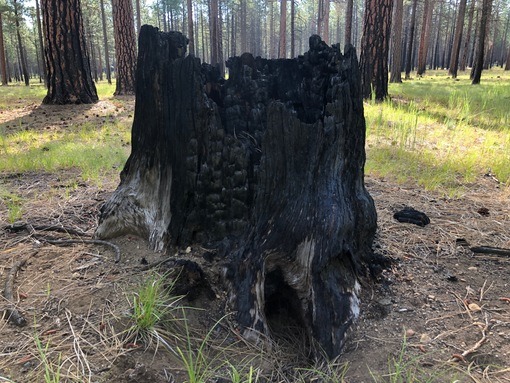
Global Warming: Boundless Dying Trees

 SEPTEMBER 29, 2020

Boundless Dying Trees

 Facebook

Photograph by Nathaniel St. Clair


Global warming is ravaging forests throughout the world.

“New studies show drought and heat waves will cause massive die-offs, killing most trees alive today.” (Source: We Need to Hear These Poor Trees Scream: Unchecked Global Warming Means Big Trouble for Forests, Inside Climate News, April 25, 2020)

According to Bill Anderegg, a forest researcher at the University of Utah: “Global warming has pushed many of the world’s forests to a knife edge… in the West, you can’t drive on a mountain highway without seeing how global warming affects forests,” Ibid.

Similar to corals and reefs, trees are slow growing and long-lived but cannot easily move to escape newly emerging rapid heat. Regrettably, both systems have inflexible damage thresholds. Corals experienced a tipping point from 2014-16 of record-breaking ocean heat as reefs around the world bleached and died in unprecedented numbers.

The Great Barrier Reef suffered its worst coral bleaching on record in February of 2020 from the most extreme ocean temperatures since records began in 1900. That’s global warming at work, overtime. Not only that but consider the egregious fact that the world’s largest living organism has been hit by three devastating bleachings in only five years. This year, for the first time in recorded history, severe bleaching, which kills coral outright, hit all three major regions of the famous reef. Scientists were awestruck.

Similar to no predictions of coral-bleaching disasters (what a big surprise!) nobody is predicting a similar disaster for forests, but it’s already underway right under everybody’s nose. It’s here now!

Giant Sequoias, the Grand Daddy of the world’s trees are “dying from the top down.” This has never been documented before. According to Christy Brigham, chief of resource management for parks: “We’ve never observed this before.” (Source: Craig Welch, The Grand Old Trees of the World are Dying, Leaving Forests Younger and Shorter, National Geographic, May 28, 2020)

The loss of Giant Sequoias is but one example of a worrisome worldwide trend that’s nerve-racking. “Trees in forests are dying at increasingly high rates – especially the bigger, older trees,” Ibid.

According to Nate McDowell, an earth scientist at the US Energy Department’s Pacific Northwest National Laboratory and the lead author of a major worldwide study: “We’re seeing it almost everywhere we look.” (Nate G. McDowell, et al, Pervasive Shifts in Forest Dynamics in a Changing World, Science, Vol. 268, Issue 6494, 29 May 2020)

The numbers are staggering. From 1900 to 2015 the world lost more than a third of its old-growth forests. Ever since, the numbers are accelerating enough for calls of extra-alarm.

The causes are mostly anthropogenic, meaning logging and land-clearing, plus the biggest impact or fossil fuel emissions that bring forth rising global temperatures significantly magnifying the rate of dying, as droughts extend longer and harsher, resulting in extremely brittle tinder, leading to massive wildfires. The upshot is a world on fire like never before. Dead trees burn easily.

According to Henrik Hartmann of Germany’s Max Planck Institute for Biogeochemisty, in central Europe: “You don’t have to look for dead trees… They’re everywhere,” Ibid.

For example, in northern Europe one week of extreme heat resulted in hundreds of thousands of beech trees dropping leaves. The trees could not handle the heat.

In the US Southwest emerging mega-drought conditions have already weakened and killed hundreds of millions of trees, including Rocky Mountain lodgepole and piñon pines, as well as aspens.

As it happens, the massive numbers of tree deaths are newly unique to the entire world. African cedars and acacias are dying. The majestic Amazon rainforest is struggling under severe drought conditions exaggerated and super-charged by tens of thousands of human-generated fires undercutting the entire ecosystem. Junipers are rapidly declining in the Middle East. In Spain and Greece oak trees are shriveling because of intense global warming. In Siberia massive wildfires have erupted within a virtual tinderbox of excessive heat conditions. Ancient African Baobab trees, some thriving for 2,000 years, have all begun decline or outright dying as their ecosystems suffer from global warming.

The integrity of trees is compromised by excessive heat, which not only kills them outright, but also makes them more vulnerable to tree-burrowing insects, especially as normalized winter temperatures crank up way too high too soon during the season.

Meanwhile, climate denial charlatans theorize that rising levels of CO2 feeds enhanced growth for trees and flora as a positive. They’re dead wrong. It’s one more dishonest position taken by rightwing politicians.

Rising levels of CO2 blanket the atmosphere, thus trapping more heat, as the planet gets ever-hotter, causing the atmosphere to suck excessive levels of moisture thereby causing trees to shed leaves and/or close pores to hold in as much moisture as possible, thus curtailing CO2 uptake. It’s a vicious cycle that reverses the carbon uptake cycle that is key to maintaining all life on the planet.

Even more odious, along the way, trees die outright. There is no silver lining to increasing levels of fossil fuel CO2 emissions. It’s bad, it’s dangerous, and it’s a killer. “Stop fossil fuel CO2 emissions or die” should be the motto of responsible political campaigns. But, that’s a pipedream without enough funding to support it.

Forest ecologist Diana Six (University of Montana) has always been skeptical of claims of projected beneficial effects of excessive levels of CO2 triggering photosynthesis in plants: “I was always amazed by the early predictions for enhanced growth of forests, especially in the West. Many of the models only included warmer temperatures or higher CO2 effects. The projections were made mainly by economists who assumed that only temperatures and CO2 affect tree growth… No one seemed to consider water. With warmer temperatures and a longer growing season comes greater demand for water and we are getting less, not more, in most cases. That should have been a big red flag,” Ibid.

In the final analysis, “Forests are our last, best natural defense against global warming. Without the world’s trees at peak physical condition, the rest of us don’t stand a chance.” (Source: Eric Holthaus, Up in Smoke, Grist, March 8, 2018)

The message behind the boundless death march is simple: Stop fossil fuel emissions!

Robert Hunziker lives in Los Angeles and can be reached at rlhunziker@gmail.com.

https://www.counterpunch.org/2020/09/29/boundless-dying-trees/


Joanna's Narcissism (3)

With artificially enhanced lips, the Eastern Bloc attempts to connect with the West. In what kind of world does 28-year-old Bulgarian Joanna...