Nicolas Guillou, French ICC judge sanctioned by the US: 'You are effectively blacklisted by much of the world's banking system'
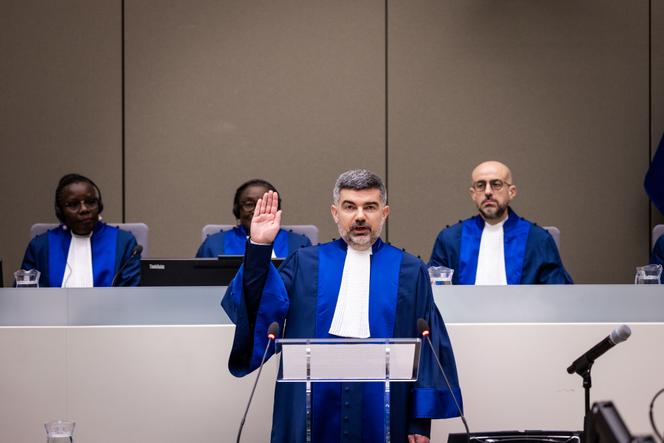
Nicolas Guillou, a French judge at the International Criminal Court (ICC), was sanctioned by the United States under a decision made by Donald Trump on August 20. The US Treasury Department justified the action, stating that "Guillou is being designated for ruling to authorize the ICC's issuance of arrest warrants for Israeli Prime Minister Benjamin Netanyahu and former Minister of Defense Yoav Gallant." Both men are indicted for war crimes and crimes against humanity for their roles in the destruction of the Gaza Strip.
In total, six judges and three prosecutors from the ICC, including Chief Prosecutor Karim Khan, have been sanctioned by the US. In an interview with Le Monde, the judge explained the impact of these measures on his work and daily life. Without commenting on ongoing cases, he called on European authorities to activate a mechanism that could limit the impact of US restrictions.
What is the purpose of the American sanctions mechanism?
Initially, it was created to address human rights violations, counter terrorism and combat drug trafficking. Today, nearly 15,000 individuals are on the US sanctions list, mostly members of Al-Qaeda, the Islamic State group (IS), mafia organizations and the leaders of authoritarian regimes. Among this long list are nine ICC judges.
What do these sanctions mean, concretely, in your daily life?
It goes far beyond simply being banned from US territory. The sanctions affect all aspects of my daily life. They prohibit any American individual or legal entity, any person or company, including their overseas subsidiaries, from providing me with services.
All my accounts with American companies, such as Amazon, Airbnb, PayPal and others, have been closed. For example, I booked a hotel in France through Expedia, and a few hours later, the company sent me an email canceling the reservation, citing the sanctions. In practice, you can no longer shop online because you do not know if the packaging your product comes in is American. Being under sanctions is like being sent back to the 1990s.
Is access to the banking system still possible?
Sanctions are even more intrusive in this area. There are banks, even non-American ones, that close the accounts of sanctioned individuals. Any banking transaction involving an American individual or company, or conducted in US dollars, or in a currency that uses the dollar for conversion, is prohibited. In practice, you are effectively blacklisted by much of the world's banking system. On top of that, all payment systems are American: American Express, Visa, Mastercard. Overnight, you find yourself without a bank card, and these companies have an almost complete monopoly, at least in Europe. American companies are actively involved in intimidating sanctioned individuals – in this case, the judges and prosecutors who serve justice in contemporary armed conflicts. These sanctions can last over a decade or even longer. Putting someone under sanctions creates a state of permanent anxiety and powerlessness, with the intent of discouragement.
Does it work?
I took an oath as a judge when I started my professional life over 20 years ago. I took another oath upon joining the Court [in March 2024]. I apply the law adopted by 125 states [that are parties to the treaty establishing the ICC]. That is my compass. As judges, we know that delivering justice is not always easy. But faced with these attacks, ICC judges and prosecutors stand firm, and they will continue to do so.
What can you do?
Continue administering justice with complete independence, even in difficult circumstances. Today, the ICC investigates globally, despite the logistical and security challenges. In recent years, arrest warrants have been issued in connection with conflicts in Ukraine, Palestine and Afghanistan. Arrests have been made in the Philippines and Libya. Reparations programs are in place for victims in Mali, the Central African Republic and the Democratic Republic of the Congo.
The 125 member states of the Court will hold their annual Assembly in The Hague, Netherlands, in early December. What support do you expect, given that the Trump administration threatens further sanctions against the institution as a whole?
The impact of sanctions will depend largely on governments' responses. Will they support us? Will they ensure the ICC's suppliers continue to work with it? For the ICC, this is a moment of truth: Who are its real defenders? Who has the courage to defend human values in the face of barbarity? That is what is at stake. International criminal justice is not an abstraction. Our cases concern hundreds, even thousands, of victims of murder, rape and torture. They speak of their suffering, of thousands of corpses, the maimed and orphans. When the Court is attacked, it is the victims who are silenced.
What can governments do?
In the face of US sanctions, European authorities can implement the "blocking statute" [a mechanism used in the past that protects EU citizens and companies from the effects of sanctions imposed by third countries]. Europe needs greater sovereignty, especially in digital and banking matters. That is the only way to reduce the impact of sanctions and, indirectly, protect the victims of international crimes. Today, there is no room for naivety. Without sovereignty – military, health, financial and digital – we can no longer guarantee the rule of law. Some European lawmakers have become aware of these issues. Still, this awareness must grow among national governments and the European Commission, because behind the sanctions against the ICC lies the entire question of the rule of law.
Does an international rule of law exist?
The international rule of law is a project spanning generations that began after the Second World War. In concrete terms, the rule of law is equality for all individuals, globally, before justice. The Court was built to be the last resort in a system designed to protect victims of war or the most serious crimes. It is the foundation of humanity's shared values that is at stake.
How do you explain the importance the ICC has taken on?
The ICC is seen as important today because it exposes the fractures of the contemporary world. If you look at a map and see which countries are not members of the ICC, you find that many have imperial ambitions; often, they are former empires. And after three decades of progress in multilateralism, empires are striking back. Some believe that power should serve the law – that is the very principle of international law. Others, on the contrary, believe that the law should serve power. For them, international criminal justice is an obstacle. It is an obstacle to empires. That is why we are under attack. But despite these challenges, I remain deeply optimistic because there is a tremendous demand for justice worldwide.


1 opmerking:
Law of he Imperial Boomerang
Een reactie posten