Zoeken in deze blog 🔎🔎

zondag 10 november 2013

Fukushima 3

Published: Sunday 10 November 2013
What has really been occurring at the Fukushima Nuclear facility?
RESIZE TEXT + | - | R
The hear no evil see no evil attitude of mainstream media outlets here in the United States about the ongoing crisis at the Fukushima nuclear facility in Japan does not obscure the fact that, in the attempt mitigate future catastrophic damage, the global community is faced with challenges unique in the history of humankind. Members of the Green Shadow Cabinet traveled to the UN on Thursday to deliver a petition signed by 150,000 citizens of the world demanding that the government of Japan transfer responsibility for the Fukushima reactor site to an international engineering firm overseen by a civil society panel and an international group of nuclear experts. Additionally, the petition demanded that the global media be permitted around-the-clock access to accurate information throughout the entire process of removal of the spent fuel rods so that the international community can be informed of any risks to its health.
Also covered this week's episode of the Resistance Report:
Abortion Providers Are Heroes (segment starts at 8:01) - An Interview with Sunsara Taylor of StopPatriarchy.org, who just returned from Jackson, Mississippi where the last abortion clinic in that state was under siege from the anti-choice group Operation Save America, described by StopPatriarchy.org as a "extreme, violence inciting, women-hating Christian fascist organization."
Lessons From Occupying Hurricane Sandy (segment starts at17:05) Pamela Brown's report on those who had spent time occupying Zuccotti park as part of the Occupy wall street and then turned their energy towards providing mutual aid to those affected by Hurricane Sandy.
A Grassroots Effort to Make Grass Legal in Maine (segment starts at 23:05) Asher Platts, known to many of you through his work as the Punk Patriot, joins the Resistance Report team to give us the story behind the story of how grassroots -- no pun- organizing help bring legalized Marijuana to Maine. 
What Is The Main Obstacle To Change? (segment starts at 26:19) Lee Camp, inspired by Tarak Kauff, breaks down what is perhaps the largest obstacle to systemic change. 


Get Email Alerts from NationofChange
ABOUT DENNIS TRAINOR, JR.
Dennis Trainor, Jr. (writer & host of Acronym TV) is also the director of the Occupy Wall St. documentary, American Autumn: an OccudocAcronym TV is an independent news program with over 21 thousand subscribers and 31 million video views and counting.

Iran 417

America: Immoral, Aggressive and Driven by Lobbyists

american-exceptionalism
The Leader of Iran’s Islamic Revolution says the United States has lost its political and military power and turned into a country grappling with its biggest economic and financial problems. He was addressing a group of school and university students on the occasion of Student Day in Iran.
Ayatollah Seyyed Ali Khamenei said the U-S is suffering from political problems and divisions which led to the recent shutdown of the federal government. The leader noted that Iran’s current economic hardships pale in comparison with those of the US administration. He said US officials made projections some 11 years ago about having 14-thousand billion dollars in extra revenues by 2011 or 2012, and that now, in practice, they are suffering from a huge 17-thousand billion dollar deficit. He added that this alone shows America’s true economic situation and the inaccuracy of their official calculations.
Ayatollah Khamenei also made mention of deep divisions among Washington’s allies, saying that the U-S has failed to convince even its closest partners like France or Britain to back its decision on launching a strike against Syria.
For more on this issue, Press TV speaks with political analyst Paul Craig Roberts.

Like this video? Visit our YouTube channel and click the “Subscribe” link to get the latest videos from Global Research!
Tune into Global Research TV for the latest video updates from Global Research!

American Terrorism 10

The CIA is Leading Massive Arms Deliveries to Rebels in Syria, Saudi Arabia is Training Terrorists

 11 
  37  2 
 
  135
syriafree army
“The Americans hold the key to these arms deliveries. Without them, they couldn’t happen.
CIA agents lead convoys of arms deliveries joined by the Free Syrian Army and Jordanian secret services…”
A French reporter has provided details on how the US, Saudi Arabia and Jordan have been supplying tons of weapons to the militants operating inside Syria, Press TV reports.
Georges Malbrunot of Le Figaro newspaper revealed how the CIA is leading massive arms deliveries to the militants in Syria.
“The Americans hold the key to these arms deliveries. Without them, they couldn’t happen. CIA agents lead convoys of arms deliveries joined by the Free Syrian Army and Jordanian secret services. The Saudis work behind the scene in charge of financing and arranging arms deliveries from eastern Europe to Jordan,” Malbrunot said.
The US Central Intelligence Agency (CIA), and Saudi Arabia and Jordan have supplied about 600 tons of weapons in 2013 alone to the militants in Syria.
Sources told Malbrunot that the weapons convoys are escorted by unmanned aircraft guided from a CIA-led command center in Jordan.
The report runs counter to the US claim that it is opposed to arming the militants.
Many believe that the arms transfers could plague the region for years.
Meanwhile, a new report says Saudi Arabia is training foreign-backed militants in Syria as part of a new push to topple the government of President Bashar al-Assad.
The kingdom has teamed up with Jordan, the United Arab Emirates, and France in adopting the new policy to bolster the militants in Syria, the Foreign Policy magazine reported.
In May, Assad said militants from 29 different countries were operating in different parts of the country.According to statistics compiled by the United Nations, more than 100,000 people have been killed and millions of others displaced due to the unrest that erupted in Syria in March 2011.

Climate Change 24

Global Warming and the Ideology of Anthropogenic (Human Caused) Climate Change

Global Research, November 08, 2013

The purpose of this work is to provide an investigation into the ideology of anthropogenic (human caused) climate change.
It has been written with the confidence that further research within the public, as well as the academic realm is required. Furthermore, the investigative strategy incorporated in this paper serves to provide a starting place for additional investigation. Therefore, the foundational reason for this work is to empower the understanding of the readership.
“We decided long ago that the dangers of excessive and unwarranted concealment of pertinent facts far outweighed the dangers which are cited to justify it…And there is very grave danger that an announced need for increased security will be seized upon by those anxious to expand its meaning to the very limits of official censorship and concealment. That I do not intend to permit to the extent that it is in my control.” John F. Kennedy
To initiate an evidentiary inquiry into geopolitical decision making, one must first understand the causal relations that frame how a scientific issue is presented, addressed and subsequently dismissed. Of importance, is the distinction between sound science and methods motivated by political self interest. In the case of the former, the observer maintains a qualitative standard founded upon the premise that such an investigation will enhance the comprehensive intelligence within their respective discipline. In the case of the latter, the observer upholds a personal standard founded upon the ideology that this method will satisfy their self-interest and accelerate their ascendance to academic prominence. Thus, to value the integrity of the former method, the current directive must be to inspire a holistic understanding within the readership, as well as to identify the inconsistencies that arise within the discourse pertaining to anthropogenic climate change.
To further clarify, the guiding principals and intent of this work is to transform power. Since the prevailing dominant discourse derives its influence through maintaining ignorance, a praxis grounded upon intellectual empowerment is the most effective use of this knowledge. This investigation begins with an analysis of inconsistencies documented by official sources.
First to be examined is the National Aeronautics and Space Administration. It is the prerogative of NASA to research and identify causal forces within Earth’s solar system. NASA identifies multivariate concerns over uncertainties pertaining to potential causal forces influencing climate change. “There’s a great deal that we don’t know about the future of Earth’s climate and how climate change will affect humans”, including the impacts of solar irradiance, aerosols/dust/smoke, clouds, the carbon cycle, ocean circulation, precipitation and sea level rise (NASA 2013). As illustrated by researcher Victor Herrera of the Institute of Geophysics at the National Autonomous University of Mexico, this statement by NASA is critical for “the models and forecasts of the UN IPCC are incorrect because they only are based on mathematical models and presented results at scenarios that do not include, for example, solar activity” (Morano 2008, pg 4). To omit such an influential contributor to climate change as the sun would inherently bias statistical models in favour of anthropogenic theorizing. NASA’s admission is important for it sets the groundwork for a genuine understanding on climate change.
A secondary piece of pertinent evidence is a report issued in 2012 by the United Kingdom’s National Weather Service. In this report, Colin Morice et al. state: “this model cannot take into account structural uncertainties arising from data set construction methodologies. It is clear that a full description of uncertainties in near-surface temperature, including those uncertainties arising from differing methodologies, requires that independent studies of near-surface temperatures should be maintained” (Morice, 2012, pg 5). This is important for the scientists involved clearly state the limitations of their chosen methodology, ie the HADCRUT4 data set, and recommend that independent research be conducted to affirm their findings.
David Rose, reporting for the UK’s Daily Mail, incorporated the graphs from this study into an article he wrote entitled Global Warming Stopped 16 years ago, reveals Met Office report. Rose also interviews a number of climate scientists who express uncertainty regarding the accuracy of climate modeling.
These interviews include “Professor Phil Jones, [former] director of the Climate Research Unit at the University of East Anglia…[who] admitted that he and his colleagues did not understand the impact of ‘natural variability’ – factors such as long-term ocean temperature cycles and changes in the output of the sun” (Rose 2012). Professor Phil Jones is the same individual “who found himself the centre of the ‘Climategate’ scandal over leaked emails..” (Rose 2012).
In these emails, Jones, in association with Michael Mann and other collaborators, communicate their intention to censor academic papers via intervening in the IPCC peer review process, as well as manipulate statistical data to conform to inaccurate climate forecast models. In a 2009 email correspondence between Kevin Trenberth and Michael Mann, Trenberth states: “the fact is that we can’t account for the lack of warming at the moment and it is a travesty that we can’t...Our observing system is inadequate” (Global Research 2009). As identified in the introduction, the actions of Jones and Mann perfectly illustrate the ideal of scientists working for academic self interest and not for the benefit of scientific understanding.
Arising from this case of intellectual manipulation is collateral damage. The scientific discipline of climate change and the severe ways upon which human beings are impacted by it, are dismissed in favour of the expert management of human populations. In the dominant discourse, additional issues such as globalization, corporatism, effective waste management, public health impacts, fresh water scarcity and natural resource privatization are often conveniently omitted. This practice of academic self interest attempts to discredit legitimate science while effectively empowering an environment of division, disinformation and subsequently, ignorance. It is within such an environment that opportunists thrive, pseudo-scientists whose rhetorical machinations frame the discourse of public opinion.
“[Thus it has become the case that] our government’s science and technology policy is now guided by uniformed and emotion-driven public opinion rather than by sound scientific advice. Unfortunately, this public opinion is controlled by the media, a group of scientific illiterates drunk with power, heavily influenced by irrelevant political ideologies, and so misguided as to believe that they are more capable than the scientific community of making scientific decisions” (Cohen 1984, pg 59).
A classic example, is Nobel Peace Prize recipient and former United States vice president Al Gore. A significant proponent of anthropogenic climate change, Gore also happens to be a major benefactor (The Telegraph). According to the Capital Research Centre’s publication Foundation Watch, “along with Gore, the co-founder of GIM [Generation Investment Management] is former Goldman Sachs CEO Hank Paulson…[In September 2006] Goldman Sachs bought 10% of CCX [Chicago Climate Exchange] shares for $23 million. CCX owns half of the European Climate Exchange (ECX), Europe’s largest carbon trading company…” (Barnes 2007, pg 4). This sale occurred the same year Al Gore released the film An Inconvenient Truth, which claims both a scientific consensus on anthropogenic climate change, as well as pushing the need to offset carbon emissions via green investments. (Freeman 2007, pg 29). In fact, the Executive Intelligence Review reports that “Al Gore spoke at the May 2005 INCR [Investors Network on Climate Risk] Investors Summit at the United Nations, in his capacity as Chairman of his Generation Investment Management. He called for following the model of the European Union Emissions Trading Scheme, which started up in 2005. Monetize emissions; trade them; reduce them, was Gore’s mantra” (Freeman 2007, pg 29).
Upon further analysis, Foundation Watch affirms that “like CCX, the European Climate Exchange has about 80 member companies, including Barclays, BP, Calyon, E.ON UK, Endesa, Fortis, Goldman Sachs, Morgan Stanley and Shell, and ECX has contracted with the European Union to further develop a future market in carbon trading” (Barnes 2007, pg 4). It is apparent that several significant benefactors are among the most powerful captains of banking, business and industry. The benefits they incur via the successful management of government policy and mainstream environmental activism is enormous and therein is the real inconvenient truth.
Therefore it is evident that the intentional manipulation of a scientific subject, can be designed to both generate a public reaction, as well as to benefit private interests. However, the real danger is when rhetorical mechanisms infiltrate the common sense of a particular population and influences that populations’ moral consciousness. When rhetoric, and those who employ it, can establish a jurisdiction of unquestionable authority, then it becomes a god, which through its own machinations, is capable of empowering its skillful technicians and silencing logical inquiry. The population, unaware of an intellectual coup d’etat, become willful participants in their own subjugation. Through their acquiescence to a society that abandons formative critical analysis and evidentiary investigation, the population voluntarily reinforces this invisible intellectual prison.

Boycot Israel 112

Het wordt hoogste tijd dat Europa Israel gaat boycotten, gezien het gevaar dat de 'Joodse natie' vormt voor de wereldvrede.


Iran 416

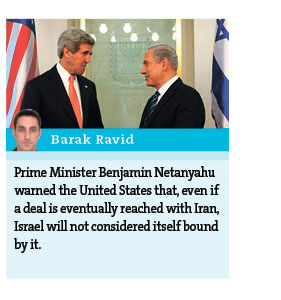
Kerry says world powers closer to nuclear deal with Iran

GENEVA Sat Nov 9, 2013 9:17pm EST
(Reuters) - U.S. Secretary of State John Kerry said on Sunday that world powers had moved closer toward a deal during negotiations with Iran on reining in Tehran's nuclear program and that "with good work" the goal could be reached.
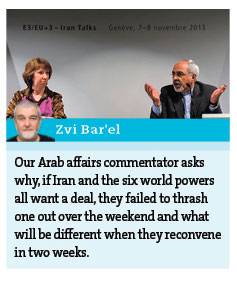
Kerry made the statement at a news conference after a three-day meeting between Iranand the six powers - the United States, FranceGermanyRussiaChina and Britain - that ended without an agreement.
Both sides, however, said progress had been made and negotiators would meet again on November 20.
Kerry said differences had been narrowed during the talks in Geneva, which were aimed at securing an agreement that would curb parts of Iran's atomic activities in exchange for limited sanctions relief.
"Over the last two days a significant amount of progress was made," Kerry said.
"There is no question in my mind that we are closer now as we leave Geneva than we were when we came, and that with good work and good faith over the course of the next weeks we can in fact secure our goal," he said.
But he also cautioned that the window for diplomacy "does not stay open indefinitely". Both the United States and Israel have refused to rule out possible military action against Iran if diplomacy fails to resolve the decade-old nuclear dispute.
Iran rejects Western accusations that it is seeking the capability to develop nuclear weapons.

(Reporting by Louis Charbonneau, Lesley Wroughton and Fredrik Dahl; Editing by Eric Beech)

Democracy?

Remarks by Senator Elizabeth Warren National Consumer Law Center Consumer Rights Litigation Conference
As Prepared for Delivery

Thank you, Will and Janet, for that introduction and for inviting me to join you today.
I’ve now been in the U.S. Senate for almost a year. In fact, yesterday was the one-year anniversary of Election Day. You might not know it from the way the President is treated around Congress, but he beat the other guy by about five million votes. So it’s a very special anniversary.
Since I got to the Senate, I’ve often been asked: “Elizabeth, what have you learned since you got back to Washington, and do you see the world any differently now that you are in this new position?” Since I am among friends, I want to be a little blunt. I ran for office because I believe the playing field is rigged. Evidence of that is everywhere. Now I’ve been in the Senate for nearly a year and believe as strongly as ever that the system is rigged for powerful interests and against working families. That’s why I wanted to be here with you today.

I have been fighting shoulder to shoulder with NCLC for a very long time now, and I have seen how hard you work to stand up for consumers and to level the playing field for working and middle class families. We’ve fought to protect consumers from tricks and traps in the credit industry time and again. We’ve fought together for the new consumer agency. We’ve fought to make sure more families have access to mortgage modifications that can help them stay in their homes. And so I wanted to be here today to thank you for everything you are doing, day in and day out, in Washington and across the country, to fight for people.
We could talk about a lot of ways the system is rigged—lobbyists, campaign finance, the court system. But I want to raise a very specific issue that we need to spotlight: how much powerful interests benefit from a system that is complicated and opaque.
For me, it all started with fine print. When credit card deals get long and complicated, when they are loaded with odd terms and complicated definitions, when they are just plain long, then the field just tilted. The company that wrote the forms could hire an army of lawyers and research all the variations in the law and carefully word every line so that it works for the company and not for the customer. Fine print gave companies a chance to hide in all kinds of traps in the bushes, and that was true not just for credit cards, but also for bank fees and mortgages and all kinds of other agreements.
If customers, people who are trying to cook dinner for the kids, check homework and pay the bills, can’t really assess the costs and risks, then the market breaks down. Lenders who build business models based on tricking and trapping people will make big profits, and honest dealers will have a hard time competing.
Government helps—or can help—level the playing field. Government—decent rules, fairly enforced—can make sure that customers and investors have the information they need to make informed choices. But that information can’t be buried in the fine print. The information has to be useful and clearly explained. It has to be easy to compare one product with another. In other words, complex disclosures aren’t real disclosures at all.
For years, consumer safety agencies have made sure that customers get what they see. When a bottle is labeled “aspirin,” the Food and Drug Administration makes sure that’s exactly what it is. When a new car is sold, the National Highway Traffic Safety Administration makes sure it has adequate brakes and seat belts. When a new parent buys a crib, the Consumer Product Safety Commission makes sure that it is a safe place for sleeping and not set up to strangle infants. And, my personal favorite, when someone buys a toaster, they don’t have to read a wiring diagram to know that it won’t explode.
The work of those agencies enjoys widespread support, and it puts some limits on risks that consumers cannot detect on their own at the time of purchase. It’s thanks to federal agencies that no one can compete in the appliance industry by leaving the safety switches out of toasters. It’s thanks to federal agencies that no one has to worry that those white pills are baking soda instead of antibiotics or that the slats on the baby’s crib are far enough apart for the baby’s body or head to slip through. It’s thanks to federal agencies that consumers can comparison shop knowing that sellers aren’t offering a cheaper price by putting their families’ safety at risk.
Those agencies have made the markets they regulate work better. When they clamp down on deceptive and dangerous innovations, they make room in the marketplace for good innovations. And while many of our regulatory agencies have experienced controversy, over time they have built up a lot of support from the American public. You tell me: When was the last time you heard someone call for regulators to go easier on companies that want to use lead paint on our children’s toys or leave the safety switches off toasters?
There are a lot of regulatory successes, and a lot of people are alive today because of the basic rules of the road NCLC and others have fought for. But there are still too many places where the world remains complicated and opaque. There are still too many places where armies of lobbyists are fighting to rig the system so that the public remains in the dark.
Earlier this year, for example, we had a major national debate on gun violence. If as many people were dying of a mysterious disease as innocent bystanders are dying from firearms, a cure would be our top priority and we’d still be talking about it. Gun violence is an epidemic, an epidemic that kills our children, our friends, our neighbors. But we don’t even have good data on gun violence. Why? Because the NRA and the gun industry lobby made it their goal to prevent any serious effort to document the violence. In 2012, the CDC, which conducts research on how other forms of violence affect public health, spent $100,000 out of its $5.6 billion budget on firearm injury prevention. Just for comparison, the NIH spent $21 million studying headaches. Think about that. If that’s not bad enough, here’s another one: When cities and local governments collect data about guns used during crimes, the ATF is banned from using an electronic database to manage the data. Keeping the public in the dark is dangerous—and it makes it that much harder to keep our children safe.
page2image30704
page2image30976

Or take our system of elections – the very heart of democracy. When the Supreme Court decided in Citizens United that it would let corporations spend as much money as they pleased on elections, they unleashed a powerful group of millionaires and billionaires who could spend hundreds of millions of dollars to influence outcomes—all in secret. And when there was a push in Congress to require disclosure of corporate spending on elections, armies of corporate lobbyists used their influence to kill it—and to keep the American people in the dark.
And then there’s the consumer agency. The CFPB was designed from the very beginning to cut out tricks and traps in consumer finance and add transparency to the marketplace. We fought for that agency together! And we won!
The agency is about making consumer credit clear—no more hiding fees and penalties in a thicket of fine print. It is about letting consumers see the deal—and putting them at ease about the things they can’t see.
And it’s already starting to make some real progress. Look, no agency is perfect and no rule is flawless. But just look at what has already been accomplished. The agency has put in place new mortgage and credit card rules so that millions of people won’t be trapped into buying exploding mortgages. It has forced credit card companies to refund about three-quarters of a billion dollars that they tricked consumers out of. Its complaint center is giving tens of thousands of people a chance to fight back when they are cheated. The agency has begun to make the consumer financial markets work more efficiently and dial down the kinds of risks that nearly sparked a second Great Depression. This new agency matters, and it is already starting to make a real difference.
But we all know that the fight isn’t over and that the lobbyists are still working to undercut the agency’s work. And we know the progress we’ve made didn’t happen because reform falls out of the sky. It didn’t happen because the industry learned its lesson and called for a tough new watchdog. It happened because we fought, and when we fought, we won. We got a strong, independent agency designed to look out for working families.
The people in this room and the consumers you represent all across the country are fighters. We are tough, resourceful, and creative. We can take steps to level the playing field. We have succeeded in so many critical areas in the past, and I know we will succeed again in the future. Reform isn’t easy, but when we succeed – when we increase transparency and fight for fairness - we get safer and we get stronger.
I admire all you have done on behalf of hard-working, play-by-the-rules families. I know there will be many battles ahead, and I look forward to standing shoulder to shoulder once again with NCLC.
Thank you for having me here today, and thank you for all you do. ###

http://readersupportednews.org/off-site-opinion-section/72-72/20336-the-playing-field-is-rigged 

Kees van der Pijl. Zijn Nieuwe Boek