zaterdag 4 april 2020
Geen Jorwert zonder Brussel. EU Breakup?
EU Commission head, Ursula von der Leyen, has apologized to Italy for the disastrous response to the Covid-19 pandemic. Von der Leyen rolled out the idea for a new financial package to subsidize salaries at companies struggling, called SURE, which would provide a total of €100 billion in loans to EU member states to prevent massive lay-offs. Is it enough, or has the EU reached the point of no return as the entire system collapses?
https://www.youtube.com/watch?v=40NesQXCL9o&feature=youtu.be&fbclid=IwAR3OmjrZK0-lt3zMAk8yRzQWgzou8cr0SibsKxaL_P4oQREFCEXWg8qSo0Y

Pieter Lakeman over Corona en Rutte
De paniek die is uitgebroken rond het Corona virus is te wijten aan het beleid
https://www.youtube.com/watch?v=pr6H3PyzvkE&t=30s
De intensive zorg werd onder kabinet Rutte bijna gehalveerd: Column Pieter Lakeman
https://www.youtube.com/watch?v=pr6H3PyzvkE&t=30s
Karel van Wolferen over Corona Maatregelen
Klopt de Corona informatie en zijn de maatregelen te rechtvaardigen? | Karel van Wolferen
CORONAVIRUS, MILITARISM AND THE END OF AN ILLUSION
CORONAVIRUS, MILITARISM AND THE END OF AN ILLUSION
9/11 NIST Whistleblower Hails University of Alaska Fairbanks Report
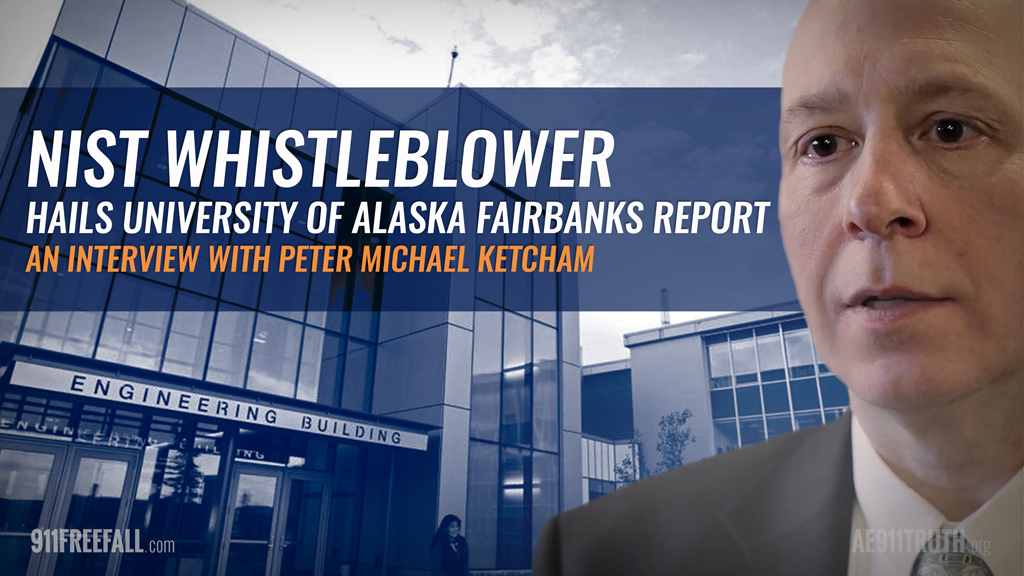
NIST Whistleblower Hails University of Alaska Fairbanks Report
- AE911Truth
On this week’s episode of 9/11 Free Fall, former NIST employee Peter Michael Ketcham joins host Andy Steele to share his thoughts on the University of Alaska Fairbanks final report on World Trade Center Building 7.
Ketcham contends that it is now incumbent upon NIST, as a scientific agency with a duty to the public, to address these new findings and explain why they diverge so greatly from NIST's own 2008 report on WTC 7.
Ketcham contends that it is now incumbent upon NIST, as a scientific agency with a duty to the public, to address these new findings and explain why they diverge so greatly from NIST's own 2008 report on WTC 7.
We invite you to listen or to read the interview below.
Andrew Steele:
Welcome to 9/11 Free Fall. I'm the host, Andy Steele. Today we're joined by Peter Ketchum. Peter was a member of the NIST technical staff during the period between 1997 and 2011. He initially joined the high-performance systems and service division and later became a member of what was at the time the mathematical and computational sciences division of the Information Technology Laboratory.
A few years ago, he came out calling for a new investigation of the collapse of the three towers that fell on September 11th, 2001. We'll be catching up with him today now, that the World Trade Center 7 report is out. Peter, welcome back to 9/11 Free Fall.
Peter Ketcham:
Well, thank you Andy. Thank you for inviting me and it's a pleasure to talk with you again.
Andrew Steele:
Well, it's a pleasure to talk to you and hear so many different perspectives now that this report is out—something that we have been waiting for a very long time. Maybe not a long time in the span of human history, but for people who are eager for justice, it has felt like an eternity, but here it is. The World Trade Center 7 report is out and of course we have some very startling conclusions that are not compatible with what NIST has told us before.
And of course you are a former employee at NIST, so we're going to be getting your take on this today. Let's start with my first question. Considering that you are a former NIST employee and you did come out calling for a new investigation, has your life or view of the world changed at all since that time when you came out?
Peter Ketcham:
Well, let me break that question into two answers. The first, has my life changed at all? I would say no. There have not been any changes to my life. The second one: Has my view of the world changed? Yes, it's changed greatly. My view of authorities, and in this case government agencies, it has changed greatly, and I've lost a lot of trust.
One of the things that happened as I started to become more and more involved with the 9/11 truth movement is that I started becoming aware of other issues that sort of encircle and encompass 9/11, including the way our global financial systems work, the way our central banking systems work, and my views on that have changed greatly from what they were before my involvement in 9/11 truth movement.
Andrew Steele:
It is like a rabbit hole. It's an analogy from Alice in Wonderland. I think that analogy has been out there so many years, but of course she falls down a hole chasing a rabbit and enters a completely upside-down world, where everything she expects from what she knows is completely different. And that is what it's like for people as they start to go down this [9/11] path. I remember it was like that for me. It has really colored my view of things, and it's of course influenced my trust in government. And I think that is very important, as we face new crises all the time.
You always have to question what you're hearing from official sources, because if it needs to be an official source, then that means they have some kind of agenda to protect. I'm never really confident that the "powers that be" are really looking out for me.
Now the Hulsey report just came out, as I mentioned. What's your take on it, now that it's been released?
Peter Ketcham:
Well, it's an excellent piece of research. This is really a milestone. It's an impressive study, and the release of this report is a big milestone, because I think one of the pieces that was missing was a comprehensive, detailed academic study. That was always a weak point that critics could point to. They could say, "Well, people in the 9/11 truth movement, you've got some good arguments, you've got some great evidence, but where's the academic research?"
So, this is like a big building block being put into place—the University of Alaska study. It's a big building block being put into place, and, of course, I obviously have read the report. I was one of the reviewers, one of the early reviewers. So I've read it cover to cover, every single page, and it's impressive.
Andrew Steele:
Absolutely. What really feels like an accomplishment, to me, for the movement in getting this report out is that it's now out there in the history [books]. We're facing some challenges right now in the overall world that are competing for attention with this report, obviously. I need not say what the big news story taking up the front pages is at this moment, but the fact that the report is even out there right now means it can be looked up at any time in the future. And I really believe the Hulsey report is going to live on in people's minds. It's something that they're going to remember— that they're going to be citing for a long time.
Let's not forget that there are inventions out there that have really revolutionized the world. But when they first came out, they didn't catch on right away. Sometimes the inventors feel like they have failed initially, and maybe it's only after they die that their product really catches on with the general public and really has an impact.
So we've just got to have faith in ourselves as a movement that our work is producing fruit and that the seeds we plant are going to sprout. You've just got to keep on putting this stuff out there. I see things changing all over the world, slowly but surely, the way people think, the way people look at the news and the information they're getting. And at some point, they're going to be looking back at 9/11 and saying, "Why can't we investigate this again? Why can't we look at what really brought down the World Trade Center 7? We've got this report conflicting with NIST. Let's get to the bottom of that. Let's get at why these two reports conflict so much."
Definitely you got to have faith in yourself and carry the work forward even when forces are trying to keep you from getting the information to as many people as you can.
You said that you read the report. Give us your take on the information in it. What did you find to be the most compelling points made by Dr. Hulsey and his team?
Peter Ketcham:
The part of the report that really got my attention and that I really studied carefully was the steel girder structure of Building 7. In other words, the network or web of beams and girders that form the structure of the building, how those connections are made, how the beams and girders connect, their stiffness, how it compares to the stiffness of the exterior of the building, where the centroid was in terms of movements as the building heated up or would have heated up during a fire. That was really very telling, because it showed where NIST had either omitted certain details or changed certain details.
And the details were crucial in the two different results: NIST results for how NIST claims the building collapse versus how Professor Hulsey and his team claimed the building collapsed. I could sum it up in a well-known phrase: "The devil is in the details." So, I spent a lot of time examining all the engineering drawings that are contained in the report, and that's where the really fascinating meat of the report is. At least for me it was.
Andrew Steele:
Absolutely. In the details. I say this so many times on the show, I feel like I'm being repetitive, but it's not a talking point. It's just a fact that people on the other side of this debate like to ignore. They just continue on with the same hollow arguments. But you have two reports with conflicting outcomes. One has all of its data available, one keeps its input data under lock and key under this false guise of protecting the public safety.
I mean, which one are you going to trust? That's like saying, "I want to buy a car." You got two dealerships. One will let you look at the car they're selling and the other one won't. They just want you to pay them and then they'll let you drive it off of the lot and see it for the first time. I mean, this is just a spit in the face of common sense when evaluating any kind of scientific document. I will keep on stressing that.
And you're right, the devil is in the details. I think that's a very important detail right there—the fact that it's hard to get at some of the details in the NIST report. And of course what they do lay out has been proven to be false in so many different instances that we've documented here on the show. That's why it's so important to get this UAF study out to academics, people who can really dive into it and let them have at it and see for themselves that this isn't just some conspiracy theory on the internet. This isn't just some people in their parents' basements shooting their mouths off on the computer. This is real. This is what happened. It was a controlled demolition and the science proves it.
Now, I keep on bringing up the point that we have two different conclusions here. One's from a university and one is from NIST. I want to know from you, why is that so important? I know why it's important to me, but from what you know of NIST from working there, how should NIST be handling a situation like this when it comes up? I mean, pretend it's not 9/11. Pretend it's some other more benign topic that isn't going to spark so much passion and controversy. If a university comes out with a report that conflicts with a conclusion that NIST put out, what would be the proper way for NIST to handle the situation?
Peter Ketcham:
I can give sort of a common sense answer. I can't speak to NIST procedures in a situation like this because I never worked with any of those specific procedures. But I can step back from this and give a common sense answer based on any kind of scientific research institute or agency or organization. What has to happen at this point is to have a full, complete, thorough, detailed comparison of what NIST did versus what the University of Alaska did.
This is just how basic science is done. You dig in and you start examining everything. Everything has to be laid out on the table. Everything has to be opened up. Everything has to be transparent. None of these squirrely games that NIST has been playing, where they don't want to show this, they don't want to show that. They can have excuse for this, excuse for that.
That has got to stop and there has to be a thorough—I'm using these words— thorough, complete, open, transparent, detailed comparison of everything NIST did against everything the University of Alaska did. That is the path forward. Endless debate, endless discussion without new information is not the path forward. Investigating thoroughly, completely, openly—that is the path forward.
Andrew Steele:
I couldn't agree with you more. And of course, that's all that we are asking for. Obviously, people throughout the 9/11 truth movement have their own opinions about what they think happened. We keep that out of AE9/11Truth. We keep personal speculation about whatever the motive was to ourselves. When we do our work here, under AE's name, we do what we do best: We focus on the science and we simply call for a new investigation, which is the most reasonable thing that anybody can ask for. And that's something that the other side likes to ignore as well.
I mean, if you have new data, if you have new information, if you have something from a credible source making this case, then there's a valid reason for NIST to simply re-analyze the whole matter. I mean, this was 9/11. This is something that still impacts us to this day. So if there's anything that we got wrong, there's no problem with looking at it again.
I mean, there are people that will look into the Titanic—and I'm not alleging that that's any kind of a cover-up or anything. I think the official story's good on that. But people will just look at it for historical interest. They might find some facts that are a little bit different than what they originally believed when they look at these historical events. It doesn't mean anything or that there was a cover-up on 'em. It just means that, okay, we want to get the story straight. So maybe we were wrong about this particular thing, now we're correcting it here.
So, in this case, if you have something that gives a completely different conclusion as to what brought the building down, it seems like a no-brainer that you reinvestigate it and look into the information alleging it when it comes from a credible source. Of course, they're not going to do that, because there was a cover-up going on here. There's a lot of stonewalling, and they're trying to protect the official story, and they're not being scientific as we all know—people who listen to the show.
Now, I'm curious. You're a former employee of NIST. I don't want to believe everyone at NIST is some kind of bad person. I believe most people in government are people doing their jobs, and they have families and are saving for retirement and just want to get along in life, like most of us. But some bad things went on here, and I'm interested in how people interact, how they go about their daily lives as part of something like this, and how it happens behind the scenes.
I don't want to hear that the media is censoring. I want to hear how that decision is made to censor something. I want to hear about the interactions between the people ordering an issue to be censored and the people who have to carry that out. I want to know the same thing when it comes to government organizations, how they arrive at these decisions. Now, I know you weren't involved in this, but just from what you see and what you experience, how could something like this happen, in your view?
Peter Ketcham:
That's a great question. And the answer is, I don't know. I don't know how something like this could happen. When I started developing an awareness of this in 2016, I was stunned, because I thought that NIST would never be involved in anything that I would consider suspicious. I thought NIST was above that. So my illusions were kind of shattered.
I did not work in any management capacity at NIST. I was a worker bee. So I don't have any good sense for how these things happen. How do things get coerced, manipulated, covered up, changed and altered away from where the scientific research and truth leads you? How does that happen? I don't know, but my guess is it's simply some flavor of corruption. That's the best answer I can give.
Andrew Steele:
Yeah, and when I first started speaking out about these issues, people would say, "Oh, you think the whole government is bad, and they're all in on this, and that's what's going on, huh?" People like to just jump to these bold assertions to avoid discussing the issue. And I don't think everybody is bad. But yeah, I had an experience—and I'm not going to get into the whole story, but I worked at a video store one time when I was very young, and there was a girl who was stealing money, but she was doing it in a pretty clever way and kind of manipulating things behind the scenes.
She wasn't clever enough, though, because I also was a little smart, and I tricked her and I caught her doing it and she ended up getting in some serious trouble for that. But I saw firsthand how one person within some kind of organization, in this case, just a video store, could manage to pull something off and manipulate things in such a way that nobody knows what's going on.
And I believe that something like that probably does happen in the bigger organizations, too. You get one or two bad apples and everybody else is oblivious or they're just following orders or they're not even knowing that they're part of some cover-up. They're just doing their job and they get some other explanation. I'm speculating here when I talk like this, because we don't know what went on behind the scenes. But what we can do is look at the science. We can look at the NIST report. We can look at the UAF report. We can determine what is better science and what kind of data NIST got wrong when they made their analysis.
We've pointed out time and time again, and it's just an uphill battle to try to get any kind of big platform. I mean, we can get our message out, and we do the best that we can. I think we do a really great job, considering the position that we are in, getting our information our great supporters out there. But we always shoot for the corporate media, even though we're not big fans of them, because they have that giant platform. I mean, that's what everybody turns to if there's ever another 9/11. They're going to look to CNN, because they have that ability to be there on the spot and cover it. So they have that kind of reach, though we'd still want to offer the chance to cover this to those institutions.
At the same time, we're making them more irrelevant, because people are turning them off. They're seeing right through it. They see through the propaganda and they are turning to more alternative sources. The problem is, the alternative sources are so scattered, which I think in some sense is a good thing. But it's hard to reach everybody by getting it through one source. So you can get a window into the kind of challenges that we face here.
Now, we were talking about trust in government earlier, and government science and figures, and you see government spit out figures and people say, "Hey, that's a nice graph there. They're telling me this is the numbers, so I'm going to trust it." But if NIST is standing by its deeply flawed World Trade Center 7 report and you're a 9/11 truth activist, what can we say now about government accounts of any issue that they're covering?
You know? I mean, if this could happen at NIST, it could be happening in some other agency with some other thing going on. That's what always runs through my head whenever I'm being fed a story by the television that's coming through the US government. What are your thoughts on that, Peter?
Peter Ketcham:
Yeah. I'm going to sort of answer your question, maybe not completely directly. This is maybe a circumspect answer. But what has become clear to me over since 2016, when I started developing an awareness of this, what has become clear to me is that governments must be held accountable. Because if they're not, they tend to slide into corruption. And I think one thing that gets lost is that government serves the people, not the other way around.
And I heard, I don't remember who said this, I'm quoting someone, I don't remember who it was, but they said something along the lines of, "The United States used to be a country with a government. Now we're becoming a government with a country." So our federal government, the US federal government, has to be held accountable, and there has to be transparency. Because if that doesn't happen, our government is going to slide into corruption, and that's very difficult to recover from. Very difficult to recover from. Certainly history is filled with examples of where that has happened, and I don't want to see that happen in the United States. That's sort of a circumspect the answer to what you're asking. But that's what comes to mind when you ask me the question you did.
Andrew Steele:
No, I mean that is totally true. In my view, there's always going to be some form of corruption everywhere, in every government. The better governments root out most of it. But to have people killed for doing nothing other than going to work, and then you have evidence of this and you cover it up, I mean, this is a level that we just cannot tolerate any more in this country. This is beyond just some kind of crony capitalism or giving special benefits to your friends. I'm not diminishing the seriousness of that either, but 9/11 and covering up evidence that completely changes the understanding of what happened is like in a whole different universe than those things. Once you allow that, the door is open to any other kinds of lies and cover-ups.
And now we've got this report from UAF that's reputable, debunks NIST, and we've got to get it out there. Now, just your own views on this. We're up against coronavirus taking up the front page of everything right now. We're up against media stonewalling on this issue, which has gone on for years. In your view, just as a supporter of a new investigation, sometimes activist, how do we break through that? What can the individual do beyond volunteering with us? But if you only have, I don't know, an hour a week to do some work, what would you recommend doing, Peter?
Peter Ketcham:
You mean just for sort of the average US citizen?
Andrew Steele:
The average citizen who doesn't have time to join up with any groups, but maybe for a few hours on a Sunday can spend some time on this on his own. What's the simplest thing he could do, in your view?
Peter Ketcham:
I think the simplest thing to do, and this is one of the things I did, is start watching some of the really excellent documentaries about 9/11. Just start watching them. There are a number that are excellent, including those produced by Architects & Engineers for 9/11 Truth.
And once people start watching those documentaries, they're going to start developing an awareness, they're going to start waking up, and they're going to start watching more. And from there then they may be motivated to expand their activities. But if they've got limited time, I would say start watching those documentaries.
Andrew Steele:
Absolutely. And share them. Don't just keep it to yourself.
Peter Ketcham:
Yeah. Yes, yes. And share them.
Andrew Steele:
Right. It's so tempting to soak up information and then walk around with it and look at your fellow Americans with disdain because they don't happen to know about this thing. I think that is counterproductive. I think it's important to share. I mean, some people are going to get hostile. Some people are going to get mad at you, and you may lose some people in your life. To me, though, if somebody gets mad at you for questioning something, it might be a person that you need to lose in your life.
But the rewards are so much better if you wake somebody up and they go and spread it to someone else and they go and spread it, I mean, it catches like wildfire, and then maybe it'll wake up the person that's got the key to getting this out into the front pages of every paper in this country and in this world. So you never know what's going to happen when you just do the work.
Well, Peter, we are out of time now on the show, but I want to thank you again for having the courage to speak out. I mean, there are people who don't have the background that you do, who are afraid to speak out, but you did it, and we commend you for that. And thank you for your activism that you do and just for lending your voice to this call for a new investigation. And of course, as always, thank you so much for coming on 9/11 Free Fall today.
Peter Ketcham:
Yes. Well, you're welcome. Thank you for the kind words, and it was a pleasure to talk with you today.
EVEN THE ICC CAN’T REIN IN AMERICAN EXCEPTIONALISM
SCHEER INTELLIGENCE: EVEN THE ICC CAN’T REIN IN AMERICAN EXCEPTIONALISM
vrijdag 3 april 2020
Geert Mak's 'Grote verwachtingen' 46

In reactie op zijn meningsverschil met theatermaker George van Houts betreffende 9/11 en de bankencrisis schreef Arnon Grunberg:
Natuurkundigen hebben ook de zwaartekracht niet geheel doorgrond. Is de zwaartekracht volgens jou een 'inside job' van de CIA? Spinoza stelt dat het wonder onbegrepen realiteit is. Verhef je eigen onwetendheid niet tot samenzweringstheorie. Meer wordt niet van je verwacht.
De enig zinnige conclusie uit Grunberg’s onlogische nonsens is dat deze mainstream-opiniemaker geen logische argumenten bezit. Omdat ‘natuurkundigen’ de ‘zwaartekracht niet geheel hebben doorgrond’ betekent vanzelfsprekend dat de vraag of ‘de zwaartekracht’ een 'inside job van de CIA’ volkomen absurd is. Het vergelijken van appels met peren creëert alleen maar verwarring, waarmee de opiniemaker probeert zijn gelijk te halen. En het feit dat hij hier ‘Spinoza’ bijsleept om zijn tegenstander op te dragen ‘je eigen onwetendheid niet tot samenzweringstheorie’ te verheffen, demonstreert alleen maar hoe hautain en verbeten hij zijn machtspel uitvoert. Het gaat hem kennnelijk om leven en dood. Van Houts moet koste wat kost kalt gesteld worden. Zijn zienswijze moet verdacht worden gemaakt, aangezien die ‘uiterst gevaarlijk’ is voor allereerst Arnon’s eigen ‘complottheorie’ over 19 Arabische samenzweerders. In de belevingswereld van de ‘zoon’ van joodse overlevenden is hier een kosmische strijd gaande tussen Goed en Kwaad, even bedreigend voor de mensheid als de Tweede Wereldoorlog voor zijn ouders was. Daarom heeft George van Houts geen recht van spreken. Voor Arnon Grunberg is twijfel aan de officiële lezing een doodzonde, aangezien in zijn ogen scepsis de kiem legt voor nieuwe gruwelen.

Zelfs ‘gerechtvaardigde koloniale kritiek kan’ volgens Grunberg ‘geleidelijk een samenzweringstheorie worden.’ Hoe? Doordat ‘kritiek op het’ Amerikaans ‘imperium zo een manier’ wordt ‘om de eigen verantwoordelijkheid te ontlopen. De lokale bevolking, die slechts een pion zou zijn in handen van het monsterlijk imperium, wordt van alle zonden vrijgepleit.’ Door wie? Door ‘de aanhangers’ van ‘de samenzweringstheorie,’ die ‘er vanuit uit [gaan] dat machtige groeperingen — de vrijmetselaars, de Joden, het Amerikaanse establishment — de wereld besturen en dat wij nooit horen hoe het echt zit.’ En wie zijn die ‘aanhangers’ precies? In zijn column van maart 2020 in Amnesty’s maandblad Wordt Vervolgd noemt Grunberg geen namen, want dan zou hij publiekelijk en zelfs juridisch ter verantwoording kunnen worden geroepen door mensen die hij beschuldigt van een ‘uiterst gevaarlijke samenzwering’ tegen ondermeer ‘de Joden’ en ‘het Amerikaanse establishment.’
Het maffe is dat Grunberg’s ‘naakte waarheid’ niet berust op concrete feiten, maar op vage sentimenten. Dit, in tegenstelling tot bijvoorbeeld oud-president Carter die, op grond van zijn eigen directe ervaringen als insider, ontdekte dat de VS in handen was gevallen van een ‘machtige groepering,’ namelijk een ‘oligarchy with unlimited political bribery.’ In Grunberg’s voorstelling van zaken is Jimmy Carter daarom één van die gevaarlijke ‘samenzweringstheoretici,’ met een duidelijke ‘weerzin’ tegen de ‘traditionele media, want feiten kunnen’ complotdenkers ‘niet overtuigen,’ aangezien voor hen ‘ook verifieerbare feiten veelal bedrog’ zijn. Een andere autoriteit behorend tot Grunberg’s categorie van ‘samenzweringstheoretici’ is de Amerikaanse voormalige Nationale Veiligheidsadviseur, Henry Kissinger. Deze expert op geopolitiek gebied heeft namelijk in 2015 met klem gewaarschuwd dat voor de beleidsbepalers in Washington ‘breaking Russia has become an objective,’ terwijl ‘the long-range purpose should be to integrate it.’ Bovendien vallen de Amerikaanse deskundigen die waarschuwen voor oplopende spanningen in de Pacific Ocean waar ‘de VS zeker 60 procent van zijn vloot in de Zuidoost-Aziatische wateren’ heeft ‘gestationeerd,’ onder Grunberg’s definitie van ‘samenzweringstheoretici.’ Het wijzen op de dreiging van een alles vernietigende Derde Wereldoorlog in de 21ste eeuw, nu ‘China appears increasingly close to achieving technological parity with US operational systems and has a plan to achieve technological superiority,’ moet wel uit de koker komen van ‘uiterst gevaarlijke’ complotdenkers. Grunberg’s ‘argumentatie’ is deze:
Het maffe is dat Grunberg’s ‘naakte waarheid’ niet berust op concrete feiten, maar op vage sentimenten. Dit, in tegenstelling tot bijvoorbeeld oud-president Carter die, op grond van zijn eigen directe ervaringen als insider, ontdekte dat de VS in handen was gevallen van een ‘machtige groepering,’ namelijk een ‘oligarchy with unlimited political bribery.’ In Grunberg’s voorstelling van zaken is Jimmy Carter daarom één van die gevaarlijke ‘samenzweringstheoretici,’ met een duidelijke ‘weerzin’ tegen de ‘traditionele media, want feiten kunnen’ complotdenkers ‘niet overtuigen,’ aangezien voor hen ‘ook verifieerbare feiten veelal bedrog’ zijn. Een andere autoriteit behorend tot Grunberg’s categorie van ‘samenzweringstheoretici’ is de Amerikaanse voormalige Nationale Veiligheidsadviseur, Henry Kissinger. Deze expert op geopolitiek gebied heeft namelijk in 2015 met klem gewaarschuwd dat voor de beleidsbepalers in Washington ‘breaking Russia has become an objective,’ terwijl ‘the long-range purpose should be to integrate it.’ Bovendien vallen de Amerikaanse deskundigen die waarschuwen voor oplopende spanningen in de Pacific Ocean waar ‘de VS zeker 60 procent van zijn vloot in de Zuidoost-Aziatische wateren’ heeft ‘gestationeerd,’ onder Grunberg’s definitie van ‘samenzweringstheoretici.’ Het wijzen op de dreiging van een alles vernietigende Derde Wereldoorlog in de 21ste eeuw, nu ‘China appears increasingly close to achieving technological parity with US operational systems and has a plan to achieve technological superiority,’ moet wel uit de koker komen van ‘uiterst gevaarlijke’ complotdenkers. Grunberg’s ‘argumentatie’ is deze:
De samenzweringstheorie geeft net als religie, zij het op een negatieve manier, betekenis aan wat aanvankelijk betekenisloos en willekeurig leek. Aanhangers van deze theorieën kennen doorgaans minder twijfels dan gelovigen. Zij menen immers niet oog in oog te staan met God, maar met de naakte waarheid zelf.
En aangezien zijn betoog begon met de beweringen dat ‘Weinig zo gevaarlijk is als de samenzweringstheorie,’ maar ‘dat’ dit ‘een dubieuze term’ is ‘want je eigen theorieën zijn natuurlijk nooit samenzweringstheorieën, het zijn altijd andermans theorieën die voor dat label in aanmerking komen,’ kan de lezer met recht concluderen dat ook opiniemaker Grunberg zelf op zoek is naar ‘wat aanvankelijk betekenisloos en willekeurig leek,’ en nu ‘minder twijfel’ bezit dan zijn gelovige orthodoxe ‘zus,’ die na haar ‘zwaar getraumatiseerde’ jeugd uitweek naar eerst Israel en vervolgens naar een Joodse ‘nederzetting’ op gestolen Palestijns land nabij ‘Jeruzalem,’ een veelzeggend detail, waaraan Arnon desgevraagd toevoegde:

In zo’n nederzetting kun je heel goedkoop wonen. Je vindt er een rare mengeling van mensen, ze wonen er om verschillende redenen, economisch, religieus, soms zijn ze mislukt in een ander land of daaruit verdreven.
Een nederzetting biedt de veiligheid van het oude dorp. Je weet wie je buren zijn, de deur staat open. Tegelijkertijd staat er een hek omheen en wordt een angstbeeld geschapen: de vijand woont op de andere heuvel, de Palestijnen. Mijn zus heeft zeven kinderen en vijftien kleinkinderen, ze zijn allemaal behoudend. Misschien is het gemakkelijk gelovig te zijn, je volgt de regels, zoals de zevendaagse rouw nadat iemand is gestorven. Dan hoef je niet zelf na te denken over wat je moet doen.
Gezien vanuit die optiek is eveneens het zionisme van dit slag orthodox-gelovigen een ‘samenzweringstheorie’ die fanatici ‘troost’ biedt, en ‘twijfel’ wegneemt. Het probleem met Grunberg’s beweringen is dat ze dermate algemeen zijn dat men er alle kanten mee op kan. Uitgaande van Grunberg’s eigen complotdenken kan voor hem de voorloper van alle ‘samenzweringstheoretici’ ongetwijfeld niemand anders zijn dan Dwight Eisenhower, die in zijn presidentiële afscheidsrede begin 1961 de Amerikaanse bevolking waarschuwde voor de toenemende macht van wat hij het ‘militair-industrieel complex’ noemde. Zowel Jimmy Carter en Henry Kissinger als Dwight Eisenhower zijn alle drie, volgens Grunberg’s definitie, ‘samenzweringstheoretici,’ voor wie ‘ook verifieerbare feiten bedrog’ blijven. Het probleem met de mainstream-opiniemaker is alleen dat alle drie autoriteiten met ‘verifieerbare feiten’ hun argumentatie onderbouwden, en Grunberg niet, waardoor zijn meningen niet meer dan een ongeloofwaardige ‘complottheorie’ verraden.
Wanneer Grunberg beweert dat de ‘angst voor de catastrofe’ een ‘uitvloeisel is van angst voor de eigen sterfelijkheid’ en dat die vrees ‘diep’ zit, dan is de vraag wat de opiniemaker van het Amnesty-publiek nu eigenlijk wil zeggen met dit overbekende cliché? Dat het allemaal onzin is? Oké. So what? Zijn woorden lijken allemaal héél diepzinnig, maar blijken bij nadere beschouwing uitgekauwde gemeenplaatsen te zijn. Wat moet de lezer aan met de volgende tegeltjeswijsheid in Grunberg’s Amnesty-column van april 2020: ‘Leven blijft een casino, je moet geluk hebben’? Het wordt pas interessant wanneer hij aan deze platitude toevoegt dat het ‘geluk’ moeten hebben ‘een ondraaglijke gedachte’ is ‘voor iedereen die controle nastreeft, en wie streeft dat niet na.’ Hier spreekt de opiniemaker van het establishment allereerst en bovenal over zichzelf. Iemand die in zijn jeugd dermate ‘zwaar getraumatiseerd’ werd dat hij er als volwassene ‘een blijvend gevoel van onveiligheid en een dijk van een hechtingsprobleem’ aan overhield, streeft vanzelfsprekend als geen ander naar ‘controle,’ oftewel, naar macht. Zijn zus ontnapte aan de werkelijkheid door orthodox Joods te worden. Hijzelf ontvlucht de werkelijkheid door haar telkens weer opnieuw naar zijn hand te zetten. Zo krijgt hij even ‘controle’ over zijn bestaan. Even maar, want de realiteit blijft alom dreigend aanwezig, het ‘onverklaarbare’ is maar zeer tijdelijk ‘verklaarbaar,’ want welke ‘samenzweringstheorie’ hij ook aanhangt ‘de chaos blijkt,’ net als destijds voor zijn ‘zwaar getraumatiseerde’ ouders ‘een duivels plan.’ Om Grunberg’s verwijt aan ‘samenzweerderstheoretici’ te citeren: ‘Niets is wat het lijkt.’ Van het ene op het andere moment kan de hel losbreken, en word je gedeporteerd naar een of ander eindstation. Driekwart eeuw nadat de ‘jodentransporten’ naar ‘de concentratie- en vernietigingskampen Auschwitz-Birkenau, Sobibór, Bergen-Belsen, Theresienstadt en Mauthausen' stopten, worstelt Arnon Grunberg nog steeds met het zinloze van de massamoord, en luidt de inleiding van Het Parool-interview met hem:
Wanneer Grunberg beweert dat de ‘angst voor de catastrofe’ een ‘uitvloeisel is van angst voor de eigen sterfelijkheid’ en dat die vrees ‘diep’ zit, dan is de vraag wat de opiniemaker van het Amnesty-publiek nu eigenlijk wil zeggen met dit overbekende cliché? Dat het allemaal onzin is? Oké. So what? Zijn woorden lijken allemaal héél diepzinnig, maar blijken bij nadere beschouwing uitgekauwde gemeenplaatsen te zijn. Wat moet de lezer aan met de volgende tegeltjeswijsheid in Grunberg’s Amnesty-column van april 2020: ‘Leven blijft een casino, je moet geluk hebben’? Het wordt pas interessant wanneer hij aan deze platitude toevoegt dat het ‘geluk’ moeten hebben ‘een ondraaglijke gedachte’ is ‘voor iedereen die controle nastreeft, en wie streeft dat niet na.’ Hier spreekt de opiniemaker van het establishment allereerst en bovenal over zichzelf. Iemand die in zijn jeugd dermate ‘zwaar getraumatiseerd’ werd dat hij er als volwassene ‘een blijvend gevoel van onveiligheid en een dijk van een hechtingsprobleem’ aan overhield, streeft vanzelfsprekend als geen ander naar ‘controle,’ oftewel, naar macht. Zijn zus ontnapte aan de werkelijkheid door orthodox Joods te worden. Hijzelf ontvlucht de werkelijkheid door haar telkens weer opnieuw naar zijn hand te zetten. Zo krijgt hij even ‘controle’ over zijn bestaan. Even maar, want de realiteit blijft alom dreigend aanwezig, het ‘onverklaarbare’ is maar zeer tijdelijk ‘verklaarbaar,’ want welke ‘samenzweringstheorie’ hij ook aanhangt ‘de chaos blijkt,’ net als destijds voor zijn ‘zwaar getraumatiseerde’ ouders ‘een duivels plan.’ Om Grunberg’s verwijt aan ‘samenzweerderstheoretici’ te citeren: ‘Niets is wat het lijkt.’ Van het ene op het andere moment kan de hel losbreken, en word je gedeporteerd naar een of ander eindstation. Driekwart eeuw nadat de ‘jodentransporten’ naar ‘de concentratie- en vernietigingskampen Auschwitz-Birkenau, Sobibór, Bergen-Belsen, Theresienstadt en Mauthausen' stopten, worstelt Arnon Grunberg nog steeds met het zinloze van de massamoord, en luidt de inleiding van Het Parool-interview met hem:
Bezette gebieden, de nieuwe roman van Arnon Grunberg, gaat over loslaten, schuldgevoel en liefde. Het verhaal komt volgens de schrijver dicht bij hemzelf. ‘Ik heb de neiging te veel te willen vasthouden.’
Hij kan niet anders dan zich vastklampen aan zijn slachtoffer-identiteit. Er is voor hem geen andere mogelijkheid. In zijn bewustzijn heerst nog steeds een alles omvattende ‘samenzwering’ tegen ‘de Joden’ en ‘het Amerikaanse establishment.’ Zonder die ‘samenzwering’ zou hij geen identiteit hebben, en zou hij er naar op zoek moeten. Niet voor niets verklaarde Arnon toen in 2015 de oorlogsmemoires van zijn moeder verschenen, dat zijn eigen ‘oeuvre een voetnoot’ was ‘bij dit boek, en bij mijn moeders leven.’ Het tragische is dat de zoon na Auschwitz nooit meer dan ‘een voetnoot’ kan worden bij zijn moeders lijden. Doordat ook voor hem ‘de chaos een duivels plan’ lijkt, is het interessant die ‘chaos’ in zijn eigen getormenteerde hoofd te analyseren. In Het Parool van 11 januari 2020 vertelde Grunberg ‘erg om’ zijn ‘verhaal’ in de nieuwe roman ‘Bezette gebieden’ te hebben ‘moeten huilen,’ terwijl hij toch opmerkte ‘niet zo’n enorme huiler,’ te zijn. In dit ‘verhaal’ gaat het evenwel indirect over de dood van zijn moeder. Grunberg:
Bezette gebieden komt dicht bij mezelf. Ik heb gelachen, maar ik heb ook erg moeten huilen. Het afgelopen jaar heb ik sowieso veel gehuild, en ik ben niet zo’n enorme huiler. Bij het teruglezen greep het me weer aan.
Misschien is het gek om om je eigen boek te huilen, maar het is als huilen om een film of een ander boek. Het is een verhaal waar je helemaal in zit. Toen mijn moeder stierf, had ik de rouw zo verwacht, dat het meeviel. Misschien is de rouw later gekomen, daarna pas, via omwegen.
Loslaten is moeilijk. Ik vind het in elk geval heel moeilijk. Ik heb de neiging te veel te willen vasthouden. Tussen ouder en kind is dat moeilijk, maar ook tussen geliefden en vrienden. Doordat ik een sterke beroepsethiek heb, laat ik noodgedwongen vaak los. Ik heb altijd een excuus om weg te gaan, ik moet werken. Maar steeds als ik zeg: ‘Ik moet weg,’ stel ik iemand teleur. Daar worstel ik mee. Het geeft me een schuldgevoel en vervolgens compenseer ik dat. Ik meen mijn vertrek te moeten goedmaken. Kadoke zegt tegen zijn nieuwe geliefde: ‘Ik wilde je te veel, ik wilde je niet genoeg.’ De vraag is: moet je naar je schuldgevoel luisteren?
Interviewster Maaike Lange: En?
Mijn trainer van krav maga, een verdedigingssport, stond op het punt te trouwen, de bruidsjurk was al gekocht, en toen wilde hij niet meer. Hij kreeg als raad: vermoord je schuldgevoel, want je helpt er niemand mee.
Het is een interessant dilemma. Moet je naar je schuldgevoel luisteren en na vijftig jaar huwelijk zeggen dat je schuld en liefde hebt verward? Steeds vaker denk ik dat schuld niet altijd een goede raadgever is. Schuldgevoel kan zelfs een uitnodiging zijn tot manipulatie. Hier is mijn schuldgevoel, maak er gebruik van.
Als ik het goed begrepen heb worstelt Grunberg met ‘schuldgevoel,’ wanneer hij niet zichzelf, met zijn gecultiveerd slachtofferschap, maar de Ander, die hij had toevertrouwd lief te hebben, plotseling laat vallen. Voor hem ‘een interessant dilemma,’ maar voor een journalist als ik is veel interessanter te weten of dit werkelijk een 'schuldgevoel' is of een chronisch gebrek aan verantwoordelijkheidsbesef. Het betreft hier immers een 49-jarige man met een ‘hechtingsprobleem,’ als gevolg van een getraumatiseerde jeugd. Aan alleen maar een ‘schuldgevoel’ heeft het individu inderdaad niets, tenzij het hem attent maakt op het feit dat hij zijn geliefde bedrogen heeft met valse gevoelens en beloften. Waar het eigenlijk om draait is: tot welke leeftijd kan men zich verschuilen achter een ‘zwaar getraumatiseerde moeder,’ die in haar onpeilbaar verdriet door haar zoon niet getroost kon worden, en daarnaast geen ruimte had voor affectie? Hoelang kan iemand zijn trauma’s koesteren? Het is een klassiek gegeven. In een artikel van 4 juni 2019 met als kop ‘Woedende Sunny Bergman Kraakt Arnon Grunberg’ kan men daarover het volgende lezen :

Documentairemaakster Sunny Bergman heeft geen goed woord over voor schrijver Arnon Grunberg en hoe hij is omgegaan met haar goede vriendin Roos van Ees. Via Facebook laat zij haar licht schijnen op de relatie tussen de twee, zo pikte de Telegraaf op.
Van Ees en Grunberg hebben vier jaar lang een relatie gehad, maar volgens Bergman had deze relatie ook een schaduwzijde. Een aantal weken geleden zocht Grunberg voor de rubriek 'seksmails' van de Volkskrant contact met Bergman. Ze zat hier echter niet bepaald op te wachten. Ze reageerde wel, maar haar brief werd door de ontvanger geweigerd, maandag klapte ze via Facebook uit de school.
Van Ees en Grunberg reisden op hun beurt door de VS om afscheid van elkaar te nemen en maakten hier een reeks over, hierin kwamen een aantal feiten naar boven die niet op Bergman's goedkeuring konden rekenen.
De documentairemaakster die bekend is van films als Wit is ook een Kleur, waarin ze institutioneel racisme aan de kaak stelt, en Sletvrees, waarin ze de verschillen benadrukt tussen mannen en vrouwen met veel bedpartners, meent dat haar goede vriendin jarenlang door de auteur is gebruikt als inspiratiebron voor zijn verhalen.
Directe aanleiding van deze zeer uitgebreide en laaiende longread was een verzoek van Grunberg aan Bergman. Hij vroeg haar vijf weken geleden om een bijdrage aan zijn verhalenreeks over zijn recente relatiebreuk en seks voor de Volkskrant. Ook Roos van Ees vertolkte hierin een belangrijke rol en schreef de laatste bijdrage in de serie. Hierin stelt zij dat de relatie met Grunberg onvervangbaar was: 'op de beste en op de slechtste manier. Jij bent een vrouwenverzamelaar. Je viert jouw verjaardag eens in de vijf jaar, elke verjaardag is er een nieuwe geliefde aan jouw zijde,’ zo schetst zij.
Hoewel Bergman van de romanschrijver vooraf een carte blanche kreeg om te 'schrijven wat ze wilde,’ werd haar tekst na ontvangst toch niet in dank afgenomen. Steker nog; hij werd geweigerd. 'Onaangenaam' en 'niet publicabel,’ zo luidde de respons. Ook het aanbod om met de auteur uit eten te gaan werd van tafel geveegd.
Een longread over Arnon Grunberg, zijn ex Roos van Ees en over kunstenaars die denken dat hun klootzakkerig gedrag toelaatbaar is zolang ze er maar eerlijk over zijn want 'alles in de naam van kunst.’
Zo'n acht jaar geleden kwam ik Roos Van Ees tegen bij een VPRO event. Ik complimenteerde haar met de mooie en kwetsbare thema avond die ze had gemaakt voor de VPRO. We raakten aan de praat en Roos bleek een extreem intelligente jonge filosofiestudent met een gigantisch professioneel netwerk en onverwacht veel werkervaring voor iemand zo jong (volgens mij was ze toen nog 19) Ik vroeg haar voor me te werken en al snel werden we naast collega's ook feministische geestverwanten en beste vrienden. We maakten samen in de afgelopen jaren Sletvrees, Sunny side of Spirit, Tent en Seks en Man Made. Ze is een steun en toeverlaat voor mijn hele gezin.
Misschien hebben jullie de stukken van Grunberg gelezen over zijn pijnlijke break up met Roos. Nu heeft Roos zelf het laatste woord geschreven. Het is prachtig. Lees het en bekijk haar begeleidende kunstwerken.
Roos: ‘Onze reis, onze liefde, ons einde is geen literatuur, het is ons leven. Jij bent voor mij geen personage en ik wil niet langer jouw personage zijn, noch in de schaduw van jouw pen leven. Wellicht is dit stuk slechts een onvolledige voetnoot bij alles wat jij al hebt geschreven, toch is het een eigen stem.
De afgelopen vijf weken kreeg jij regelmatig berichten van mensen die je complimenteerden met je prachtige, rauwe stukken in deze krant. Beseffen die mensen wel dat het leed dat jij zo prachtig verwoordt geen fictie is? Of is men er in jouw geval aan gewend geraakt dat alles literatuur is en iedereen een personage? Soms vraag ik me zelfs af of jij je nog wel realiseert dat ik echt besta en niet een van je personages ben.’
Een paar weken geleden vroeg Arnon mij voor zijn seksmail in de Volkskrant. Ik zei: maar ik ben woedend op jou. Hij zei: je mag alles schrijven. Dit was mijn brief:
‘Arnon,
we kennen elkaar omdat je vier jaar een relatie gehad hebt met mijn goede vriendin en collega R. Je hebt haar een paar weken geleden verteld dat je verliefd op een ander bent en dat je geen liefdesrelatie meer met haar wilt. De volgende ochtend ontdekte ze dat ze zwanger van je is. Ondanks dit drama besloten jullie twee alsnog samen op een reis door Amerika te gaan met als thema ‘de liefde.’ R belt me soms huilend op om me te vertellen hoe gemeen je tegen haar bent. Daarom ben ik verbaasd dat je me vraagt voor deze rubriek. Ik heb momenteel weinig sympathie voor je. Sterker nog: ik ben heel boos op je. Niet omdat je verliefd bent op een ander. Dat kan iedereen gebeuren. Ik was woedend toen ik van R hoorde dat je haar onder druk probeerde te zetten middels intimidatie om een abortus te plegen. Het concept ‘baas in eigen buik’ is je wellicht niet bekend? Ik ben boos omdat je publiekelijk schrijft over het kind wat jij niet wilt, terwijl het nog in haar buik zit. Ik ben boos omdat voor jou al dit drama en verdriet ‘inspiratie’ is. Ik weet dat je een keer R aan haar haren door de hotellobby getrokken hebt omdat je zo jaloers was. Ik zie dat je vooral jongere vrouwen kiest, en ze na een paar jaar inruilt voor een nieuwe. Ik vermoed dat een gelijkwaardige langdurige liefdesrelatie niet aan je besteed is omdat je geen waarachtige verbinding aan kan gaan. Het kan, het is jouw privilege, maar houd die vrouwen dan niet voor de gek. Door bijvoorbeeld met ze te trouwen, zoals je met R hebt gedaan (weliswaar niet voor de wet, maar wel volgens de Joodse traditie). Wees eerlijk over je eigen onvermogen.
Sunny
PS deze rubriek en al je avances op papier aan vrouwen die daar — naar ik hoor — meestal niet op zitten te wachten, vind ik een beetje creepy. Ik heb ja gezegd nadat ik R om toestemming heb gevraagd. Ik hoop dat je mijn kritiek niet op haar afreageert. O en het honorarium van een etentje wat je biedt voor mijn bijdrage begrijp ik niet helemaal? Waarom niet gewoon de fee die je hier voor krijgt eerlijk delen? Of vind je het gevoel van de weldoener zijn die iemand trakteert fijn?’
Blijkbaar mocht ik toch niet alles schrijven. Arnon vond deze mail 'onaangenaam' en 'niet publicabel.’ Ik post het omdat ik zijn gedrag ook 'onaangenaam' vind. Ik vind het belangrijk om te onderstrepen dat we als maatschappij veel te vaak machtige mannen laten weg komen met gedrag wat we bij een vrouw nooit zouden accepteren.
En in het geval van Arnon noemt Roos het 'het Kluun effect': je geeft toe dat je onvermogend en een klootzak bent en dat is dan vervolgens een vrijbrief om je zo te blijven gedragen. En we vinden het vaak nog charmant ook. Zogenaamd omdat de man 'een genie' is.
Maar wat is kunst zonder een hart? Gelukkig heeft Roos wel kunst kunnen maken met een hart.

Het betreft hier niet een gestrande kalverliefde, maar een volwassen relatie tussen een zwangere vrouw en een opiniemaker van de reguliere pers die her en der over van alles en iedereen zijn mening spuit, in de overtuiging dat hij het allemaal beter weet. Maar wat voor man gaat achter het masker schuil? Uit zijn teksten en de ervaringen van anderen vrees ik dat Grunberg een onvolwassen kind is, een narcist, iemand met een onverzadigbare geldingsdrang, die als poseur zijn publiek een rad voor ogen draait. Een voorbeeld:
In De Groene Amsterdammer van 3 april 2019 deelde Grunberg in een ‘essay’ over zijn ‘onoverwinnelijkheid’ zijn volgelingen mee:
Het is de hoop op de overwinning die de vijand zo begeerlijk maakt, aldus de Duitse rechtsgeleerde Carl Schmitt. Overwinnen is, inderdaad, een verrukkelijke sensatie.
Hij werkt dit als volgt uit:
Diep in de politiek zit het irrationele, en juist daarom kan de Duitse rechtsgeleerde Carl Schmitt (1888-1985) schrijven dat oorlog de uiterste consequentie van de politiek is, die immers onderscheid moet maken tussen vriend en vijand. Oorlog is de ‘permanent aanwezige vooronderstelling’ van de politiek. Zonder vijand geen overwinning; het is precies de hoop op de overwinning die de vijand zo begeerlijk maakt. Om het concept en het gevoel van de overwinning werkelijk tot ons door te laten dringen, om te ontsnappen aan het misschien niet zo leefbare besef dat leven niets is dan smadelijke nederlagen, hebben wij een vijand nodig. Ik had ook over tegenstander of opponent kunnen spreken, maar waar men nog spreekt over tegenstander en opponent, is het beschaafde discours niet verlaten en waar dat discours nog niet is verlaten is de overwinning geen overwinning maar een compromis.
Het kan niet genoeg worden benadrukt: tegenover de vijand staan betekent dat het beschaafde discours is verlaten. De grensoverschrijding, de overtreding, is per definitie buiten dat discours treden.
Wie ontkent dat dat nodig is, dat die behoefte bestaat, ontkent het menselijke in zichzelf en de ander, hij ontkent het ongehoorde van het leven en daarmee het leven zelf, al heeft bijvoorbeeld de religie geprobeerd de primitieve impulsen te beheersen door ze te reguleren.
Pas op driekwart van zijn betoog wijst Grunberg erop dat Schmitt een overtuigde nazi was:
Sinds ik mij met Schmitt heb beziggehouden voor een essay over de politiek, de staat, vriend en vijand, kan ik de sensatie van onoverwinnelijkheid niet van hem loskoppelen, en niet van de monsterlijke afgod die hij heeft gediend en waarvan hij nooit afstand heeft willen nemen: het nazisme. Is dat niet het wezen van het fascisme, dat de fascist vanwege zijn geboorte meent recht te hebben op onoverwinnelijkheid? Schmitt heeft zijn zinnen gezet op het ongehoorde, met een intellectualisme dat aan het zicht moet onttrekken hoe ongehoord het eigenlijk is wat er staat.
Juist vanwege dit laatste omarmt Arnon Grunberg het nazi-beginsel dat de ‘vijand zo begeerlijk’ is door ‘de hoop op de overwinning.’ Ook hier weer duikt hetzelfde poseurschap op als in zijn recente retorische vraag: ‘Wie flirt niet graag van tijd tot tijd met de ondergang?’ Als opiniemaker geeft hij in De Groene Amsterdammer drie voorbeelden van zijn gevoel, meer is het niet, van ‘overwinnelijkheid.’ Het eerste was na de ‘bescheiden ontploffing’ van een overvliegende Taliban-granaat toen hij in 2006 op Kandahar Air Field als verslaggever bij het Nederlandse leger ‘embedded’ was. Sinds die gebeurtenis, zo meldt Grunberg:
ben [ik] naar de sensatie van onoverwinnelijkheid terug blijven verlangen, zonder precies te kunnen zeggen waaruit het verrukkelijke van die sensatie nou precies bestond. Misschien al te reële, al te grote vrijheid; kortstondig had ik het idee gehad buiten de beschaving te staan, een misschien wel verslavende prikkeling.
Dezelfde ‘sensatie’ ondervond hij toen hij in Brooklyn met een honkbalknuppel bedreigd werd door de partner van een mevrouw die druk doende was Arnon thuis op haar bank ‘te pijpen,’ en hij meende ‘nooit zo dicht bij de dood’ te zijn ‘geweest.’ Maar het enige dat zijn beschijving bij mij opriep was een onbedaarlijke lachbui, vanwege de Woody Allen-achtige lulligheid, waarmee hij aan de vermeende 'dood' ontsnapte. Grunberg schreef:
Hij duwde me van zijn bank en omdat ik vreesde dat het slaan nu zou beginnen kroop ik naar een hoek van de kamer waar ik me zo klein mogelijk maakte. Mijn bril deed ik af, als ik het zou overleven was het prettig dat ik straks een bril had om te kunnen zien. Ik begon te bidden. Niet omdat ik plotseling in God geloofde, maar omdat ik dacht dat als ik de gebeden die ik me herinnerde uit mijn jeugd in het Hebreeuws zou opzeggen – een taal die hij niet sprak – ik onderstreepte dat ik echt niet van plan was te sterven. Het bidden was de bevestiging van mijn levenswil. Ik was niets dan onwil om te sterven, en zo kroop ik, met mijn bril in mijn hand, als een hond over de grond, almaar zeggend: sjema jisrael, adonai elohenu adonai egad. Vermoedelijk de belangrijkste zin uit de joodse liturgie, ruwweg vertaald als: hoor Israël, de Eeuwige is God, de Eeuwige is Eén.
Mijn vijand keek naar dit tafereel en zei tegen Michela (zijn partner. svh), ook deze woorden zal ik nooit vergeten: ‘En deze homo noem je een man.’
Ik hoopte dat door bij voorbaat al als een zieke hond in de hoek van een kamer weg te kruipen ik een onwaardige tegenstander zou worden, dat mijn vijand mij de eer van het gedood worden niet meer zou gunnen en mij als onwaardige zou laten leven. De eervolle dood liet ik met graagte aan anderen over, geef mij maar het smadelijke leven al moest ik daarvoor een ontmande man zijn.

En dus verandert Grunberg, wiens pijpbeurt plotseling werd onderbroken, razendsnel in een schlemiel om aan ‘de eervolle dood’ te kunnen ontsnappen. Alleen op die manier weet de zoon van ‘zwaar getraumatiseerde’ joodse ouders zich ‘onoverwinnelijk’ te wanen. En alleen op deze wijze kan hij dicht bij zijn inmiddels overleden moeder komen, die door haar onverwerkte Auschwitz-ervaringen de liefde van haar zoon niet kon beantwoorden, en elke poging haar te behagen op niets uitliep. De NRC wees erop dat volgens de Leidse letterkundige Yre van Dijk in haar monografie over Grunberg 'de verknipte relaties tussen mannen en vrouwen in de romans terug te voeren' zijn 'tot Grunbergs symbiotische relatie met zijn getraumatiseerde moeder, die hij zo bemint dat het op een liefdesrelatie lijkt. Een gewelddadige liefde, la tendre guerre. ‘Ik kom niet uit de oorlog, ik kom uit mijn moeder,’ schrijft hij. Als in 2015 de oorlogsmemoires van zijn moeder verschijnen, stelt hij: ‘Mijn oeuvre is een voetnoot bij dit boek, en bij mijn moeders leven.’
De sterke betrokkenheid bij zijn moeder leidde tot een wanhopige afhankelijkheid aan haar, waardoor hijzelf belemmerd werd in het ontwikkelen van een eigen identiteit. Het is alsof hij de gebeurtenissen die zijn moeder traumatiseerden wil herbeleven, niet zozeer als fictie, maar als non-fictie, om zodoende de ‘sensatie van onoverwinnelijkheid’ te beleven. Hoewel dit een onmogelijke opgave blijft, gaat Grunberg daarbij zover dat hij intellectueel sympathiseert met de nazi-ideoloog Carl Schmitt die hij ondermeer als volgt opvoert:
Schmitt wordt graag net als bijvoorbeeld Nietzsche een ‘gevaarlijke denker’ genoemd, wat iets merkwaardigs heeft, want waar het denken is, is het potentieel gevaarlijk; als denken zich alleen langs de sociaal wenselijke paden begeeft, kan dat dan nog wel denken worden genoemd? Waarmee niet gezegd is dat het sociaal onwenselijke een bewijs is voor waarlijk denken.
Omdat hij Schmitt in De Groene Amsterdammer tamelijk terloops opvoert, wijs ik erop dat ik vijf jaar geleden, op 26 maart 2015, het volgende fragment van Wikipedia over deze ‘radicale antisemiet’ op mijn weblog plaatste:
Zoals ondermeer de illegale inval in Irak aantoonde, gaan de neoconservatieve beleidsbepalers niet van de waarheid uit, maar van wat zij beschouwen als 'nobele leugens,' een begrip dat werd gepopulariseerd door de politiek ideoloog Leo Strauss, geestelijk vader van de Amerikaanse neoconservatieven en leerling van de Duitse twintigste eeuwse filosoof en politiek theoreticus Carl Schmitt. Enige achtergrond informatie:
Schmitt is a major figure in 20th century legal and political theory, writing extensively on the effective wielding of political power. His work has been a major influence on subsequent political theory, legal theory, continental philosophy, and political theology in the 20th century and beyond…
Schmitt joined the Nazi Party on 1 May 1933. Within days of joining the party, Schmitt was party to the burning of books by Jewish authors, rejoicing in the burning of 'un-German' and 'anti-German' material, and calling for a much more extensive purge, to include works by authors influenced by Jewish ideas. In July he was appointed State Councillor for Prussia (Preußischer Staatsrat) by Hermann Göring and became the president of the Vereinigung nationalsozialistischer Juristen ('Union of National-Socialist Jurists') in November. He also replaced Hermann Heller as professor at the University of Berlin (a position he held until the end of World War II). He presented his theories as an ideological foundation of the Nazi dictatorship, and a justification of the 'Führer' state…


Half a year later, in June 1934, Schmitt became editor in chief for the self-published newspaper 'Deutsche Juristen-Zeitung' […] in July 1934, he justified the political murders of the Night of the Long Knives as the 'highest form of administrative justice' ('höchste Form administrativer Justiz') and the authority of Hitler with 'The leader defends the law' ('Der Führer schützt das Recht'). Schmitt presented himself as a radical anti-semite and also was the chairman of a law teachers' convention in Berlin in October 1936, where he demanded that German law be cleansed of the 'Jewish spirit' ('jüdischem Geist'), going so far as to demand that all publications by Jewish scientists should henceforth be marked with a small symbol…
In 1945, Schmitt was captured by American forces and, after spending more than a year in an internment camp, he returned to his home town of Plettenberg following his release in 1946…
Schmitt refused every attempt at de-nazification, which effectively barred him from positions in academia. Despite being isolated from the mainstream of the scholarly and political community, he continued his studies especially of international law from the 1950s on, and he received a never-ending stream of visitors, both colleagues and younger intellectuals, until well into his old age…
Schmitt supported the emergence of totalitarian power structures in his paper 'Die geistesgeschichtliche Lage des heutigen Parlamentarismus' (roughly: 'The Intellectual-Historical Situation of Today's Parliamentarianism,' translated as The Crisis of Parliamentary Democracy by Ellen Kennedy). Schmitt criticized the institutional practices of liberal politics, arguing that they are justified by a faith in rational discussion and openness that is at odds with actual parliamentary party politics, in which outcomes are hammered out in smoke-filled rooms by party leaders. Schmitt also posits an essential division between the liberal doctrine of separation of powers and what he holds to be the nature of democracy itself, the identity of the rulers and the ruled. Although many critics of Schmitt today, such as Stephen Holmes in his The Anatomy of Anti-Liberalism, take exception to his fundamentally authoritarian outlook, the idea of incompatibility between liberalism and democracy is one reason for the continued interest in his political philosophy.
Voor een goed begrip is het belangrijk te weten dat de geopolitieke opvattingen van de Amerikaanse neoconservatieven in zowel de regering Bush junior als in de regering Obama sterk beïnvloed werden door de opvattingen van de joodse leerling van Carl Schmitt, te weten, Leo Strauss:
Prior to the US invasion of Iraq in 2003 the White House failed to heed warnings from military and intelligence analysts about possible repercussions from the violent overthrow of Saddam Hussein. Now it seems the U.S. is again failing to heed warnings about the potential risks of an attack on Iran. I asked Professor Boyle his view on why the present administration ignores such warnings:
Professor Francis A. Boyle: 'Well you have to understand the neoconservative mentality. I went to the University of Chicago with these people, (Paul) Wolfowitz and all the rest of them, and I went through the same program, the Department of Political Science run by the neocon founder Leo Strauss. His mentor in Germany before he came to the United States was Carl Schmitt who went on to become the most notorious Nazi law professor of that benighted era who tried to justify in legal terms every hideous atrocity the Nazis inflicted on anyone.
So the neocons had been thoroughly brainwashed I would say, as they attempted to do to me at the University of Chicago, in Schmitt, and Strauss, and Nietzsche and Machiavelli. These are the people we are dealing with. They are extremely dangerous, very bright, cunning and ruthless, and they are really out to dominate and control the two-thirds of the world’s hydrocarbon resources in Eurasia. — An objective that Zbigniew Brzezinski identified a while ago in his book, The Grand Chess Board.'
Kortom, het is veelzeggend dat ook Arnon Grunberg -- in de rol van schlemiel -- in navolging van de nazi-ideoloog Carl Schmitt, stelt dat ‘Overwinnen, inderdaad, een verrukkelijke sensatie [is].’
Meer daarover de volgende keer.

Meer daarover de volgende keer.

Abonneren op:
Posts (Atom)
Chris Hedges: Don Corleone Trump
Chris Hedges @ChrisLynnHedges https://x.com/ChrisLynnHedges/status/2084328759633850729 I visited Donald Trump’s Taj Mahal Casino in Atlant...

-
SKIP TO CONTENT Site Navigation Popular Latest Sign In Subscribe GLOBAL THE WAR PHOTO NO ONE WOULD PUBLISH When Kenneth Jarecke photograph...
-
Paul2 heeft een nieuwe reactie op uw bericht "De Israelische Terreur 938" achtergelaten: Nou Stan ,dat wordt gevangenisstraf voor ...
-
Going Underground heeft deze post opnieuw geplaatst Afshin Rattansi @afshinrattansi · 5 u Col. Lawrence Wilkerson: ‘I WATCHED MOSSAD TAKE...

