Eighty years after Hiroshima and Nagasaki bombings, the fight for survivors' memories to live on
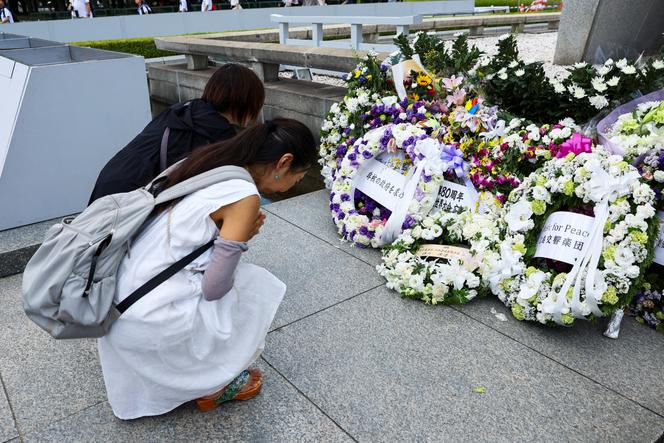
With her warm smile and calm speaking voice, Noriko Kubota recounted the story of her father-in-law, Masayoshi, who survived the atomic bomb dropped on Hiroshima on August 6, 1945. "He no longer has the strength to speak in public like he used to, so I chose to do this for him," Kubota said, stressing the message he always wishes to convey: "Cherish life, and care for your friends and loved ones." On this July day, as the 80th anniversary of the bombing approached, the elderly man sat among some 20 listeners in the audience, hearing his experience recounted by someone else.
Kubota is one of the hibaku taiken denshosha, or "successors to the experience of the irradiated," who are tasked with vividly conveying the message of the victims of the Hiroshima and Nagasaki bombings, which occurred on August 6 and 9, 1945, respectively. Both cities are determined that these bombings and the hibakusha's ("irradiated people") call for nuclear disarmament and world peace will not be forgotten.
Hiroshima Mayor Kazumi Matsui was expected to use the traditional August 6 Peace Declaration to emphasize: "Never give up," the credo of Sunao Tsuboi, a hibakusha and former president of the Atomic Bomb Victims' Association, who passed away in 2021 at the age of 96.
'A city of peace'
Seiichiro Mise, a hibakusha from Nagasaki, has no intention of giving up. "At my level, I plant the seed of peace. The next generations must make it bloom," said the nonagenarian, adding that he is in good health "for now." Mise does not want others to experience "the hell" he endured. "My home was 3.6 kilometers from the hypocenter. That morning, I was playing my sister's organ. My grandmother told me to stop. When we heard the B-29s, I threw myself to the ground as I had learned at school. When I got up, everything was upside down. There was glass everywhere. I asked my grandmother what had happened. She replied: 'The sun has fallen on us.'"
At 10 years old, he was confronted with the horror of the atomic bomb. "There was black rain. My school had become a makeshift hospital. There wasn't enough medicine. People were terribly thirsty. Some were in so much pain that they screamed, 'Kill me.' In the heat of summer, the smell of infections was horrible. We had nothing to eat."
Following the end of World War II on August 15, 1945, Hiroshima and Nagasaki each committed to peace in their own way. Driven by its renowned first elected mayor, Shinzo Hamai (1905-1968), Hiroshima rebuilt itself with the determination to become "a city of peace." This commitment resulted in the creation of Peace Park, adorned with buildings designed by architect Kenzo Tange, as well as activism that quickly spread beyond Japan. In 1955, the city hosted the World Conference Against Atomic and Hydrogen Bombs.
Nagasaki rebuilt itself by focusing on culture and opening up to the world, reflecting its past as the only port open to foreign Chinese and Dutch traders during the Edo period (1603-1868). "The city's spirit is less confrontational and more contemplative," said Joseph Mitsuaki Takumi, the former archbishop of Nagasaki (2003-2021). Takumi comes from a long-standing Catholic family in Nagasaki, a city where the faith never died out despite the ban during the Edo era. "I am also a hibakusha. I was in my mother's womb when the bomb was dropped," said the Sulpician in elegant French, polished over years of seminars in Canada and Europe.
During the first memorial service for the victims on November 23, 1945, the Catholic doctor and writer Takashi Nakai, who passed away in 1951 due to the effects of the bombing, spoke about "divine providence." "It was a way of saying that people were sacrificed for world peace, just as Christ was for the salvation of humanity," Takumi said.
For the hibakusha, passing on the message of peace was possible only after they had rebuilt their lives and overcome discrimination. Marriage was difficult, and jobs were scarce for those suspected of carrying an unknown affliction. Additionally, they faced humiliation at the hands of the American research organization studying the effects of the bomb, the Atomic Bomb Casualty Commission, which offered no care but conducted repeated examinations and collected bodies for autopsies.
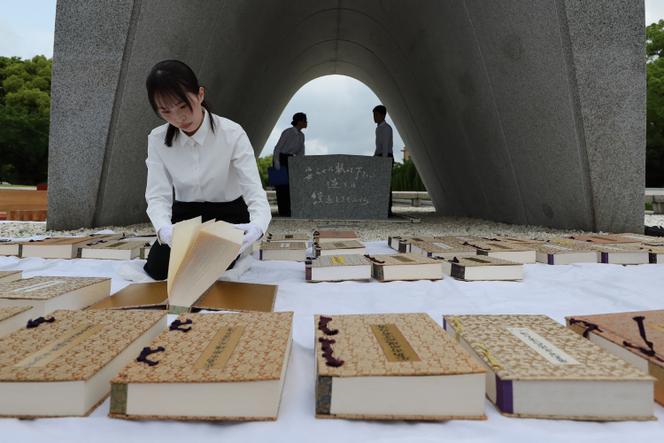
Thanks to persistent activism, the stories of survivors have taken on a universal dimension. Hiroshima established the Mayors for Peace network, which currently includes 8,509 municipalities from 166 countries. Contact has been established with victims of American, Russian and French nuclear tests. This movement helped lead to the United Nations' adoption of the Treaty on the Prohibition of Nuclear Weapons in 2016. However, nuclear-armed countries and Japan, which remains under the American nuclear umbrella, did not sign the bill.
'Successor program'
However, 80 years after the bombings, the powerful voices of direct witnesses are gradually falling silent. "Currently, only 29 hibakusha remain in Nagasaki who can share their experience. In 2021, there were 44," said Masayoshi Nakagawa of the Nagasaki Foundation for the Promotion of Peace. The foundation's goal is "to make people understand the horror of the bomb, as many believe it is just a big explosion."
It was with this in mind that the successor program was set up in 2012 by Hiroshima and Nagasaki. Since simple recordings and written testimony lack the necessary impact, researchers are using artificial intelligence to create hibakusha avatars that can answer any question. Currently, there are 278 successors, compared to 150 in 2020. All successors undergo strict training for several months. Kubota "graduated" in 2019.
Tomoko Watanabe, a second-generation hibakusha and dynamic president of the NGO ANT-Hiroshima, which works to spread survivors' testimonies, said that the 2024 Nobel Peace Prize awarded to the survivors' association, Nihon Hidankyo, "gave renewed strength to our message for peace and the abolition of atomic weapons." Mise, the nonagenarian hibakusha, also reflected on the symbolism of this award: "This prize is not an end in itself, but a new beginning. Today, we have Russia and Ukraine, Iran and Israel. Peace is difficult, but it must be achieved. Atomic weapons can destroy the Earth."


Geen opmerkingen:
Een reactie posten