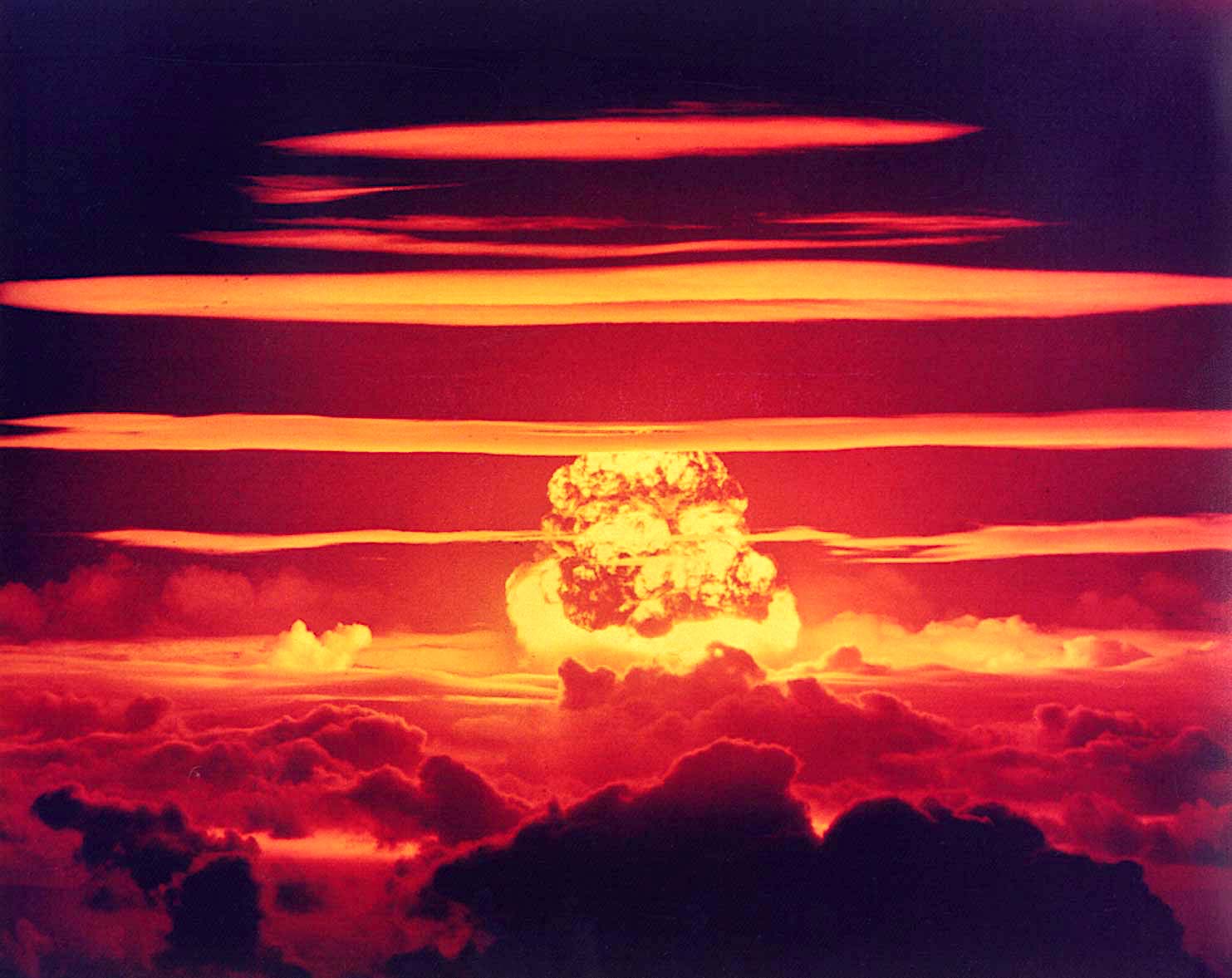
Ballistic missile submarine USS Rhode Island returns to Naval Submarine Base Kings Bay after three months at sea, March 20, 2013. (U.S. Navy, James Kimber)
By Scott Ritter
Special to Consortium News
 Wars should be avoided at all costs. Nuclear conflict should never be contemplated.
These two truisms are often spoken, but rarely adhered to. Wars occur all too frequently, and so long as nations possess nuclear weapons, their use is contemplated on a continuous basis.
The ongoing Ukrainian-Russian conflict has put the world’s two largest nuclear powers on opposing sides, with the U.S. supporting a Ukrainian military that has become a de facto proxy of NATO, and Russia viewing its struggle with Ukraine as including the “collective West.”
Since the initiation of Russia’s “special military operation” in Ukraine, both the U.S. and Russia have played their respective nuclear cards.
Russia has made it clear that any intervention by NATO would be considered an existential threat to the Russian nation, thereby invoking one of the two clauses in the Russian nuclear posture in which nuclear weapons could be used. (The other would be in response to a nuclear attack against Russia.)
The U.S. has made it clear that any attack by Russia against a NATO member would invoke Article 5 of the NATO charter (the “collective defense” clause), resulting in the totality of the alliance’s military capabilities, including nuclear weapons, being made available in response.
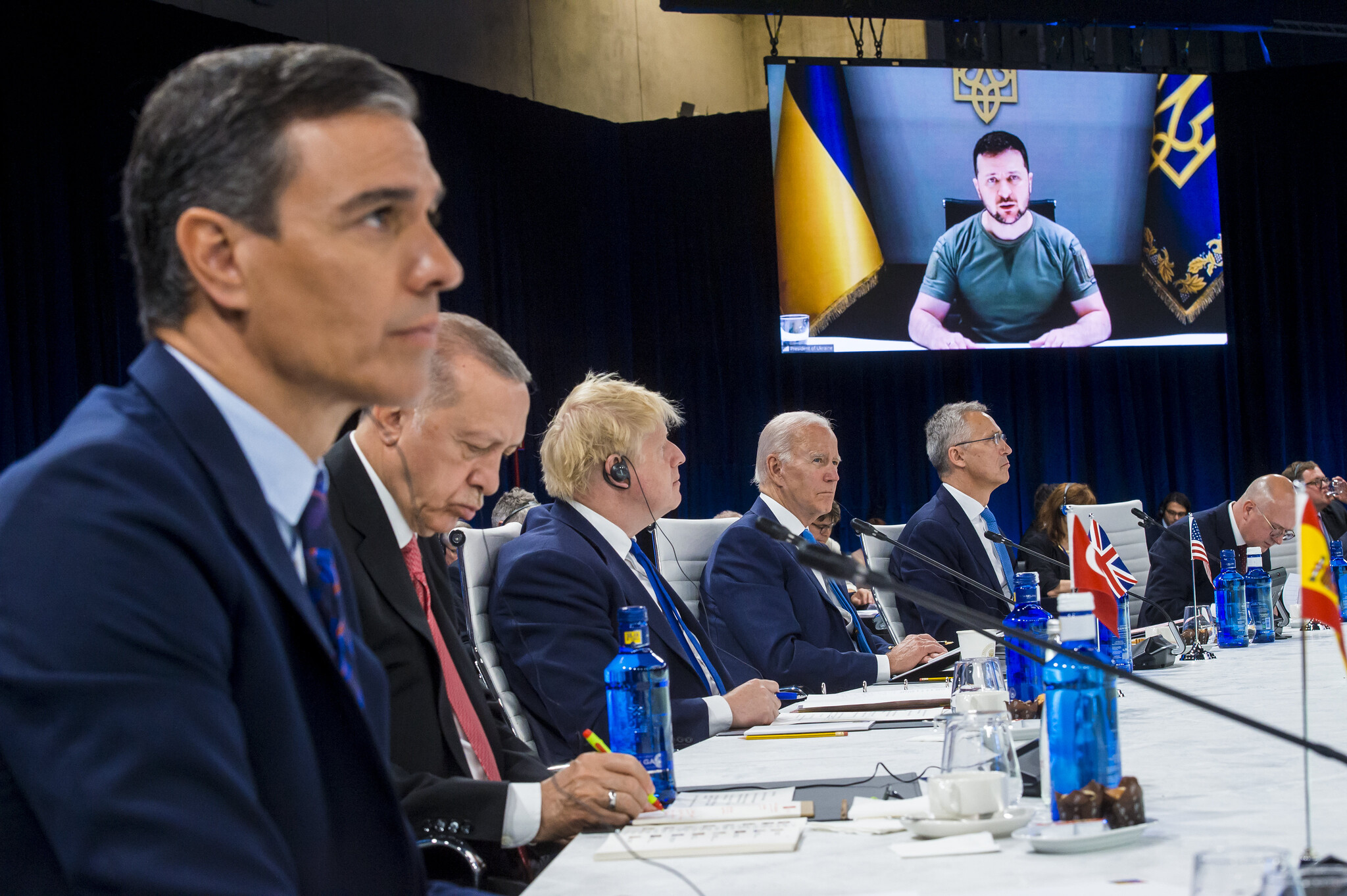
Ukraine’s President Volodymyr Zelensky joins NATO meeting in Madrid in June via video link. (President of Ukraine)
So far, neither side has directly challenged the red line of the other, although the United States has edged right up to it with the provision of tens of billions of dollars of advanced weaponry, financial assistance and intelligence and communication support for Ukraine.
This material support isn’t provided for Ukraine’s defense, but rather to enable Ukraine to retake territory lost to Russia and to inflict losses among the Russian forces of such a magnitude as to weaken Russia for an extended period.
From the Western perspective, the massive infusion of military aid appears to be succeeding. Ukraine is perceived as having pushed back an initial Russian effort to capture Kiev in the opening weeks of the conflict. It is also seen as having held back a concerted Russian offensive in the Donbass long enough to deploy a reconstituted army — trained and equipped by NATO — which succeeded in recapturing the totality of the Kharkov region.
The fact that the Kiev “victory” has been described by Russia as a strategic feint, and not a defeat, and that the Kharkov offensive, together with a parallel failed offensive in Kherson, cost Ukraine so many casualties that it was more Pyrrhic than political in nature, is secondary.
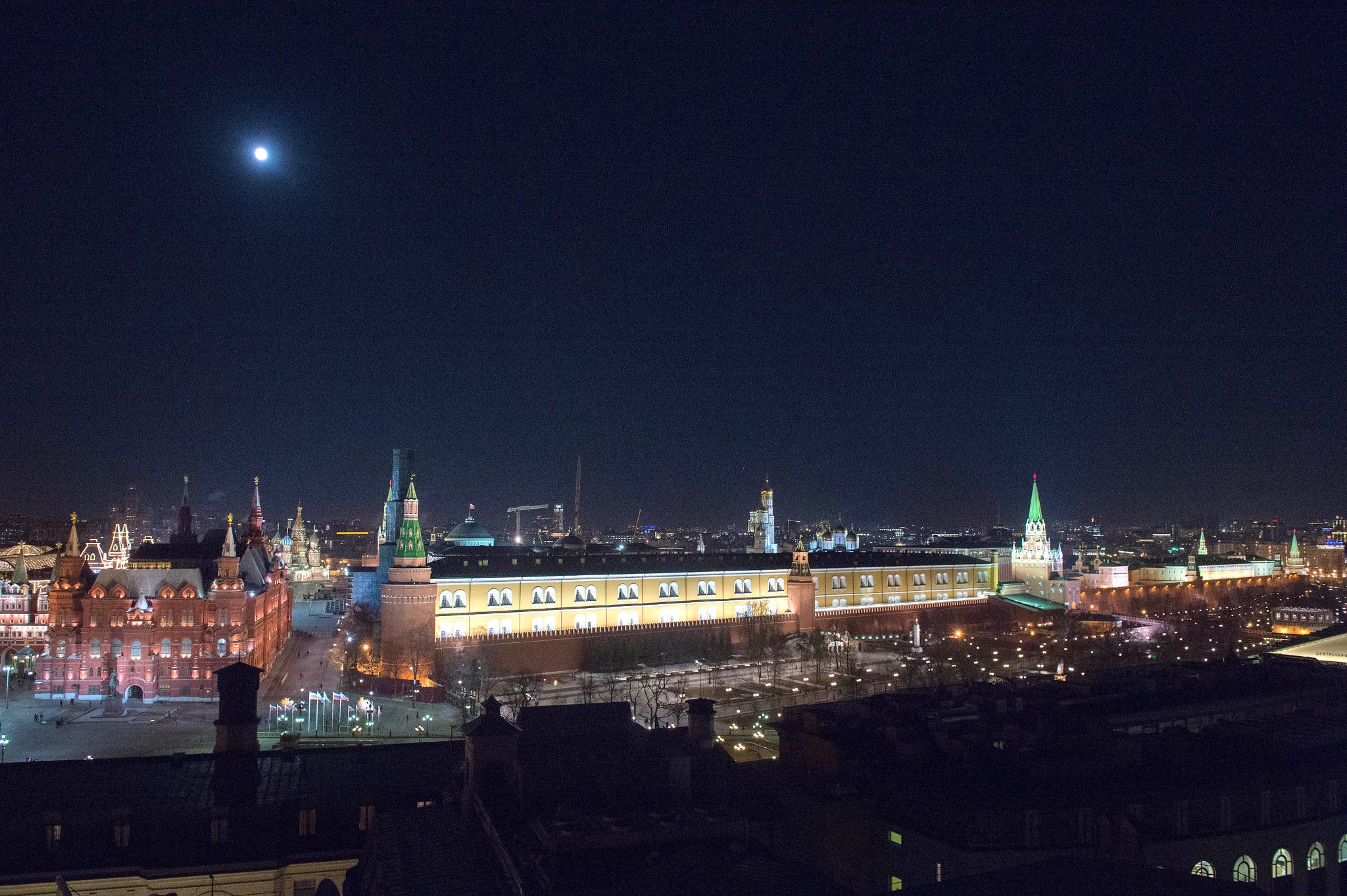
The Kremlin, March 2016. (State Department)
From the perspective of both Ukraine and NATO, the Russian army is no longer viewed as invincible, but actually vulnerable. Both NATO and Ukraine appear ready to continue an aggressive military posture designed to attrite Russian forces while recapturing Ukrainian territory.
For its part, Russia believes that it has the upper hand in the conflict, having both inflicted massive casualties on the Ukrainian military and seizing control of approximately 20 percent of Ukrainian territory.
Moreover, by holding referenda in the occupied territories about joining Russia (all of which passed by an overwhelming majority), Russia has changed the very nature of the conflict, transforming it from a fight between Ukraine and Russia on Ukrainian soil, to an existential battle with the “collective West” over Mother Russia itself.
Donate to CN’s 2022 Fall Fund Drive
Russia has also ordered a partial mobilization of some 300,000 troops which, once trained and deployed into the Ukraine theater of operations, will provide sufficient military power to successfully complete Russia’s original tasks — demilitarization and denazification.
NATO and Ukraine both believe that the Russian forces, even after receiving the 300,000 mobilized troops, will not be able to defeat Ukraine. This inability to achieve the desired objectives, they believe, will compel Russia to resort to the use of tactical nuclear weapons on Ukrainian targets in order to break the will to resist on the part of the Zelensky government.
Nuclear Postures
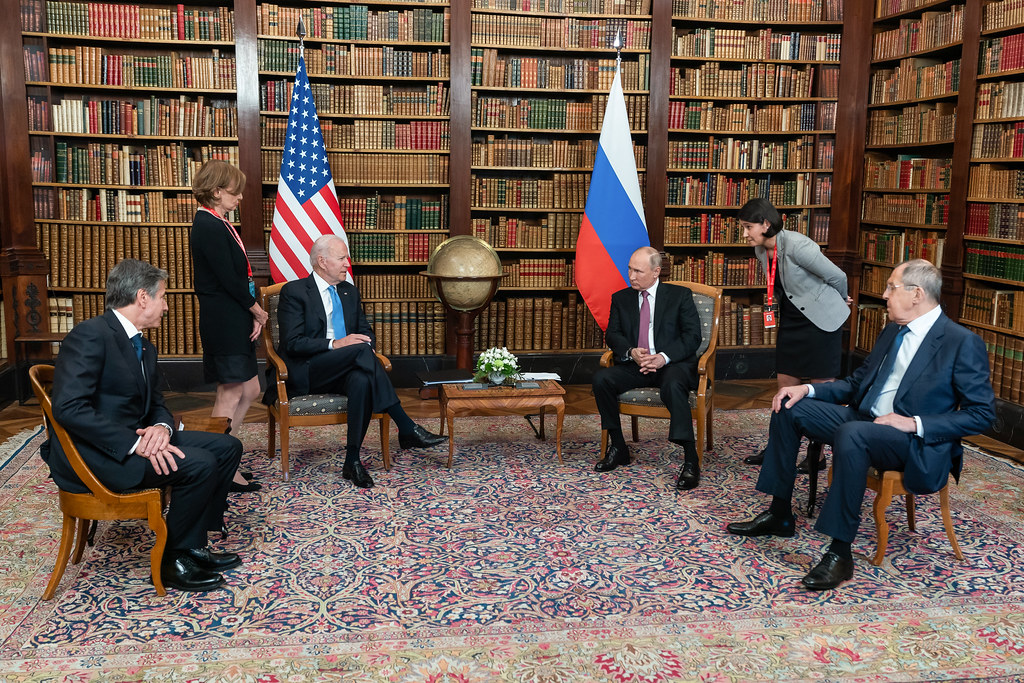
U.S. President Joe Biden and Russian President Vladimir Putin meeting at the at the Villa La Grange in Geneva, June 16, 2021, with U.S. Secretary of State Antony Blinken on left, Russian Foreign Minister Sergei Lavrov, right. (White House/ Adam Schultz)
The reality, however, is that Russian nuclear doctrine does not allow for such a scenario. Indeed, there are only two conditions where Russian nuclear doctrine permits the employment of nuclear weapons.
No 1. “[I]n response to the use of nuclear and other types of weapons of mass destruction against it and/or its allies,” the 2020 Russian Nuclear Posture document states, or
No 2. “in the event of aggression against the Russian Federation with the use of conventional weapons when the very existence of the state is in jeopardy.”
U.S. nuclear posture, however, does allow it.
“[T]he United States will maintain the range of flexible nuclear capabilities,” the 2018 U.S. Nuclear Posture Review (NPR) declared, “needed to ensure that nuclear or non-nuclear aggression against the United States, allies, and partners will fail to achieve its objectives and carry with it the credible risk of intolerable consequences for potential adversaries now and in the future.”
It should be noted that the 2018 NPR was promulgated during the administration of President Donald Trump. Although the Biden administration initiated the NPR process in September 2021, it has yet to publish an updated document.
By ignoring stated Russian nuclear policy, and instead mirror-imaging U.S. nuclear policy onto Russian behavior, the U.S., NATO and Ukraine are setting themselves — and the world — up for disaster.
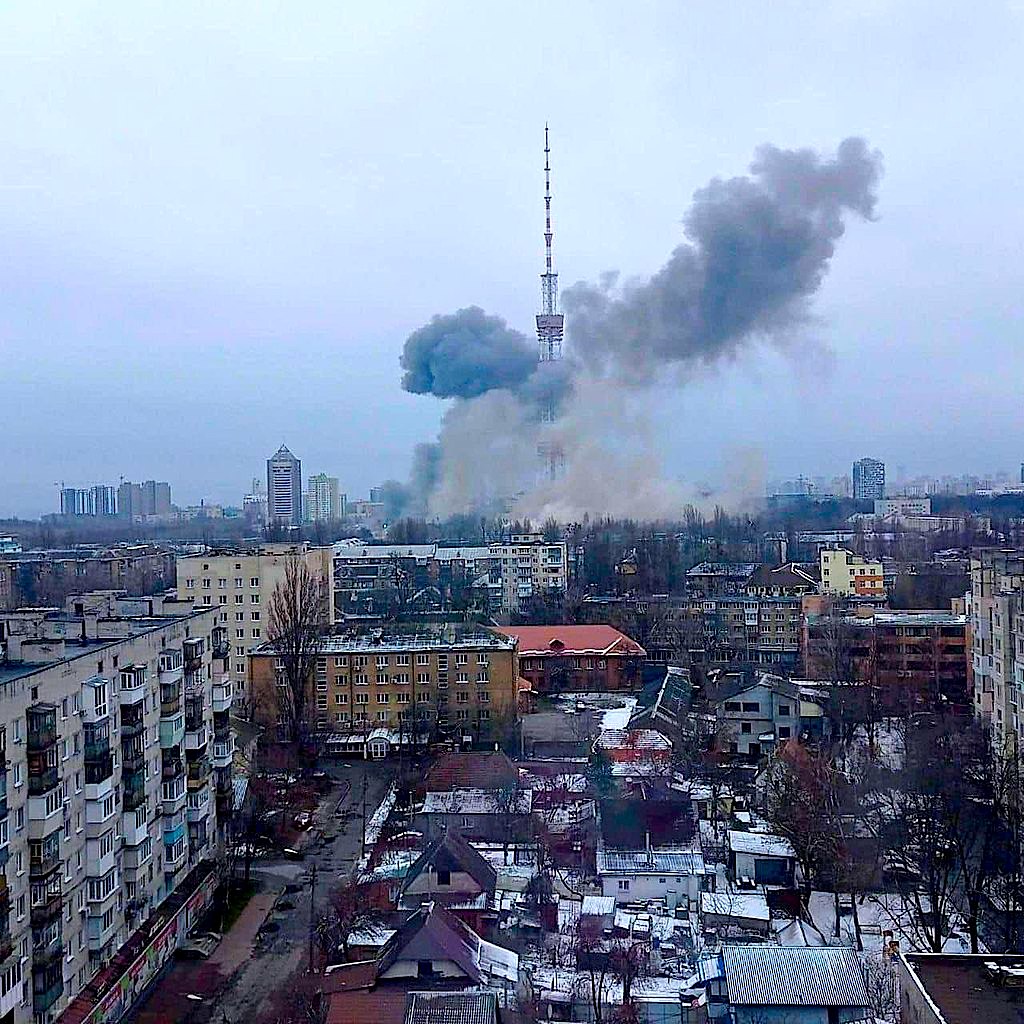
Russian bombardment of telecommunications antennas in Kiev, March 1. (Ministry of Internal Affairs of Ukraine/Wikimedia Commons)
Indeed, using a hypothetical Russian tactical nuclear attack on Ukraine as a working assumption, the Biden administration has developed a range of non-nuclear options in response, including — according to Newsweek — a “decapitation” strike targeting Russian leadership, to include President Vladimir Putin.
According to Jake Sullivan, President Joe Biden’s national security adviser, the White House has “communicated directly, privately, to the Russians at very high levels that there will be catastrophic consequences for Russia if they use nuclear weapons in Ukraine.”
Sullivan noted that the Biden administration has “spelled out in greater detail exactly what that would mean” in its communications with the Kremlin. Just to be clear: the White House has communicated to Russia its intent to respond in a non-nuclear manner to any potential Russian nuclear attack against Ukraine.
Andrey Gurulyov
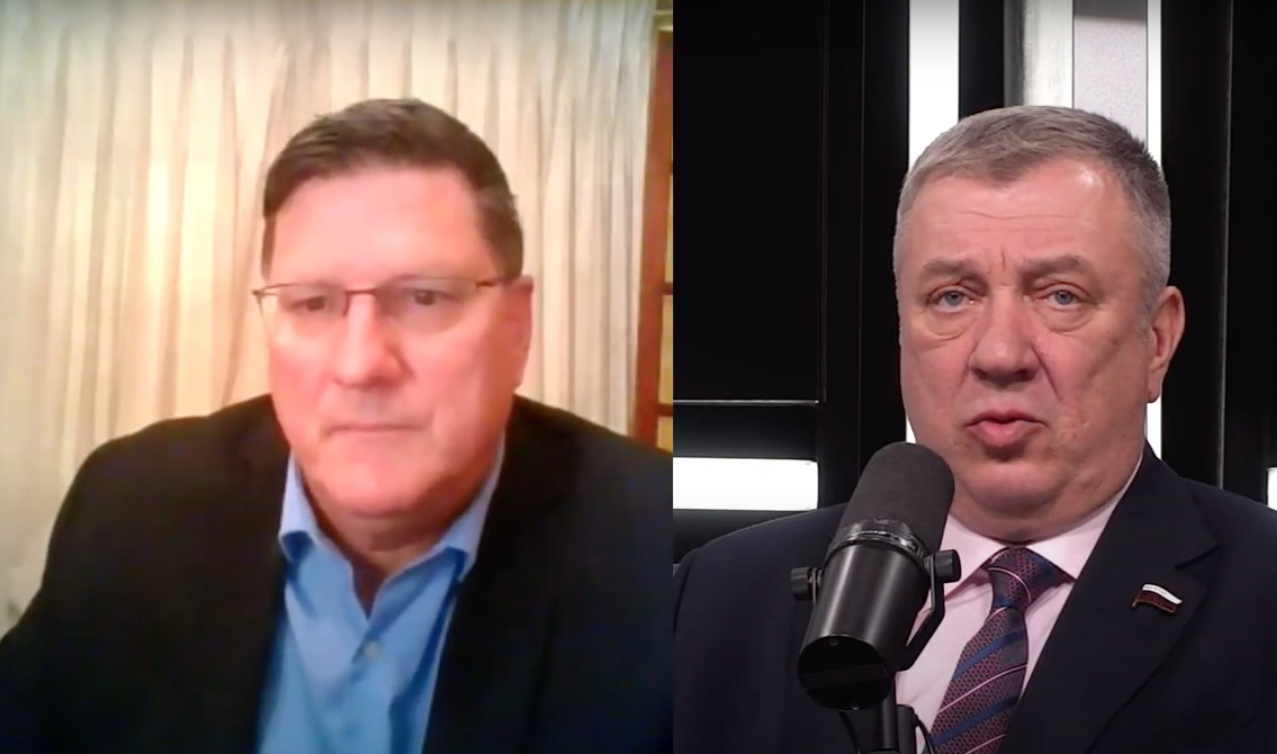
Scott Ritter and Andrey Gurulyov on “The Scott Ritter Show,” Sept. 29.
Enter Andrey Gurulyov, a former Russian general officer and current member of the Russian Duma.
Gurulyov is from the Russia United Party (Putin’s party), and is said to be closely connected to the senior Russian leadership. He gave me a wide-ranging interview on the Sept. 29 edition of my “Scott Ritter Show” (a joint effort with Russian producers of “Solovyov Live” featuring the well-known Russian commentator Vladimir Solovyov). We discussed the future of Russia’s “special military operation” in Ukraine in the aftermath of the referenda and partial mobilization.
Gurulyov indicated that given the reality that the Ukrainian military was operating as a de facto proxy of NATO, the “demilitarization” task set forth by Putin in invading Ukraine now meant the complete destruction of the Ukrainian military.
Likewise, given that the Russian government has labelled the government of Ukrainian President Volodymyr Zelensky a Nazi regime, “denazification” would require regime change in Kiev and Russian troops advancing up to the western reaches of Ukraine that border NATO itself.
These objectives would be accomplished through a strategic air campaign that would destroy the totality of Ukraine’s critical infrastructure, severely impacting command and control and logistics of the Ukrainian military.
According to Gurulyov, such a campaign could last up to three weeks, after which the Ukrainian military would be a sitting duck for the newly reinforced Russian military.

Russian Duma in Moscow. (Wikimedia Commons)
Gurulyov was confident that the reinforced Russian military would be able to defeat the NATO-enhanced Ukrainian armed forces without resorting to the use of tactical nuclear weapons.
Indeed, Gurulyov was adamant that tactical nuclear weapons would never — and indeed, could never — be used by Russia against Ukraine.
He was less so when it came to using tactical nuclear weapons against NATO.
Gurulyov was convinced that the nature of Russia’s military victory over Ukraine would be so decisive that NATO might feel compelled to intervene to stop Russia.
If NATO were to indeed dispatch troops into Ukraine, and those troops engaged in large-scale ground conflict with Russian forces, then Gurulyov envisioned that Russian nuclear weapons could, in fact, be used against NATO targets.
Gurulyov was convinced that the United States, fearing Russian strategic nuclear-retaliation capabilities, would not unleash its own nuclear arsenal against Russia, even if NATO were struck by Russian nuclear weapons. But here Gurulyov was operating from a false premise — U.S. nuclear doctrine clearly states that “They [Russia ] must understand that there are no possible benefits from non-nuclear aggression or limited nuclear escalation.”
Indeed, U.S. nuclear doctrine emphasizes that “any nuclear escalation will fail to achieve their objectives and will instead result in unacceptable consequences for them [Russia].”
From these two fundamental misunderstandings — that a) Russia could be preparing to use nuclear weapons against Ukraine that would generate a non-nuclear response on the part of the U.S., and b) Russia believes that the U.S. would not respond with nuclear weapons if Russia were to use its own nuclear arsenal against NATO, the world now faces the real prospect of imminent nuclear conflict between the U.S. and Russia.
From the U.S. perspective, Russia’s unwillingness to use nuclear weapons against Ukraine underscores the overall impotence of Russia and its leadership, and therefore opens the door for decisive NATO intervention, including boots on the ground, in case of any Russian non-nuclear threat against Kiev itself.
From the Russian perspective, the documented U.S. reluctance to employ nuclear weapons in the case of a decisive Russian military victory over Ukraine opens the door for Russia ’s use of a tactical nuclear weapon against NATO in the case of a major NATO military intervention in Ukraine.
From this foundation of misrepresentation and misunderstanding only disaster can ensue.
Putin, in announcing the formal incorporation of Kherson, Zaporizhia, Donetsk and Lugansk into the Russian Federation, has turned up the rhetorical heat regarding Ukraine and the “collective West.” Soon words will be transformed into action, initiating the very scenarios U.S. military planners and Russian authorities such as Andrey Gurulyov have spoken about.
We are, literally, on the eve of destruction. Now is the time for the kind of political maturity leaders rarely demonstrate. The onus is on Joe Biden and Vladimir Putin to make sure that even while events on the ground in Europe devolve into chaos and violence, the leaders of the world’s two largest nuclear arsenals do not allow emotion to get the better of reason. The consequences of failure in this regard are, for humanity, terminal.
Scott Ritter is a former U.S. Marine Corps intelligence officer who served in the former Soviet Union implementing arms control treaties, in the Persian Gulf during Operation Desert Storm and in Iraq overseeing the disarmament of WMD. His most recent book is Disarmament in the Time of Perestroika, published by Clarity Press.
https://consortiumnews.com/2022/09/30/scott-ritter-the-onus-is-on-biden-putin/