Zoeken in deze blog 🔎🔎

zondag 9 oktober 2022

As Biden warns of 'Armageddon,' more off-ramps explode


As Biden warns of 'Armageddon,' more off-ramps explode

While President Biden claims that he's pondering an "off-ramp" for Russia, the White House is escalating the proxy war at every pass. 

 
SAVE
 

At a Manhattan fundraiser, President Joe Biden shared with Democratic donors that, from his vantage point, the world faces “the prospect of Armageddon” for the first time “since Kennedy and the Cuban Missile Crisis.”

Vladimir Putin “is not joking when he talks about potential use of tactical nuclear weapons or biological or chemical weapons, because his military, you might say, is significantly underperforming,” Biden added.

The Commander-in-Chief’s comments inevitably stoked an already elevated global panic over a Ukraine proxy war that pits the world’s top nuclear powers on opposing sides. In US media, there was virtually no acknowledgement that Biden’s characterization of how Putin “talks” was false. Although Putin has made bellicose comments, he has never threatened the “use of tactical nuclear weapons or biological or chemical weapons,” as Biden claimed.

Biden’s alarmism overshadowed what could be taken as encouraging news. For the first time, the US president suggested that his administration is as least pondering a diplomatic path that could bring the Ukraine conflict to an end.

 “We’re trying to figure out: What is Putin’s off-ramp?,” Biden said. “Where does he get off? Where does he find a way out? Where does he find himself in a position that he does not — not only lose face, but lose significant power within Russia?”

Biden’s remarks offer a sharp contrast to his declaration in March that Vladimir Putin “cannot remain in power.” On the other hand, there is no indication that US policy has undergone any significant change. If anything, the recent actions of the White House and its client government in Kiev are blowing up off-ramps at every pass.

“White House and military leaders are transitioning to a sustainable model Kyiv can depend on for an open-ended war with Russia,” the New York Times reports. That sustainable warfare will be “roughly modeled on U.S. train-and-assist efforts in Iraq and Afghanistan over the past two decades,” – a model that, while highly sustainable for weapons contractors, was the opposite for the nations subjected to it. 

The “open-ended war with Russia” will be waged with a $12.3 billion package newly approved by Congress, bringing the total US commitment so far to more than $66 billion. With that most recent vote, the Times notes, “Congress has now committed more military aid to Ukraine than it has to any country in a single year since the Vietnam War, reflecting a remarkable bipartisan consensus in favor of pouring huge amounts of American resources into the fight.”

As the audacious truck-bombing of the Kerch Strait bridge shows, Ukraine is bringing the fight to Crimea, home to Russia’s most important naval base. In June, a Ukrainian commander identified the Kerch bridge as a “number one target,” and a Ukrainian official has now taken credit for Saturday’s successful operation. Days earlier, senior Pentagon official Laura Cooper signaled that the US has given Ukraine the green light to use US weaponry there. “We think they can reach the vast majority of targets, including Crimea,” Cooper said. “And just to be clear, Crimea is Ukraine.”

For his part, Ukrainian President Volodymyr Zelensky is explicitly rejecting any off-ramp for Putin. Zelensky greeted Russia’s annexation of four Ukrainian regions with an application for fast-tracked NATO membership. When that was swiftly rejected, Zelensky signed a decree ruling out peace talks with Moscow so long as Putin is in power. Not content with calling for regime change, Zelensky followed that up with his most direct plea for World War III to date, urging NATO to launch “preemptive strikes” inside Russia. (After an uproar, a spokesperson claimed that Zelensky meant preemptive sanctions.)

Meanwhile, the bombing of the Nord Stream pipelines has ensured, for now, that NATO members have no off-ramp from the proxy war coalition – nor, it seems, from the economic crises that they face as a result.

When he greeted the Nord Stream sabotage as a “tremendous strategic opportunity,” Secretary of State Antony Blinken acknowledged some pitfalls.

Cut off from their traditional cheap Russian gas supply, “European allies,” Blinken said, will now “prepare for a difficult winter ahead.” To address that difficulty, he vowed, “we’re determined to do everything we possibly can to make sure that the consequences of all of this are not borne by citizens in our countries or, for that matter, around the world.”

But the United States’ European allies are quickly learning that there are limits on what the US can “possibly” do for them...


https://mate.substack.com/p/as-biden-warns-of-armageddon-more?utm_source=email


Waarom Ollongren een Oorlogsmisdadiger Is

Jeffrey Sachs: end Ukraine proxy war or face "armageddon"


 https://www.youtube.com/watch?v=g57ViSqmRFM


Jeffrey Sachs: end Ukraine proxy war or face "armageddon"


For the video version, see part 1 here and part 2 here. 

Jeffrey Sachs joins The Grayzone's Aaron Maté and Max Blumenthal to discuss escalating nuclear rhetoric in Ukraine proxy war, the bombing of the Nord Stream pipelines, and why a diplomatic off-ramp is more urgent than ever. Sachs also addresses the investigation into the origins of Covid-19. 

Guest: Jeffrey Sachs, Director of the Center for Sustainable Development at Columbia University and President of the UN Sustainable Development Solutions Network. He has also served as chair of the Lancet COVID-19 commission.

Nazism Did Not Die


General Flynn talks about the New World Order, globalism and the ‘de-nazification of Ukraine’:
“What Putin talks about in Ukraine, this de-nazification of Ukraine… When you look at the results of WWII… and you pay attention to where did these people go? Where did these ideologies go?
They didnt die. They just settled into different parts of Europe and they settled into different parts of the United States, actually.”
Join @Truthcast

The Corrupt Western Corporate Mass Media


Hold It Idiots: The US Demands Europe Will Pay for American War Support to Ukraine. Keine Jorwerd Ohne Brüssel

De VS EISEN dat de EU eindelijk, en het liefst zo snel mogelijk, geld overmaakt aan Oekraïne, zodat dit land de door de VS geleverde wapens kan betalen... Ik ben eigenlijk volkomen sprakeloos...

Twitter Web App


USA fordern EU auf, der Ukraine endlich Geld zu überweisen

Die US-Regierung fordert von der EU raschere Zahlungen. Teuer sind unter anderem die von den USA geleasten Waffen. 

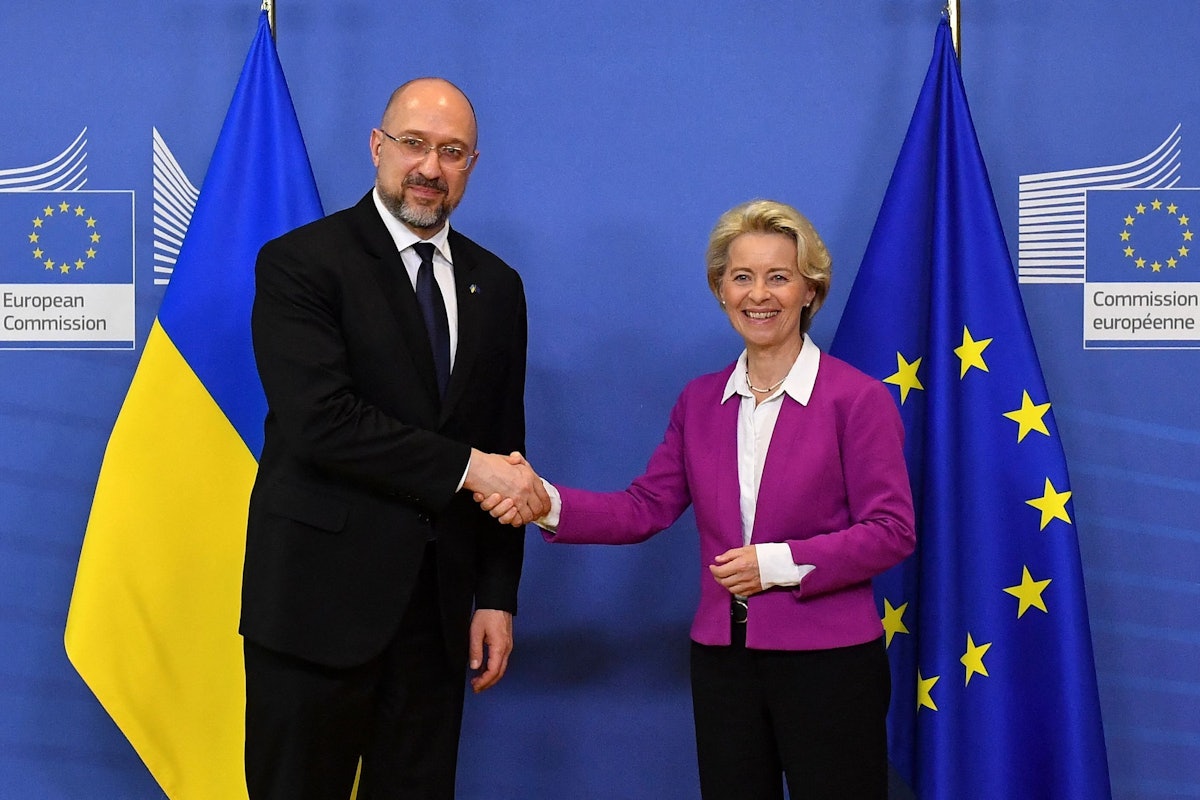
Der ukrainische Premier Denys Schmyhal mit EU-Kommissionspräsidentin Ursula von der Leyen in Brüssel
Der ukrainische Premier Denys Schmyhal mit EU-Kommissionspräsidentin Ursula von der Leyen in BrüsselAFP

Die prekäre Lage der ukrainischen Staatsfinanzen sorgt für Unruhe in der US-Regierung. Die Financial Times (FT) berichtet, dass mehrere offizielle Regierungsvertreter aus Washington den Druck auf EU-Verantwortliche erhöht haben, Geld nach Kiew zu überweisen.

Am Rande der UN-Vollversammlung sei es zu verschiedenen Treffen gekommen, bei denen die US-Vertreter ihren Unmut über die schleppenden Zahlungen aus Brüssel zum Ausdruck gebracht hätten. Ein EU-Beamter sagte der FT, auch der ukrainische Premierminister Denys Schmyhal habe sich zu diesem Zweck mit dem Präsidenten des Europäischen Rates, Charles Michel, getroffen.

Er habe der EU gesagt, dass Kiew jeden Monat etwa 3,5 Milliarden Euro brauche. „Die eine Botschaft war die dringende Notwendigkeit, das Geld auch wirklich zu erhalten“, sagte der Beamte. Schmyhal plädierte dafür, dies solle „so schnell wie möglich“ geschehen. Zuschüsse und Darlehen seien gleichermaßen willkommen. Die US-Beamten betonten demnach gegenüber den EU-Verantwortlichen, es sei notwendig, die Ukraine finanziell zu unterstützen, solange die ukrainische Offensive im Süden erfolgreich verlaufe.

Ein Problem für die Ukraine könnten mögliche russische Sanktionen gegen den staatlichen ukrainischen Gasversorger Naftogaz sein. Naftogaz trägt vor einem Schiedsgericht einen Streit gegen den russischen Gazprom-Konzern aus. Gazprom wies am Dienstag alle Zahlungsansprüche von Naftogaz zurück. Wie Reuters berichtet, droht Russland dem ukrainischen Gasversorger mit Sanktionen. Diese würden dazu führen, dass die Ukraine ihre lukrativen Transitgebühren verliert, wodurch der Staatshaushalt weiter erheblich belastet würde.

Die Ukraine braucht neben den Kriegskosten erhebliche Liquidität

Die EU hat der Ukraine neun Milliarden Euro an Finanzspritzen zugesagt. Davon ist erst eine Milliarde geflossen. Weitere fünf Milliarden sollen noch im September fließen, der Rest dann bis zum Jahresende. Die US-Beamten sagten der EU, es wäre besser, das Geld als nicht rückzahlbare Zuschüsse zu gewähren und nicht als Darlehen.

Die EU solle einen Mechanismus einrichten, über den automatisch monatlich Geld in das ukrainische Budget fließen könnte. Die Ukraine braucht neben den Kriegskosten erhebliche Liquidität, weil sie sämtliche von den USA gelieferte Waffen bezahlen muss. Grundlage der Zusammenarbeit zwischen Washington und Kiew ist der „Lend and Lease Act 2022“. Er entspricht einer ähnlichen Vereinbarung, die die USA im Jahr 1941 mit Großbritannien und der Sowjetunion abgeschlossen hatten.

Demnach werden Kriegsgerät, Ausrüstung und Kraftstoff von der US-Regierung an den Partner lediglich verliehen oder verpachtet und müssten nach dem Krieg zurückgeführt werden. Weil Kriegsgerät meist beschädigt oder zerstört wird, haben die Waffen oft zum Ende des Krieges lediglich Schrottwert. Daher hat die US-Regierung ein Interesse, dass die Ukraine ihre Leasing-Verträge auch pünktlich erfüllen kann.Die Ukraine braucht neben den Kriegskosten erhebliche Liquidität

Die EU hat der Ukraine neun Milliarden Euro an Finanzspritzen zugesagt. Davon ist erst eine Milliarde geflossen. Weitere fünf Milliarden sollen noch im September fließen, der Rest dann bis zum Jahresende. Die US-Beamten sagten der EU, es wäre besser, das Geld als nicht rückzahlbare Zuschüsse zu gewähren und nicht als Darlehen.

Die EU solle einen Mechanismus einrichten, über den automatisch monatlich Geld in das ukrainische Budget fließen könnte. Die Ukraine braucht neben den Kriegskosten erhebliche Liquidität, weil sie sämtliche von den USA gelieferte Waffen bezahlen muss. Grundlage der Zusammenarbeit zwischen Washington und Kiew ist der „Lend and Lease Act 2022“. Er entspricht einer ähnlichen Vereinbarung, die die USA im Jahr 1941 mit Großbritannien und der Sowjetunion abgeschlossen hatten.

Demnach werden Kriegsgerät, Ausrüstung und Kraftstoff von der US-Regierung an den Partner lediglich verliehen oder verpachtet und müssten nach dem Krieg zurückgeführt werden. Weil Kriegsgerät meist beschädigt oder zerstört wird, haben die Waffen oft zum Ende des Krieges lediglich Schrottwert. Daher hat die US-Regierung ein Interesse, dass die Ukraine ihre Leasing-Verträge auch pünktlich erfüllen kann.


Ein Sprecher der EU-Kommission sagte der FT, die Zahlungen müssten im Einklang mit den strengen EU-Budgetregeln geschehen, um eine missbräuchliche Verwendung der Gelder auszuschließen. Eine gründliche Prüfung sei notwendig, bevor das Geld ausgezahlt werden könne. Im Zusammenhang mit den Waffenlieferungen hatten mehrere US-Kongressabgeordnete stärkere Kontrollen gefordert. Die Ukraine findet sich im Korruptionswahrnehmungsindex 2022 von Transparency auf Rang 122 unter 180 bewerteten Staaten.

https://www.berliner-zeitung.de/wirtschaft-verantwortung/ukraine-braucht-dringend-geld-li.271538


Hold It Idiots: 'The crisis is here.'


The Stagflationary Debt Crisis Is Here

Oct 3, 2022

NOURIEL ROUBINI

The Great Moderation has given way to the Great Stagflation, which will be characterized by instability and a confluence of slow-motion negative supply shocks. US and global equities are already back in a bear market, and the scale of the crisis that awaits has not even been fully priced in yet.

NEW YORK – For a year now, I have argued that the increase in inflation would be persistent, that its causes include not only bad policies but also negative supply shocks, and that central banks’ attempt to fight it would cause a hard economic landing. When the recession comes, I warned, it will be severe and protracted, with widespread financial distress and debt crises. Notwithstanding their hawkish talk, central bankers, caught in a debt trap, may still wimp out and settle for above-target inflation. Any portfolio of risky equities and less risky fixed-income bonds will lose money on the bonds, owing to higher inflation and inflation expectations.

How do these predictions stack up? First, Team Transitory clearly lost to Team Persistent in the inflation debate. On top of excessively loose monetary, fiscal, and credit policies, negative supply shocks caused price growth to surge. COVID-19 lockdowns led to supply bottlenecks, including for labor. China’s “zero-COVID” policy created even more problems for global supply chains. Russia’s invasion of Ukraine sent shockwaves through energy and other commodity markets. And the broader sanctions regime – not least the weaponization of the US dollar and other currencies – has further balkanized the global economy, with “friend-shoring” and trade and immigration restrictions accelerating the trend toward deglobalization.

Everyone now recognizes that these persistent negative supply shocks have contributed to inflation, and the European Central Bank, the Bank of England, and the US Federal Reserve have begun to acknowledge that a soft landing will be exceedingly difficult to pull off. Fed Chair Jerome Powell now speaks of a “softish landing” with at least “some pain.” Meanwhile, a hard-landing scenario is becoming the consensus among market analysts, economists, and investors. 

It is much harder to achieve a soft landing under conditions of stagflationary negative supply shocks than it is when the economy is overheating because of excessive demand. Since World War II, there has never been a case where the Fed achieved a soft landing with inflation above 5% (it is currently above 8%) and unemployment below 5% (it is currently 3.7%). And if a hard landing is the baseline for the United States, it is even more likely in Europe, owing to the Russian energy shock, China’s slowdown, and the ECB falling even further behind the curve relative to the Fed. 

Are we already in a recession? Not yet, but the US did report negative growth in the first half of the year, and most forward-looking indicators of economic activity in advanced economies point to a sharp slowdown that will grow even worse with monetary-policy tightening. A hard landing by year’s end should be regarded as the baseline scenario. 

While many other analysts now agree, they seem to think that the coming recession will be short and shallow, whereas I have cautioned against such relative optimism, stressing the risk of a severe and protracted stagflationary debt crisis. And now, the latest distress in financial markets – including bond and credit markets – has reinforced my view that central banks’ efforts to bring inflation back down to target will cause both an economic and a financial crash.

I have also long argued that central banks, regardless of their tough talk, will feel immense pressure to reverse their tightening once the scenario of a hard economic landing and a financial crash materializes. Early signs of wimping out are already discernible in the United Kingdom. Faced with the market reaction to the new government’s reckless fiscal stimulus, the BOE has launched an emergency quantitative-easing (QE) program to buy up government bonds (the yields on which have spiked). 

Monetary policy is increasingly subject to fiscal capture. Recall that a similar turnaround occurred in the first quarter of 2019, when the Fed stopped its quantitative-tightening (QT) program and started pursuing a mix of backdoor QE and policy-rate cuts – after previously signaling continued rate hikes and QT – at the first sign of mild financial pressures and a growth slowdown. Central banks will talk tough; but there is good reason to doubt their willingness to do “whatever it takes” to return inflation to its target rate in a world of excessive debt with risks of an economic and financial crash.

Moreover, there are early signs that the Great Moderation has given way to the Great Stagflation, which will be characterized by instability and a confluence of slow-motion negative supply shocks. In addition to the disruptions mentioned above, these shocks could include societal aging in many key economies (a problem made worse by immigration restrictions); Sino-American decoupling; a “geopolitical depression” and breakdown of multilateralism; new variants of COVID-19 and new outbreaks, such as monkeypox; the increasingly damaging consequences of climate change; cyberwarfare; and fiscal policies to boost wages and workers’ power. 

Where does that leave the traditional 60/40 portfolio? I previously argued that the negative correlation between bond and equity prices would break down as inflation rises, and indeed it has. Between January and June of this year, US (and global) equity indices fell by over 20% while long-term bond yields rose from 1.5% to 3.5%, leading to massive losses on both equities and bonds (positive price correlation). 

Moreover, bond yields fell during the market rally between July and mid-August (which I correctly predicted would be a dead-cat bounce), thus maintaining the positive price correlation; and since mid-August, equities have continued their sharp fall while bond yields have gone much higher. As higher inflation has led to tighter monetary policy, a balanced bear market for both equities and bonds has emerged. 

But US and global equities have not yet fully priced in even a mild and short hard landing. Equities will fall by about 30% in a mild recession, and by 40% or more in the severe stagflationary debt crisis that I have predicted for the global economy. Signs of strain in debt markets are mounting: sovereign spreads and long-term bond rates are rising, and high-yield spreads are increasing sharply; leveraged-loan and collateralized-loan-obligation markets are shutting down; highly indebted firms, shadow banks, households, governments, and countries are entering debt distress. The crisis is here.


Nouriel Roubini

NOURIEL ROUBINI

Writing for PS since 2007 

167 Commentaries

Follow

Nouriel Roubini, Professor Emeritus of Economics at New York University’s Stern School of Business, is Chief Economist at Atlas Capital Team, CEO of Roubini Macro Associates, Co-Founder of TheBoomBust.com, and author of the forthcoming MegaThreats: Ten Dangerous Trends That Imperil Our Future, and How to Survive Them (Little, Brown and Company, October 2022). He is a former senior economist for international affairs in the White House’s Council of Economic Advisers during the Clinton Administration and has worked for the International Monetary Fund, the US Federal Reserve, and the World Bank. His website is NourielRoubini.com, and he is the host of NourielToday.com.

The Queue Behind BRICS’ Door

  Forwarded this email?  Subscribe here  for more The Queue Behind BRICS’ Door Ghana seeks BRICS partner status while Zimbabwe prepares a fu...