Zoeken in deze blog 🔎🔎

woensdag 2 oktober 2019

Green Olive Collective


Green Olive Collective — Not your 

fly by the night organization


What’s a Palestinian-American and a Jewish-Scotlander living in Israel and Palestine, respectively, have in common? Simple, peace with justice!


Sam Bahour

Oct 2 · 4 min read

Green Olive Partners Fred Schlomka (L) and Mohammad Barakat (R)

His name was Fred Schlomka. His email arrived in my inbox on Wednesday, 30 Nov 2005. I answered positively. The rest is history. I found a friend for life who is just as committed to peace with justice in Palestine and Israel as I am; only difference is that we are mirror images of one another, both arriving from our respective diaspora communities. Fred is a Jewish-Scotlander who relocated to Israel. I’m a Palestinian-American who relocated to Palestine.
Fred and I have spent our lives in the service of our communities and, although it seems our efforts may require more time than we have to offer, we are both hell-bent on making sure we employ the time we are fortunate enough to have to advance peace. Not any peace. Real peace.
The email that started our relationship came from Kfar Saba in Israel and read as follows:
Sam -

Jeff Halper and I are long-time colleagues, working together in The Israeli Committee Against House Demolitions and other projects. He suggested [I] contact you.

I have been invited by the US Ambassador [to Israel], Dick Jones, to arrange a private briefing for him with a few people who have an intimate understanding of the situation on the ground in Palestine. Jeff and I both agree that time may have run out for the creation of a fully sovereign Palestinian State unless there is serious intervention by the international community. We would like to convey this information directly to the Ambassador, backed up by hard information and analysis.

I am hoping to assemble a small group for the meeting and Jeff has suggested that you might be a good addition. I understand you are a businessman with broad knowledge of developments in the West Bank. We are looking at Friday 16th December. Please call me at 054–693-[****] so we can discuss the matter. Thanks.

All the best,
Fred
Long story short, we did end up meeting the U.S. Ambassador in Tel Aviv and we made our case — that the peace process, which had already started to falter, needed the civil societies to be engaged to have any chance to succeed and success to us meant, and still means, “a fully sovereign Palestinian State.”
We went on to meet many times thereafter. Fred’s wife Sunita is an amazing professional harp musician. I had the pleasure of meeting her when I visited their home in Kfar Saba before they relocated to Jaffa. Regretfully, now I hold a West Bank residency (issued by Israeli occupation authorities) so I’m unable to visit them without Israeli military approval, even though I’m a U.S. citizen (a story for another day).
In one of our many meetings I recall us sitting at the Pronto Café in Ramallah. I arrived and Fred was tapping away on his laptop. We got to talking and he showed me a “blog” that he was creating. I had heard of blogs but did not have my mind fully grasping it yet, so I asked. What’s a blog? Fred patiently gave me the scoop and I’ve been creating and managing blogs ever since.
It turns out that the blog Fred was working on was the start of his alternative tour agency, Tours in English, which developed over the years to be the Green Olive Collective (www.greenolivetours.com). This Collective is not your fly by the night organization. It’s an Arab-Israeli cooperative with a mission, a big mission — to offer tours to Israel and Palestine that are alternative tours to the commercial offerings that tend to shy away from the political reality on the ground and the complicated realities that have emerged. Green Olive Collective’s tours dive deep into the culture and politics of the region. Fred and his tour guide partner Mohammad Barakat have brought my way dozens of persons and groups to meet, all well worth the time, for me and them.
Just as when Fred reached out to connect with me nearly a decade and half ago, he, and now along with his partners, does not hesitate to take the first step in educating and engaging for peace and justice. However, Fred’s approach is mindful that, not only are we living in different cultures, but that we are living in a reality of occupier and occupied, not to mention his deep understanding of the nuances of working with communities that are dispossessed and discriminated against.
I cherish friendships but am devoted to friendships with meaning. Fred falls into the latter and I look forward to our next meeting, next tour, next technology to explore, and ultimately living in a free and independent Palestine where we can freely meet and his wife Sunita can perform in Ramallah and we can jointly attend her performance in Jaffa, unhindered by Israeli military occupation, Separation Walls, or never-ending hate.
Sam Bahour is a Palestinian-American business consultant from Ramallah/Al-Bireh in the West Bank. He is chair of the board of Americans for a Vibrant Palestinian Economy (AVPE) and serves as a policy adviser to Al-Shabaka, the Palestinian Policy Network and is co-editor of “Homeland: Oral Histories of Palestine and Palestinians” (1994). He blogs at ePalestine.com. @SamBahour

Human Rights?

CODEPINK.ORG

Dear stan,
Today marks one year since the brutal murder of Washington Post journalist Jamal Khashoggi at the hands of Saudi Arabia, and the brutal regime is showing no shame as they try to sweep Khashoggi’s memory under the rug. At the end of this month, they are hosting an investment conference titled “Davos in the Desert” and have invited the world's biggest financial giants. Citigroup, Goldman Sachs, and Larry Fink, the Chairman and CEO of BlackRock, the world’s largest investor in the weapons of war have all RSVP’d yes.
We’ve long known that companies such as these don’t give a damn about human rights, but to appear in Saudi Arabia less than 13 months after a prominent journalist was lured into an embassy, murdered in cold blood, and then chopped into pieces and disposed of? That just rubs salt in an open wound. Help us call on Larry Fink and others to withdraw from the Davos in the Desert investment conference.
Last year, in response to Khashoggi’s murder, Blackrock and others — Google, Uber, JP Morgan Chase, CNN, The New York Times, and more — all pulled out of the conference. But now, with a year having passed, despite there still being zero accountability for those responsible, companies are trying to slip back in. Some, like Blackrock’s Larry Fink, have publicized their attendance, while others —- and we are hard at work right now trying to identify who — are trying to attend quietly.
NO COMPANY OR CEO SHOULD ATTEND DAVOS IN THE DESSERT. Send a message now to Fink, Citigroup, and Goldman Sachs asking them to cancel. As soon as we find out who else is planning to attend, we will let you know so you can appeal to them also.
Even though Fink admits Khashoggi’s murder was “horrifying,” he is willing to overlook Saudi Arabia’s crimes against humanity — Khashoggi’s murder, the imprisonment and torture of women activists, the war in Yemen— as long as it furthers his company’s business ties, including the launch of a new BlackRock office in the kingdom.
Just this past Sunday Saudi crown prince Mohammed bin Salman (MbS) was interviewed on CBS’s 60 Minutes. He denied any personal involvement or knowledge of the murder of journalist Jamal Khashoggi who was chopped into pieces with a bone saw. This was despite CIA and UN intelligence that indicated that MbS was not only involved but likely the person who gave the order.
During his 60 Minutes interview, MbS also denied any knowledge of the torture of woman’s rights activist Loujan al-Hathloul who has been languishing in a Saudi prison since March 2018, saying Loujan's release is not up to him. But this is ridiculous, as Saudi Arabia is an absolute monarchy where MbS has knowledge of and controls every major decision, from the torturing of Loujan to the premeditated murder of Khashoggi. We call BS on MbS!
Saudi Arabia thinks that now that a year has passed since Khashoggi’s murder, that the world should close their eyes and ignore Saudi crimes. But MbS belongs at the Hague, not on 60 Minutes or hosting extravagant economic forums. Take action now by telling Larry Fink of Blackrock, as well as Citigroup and Goldman Sachs, to withdraw from the Saudi Davos in the Desert investment conference.Towards justice and freedom,
Ann, Ariel, Caroline, Carley, Clara, Jodie, Leonardo, Maya, Mark, Medea, Megan, Michelle, Nancy, Paki, Rose, Teri, Tighe, and Zena
P.S. If you are in DC, join us and CAIR at 1 pm outside the Saudi Arabia embassy for a vigil and protest on the anniversary of Jamal Khashoggi’s murder, and read Medea Benjamin's latest article: One Year After Khashoggi’s Brutal Murder: Business as Usual?


You Have Stolen My Childhood With Your Empty Words


Economic Slowdown

Posted: 01 Oct 2019 07:35 PM PDT
We just witnessed the worst month for U.S. manufacturers in more than 10 years, and nobody seems optimistic that things are going to get much better any time soon.  In fact, one expert is warning that “more damage” is coming if the trade war is not resolved, and unfortunately it does not appear that a resolution will be possible for the foreseeable future.  As I have been detailing for months, the entire global economy has been steadily slowing down, but some shocking new numbers that we just got indicate that our economic problems are really starting to accelerate.  So hold on to your hats, because it looks like things are about to get really crazy.  According to CNBC, September was the worst month for U.S. factories in more than a decade…
The U.S. manufacturing purchasing managers’ index from the Institute for Supply Management came in at 47.8% in September, the lowest since June 2009, marking the second consecutive month of contraction. Any figure below 50% signals a contraction.
The new export orders index was only 41%, the lowest level since March 2009, down from the August reading of 43.3%, ISM data showed.
Those numbers are absolutely abysmal, and they were far worse than analysts were expecting.
Since December 2009, I have published more than 2,000 articles on The Economic Collapse Blog, and in all that time we have never seen manufacturing numbers this bad.
According to Peter Boockvar, the chief investment officer at Bleakley Advisory Group, we have “now tariffed our way into a manufacturing recession in the U.S. and globally”.  So those that have been waiting for a “manufacturing recession” to arrive can now stop waiting.  It is here, and it is going to be very painful.
All over America factories are starting to close down at an alarming pace.  This week, Louisiana Governor John Bel Edwards blamed the “sudden shutdown” of a steel plant in his state on the ongoing trade war…
In Louisiana, meanwhile, Gov. John Bel Edwards on Tuesday blamed the sudden shutdown of a steel plant on tariffs. “While Bayou Steel has not given any specific reason for the closure, we know that this company, which uses recycled scrap metal that is largely imported, is particularly vulnerable to tariffs,” he said.
The closure of LaPlace, Louisiana-based of Bayou Steel will cost 376 employees their jobs.
All over the globe, manufacturing numbers are plunging at an alarming pace thanks to the trade war.  For a long time I warned my readers that the level of economic pain that this trade war would inflict upon all of us would steadily rise as long as this trade war persisted, and now the experts being quoted by the mainstream media are saying the exact same thing.  Here is just one example…
“The manufacturing side is telling us something. It’s a combination of global growth and we’ve got a trade war that’s been going on for a year and a half,” said Christian Fromhertz, CEO of The Tribeca Trade Group. “That’s been freezing things up. The longer this trade war keeps going, the more damage it does.”
Of course it isn’t just the U.S. that is being hit extremely hard.
Overall, we haven’t seen a slowdown in global trade like this since the last recession, and at this point container shipping rates are down a whopping 34 percentsince the beginning of 2019…
Container shipping rates continue to move lower into the fourth quarter of 2019, according to FreightWaves. The drop in price comes as a result of the most recent round of tariffs discouraging U.S. importers from front loading orders. As a result, ocean carriers are looking to cut even more shipping capacity in hopes of meeting tepid demand into the back end of the year.
Spot rates on the Freightos Baltic Daily Index for China-North America West Coast were down 8% from last week, falling to $1,327 per forty-foot equivalent unit. Container rates are down 34% since the beginning of the year, despite the industry now being in peak season. 
For months, I have been sharing numbers that indicate that the entire global economy is heading into a recession.  But now the numbers are absolutely screaming that major trouble is imminent.
Winter is coming, and it will not be pleasant.
After the horrifying U.S. manufacturing numbers were released on Tuesday, U.S. stock prices immediately began falling, and the Dow ended the day down more than 340 points…
The Dow Jones Industrial Average closed 343.79 points lower, or 1.3% at 26,573.04 after rallying more than 100 points earlier in the day. The S&P 500 slid 1.2% close at 2,940.25. The Nasdaq Composite was down 1.1% at 7,908.68.
Tuesday marked the worst one-day performance for the Dow and S&P 500 since Aug. 23.
Meanwhile, as is usually the case when economic doom erupts, the price of gold is soaring once again…
Gloom for the economy is a boom for safe havens. A 10-year-low in a reading of U.S. manufacturing activity sent investors flocking back to the safety of gold on Tuesday, just after they let the yellow metal flounder to two-month lows.
U.S. gold futures for December delivery settled up $16.10, or 1%, at $1,489 per ounce on the Comex division of the New York Mercantile Exchange.
The threat of impeachment looms over Washington, and it could potentially unleash political chaos like we haven’t seen in the United States in decades.
And at the same time, the global economy is deteriorating to a degree that we have not seen since the last recession, and many believe that what is coming will be even worse than what we experienced a decade ago.
Dark storm clouds have gathered over America, and we stand on the precipice of one of the most critical moments in the history of our nation.
Unfortunately, most Americans are still dead asleep, and many of them have absolutely no idea what is about to happen.
About the author: Michael Snyder is a nationally-syndicated writer, media personality and political activist. He is the author of four books including Get Prepared Now, The Beginning Of The End and Living A Life That Really Matters. His articles are originally published on The Economic Collapse Blog, End Of The American Dream and The Most Important News. From there, his articles are republished on dozens of other prominent websites. If you would like to republish his articles, please feel free to do so. The more people that see this information the better, and we need to wake more people up while there is still time. Of course the most important thing that we can share with people is the gospel of Jesus Christ, and if you would like to learn more about how you can become a Christian I would encourage you to read this article.


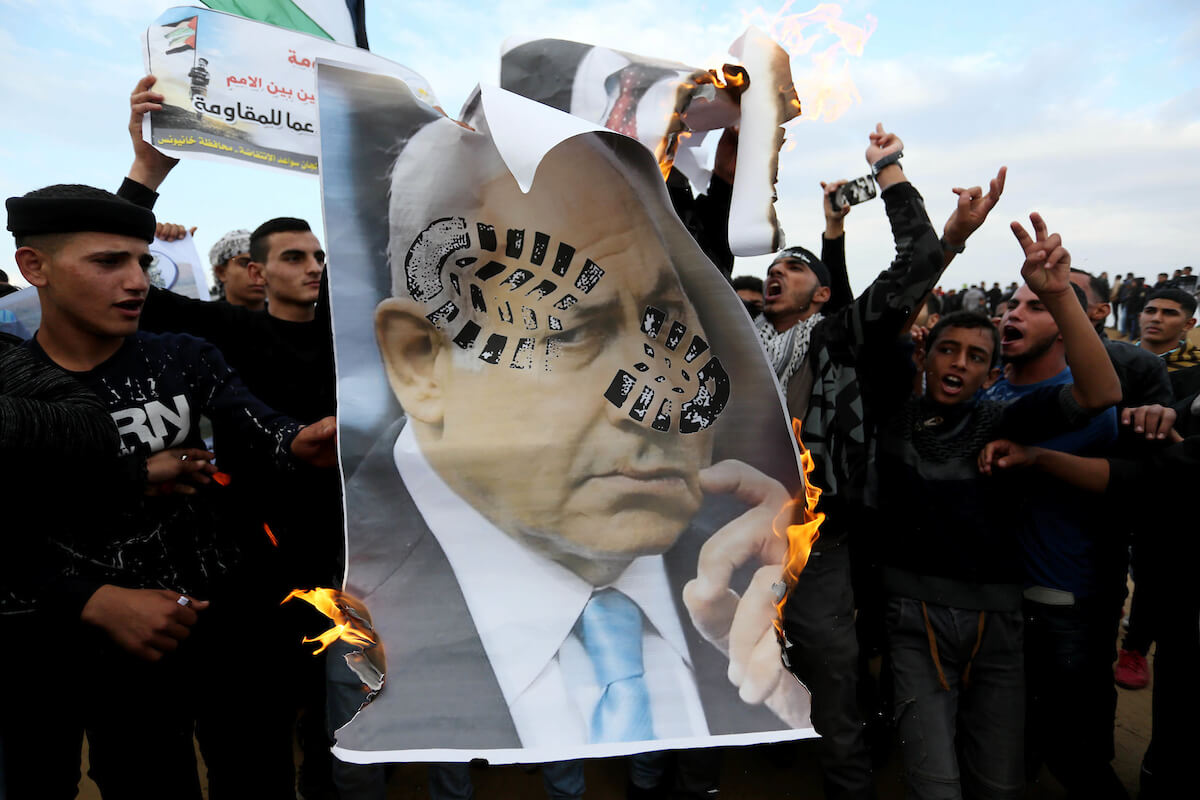
The fall of Netanyahu is not meaningless

The fall of Netanyahu is not meaningless 

Opinion 

 on  
Israel’s Prime Minister Benjamin Netanyahu is facing the greatest political challenge of his life. After a close snap election, if he is unable to form a unity coalition in the next few days, for the first time in a decade he might be voted out of office and could becomea prisoner.
His potential successor, Benny Gantz, is not necessarily better. Gantz is a war criminal. He was chief of staff during the 2012 and 2014 attacks on Gaza and is responsible for the deaths of thousands of Palestinians. He is proud of this. His policies are vague and very similar to Netanyahu’s on most important issues. Clearly, these elections don’t represent a revolutionary turn in Israeli politics. But I think they do matter.
Change is the lifeblood of all progressive politics. No one understands this better than Netanyahu, a conservative politician whose reign has been marked by stagnation. His appeal is in maintaining the existing reality, bad as it is, against real and imagined calamities. His legacy is not in making dramatic decisions. It’s in successfully convincing the Israeli public that there’s no other option but the status quo, while slowly and surely sinking the country deeper and deeper into fascism, entrenching its racial policies and consolidating its control over the territory occupied in 1967.
Take the peace process for example. Netanyahu’s achievement is not in dealing it a fatal blow; this honor is reserved for Ehud Barak. By the time of Netanyahu’s current term, it was dead on arrival. His achievement is that he somehow managed to keep it seemingly alive. A decade of intentionally pointless demands, zig-zagging on a commitment to the two-state solution and blaming the Palestinians for everything has resulted in a very convenient impasse. Israel’s foreign allies can maintain deniability over their complicity in Israel’s international law violations by asserting that the regrettable situation is temporary.
Meanwhile, Israeli society has never been less interested in the Palestinian question. Fewer and fewer Israelis believe that any solution is possible, most of us solemnly accept as a rule of nature that there’s just no end to this. Older generations tended to yearn for peace, which at the very least meant that the next generation of Israelis will not have to pick up a gun at 18. Today more and more believe that, as Netanyahu said, “we will forever live on our swords.” The metaphorical swords, of course, include bombs dropped from airplanes into the densely populated Gaza strip every few years. “Mowing the lawn,” as one of his cabinet members called it. It’s as brutal as it’s endlessly repetitive. For the first time since the first intifada, Netanyahu succeeded in making the occupation boring.
With the occupation sidelined, Israelis turned to other issues. In 2011, a massive wave of social protests broke out against Netanyahu’s austere, laissez-faire economic policies. At their peak, the protests brought half a million Israelis to the streets against the high cost of living and the deterioration of Israel’s once-robust welfare system. Netanyahu withstood the storm until it subsided without offering any meaningful policy change. The social protest petered out and all we got was some new opportunist politicians to warm the Knesset’s seats and the notion that Bibi is undefeatable. Less than a year later he was crowned “King Bibi” on Time’s front page.
A generation of Israelis has grown from preschoolers to young adults knowing nothing but Bibi. In recent years we have seen an incredible wave of progress in Palestine-related politics here in the U.S., with young people more and more likely to oppose Israeli apartheid. Meanwhile, the Netanyahu generation in Israel is more right-wing, more entrenched and more racist than their parents. There’s no clearer indication for his success.
But now, as a result of corruption charges (minuscule in comparison to his war crimes) and petty sectorial politics, the king is shaking in his throne. The authoritative father figure is now running around hysterically trying to form an unlikely coalition to save his own skin. Whether or not he’ll manage to weasel his way out of this pit, his invincible days may well be over. Could Pharaoh be a mere mortal? He sure sweats like one.
Netanyahu’s carefully cultivated stagnation can only be disrupted by his removal. The change will not come from a Gantz administration, but by the end of the Netanyahu administration. It may allow Israelis to imagine again. I am not saying that Israelis will suddenly vote down apartheid, and Gantz himself surely has no intention of ending it. But it’s important to not underestimate the toxic influence of Netanyahu’s personal grip on power. His fall can set things in motion again, revitalize dormant Israeli protests and grievances, and bring back hope for change to the Israeli psyche. As it stands, presently the only segment of Israeli society that is optimistic about the future is the right. The Israeli people – rather than the Israeli regime – are necessary partners in any future solution. Their awakening from their Bibi-induced slumber will be a crucial wave of change in which we must recognize and take part.

“Racisme en discriminatie zijn de funderingen van de Israëlische staat.”

“Racisme en discriminatie zijn de funderingen van de Israëlische staat.”


Foto: Ludo De Brabander
Facebooktwittergoogle_plusmail

Interview met de Palestijnse politica Haneen Zoabi

In Israël is naar schatting 20% van de bevolking Palestijns. De Israëlische politieke wereld spreekt van ‘Arabieren’ in een poging om hen te dissociëren van hun volksgenoten in de Palestijnse bezette gebieden. Haneen Zoabi is een van hen.
Ze is afkomstig uit Nazareth, een Palestijnse stad die de etnische zuiveringen van 1948 overleefde en in het noorden van Israël ligt. Zoabi was de eerste vrouwelijke Palestijnse politica die via een ‘Arabische’ lijst verkozen geraakte in het Israëlische parlement (de Knesset), waarin ze zetelde van 2009 tot 2019. Ze ontpopte er zich als een hevig voorstandster van gelijke rechten en bekritiseerde fel de definiëring van Israël als een joodse staat. Haar uitspraken en acties leverden haar honderden doodsbedreigingen op en een zes maanden lange parlementaire schorsing.
Wanneer ik Haneen Zoabi, een paar weken voor de Israëlische verkiezingen van 17 september ontmoet in Nazareth, krijgt ze net een telefoontje van haar medewerkster over een zoveelste gerechtelijk onderzoek tegen haar partij, Balad. De donaties van de Balad-leden en sympathisanten aan de partijkas zouden niet altijd wettelijk zijn”, zo luidt de beschuldiging van de politie. “Dit is heel duidelijk een politiek proces”, aldus Zoabi. “We doen niets anders dan alle andere partijen. Gewoonlijk vinden ze fouten in de registratie van documenten, maar alleen bij ons maken ze daar een grote zaak van. Het zou een routineuze financiële procedure moeten zijn, zoals dat het geval is bij de andere partijen. Nu willen ze 36 activisten van Balad voor de rechter dagen. Ik ben een van hen.”
Balad is de Hebreeuwse afkorting voor Nationaal-Democratische Vergadering. In het Arabisch betekent Balad ook ‘land’. Voor de verkiezingen van 17 september heeft Balad de krachten gebundeld met een aantal andere partijen (Haddash, Ta’al en Ra’am) op een ‘Gezamenlijke Lijst’. Haneen dingt niet langer naar een verkiesbare plaats. Ze is al sinds sinds de vorige verkiezingen in april van dit jaar geen parlementslid meer. Wel is ze nog steeds lid van het Politiek Bureau van Balad.
ALS JE HIER LEEFT, IS ALLES POLITIEK.
Hoe kwam je in de Israëlische politiek terecht?
Als je hier leeft, is alles politiek. Als je kinderen hier opgroeien, ontdek je meteen dat je een Palestijn bent. Als je naar werk zoekt, dan zal je al gauw ondervinden dat je een Palestijn bent. Er heerst een racistische politiek in het land die de natuurlijke ontwikkeling van de Israëlische Palestijnen blokkeert. Je moet als het ware dubbel zoveel inspanningen leveren om hetzelfde te krijgen als andere Israëli’s. De discriminatie is alomtegenwoordig. Klein voorbeeldje: in Nazareth is veel grond van de Palestijnen geconfisqueerd voor de oprichting en uitbreiding van het naburige Nazareth Illit (opper-Nazareth), een stad gecreëerd in 1957 waar duizenden recent geïmmigreerde joden zijn gevestigd. Daar gaat ook het gros van de plaatselijke publieke investeringen naartoe.
Jezelf confronteren met de realiteit, met de discriminatie die je ondergaat is genoeg om in de politiek verzeild te geraken. Het is ook een zaak van waardigheid. Vanaf het ogenblik dat je je volk steunt in de Westelijke Jordaanoever en je tegen de Israëlische bezetting bent, word je hier gezien als een vijand. Anders gezegd. De enige reden waarom je hier als Palestijnse Israëli niet in de politiek terechtkomt, is omdat je schrik hebt of omdat je aanvaardt dat je minder bent dan de andere. Als Palestijn moet je hier als het ware bewust beslissen om niet met politiek bezig te zijn. Maar als je uitdrukking geeft aan je identiteit en je gelijke rechten opeist, dan zit je er automatisch middenin.
Voor mij is die strijd vanzelfsprekend omdat ik het geluk had dat mijn moeder een feministe was, hoewel ze dat zelf niet erkende. Ze leerde me om een sterke vrouw te zijn die opkomt voor haar waardigheid en rechten. Dat was iets natuurlijks voor haar. Ze was lerares. Ze geloofde dat vrouwen zonder zich te moeten rechtvaardigen hetzelfde moeten kunnen doen als mannen. Ze was religieus, maar ze zag de islam als een bevrijdende godsdienst.
Hoe heb je je mandaat als parlementslid ervaren?
Twee jaar na de oprichting van Balad in 1995 werd ik lid van de afdeling in Nazareth. Ik verwachtte helemaal niet om parlementslid te worden. In 2003 werd ik verkozen als lid van het Politiek Bureau van de partij. Kaderleden vroegen me daarop of ik me geen kandidaat wilde stellen. In 2006 besliste de partij dat vrouwen met minstens een derde vertegenwoordigd moesten zijn op de parlementaire lijsten. We waren de eerste Arabische partij die een quotum voor vrouwelijke kandidaten hanteerde. In 2009 geraakte ik effectief verkozen. Ik had niet verwacht dat het allemaal zo dramatisch zou worden [lacht]. Voor Israël werd ik een erg vervelende luis in de pels.”
Je nam deel aan de Gaza-flotilla in 2010. Was dat het moment waarop je in het politieke blikveld terechtkwam in Israël?
Ja, dat was het ogenblik waarop ze zich van mijn bestaan bewust werden. Er werd nauwlettend geluisterd naar elk woord dat ik uitsprak. Ik werd behandeld als een verraadster en werd een van de meest gehate personen in Israël. Dat is nog altijd zo! Ik kan geen Israëlisch restaurant binnenwandelen zonder herkend te worden en verwijten naar mijn hoofd geslingerd te krijgen.
EEN OF TWEE STATEN… DAT IS NIET HET BELANGRIJKSTE PROBLEEM. HET PROBLEEM IS EERST EN VOORAL HET ZIONISME
Wat is jouw visie en die van jouw partij op de Palestijnse kwestie? Is een tweestatenoplossing nog langer mogelijk of wenselijk?
Een of twee staten… dat is niet het belangrijkste probleem. Het probleem is eerst en vooral het zionisme en het feit dat binnen Israël geen enkele andere partij diens essentie van discriminatie en racisme in vraag durft te stellen. Er moet erkend worden dat Israël officieel als een joodse staat definiëren de democratie onmogelijk maakt. In Europese landen, waaronder België, bestaat er ook racisme, antisemitisme, enzovoort. Ok, maar racisme is in deze landen in strijd met de basisrechten. Racisme is er misschien een probleem, maar het zit er niet wettelijk verankerd in het systeem. In Israël vormen racisme en discriminatie de fundering van de staat. Het ís het systeem. Je kan niet van een democratie spreken als je de basis ervan niet aanvaardt, zijnde dat een democratische staat de staat moet zijn van al zijn burgers. Dat is in Israël niet zo. Balad is de eerste en tot nu de enige partij die zeventig jaar na de oprichting van Israël, een einde wil maken aan het feit dat Israël gedefinieerd wordt als een joodse staat. Dat is de reden waarom Balad zo wordt geviseerd en waarom men ons voortdurend probeert uit te sluiten van het politiek proces en van deelname aan de verkiezingen. Zowel het Israëlisch gerecht (in 2003), de Israëlische inlichtingendiensten (in 2007 en 2008) en het Israëlisch parlement en de regering (in 2009, 2010 en 2011) hebben Balad omschreven als een strategische dreiging. Je hoort het goed! Wij worden dus over dezelfde kam geschoren als gewapende bewegingen als Hamas en Hezbollah, ook al vind ik dat Israël zelf de strategische dreiging vormt. Vanuit het standpunt van Israël bekeken kan je begrijpen dat Hezbollah, dat goed uitgerust is en een gewapende strijd voert, als een strategische dreiging bestempeld wordt. Maar in ons geval spreken we over een politieke partij die zich geweldloos opstelt, geen andere middelen inzet dan het woord, bewustzijn probeert te creëren, de publieke opinie probeert te beïnvloeden, vertegenwoordigers in de Knesset heeft, enzovoort. Hoe kunnen politieke activiteiten als een strategische dreiging worden gezien? Je kan de praktijk van de democratie toch niet zien als een strategische dreiging? Als je democratie zelf als een strategische dreiging beschouwt, dan verdedig je het racistische karakter van de staat Israël.
Op een gegeven moment verleende Israël het burgerschap aan de 15% Palestijnen die niet verdreven waren tot buiten de grenzen van de nieuw opgerichte staat in 1948. Maar Israël zag het burgerschap als een middel om ons onze Palestijnse identiteit te doen opgeven, om ons te temmen. Israël had er niet aan gedacht dat we dit burgerschap ook konden gebruiken om onze slagkracht te vergroten. Balad herformuleert de definitie van het Israëlisch burgerschap. We willen dit burgerschap niet in contradictie brengen met identiteit, met onze rechten, met onze geschiedenis. Balad aanvaardt dus het burgerschap in Israël, maar niet de zionistische versie ervan. Dat kan alleen maar als we de zionistische staat totaal verwerpen en delegitimeren.
Hoe vertaalt zich dat in concrete voorstellen?
Dat betekent eerst en vooral dat alle wetten geschrapt moeten worden die privileges verlenen aan de joodse bevolking in Israël. Gelijke rechten voor alle burgers dus. Instellingen die discriminatie legaliseren moeten ontmanteld worden. Balad stelde een wetsvoorstel op dat Israël definieert als een staat van al zijn burgers. De voorzitter van de Knesset verhinderde in april 2018 dat het wetsvoorstel kon worden ingediend en bediscussieerd. In plaats daarvan nam de Knesset in januari 2019 een basiswet aan die Israël definieert als de natiestaat van het joodse volk. Het Arabisch werd gedegradeerd van een officiële taal naar een taal met ‘speciale status’. Balad stelt een alternatief voor: een fundamentele democratische verandering die de Palestijnen als volwaardige burgers van de staat Israël ziet. In Israël probeert men Balad in de schoenen te schuiven dat we tegen Israëli’s tout court zijn, terwijl we louter het racisme aanklagen. Maar we willen ook dat de 1,5 miljoen Palestijnse inwoners van Israël beter aansluiting vinden bij de strijd van de hele Palestijnse bevolking.
DE STRATEGIE VAN ONDERDRUKKING IN ISRAËL IS TWEEDERANGSBURGERSCHAP.
Hoe verbind je deze intern Israëlische strijd met de situatie op de bezette Westelijke Jordaanoever en Gaza?
De Groene Lijn (de bestandslijn van 1949 tussen Israël en de Palestijnse gebieden die in 1967 bezet werden, nvdr.) is voor de Palestijnen enkel een grens tussen verschillende types van kolonisatie, tussen verschillende vormen van controle en repressie. De strategie van onderdrukking in Israël is tweederangsburgerschap. De strategie van onderdrukking in de Westelijke Jordaanoever is bezetting. In Gaza bestaat deze strategie uit belegering. In Jeruzalem tenslotte gaat het over judaïsering, etnische zuivering, kolonisatie en het stelen van land. Er worden dus 4 verschillende strategieën voor controle en onderdrukking gehanteerd. Wat deze strategieën verbindt, is zionisme. Om ons van alle vormen van onderdrukking te bevrijden is er een alternatieve visie nodig op het judaïsme. Gelijkheid moet het sleutelwoord zijn. Vandaar dat het politieke vraagstuk van een of twee staten een minder belangrijke kwestie is geworden. Als ik maar beschik over gelijke rechten, een eigen identiteit en me niet moet onderwerpen aan de superioriteit en privileges voor de joodse bevolking van dit land. Het gaat niet over een onafhankelijke Palestijnse staat, maar over zelfbeschikking in een staat die alle burgers vertegenwoordigt. Daarna kan je discussiëren over de naam van de staat, de vlag, enzovoort. Dat moet een discussie zijn van alle burgers. En natuurlijk, moet het recht op terugkeer voor de Palestijnse vluchtelingen naar hun huizen en dorpen gerespecteerd worden. Wat Balad uniek maakt in het Israëlische politieke landschap is dat onze perceptie van democratie een perceptie van dekolonisatie is. Op die manier vertegenwoordigen we niet alleen de Palestijnen, maar alle Israëli’s die willen leven in een normale democratische staat. We willen hen de gelegenheid geven om zichzelf te dekoloniseren.
Voelen de Palestijnen die in Israël wonen zich qua identiteit nog altijd sterk verbonden met de Palestijnen in Gaza en de Westelijke Jordaanoever?
Na de Israëlische nederlaag tegen Hezbollah in de zomer van 2006, net als tijdens de beginfases van de eerste en tweede Intifada (Palestijnse opstand) of van de Arabische lente, was het antwoord van om het even welke Palestijnse Israëli op de vraag naar zijn identiteit eenvoudig: Palestijn en Arabier. Maar telkens als we ervaren dat de Israëlische staat veel sterker is dan ons, als we ons zwak en onderdrukt voelen, dan is het moeilijker onze identiteit te erkennen. Toen bijvoorbeeld de intifada of de Arabische lente werd neergeslagen, of toen generaal Sisi aan de macht kwam in Egypte, als er militair samengewerkt wordt tussen de Palestijnse Autoriteit en Israël, enzovoort, dan voelen de mensen hun verwachtingen de kop ingedrukt en zullen ze veel gefrustreerder hun identiteit beleven en uitdrukken.
Het thema identiteit is immers ook een thema van macht, van hoe sterk je je voelt en hoe trots je bent. Ik aanvaard de opiniepeilingen niet die zeggen dat meer dan 40% van de Palestijnen in Israël zich in de eerste plaats definiëren als Israëlisch, want het antwoord zal sterk verschillen van de periode en de politieke context waarin je de bevraging doet. Identiteit is geen stabiel gegeven. Als je de Palestijnen die zeggen dat ze zich Israëlisch voelen, zou vragen of ze zich graag definiëren als een Israëli, dan zouden ze aarzelen om daar positief op te antwoorden. Als je een jood hetzelfde vraagt, dan zal hij zichzelf met trots identificeren als een Israëli. Indien je dieper zou graven, dan zou je merken dat Palestijnen in Israël zich gedwongen voelen. Voor hen is het een overlevingsstrategie en niet een echte uitdrukking van vrije wil. En deze Israëlische onderzoekers concluderen dan dat Balad deze Israëlische Palestijnen niet vertegenwoordigt. Voor mij is het wel degelijk zo dat ik mijn volk vertegenwoordig, met al zijn verlangens, ambities en dromen. Dat volk voelt zich nu onderdrukt en zwak.
Bij de verkiezingen van 17 september komen jullie opnieuw op met de Gezamenlijke Lijst, een coalitie van de vier door Palestijnen gedomineerde partijen in Israël. Tijdens de vorige verkiezingen in april 2019 lukte het niet om dezelfde coalitie te vormen. Waarom nu wel?
De Gezamenlijke Lijst werd opgericht voor de parlementsverkiezingen van 2015. We slaagden er toen in de derde grootste politieke formatie in het parlement te worden. In februari 2019 viel de coalitie uit elkaar. Voor mij is eenheid heel belangrijk, maar moeilijk. Hadash (Het Democratisch Front voor Vrede en Gelijkheid) -een niet-zionistische linkse partij die de joods-Arabische samenwerking benadrukt- is sterker dan Balad. Hadash probeert uiteraard haar discours en opinie door te duwen, maar als een partij domineert dan dreigt de diversiteit verloren te gaan. De afgelopen vier jaren verloor Balad daardoor wat aan kracht en invloed. We hebben heel wat gediscussieerd over de ervaringen met de vorige Gezamenlijke Lijst en hebben er lang over nagedacht om die eenheid opnieuw na te streven voor de verkiezingen van september. Binnen onze partij verdedigde ik het minderheidsstandpunt, dat we ons binnen het eenheidsplatform, de ‘Gezamenlijke Lijst’, radicaler moesten opstellen, zodat we het meer in onze richting konden sturen. Het gaat niet over dominantie, wel over vocaler en militanter zijn. Maar de meerderheid koos ervoor om zich gematigder op te stellen. En volgens mij was dat een strategische fout. Voor de komende jaren zouden we minstens de eigenheid van Balad beter moeten kunnen uitdrukken.
In Israël is het mainstream politieke landschap altijd heel zionistisch geweest. Maar de jongste jaren is de extreemrechtse strekking van het zionisme heel sterk geworden. Hoe komt dat?
DE MACHT VAN DE EUROPESE ASJKENAZIM, DIE AAN DE BASIS LAGEN VAN DE OPRICHTING VAN ISRAËL, BEGON GELEIDELIJK AAN TE ERODEREN TEN VOORDELE VAN DE KOLONISTEN EN RECHTSEXTREMISTEN.
Je moet er absoluut de statistieken van het Israëlisch Instituut voor Democratie op navlooien. Jaarlijks organiseert dat instituut opiniepeilingen die fascinerende vergelijkingen mogelijk maken. Daarin kan je ontdekken hoe de publieke opinie de afgelopen jaren op dramatische wijze is opgeschoven naar rechts. Daar is zowel een interne als externe reden voor. Ik leg eerst de interne reden uit. Onmiddellijk na de bezetting van de Westelijke Jordaanoever in 1967 startte Israël met de bouw van joodse nederzettingen in het gebied. Het heeft echter dertig jaar geduurd voor de nederzettingen en de kolonisten ook hun plaats in de Israëlische maatschappij konden veroveren. Tot de tweede intifada (2000-2005) speelden de kolonisten geen belangrijke rol binnen de politieke elite en de Israëlische maatschappij. Het is pas na deze intifada dat de nederzettingen echt deel gingen uitmaken van Israël en niet gewoon werden gezien als een afzonderlijke entiteit. Sindsdien zijn de kolonisten zich snel beginnen integreren in het politiek-maatschappelijke leven om vervolgens op de besluitvorming te gaan wegen. In 2003 vertegenwoordigden kolonisten en rechtsextremisten slechts 3% van de hogere rangen binnen het Israëlisch leger. In 2016 was dat 27%. Israël ondervond dus een aanzienlijke politieke verschuiving binnen de elite. De macht van de Europese Asjkenazim, die aan de basis lagen van de oprichting van Israël, begon geleidelijk aan te eroderen ten voordele van de kolonisten en rechtsextremisten. De onderzoekers spraken van een nieuw, tweede Israël. De situatie vandaag is dat de kolonisten de politiek, het militair apparaat en in mindere mate de media domineren. Ik ben er zeker van dat we hun invloed de komende tien jaren ook gradueel zullen zien stijgen binnen de academische wereld en het juridisch apparaat. Je moet dit alles niet louter als een kwantitatieve verandering zien, maar als een kwalitatieve kentering. We spreken vandaag over een ander Israël, zowel op sociaal, politiek als demografisch vlak. In 2006 was het aantal joden dat vond dat de Palestijnse Israëli’s niet over gelijke rechten mogen beschikken 39%. In 2017 is dat aantal gestegen naar meer dan 70%.
Je moet deze algemene politieke verschuiving ook gerelateerd zien aan de veranderde ideologische koers van de Israëlische Arbeiderspartij, met premier Ehud Barak die in 2000 plots aankondigde: “Er is geen Palestijnse partner meer”. Later in 2015 zou partijleider Yitzhak Herzog dat standpunt herhalen. Daarmee maakte de Arbeiderspartij zelf een einde aan de links-zionistische visie op het Palestijnse vraagstuk en gaf het meer politieke speelruimte aan de extremisten en kolonisten. Daarbij komt dan ook nog eens het zwakke optreden van de Palestijnse Autoriteit en hun veiligheidssamenwerking met Israël om zich te ontdoen van de ‘Palestijnse last’. Het is tot slot natuurlijk ook zo dat de kolonies in economisch opzicht aan belang hebben gewonnen. Dat gaat gepaard met het toe-eigenen van de toegang tot water en het inpalmen van Palestijnse landbouwgrond. Ja mag ook niet vergeten dat de bouw van de muur en de hele Israëlische veiligheidsinfrastructuur veel geld in het laatje brengen van de veiligheidsindustrie.
De externe reden voor de verschuiving naar extreemrechts vinden we in de internationale context. Europa stelt zich laks op tegenover de kolonisatiepolitiek en bewijst hooguit wat lippendienst aan het internationaal recht. De Verenigde Staten voert al sinds de jaren 1970 een uitgesproken pro-Israëlische koers. Israël is voor de VS een belangrijke strategische partner in de regio. In dat opzicht is er weinig verschil tussen Trump en zijn voorgangers. Onder de huidige VS-president heeft Israël echter nog meer een uitzonderingsstatus gekregen voor wat betreft de internationale verplichtingen. Dat geeft de kolonisten extra wind in de zeilen. Premier Netanyahu kan nu zonder meer aankondigen dat hij bezet gebied wil annexeren.
Haneen Zoabi is een van de spreeksters tijdens het jubileum 70 jaar Vrede vzw op 7 december

Genocidi

Genocidi Translation / Caption Text / Source Source: https://www.instagram.com/explore/search/keyword/?q=%23postersxgaza and https://www.ins...