Zoeken in deze blog 🔎🔎

zondag 29 september 2019

Joe Biden's Corruption

Solomon: These once-secret 

memos cast doubt 

on Joe Biden's 

Ukraine story

Bellingcat Misleads


How military industries poison our planet


How military industries poison our planet
Aleksandar Novaković
21/09/2019, Articles
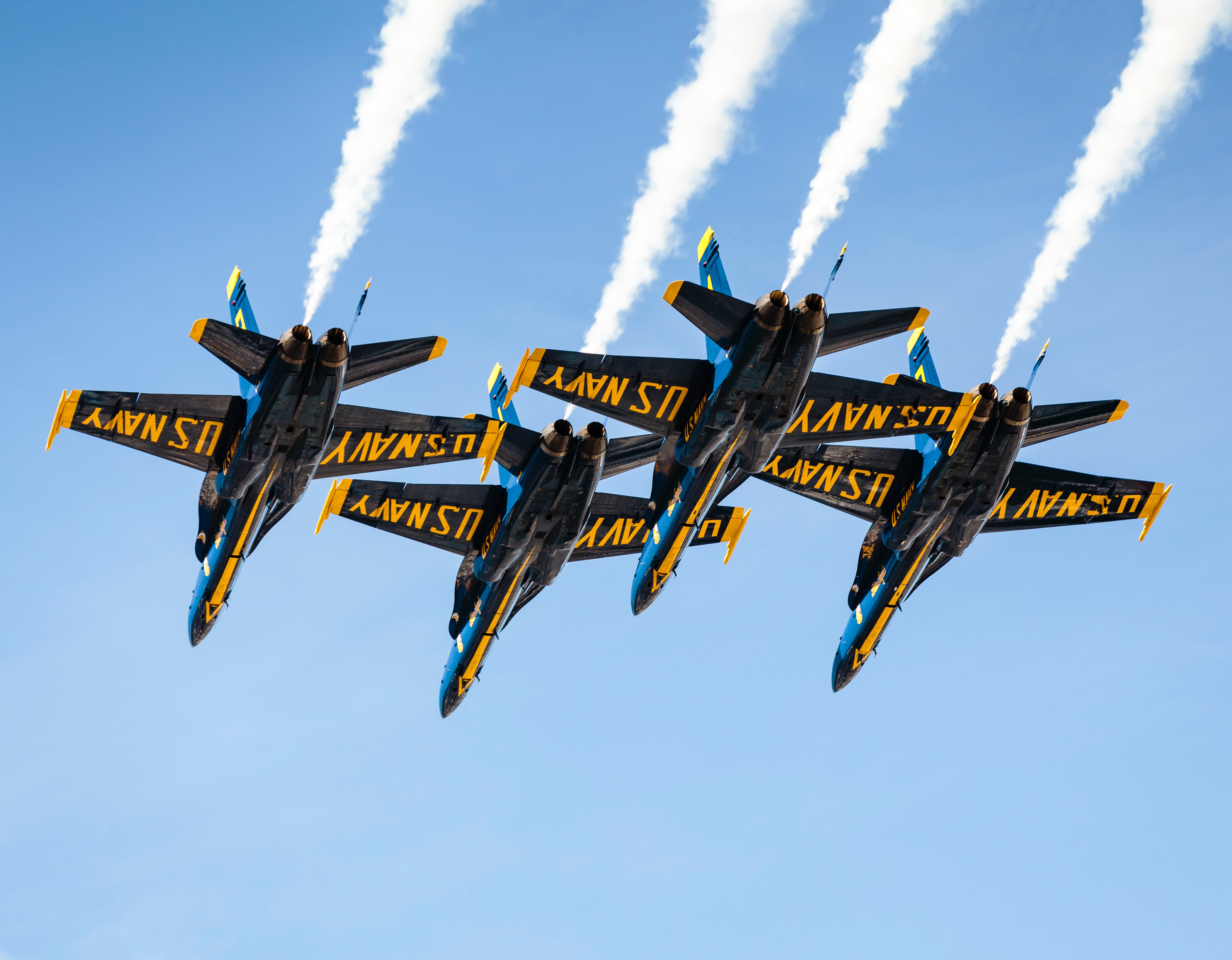
The U.S. military is the single greatest institutional contributor to growing natural disasters. We must bring an overall reduction in military spending onto the political agenda. 
Media coverage of massive heatwaves and forest fires in the heart of the Amazonia and Subsaharan Africa has somehow overshadowed the awful truth that military industries are significant contributors to climate change. 
It is easy to fathom that with CO2 emissions, coming mostly from coal and petrol, newspaper stories about multinationals exploiting Third World countries, we tend to forget about the military. After all, in most of the Western world, the military is professional and soldiers are not a large part of population, hence the assumption that their role in ecological disasters is not significant. 
Wrong! 
In fact, the US Army alone pollutes at a rate greater than 140 countries combined. Indeed, the United States insisted on an exemption to the reporting of military emissions in the 1997 Kyoto Protocol. This is no surprise since the USA has one of the largest military industries in the history of the world and the US Air Force (USAF) is the largest single consumer of jet fuel in the world. In 2006, the USAF spent more on fuel than during the Second World War. 
Climate & Capitalism sums it up: “The U.S. military is the single greatest institutional contributor to the growing natural disasters intensified by global climate change.“ 
The Munich Institut für sozial-ökologische Wirtschaftsforschung reports the scale of these emissions: the modern Eurofighter consumes about 70 to 100 litres of kerosene per minute and at Ramstein Base (Germany) alone, 1.35 billion m³ of climate-damaging gases are released each year. 
Furthermore, the US Army has a long history of chemical weapons use dating back to the Vietnam War, including the herbicide Agent Orange that killed Vietnamese and US soldiers alike. Today, the US Army is doing the same by emitting toxic waste from their military bases in the Philippines and Okinawa, not to mention shooting depleted uranium shells in the NATO campaign in Yugoslavia in 1999 and war in Iraq in 2003.
While the public outcry against climate change continues, military industries are booming, and not only in the USA. 
According to the Stockholm International Peace Research Institute (SIPRI), military expenditure is rising in China (by 5%) as well as in the whole of Europe (Ukraine is leading with an increase of 21%), most of Asia and Oceania and of course the USA with 716 billion dollars in 2019. The US Army is not only the world leader in the accumulation of arms but also damaging the planet with 5429 military bases worldwide, 1000 of which are located in 80 different countries outside of the US.
The conclusion is obviousWe must bring an immediate reduction in military spending onto the political agenda. 
There is no room for mistakes such as the recent support by progressives in the US House of Representatives for Trump’s colossal military budget giving the Pentagon carte blanche for the next two years. While Europeans can’t influence the American legislature they can decrease their own military budgets, stop exporting weapons abroad, ban storage and use of nuclear warheads in Europe, withdraw from military campaigns around the globe.
I hope that our choice will not be poisoning ourselves with military industries while, at the same time, trying to protect our lives with those very industries.
Aleksandar Novaković is a historian and dramatist, and member of the Thematic DSC Military and International Policy 1

Chris Hedges: The Problem With Impeachment

OPINIONTD ORIGINALS


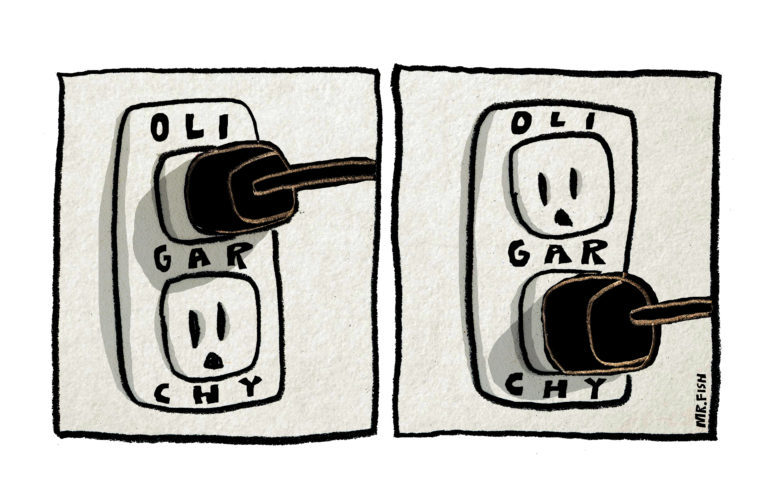
The Problem With Impeachment

The Problem With Impeachment
Mr. Fish / Truthdig
Impeaching Donald Trump would do nothing to halt the deep decay that has beset the American republic. It would not magically restore democratic institutions. It would not return us to the rule of law. It would not curb the predatory appetites of the big banks, the war industry and corporations. It would not get corporate money out of politics or end our system of legalized bribery. It would not halt the wholesale surveillance and monitoring of the public by the security services. It would not end the reigns of terror practiced by paramilitary police in impoverished neighborhoods or the mass incarceration of 2.3 million citizens. It would not impede ICE from hunting down the undocumented and ripping children from their arms to pen them in cages. It would not halt the extraction of fossil fuels and the looming ecocide. It would not give us a press freed from the corporate mandate to turn news into burlesque for profit. It would not end our endless and futile wars. It would not ameliorate the hatred between the nation’s warring tribes—indeed would only exacerbate these hatreds.
Impeachment is about cosmetics. It is about replacing the public face of empire with a political mandarin such as Joe Biden, himself steeped in corruption and obsequious service to the rich and corporate power, who will carry out the same suicidal policies with appropriate regal decorum. The ruling elites have had enough of Trump’s vulgarity, stupidity and staggering ineptitude. They turned on him not over an egregious impeachable offense—there have been numerous impeachable offenses including the use of the presidency for personal enrichment, inciting violence and racism, passing on classified intelligence to foreign officials, obstruction of justice and a pathological inability to tell the truth—but because he made the fatal mistake of trying to take down a fellow member of the ruling elite.
Yes, Trump pressured Ukraine President Volodymyr Zelensky to give him dirt on Biden and his son, Hunter Biden, and there probably is some. Yes, it appears the U.S. president withheld roughly $400 million in military aid to Ukraine in order to exert leverage over that government. Yes, he attempted to block the release of the whistleblower report that detailed his conduct. Yes, this is a violation of the law, one that many Democrats in Congress see as an impeachable offense.
But this kind of dirty quid pro quo is the staple of politics and international relations. Christopher Steele, a former British intelligence official, was hired to dig up dirt on Trump and Russia by Fusion GPS, a research and intelligence firm under contract to investigate Trump by Perkins Coie, a law firm working for the Clinton campaign and the Democratic National Committee. Four decades ago, Ronald Reagan’s campaign manager, William Casey, asked the Iranians not to free the American hostages held in Tehran until after the November presidential election to hurt incumbent Jimmy Carter, according to Gary Sick, Carter’s chief aide on Iran. The American hostages were released the day Reagan was inaugurated, in January 1981.
Hillary Clinton, as far as we know, was never on the phone to Steele. Reagan, as far as we know, was never on the phone to the Iranian president. Trump’s fatal mistake was that he was overt in his request and he made it himself. This kind of underhanded pressure to damage political opponents requires skillful hints, secret meetings, carefully calibrated pressure and total deniability. Trump is too clueless to play the game. Because of this he looks set to join the exclusive club of presidents who were impeached—Andrew Johnson and Bill Clinton.
Trump, however, will not go quietly into this good night. He will attempt to bring the whole rotten edifice down with him. And he may succeed.
“The Democrats thrive on silencing and intimidating his supporters, like YOU, Friend,” reads a fundraising appeal for Trump that was sent out immediately after the impeachment inquiry was announced this week. “They want to take YOUR VOTE away. President Trump wants to know who stood with him when it mattered most.”
But fundraising from a looming impeachment proceeding will be benign compared with what I think will come next. Trump’s rhetoric, as the pressure mounts, will become ever more incendiary. He will, as he has in the past, openly incite violence against the Democratic leadership and a press he brands as “the enemy of the people.”
There is no shortage of working-class Americans who feel, with justification, deeply betrayed and manipulated by ruling elites. Their ability to make a sustainable income has been destroyed. They are trapped in decaying and dead-end communities. They see no future for themselves or their children. They view the ruling elites who sold them out with deep hostility.
Trump, however incompetent, at least expresses this rage. And he does so with a vulgarity that delights his base. I suspect they are not blind to his narcissism or even his corruption and incompetence. But he is the middle finger they flip up at all those oily politicians like the Clintons who lied to them in far more damaging ways than Trump. Trump was weaponized to stick it to the man. Polls in the 2016 presidential election showed that 53 percent of Trump supporters were motivated by dislike of Hillary Clinton and only 44 percent said they were motivated by support for Trump.
“People no longer voted for candidates they liked or were excited by,” Matt Taibbi writes in “Insane Clown President: Dispatches From the 2016 Circus.” “They voted against the candidates they hated. At protests and marches, the ruling emotions were disgust and rage. The lack of idealism, and especially the lack of any sense of brotherhood or common purpose with the other side (i.e., liberals and conservatives unable to imagine a productive future with each other, or even to see themselves as citizens of the same country), was striking.”
Impeaching Trump would be seen by his supporters as an effort to take away this primal, if ineffectual, form of defiance. It is yet another message to the disenfranchised, especially those in the white working class, that their lives, their concerns, their hopes and their voices do not matter. This huge segment of the population, as Trump is aware, is heavily armed. There are more than 300 million firearms in the hands of U.S. civilians, including 114 million handguns, 110 million rifles and 86 million shotguns. The number of privately owned military-style assault weapons—including the AR-15 semi-automatic rifles used in the massacres at Marjory Stoneman Douglas High School in Parkland, Fla., and the Sandy Hook Elementary School in Newtown, Conn.—is estimated at 1.5 million. The United States has the highest rate of gun ownership in the world, an average of 90 firearms per 100 people. Mass shootings in the U.S. take place at a rate of one or more per day on average.
Economic, social and political stagnation, coupled with a belief that our expectations for our lives and the lives of our children have been thwarted, breeds violence. Trump, fighting for his political life, will use rhetorical gasoline to set it alight. He will demonize his opponents as the embodiment of evil. He will seek to widen the divisions and antagonisms, especially around race. He will brand his political opponents as irredeemable enemies and traitors. He will demand omnipotence, the power of a dictator. Many of those for whom he is a cult leader will seek to give it to him. For when the magical aura of Trump’s power is attacked, those in the Trump cult feel attacked. He is an extension of them. Trump embodies the yearning by millions of Americans, especially those in the Christian right, for a cult leader.
The efforts by the Democratic Party and much of the press, including CNN and The New York Times, to remove Trump from office, as if our problems are embodied in him, will backfire. Our social, cultural, economic and political crisis created a demagogue like Trump. These forces will grow more virulent if Trump is impeached. The longer we fail to confront and name the corporate forces responsible for the misery of over half the U.S. population and our broken democracy, the more the disease of cultism will spread. It was the seizure of power by corporations that vomited up Trump. And it will be only by freeing ourselves from corporate rule, by rebuilding our democratic institutions, including the legislative bodies, the courts and the media, that we can roll back from the abyss.
If we do not succeed in overthrowing corporate power, the explosive devices mailed to Trump critics and leaders of the Democratic Party, including Barack Obama, Hillary Clinton and Joe Biden, along with George Soros, James Clapper and CNN, allegedly by Cesar Sayoc Jr., an ex-stripper and fanatic Trump supporter who was living out of his van, will become an acceptable form of political expression. Such assassination attempts will, if left unchecked, eventually succeed. Anarchic lawlessness and tit-for-tat forms of political murder will swiftly turn the United States into a failed and terrifying state.

De Zionistische Meute 25


In zijn anno 2015 verschenen essay Hannah Arendt: Jew and Cosmopolitan betoogt de Joods-Israelische socioloog Natan Sznaider over haar opvattingen:

Arendt marks the limits of an abstract universalism that is deadly for the Jews, and with it develops a rooted cosmopolitanism, rooted in a Jewish national experience. In her opinion, Jews as a nation should become compatible with the nations of the world. Since they were not, Jewish collective experience was doomed. This is also why, in the final analysis, Arendt preferred the American over the French Revolution. The promise of emancipation in Europe was a false promise. It promised equality under the condition of complete assimilation, whereas the American Revolution could offer an ethnic pluralistic model based on personal liberty and the preservation of difference in modernity. That, at least, was Arendt’s American Dream.

In de beschrijving van professor Sznaider stelt Hannah Arendt dat het ‘universalisme,’ dus ‘de overtuiging die stelt dat een groep of institutie niet buitengewoon of exceptioneel is ten opzichte van een andere groep,’ ronduit ‘dodelijk is voor de Joden.’ De gedachte hierbij is dat wanneer in een democratie een burger gelijk is aan iedere andere burger, dan kan het Joods-zijn niet meer ‘exceptionalistisch’ zijn. Een jood zou dan gelijk zijn aan alle andere niet-joden, met dezelfde rechten en plichten, en dit zou de essentie van het Joods-zijn vernietigen. Vandaar dat Hannah Arendt in ‘Amerika (en niet in Frankrijk), de verwezenlijking zag van haar Europese kosmopolitische dromen,’ waardoor in haar ogen ‘Joden burgers zouden kunnen zijn zonder op te houden Joden te zijn,’ dat wil zeggen: een ander volk. Waarom het zo belangrijk voor Arendt was dat Joden een ander volk zouden blijven temidden van hun landgenoten, maakt Sznaider niet echt duidelijk. De vraag is namelijk: waarom zou een geseculariseerde jood buiten Israel zich nog Joods voelen? Wel schrijft hij:  

In America (and not in France), Arendt saw the realization of her European cosmopolitan dreams. Jews could be citizens without ceasing to be Jews. Universalism and particularism (exclusive attachment to one's own group, party, or nation. svh) could exist side by side. American Jews, though a minority, were at large not a shunned and despised minority as they were in Europe. They could become political members of the United States as Jews.

Er kleeft evenwel een probleem aan de geforceerde poging anders te zijn dan alle andere wereldbewoners. In zijn boek The Fatal Embrace. The Politics of Anti-Semitism in the United States (1998) — die door de Jewish Herald-Voice geprezen werd als ‘[o]ne of the most important studies on anti-Semitism in this country. It should be required reading for all Jewish community leaders and for every Jew involved in electoral politics at any level’ — benadrukt de joods-Amerikaanse hoogleraar Politieke Wetenschappen aan de Johns Hopkins Universiteit, Benjamin Ginsberg dat:

Their role in American economic, social, and political institutions has enabled Jews to wield considerable influence in the nation’s public life. The most obvious indicator of this influence is the $3 billion in direct military and economic aid provided to Israel by the United States each year and, for that matter, the like amount given to Egypt since it agreed to maintain peaceful relations with Israel. That fully three-fourths of America’s foreign aid budget is devoted to Israel’s security interests is a tribute in considerable measure to the lobbying prowess of AIPAC and the importance of the Jewish community in American politics. 

Het Joods-Israelische Ynet, ‘Israel's most comprehensive, authoritative daily source in English for breaking news and current events from Israel and the Jewish world,’ wierp op 26 oktober 2011 de vraag op ‘How did American Jews get so rich?’: 

Since the mass immigration some 100 years ago, Jews have become richest religious group in American society. They make up only 2% of US population, but 25% of 400 wealthiest Americans. How did it happen, and how crucial is their aid to Israel?

In een neoliberale kapitalistische cultuur waarin alles, maar dan ook alles, om geld draait, is vanzelfsprekend de vraag waarom een minderheidsgroep zo rijk kon worden uiterst relevant. Niet alleen voor  de getalsmatig veel minder succesvolle gojim, maar ook voor de joden zelf, die de afgunst opwekken van degenen die immers de rekening betalen van dit systeem. Ynet:

A study of the Pew Forum institute from 2008 found that Jews are the richest religious group in the US: Forty-six percent of Jews earn more than $100,000 a year, compared to 19% among all Americans. Another Gallup poll conducted this year found that 70% of American Jews enjoy ‘a high standard of living’ compared to 60% of the population and more than any other religious group.

More than 100 of the 400 billionaires on Forbes' list of the wealthiest people in America are Jews. Six of the 20 leading venture capital funds in the US belong to Jews, according to Forbes.

Het is algemeen bekend dat de menselijke natuur het succes wantrouwt van een groep ‘buitenstaanders’ die overal aan de touwtjes trekt:

Jews are well represented in Wall Street, Silicon Valley, the US Congress and Administration, Hollywood, TV networks and the American press — way beyond their percentage in the population.

Met ondermeer deze informatie als achtergrond is het interessant te weten dat april 2008 de Britse auteur en journaliste Linda S. Heard, Midden Oosten-deskundige,  het volgende schreef:

Is the US manipulating and remolding the area so that Israel can remain the only regional superpower in perpetuity?

This is not as fanciful as one might imagine on first glance. Read the following strangely prophetic segment from an article published in 1982 by the World Zionist Organization’s publication Kivunim and penned by Oded Yinon, an Israeli journalist with links to the Israeli Foreign Ministry.

Yinon’s strategy was based on this premise. In order to survive Israel must become an imperial regional power and must also ensure the break-up of all Arab countries so that the region may be carved up into small ineffectual states unequipped to stand up to Israeli military might. Here’s what he had to say on Iraq:

‘The dissolution of Syria and Iraq into ethnically or religiously unique areas such as in Lebanon is Israel’s primary target on the Eastern front. Iraq, rich in oil on the one hand and internally torn on the other is guaranteed as a candidate for Israel’s targets. Its dissolution is even more important for us than that of Syria. Iraq is stronger than Syria. In the short run, it is Iraqi power which constitutes the greatest threat to Israel.

An Iraqi-Iranian war will tear Iraq apart and cause its downfall at home even before it is able to organize a struggle on a wide front against us. Every kind of inter-Arab confrontation will assist us in the short run and will shorten the way to the more important aim of breaking up Iraq into denominations as in Syria and Lebanon.

In Iraq, a division into provinces along ethnic/religious lines as in Syria during Ottoman times is possible. So, three (or more) states will exist around the three major cities: Basra, Baghdad and Mosul and Shiite areas in the South will separate from the Sunni and Kurdish north.’

Sound familiar?


Now let’s focus on the reality, 24 years on (2006 svh).

The eight-year long Iran-Iraq War that ended in 1988 was responsible for over a million casualties but did not result in Yinon’s desired break-up. Iraq still stood as a strong homogenous entity.

Iraq was, however, severely weakened in 1991 as a result of the Gulf War brought about by Saddam Hussein’s invasion of Kuwait. Still, the country remained unified.

It took the 2003 US-led invasion of Iraq and the subsequent occupation to destabilize Iraq and split the country on sectarian lines. Indeed, its new constitution is drawn around a loose federation with partial autonomy for the northern Kurds and the southern Shiites, and the country is now rife with sectarian, religious and ethnic strife. Some say ‘civil war.’

Turning to Syria, until the March 2003 invasion of Iraq Syria under President Bashar Al-Assad enjoyed reasonably good relations with the West. We should also remember that Syria fought alongside the US-led allies during the Gulf War. Syria also voted, albeit reluctantly, for the UN resolution that oiled the invasion, and was a strong partner in the so-called ‘War on Terror.’

Then, lo and behold, Syria could do no right. Suddenly, it was accused to all kinds of ‘crimes’ from hiding Iraq’s mythical weapons of mass destruction, harboring insurgents and terrorists, and allowing the free passage of fighters and arms into Iraq.

Heavy pressure was then put on to Damascus to end its de facto occupation of Lebanon following the assassination of the former Lebanese Prime Minister Rafik Hariri, and, now the Syrian government is being investigated by the UN, accused of involvement.

Today (2008 svh) the US is actively engaged in weakening the Al-Assad government and is supporting opposition parties. If it is successful, experts predict that Syria, like Iraq, will fall victim to sectarianism and internecine conflict.

Lebanon, which had been recovering from a long civil war and an Israeli occupation, and was on the point of finding some semblance of unity, is also in danger of being destabilized with parties lining up into pro-Syrian and anti-Syrian confederations.

Yinon described the Arab-Muslim world as a temporary house of cards put together by foreigners and arbitrarily divided into states, all made up of combinations of minorities and ethnic groups which are hostile to one another.

He then goes on to bemoan Israel’s relinquishment of the Sinai to Egypt under the Camp David Peace Treaty due to that area’s reserves of oil, gas and other natural resources.

‘Regaining the Sinai Peninsula is, therefore, a political priority, which is obstructed by Camp David’ he writes. ‘And we will have to act in order to return the situation to the status quo which existed in Sinai prior to Sadat’s visit and the mistaken peace agreement signed with him in March 1979.’

Yinon then predicts that if Egypt is divided and torn apart, some other Arab countries will cease to exist in their present forms and a Christian Coptic state would be founded in Upper Egypt. Presently there are growing problems between Egypt’s Muslims and Copts, perceived by some hard line Egyptian Muslims as being more loyal to the US than their own country. This has resulted in open clashes often with resultant deaths…


If you feel the idea that the US would put itself on the line for the sake of Israel is far-fetched, then it is worth remembering the words of the assassinated Israeli Prime Minister Yitzhak Rabin, who claimed in his book that the Israeli government was, in fact, responsible for the design of American policy in the Middle East after the 1967 ‘Six Day War.’

Yinon’s essay does not focus on Iran, but let’s look at comparatively recent statements coming out of Israel on this subject.

During a visit to Washington in November 2003 two years before the US government turned its fire on Iran — the Israeli Minister of Defence Shaul Mofaz told US officials that ‘under no circumstances would Israel be able to abide by nuclear weapons in Iranian possession.’ […]

An article in the Daily Telegraph dated February 18 headed ‘America would back Israel attack on Iran’ clearly indicates that it is Israel leading the charge against Iran.

The article quotes George W. Bush as saying,

‘Clearly, if I was the leader of Israel and I’d listened to some of the statements by the Iranian ayatollahs that regarded the security of my country, I’d be concerned about Iran having a nuclear weapon as well. And in that Israel is our ally, and in that we’ve made a very strong commitment to support Israel, we will support Israel if her security is threatened.’

A year later and the US government is no longer portraying Iran’s purported nuclear ambitions as a threat to Israel, but a threat to the United States. In this way the case against Iran and the possible repercussions emanating from that, can be sold to the American people. Suddenly Israel’s concerns have become theirs. Interestingly, more than 55 per cent of the US public say they would back strikes on Iran’s nuclear facilities, according to a recent poll.

As the columnist Doug Ireland (Amerikaanse journalist. svh) writes in his exposé ‘The Real AIPAC Spy Ring Story. It was all about Iran,’

‘Bush’s slip-of-the-tongue that revealed his real intentions was front-page news in Le Monde and other European dailies but received little attention in the States-side major media.’

Justin Raimondo (Amerikaanse auteur en editorial director of antiwar.com. svh) wrote in September last year,

‘This case has received relatively little publicity in relation to its importance. It isn’t just the fact that, for the first time in recent memory, Israel’s powerful lobby has been humbled. What is going on here is the exposure of Israel’s underground army in the US covert legions of propagandists and outright spies, whose job it is to not only make the case for Israel but to bend American policy to suit Israel’s needs and in the process, penetrate closely-held US secrets.’

Back to the question of whether the US is, indeed, waging wars on behalf of Israel. In short, we can’t be certain and we may never know since the Bush White House has sealed its private tapes and papers for 100 years.

There is one thing that we do know. Oded Yinon’s 1982 ‘Zionist Plan for the Middle East’ is in large part taking shape. Is this pure coincidence? Was Yinon a gifted psychic? Perhaps! Alternatively, we in the West are victims of a long-held agenda not of our making and without doubt not in our interests.


Sinds Linda Heard’s artikel ‘Yinon’s Prophecy: Is the US Waging Israel’s Wars?’ ruim een decennium geleden verscheen stapelen de bewijzen zich op dat haar sterke vermoeden geenszins ongegrond is. Israel’s plan om Irak in drie delen te laten uiteenvallen is werkelijkheid geworden. Ook  Libië  is  door de NAVO-interventie gefragmenteerd geraakt. Syrië stond op het punt te desintegreren door de westerse logistieke steun aan de zogeheten ‘rebellen,’ in werkelijkheid merendeels fundamentalistische soennitische terroristen die mede met militaire hulp van Israel, Saoedi-Arabië en Qatar vele slachtoffers onder de Syrische bevolking hebben veroorzaakt. Alleen dankzij de militaire interventie van de Russische Federatie werd voorkomen dat ook Israel’s noorderbuur uiteen viel in elkaar bestrijdende etnische milities. Dinsdag 15 januari 2019 berichtte RT News dat:

Gadi Eisenkot, who was the Israeli Defense Forces’ Chief of Staff for the last three years, told the Sunday Times in a farewell interview that Israel had been directly involved in the Syrian conflict on the side of the Syrian rebels (zoals ISIS, Al Qaeda, Jabhat al-Nusra, etc. svh), something that Tel Aviv has been reluctant to acknowledge before.

The general, who is retiring from military service, said that Israel supplied rebels at the border with light weapons for the purposes of ‘self-defense.’

While the direct links between Syrian rebels and Israeli commanders have been officially revealed for the first time, rumors of close military ties between the armed militants and the Israeli government have been circulating for years.

Foreign Policy magazine reported in September that Israel supplied weapons and gave money to at least 12 rebel groups holed up in southern Syria. The arrangement reportedly included Israeli officials also giving $75-per-person monthly allowances to rebel fighters, in addition to the funds their leaders received to procure weapons on the black market.

In return, rebels were expected to deter Hezbollah and Iran proxies from the Israeli-occupied part of the Golan Heights.

The scheme was reportedly in effect throughout Operation Good Neighbor, which officially kicked off in June 2016 and was wrapped up only last November. Within this undertaking, Israel was openly assisting the rebels but claimed that assistance was strictly humanitarian. Israel treated wounded Syrian rebels and their families in its hospitals, provided some 1,524 tons of food, 250 tons of clothes, 947,520 liters of fuel, as well as a huge amount of medical supplies.

In November, Maj. Gen. Gershon Hacohen, a former senior commander with the IDF, revealed that former Defense Minister Moshe Ya'alon had personally met with a group of Syrian rebels, without specifying the time period. Ya'alon was Israel's chief of defense from 2013 to May 2016.


Links Gadi Eisenkot, tot midden januari 2019 chefstaf van de Israelische Strijdkrachten. De Joods-Israelischer krant Haaretz schreef over hem:

'What happened in the Beirut suburb of Dahiya in 2006 will happen in every village from which shots are fired in the direction of Israel,' Eisenkot said to journalists from Yedioth Ahronoth. 'We will wield disproportionate power against every village from which shots are fired on Israel, and cause immense damage and destruction. From our perspective, these are military bases. This isn't a suggestion. This is a plan that has already been authorized.'  

Hence, in two short sentences, one of the Israel Defense Force's senior commanders stated, with the world as his witness, his intention to violate the two central tenets of the international laws of war: the principle of distinction, which states that every time military force is used, it is imperative to differentiate enemy combatants from enemy civilians, and that attacks may be directed only at the former; and the proportionality principle, which states that even in attacks against enemy combatants, disproportional use of power is prohibited. 

It is important to understand this: The international legal definition of an illegal military attack is one directed at civilians, or one that involves a disproportional use of force. It was as if Eisenkot, then, was standing on a hilltop, declaring his intention to commit war crimes, yelling to passersby, 'My intentions are biggest of all!'

Wanneer Israëlische militairen spreken van steun aan '12 rebel groups’ dan wordt daaronder tevens verstaan militaire steun aan terroristische groeperingen die sinds 2011 ontelbare Syrische burgers en militairen op gruwelijke wijze hebben afgeslacht. Op 31 mei 2018 werd tevens bekend dat: 

Striking targets in Syria and threatening to assassinate the leader on the pretext of fighting Iranian influence is a sign that Israel is in ‘panic’ after losing its ‘dear’ terrorist assets, President Bashar Assad told RT.

Over the last couple of months, Israel has intensified its bombing of military infrastructure in Syria, arguing that the Iranian presence in the Arab Republic jeopardizes its own national security. However, Israel’s justification for its air strikes based on alleged Iranian assets is a ‘lie,’ Assad told RT’s Murad Gazdiev in an exclusive interview.

‘We don’t have Iranian troops,’ Assad said. ‘We always said that we have Iranian officers, but they work with our army, we don’t have [Iranian] troops.’

Some Israeli politicians have threatened to ‘liquidate’ Assad and topple his government if Iran continues to operate in Syria and transfer weapons to the Lebanese Hezbollah. The Syrian president, however, has made it clear that he is not afraid of the threat. 

‘The Israelis have been assassinating, killing, occupying for decades now, for around seven decades, in this region, but usually they do all this without threatening. Now, why do they threaten in this way? This is panic, this is a kind of hysterical feeling because they are losing the ‘dear ones,’ the dear ones Al-Nusra and ISIS, that’s why Israel is panicking recently, and we understand their feeling,’ Assad said.

Rejecting claims that Syria’s air defenses are practically useless against Israeli jets, the 52-year-old Syrian leader said the old Soviet weapons were capable of repelling numerous IAF strikes and the US-led bombardment in April, when the US, Britain, and France fired over 100 cruise missiles at Syria.

‘Our air defense is much stronger than before, thanks to the Russian support and the recent attacks by the Israelis and by the Americans and British and French proved that we are in a better situation’ than at the start of the civil war seven years ago, he said. 

To protect the sovereignty of Syria, Assad vowed to ‘improve our air defense, this is the only thing we can do, and we are doing that.’


Dat het Westen op grote schaal terroristen in Syrië steunde, was al bekend in 2012 toen de prominente Franse journalist Thierry Meyssan begin augustus van dat jaar op Voltaire Network schreef:

No one doubts that terrorism in Syria is being sponsored by NATO and the GCC but until now it was being carried out behind a veil of hypocrisy. Unable to bombard and raze the country because of the Russian and Chinese double veto, the Western powers and their Arab partners decided to bleed the country while setting it up for an attack by mercenaries. Then on February 12 came the call to jihad issued by Ayman al-Zawahiri. Suddenly, NATO, the Gulf Cooperation Council and al-Qaeda found themselves pursuing the same objective. Notwithstanding, Brussels took the view that the Egyptian sheik’s declarations were his alone and were therefore unworthy of comment as if to underline that NATO doesn’t revise its positions in response to such fatwas. This rationale remained unconvincing because it ignored the issue of the common objectives shared by the self-proclaimed advocates of democracy, on the one hand, and Islamism, on the other. It did allow appearances to be preserved. The masks are now off. The Western powers have acknowledged their links with terrorists.


Desondanks verzwegen de Nederlandse mainstream-media dit feit tot medio september 2018 toen duidelijk werd dat de terroristen van onder andere Al Qaeda en ISIS in Syrië verslagen waren, en dat twee opeenvolgende Nederlandse kabinetten terroristen in dat land hadden gesteund. Dit alles natuurlijk in overleg met de zelfbenoemde ‘Joodse staat,’ waarvan de strijdkrachten sinds enige tijd mogen deelnemen aan NAVO-oefeningen, ondanks het feit dat hun oorlogsmisdaden en misdaden tegen de mensheid door Amnesty International, Human Rights Watch en de Verenigde Naties uitgebreid gedocumenteerd zijn. Aan het NAVO-besluit was geen parlementaire goedkeuring aan vooraf gegaan, een feit dat dat de ‘vrije pers’ weigert te onderzoeken, aangezien dit alles gelegitimeerd wordt door wat officieel ‘The War on Terror’ heet. Op die manier is eveneens Nederland direct betrokken bij het ‘Voeren van Israel’s Oorlogen’ en ook dit wordt hardnekkig verzwegen door de Nederlandse mainstream-media, die door hun ‘conspiracy of silence’ volop meedraaien in het verspreiden van ‘nepnieuws.’ Met betrekking tot het Yinon Plan is van doorslaggevend belang om de bredere context te bestuderen waarin de ontwikkelingen sinds 11 september 2001 plaatsvinden. Daarover de volgende keer meer. Dan ook meer over het feit dat als een tribale groepering, als de zionistische joden, een buitenproportionele invloed uitoefent op de politiek van het land waarin zij leeft, dit op den duur onvermijdelijk weerstand zal oproepen bij de zogeheten autochtone bevolking. Dit heeft niets met ‘anti-semitisme’ te maken, maar alles met sociaal-psychologische wetmatigheden die de afgelopen eeuw door sociologen en psychologen uitvoerig zijn beschreven. 


De Joodse Amerikaan Joe Klein is een politiek columnist van Time magazine. 


Gaza: The Arsenal of the Irreparable

  Fair Use Disclaimer Privacy Policy Contact Subscription News Letter Submission Policy About Follow us on Facebook Follow us on Twitter Fol...