Zoeken in deze blog 🔎🔎

dinsdag 25 april 2006

Het Amerikaans Imperium 2

De Amerikaanse auteur Michael T. Klare schrijft: 'Containing China. Slowly but surely, the grand strategy of the Bush administration is being revealed. It is not aimed primarily at the defeat of global terrorism, the incapacitation of rogue states, or the spread of democracy in the Middle East. These may dominate the rhetorical arena and be the focus of immediate concern, but they do not govern key decisions regarding the allocation of long-term military resources. The truly commanding objective -- the underlying basis for budgets and troop deployments -- is the containment of China. This objective governed White House planning during the administration's first seven months in office, only to be set aside by the perceived obligation to highlight anti-terrorism after 9/11; but now, despite Bush's preoccupation with Iraq and Iran, the White House is also reemphasizing its paramount focus on China, risking a new Asian arms race with potentially catastrophic consequences. President Bush and his top aides entered the White House in early 2001 with a clear strategic objective: to resurrect the permanent-dominance doctrine spelled out in the Defense Planning Guidance (DPG) for fiscal years 1994-99, the first formal statement of U.S. strategic goals in the post-Soviet era. According to the initial official draft of this document, as leaked to the press in early 1992, the primary aim of U.S. strategy would be to bar the rise of any future competitor that might challenge America's overwhelming military superiority. "Our first objective is to prevent the re-emergence of a new rival... that poses a threat on the order of that posed formerly by the Soviet Union," the document stated. Accordingly, "we [must] endeavor to prevent any hostile power from dominating a region whose resources would, under consolidated control, be sufficient to generate global power." When initially made public, this doctrine was condemned by America's allies and many domestic leaders as being unacceptably imperial as well as imperious, forcing the first President Bush to water it down; but the goal of perpetuating America's sole-superpower status has never been rejected by administration strategists. In fact, it initially became the overarching principle for U.S. military policy when the younger Bush assumed the presidency in February 2001.
Target: China
When first enunciated in 1992, the permanent-dominancy doctrine was non-specific as to the identity of the future challengers whose rise was to be prevented through coercive action. At that time, U.S. strategists worried about a medley of potential rivals, including Russia, Germany, India, Japan, and China; any of these, it was thought, might emerge in decades to come as would-be superpowers, and so all would have to be deterred from moving in this direction. By the time the second Bush administration came into office, however, the pool of potential rivals had been narrowed in elite thinking to just one: the People's Republic of China. Only China, it was claimed, possessed the economic and military capacity to challenge the United States as an aspiring superpower; and so perpetuating U.S. global predominance meant containing Chinese power.' Lees verder: http://tomdispatch.com/index.mhtml?pid=78021
Of: http://informationclearinghouse.info/article12794.htm

Irak 71

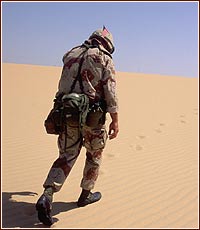
Common Dreams bericht: 'Abuses Found in Hiring at Iraq BasesViolations of laws on human-trafficking prompt U.S. military's order for change. WASHINGTON - The top U.S. commander in Iraq has ordered sweeping changes for privatized military support operations after confirming violations of laws against human-trafficking and other abuses by contractors involving possibly thousands of foreign workers on American bases, according to records obtained by the Chicago Tribune.Gen. George W. Casey Jr. ordered that contractors be required by May 1 to return passports that have been illegally confiscated from laborers on U.S. bases after determining that such practices violated U.S. laws against trafficking for forced or coerced labor. Human brokers and subcontractors from South Asia to the Middle East have worked together to import thousands of laborers into Iraq from impoverished countries.Two memos obtained by the Tribune indicate that Casey's office concluded that the practice of confiscating passports from such workers was widespread on American bases and in violation of the U.S. anti-trafficking laws.The memos, including an order dated April 4 and titled "Subject: Prevention of Trafficking in Persons in MNF-I," or Multinational Forces-Iraq, say the military also confirmed a host of other abuses during an inspection of contracting activities supporting the U.S. military in Iraq. They include deceptive hiring practices; excessive fees charged by overseas job brokers who lure workers into Iraq; substandard living conditions once laborers arrive; violations of Iraqi immigration laws; and a lack of mandatory "awareness training" on U.S. bases concerning human trafficking.Along with a separate memo from a top military procurement official to all contractors in Iraq, dated April 19 and titled, "Withholding of Passports, Trafficking in Persons," Casey's orders promise harsh actions against firms that fail to return passports or end other abusive practices. Contracts could be terminated, contractors could be blacklisted from future work, and commanders could physically bar firms from bases, the memos show.' Lees verder: http://www.commondreams.org/headlines06/0424-04.htm

Klimaatverandering 32

Common Dreams bericht: 'Bush Faces Growing Dissent From Republicans on Climate Change.
Representative Bob Inglis, a South Carolina Republican, says he "pooh-poohed'' global warming until he trekked to the South Pole in January. "Now, I think we should be concerned,'' says Inglis, who heads the U.S. House Science Research subcommittee. "Thabout reclaiming their heritage as ere are more and more Republicans willing to stop laughing at climate change who are ready to get serious conservationists.'' U.S. companies including General Electric Co. and Duke Energy Corp. have come out in support of national limits on carbon dioxide and other greenhouse-gas emissions that scientists say contribute to global warming. They are now being joined by Republican lawmakers who have parted company with President George W. Bush on the issue. In addition to Inglis, who says he saw evidence of heat- trapping gases in the atmosphere during his trip to Antarctica, the list includes Senators Pete Domenici of New Mexico, the chairman of the chamber's Energy Committee; Mike DeWine of Ohio; and Lindsey Graham of South Carolina, as well as Representative Jim Leach of Iowa. ``Resistance to action on climate change is crumbling,'' says Reid Detchon, an Energy Department official under former President George H.W. Bush who is now head of energy and climate at the United Nations Foundation. ``The business community has a number of prominent leaders arguing for action, and the science on climate change becomes clearer and more inescapable by the day.''
Republicans also are under pressure from one of their core constituencies: fundamentalist Christians. In February, 86 evangelical leaders called on the government to curb greenhouse gases emitted by cars, power plants and other sources, saying they felt a moral duty to speak out because global warming is endangering the earth." Lees verder: http://www.commondreams.org/headlines06/0424-07.htm Nu het Nederlands kabinet nog.

Het Transnational Institute


Het Transnational Institute emailde me het volgende: 'Arming Big Brother: new research reveals the true costs of Europe's security-industrial complexAmsterdam, 25 April. For immediate release. The European Union is preparing to spend up to €1 billion per year on new ‘research’ into surveillance and control technologies, according to Arming Big Brother, a new report by the Transnational Institute (TNI) and Statewatch.“Arms industry lobbying is leading to the creation of a powerful new internal security-industrial complex,” says Ben Hayes, author of the report.Arming Big Brother lifts the lid on the secretive committees and arms industry lobbying that led to the creation of the European Security Research Programme (ESRP). In 2003, a ‘Group of Personalities’ (GoP) comprised of EU officials and Europe’s biggest arms and IT companies, argued that European multinationals need one billion euros per year so they can compete with US multinationals and the US government’s funding of ‘Homeland Security’ research.The GoP’s demands were endorsed by the European Commission, which ignored its own rules on EU research expenditure to begin funding ‘security’ research immediately. The Commission has also appointed a European Security Research Advisory Board (ESRAB) to develop and implement the future ESRP. ESRAB includes at least 14 defence companies amongst its 50 members, but no one from the European Parliament or the EU Group on Ethics in Science and New Technologies.“The ESRP is completely unaccountable and gives multinational corporations an unacceptable role in EU decision-making. This is contributing to a European security agenda in the corporate rather than the public interest,” says Hayes. This claim is backed up by the evidence of the 24 projects that have already received funding from the Commission: military organisations and defence sector contractors are leading 17 of them. This includes two high-level ‘studies’ on EU security policy, one led by the European Association of Aerospace and Defence Industries (ASD, Europe’s largest defence industry lobby group), the other by the defence giant Thales. Another 10 projects deal with research into high-tech surveillance systems. The TNI-Statewatch report suggests that the EU ‘security research’ programme is - like the idea of ‘dual-use’ technologies - simply providing cover for military subsidies and lucrative government contracts. “The EU is basically funding the diversification of the ‘military-industrial complex’ into the highly profitable internal security field”, said Hayes.“The militarisation of policing and border controls will not prevent crime or terrorism”, said Hayes, “it does nothing to address ‘root causes’ while posing a massive threat to civil liberties”. “The EU should be regulating the trade in security technology, not lavishing it with taxpayers money in an unaccountable fashion”. A five page summary of Arming Big Brother can be downloaded from <www.tni.org/reports/militarism/bigbrosummary.pdf>. The full report is available at <'">www.tni.org/reports/militarism/bigbrother.pdf>'

Mohammed R. Jabri

Mohammed R. Jabri is redacteur va Elqalem.nl/com. Hij emailde me een essay waarin hij schrijft: 'Olie, wapens en de Amerikaanse dollar in het Midden-Oosten conflict. Er is een algemeen geloof dat door de media word verspreid: het geloof dat de enige intentie van Westerse naties bestaat uit het goedmaken van de relatie tussen Joden en Moslims. Hoe komt het dan dat, na decennia van bemoeienissen van deze Westerse naties, er nog geen oplossing is gevonden? Het is niet dat Joden en Moslims niet willen. Beide partijen zijn moegestreden en lijken te snakken naar vrede in de regio. Simpel. Omdat vrede geen winstgevende onderneming is voor de buitenlandse ‘elite’ in de regio. Wat belangrijk is, is de consolidatie van de positie van de Amerikaanse dollar in alle wereldeconomieën, het recyclen van oliedollars om winst te maken in de olie-industrie en de verkoop van militaire producten aan de olierijke Arabische regimes. De ongeschreven overeenkomst die de VS heeft is dat deze regimes de olie in dollars gewaardeerd wordt en als tegenprestatie word bescherming geboden. Bescherming waartegen? Het lijkt op de Italiaanse maffia: betaal beschermgeld en je wordt niet aangevallen door degenen aan wie je dat beschermgeld betaalt. Terwijl Fox, Time en CNN nooit dit punt bespreken, mag het duidelijk zijn dat de waardering van olie in dollars immens belangrijk is voor de positie van de dollar en daarom dan ook enkel en alleen olie in dollars mag worden gewaardeerd op de internationale markteconomie. Wanneer olie wordt verhandeld in Amerikaanse dollars zijn landen wereldwijd genoodzaakt een bepaalde hoeveelheid dollars in de reserves van hun nationale banken te houden, om zo hun olieaankopen te kunnen blijven financieren. OPEC is een kartel dat is ontstaan om enkel en alleen dit doel te dienen. Tegen het eind van 2000 raamde de ‘Bank for International Settlements’ de dollarreserves wereldwijd op $1,45 biljoen, oftewel: 76% van de wereldreserves van $1,09 triljoen. Als olie in een andere valuta zou worden gewaardeerd, zouden de meeste landen een overschot aan dollars hebben en zouden zo de meeste biljetten die de VS de afgelopen decennia hebben gedrukt alleen waarde hebben in de VS zelf. Dit zou een vloed aan dollars naar de VS en daarmee dus ook een ongelofelijke inflatie veroorzaken. Daarnaast zou ook het Amerikaans deficit niet meer worden gefinancierd door buitenlandse investeerders en zouden zij niet langer meer investeren in Amerikaanse overheidsobligaties. Met andere woorden: de VS zou ophouden met het zijn van een economische supermacht. In een briljant essay over dit onderwerp, genaamd “A Macroeconomic and Geostrategic Analysis of the Unspoken Truth” van de econoom William Clark, geschreven in januari 2003 wordt het volgende gesteld: “De grootste nachtmerrie van ‘The Federal Reserves’ is dat OPEC zal switchen van een dollar- naar een eurostandaard als waardering voor aardolie. Saddam Hussein’s Irak heeft in feite deze switch gemaakt. De werkelijke reden van de Bush-regering, of beter gezegd: het Amerikaanse corporatief-militair-industrieel netwerk, om een zogenaamde ‘trekpoppenregime’ in Irak aan te stellen is om de waardering van olie ook in Irak weer in dollars te krijgen”. Anderen hebben ook oor gekregen naar het idee om de olie in euro’s te gaan waarderen en de dollar overboord te gooien (iets wat ook de bekoelde relatie tussen Europa en de VS zou kunnen uitleggen). Op 18 juni 2003 schreef publicist Roy Carson van het Venezolaanse economisch tijdschrift Veheadline.com, het volgende: “De beslissing van de Venezolaanse president Hugo Chavez Frias, om de waardering van dollars in Venezuela te vervangen met de Euro, lijkt Washington erg op de tenen te hebben getrapt. Erger nog dan toen Saddam Hussein in november 2002 overging op de euro en de dollar liet voor wat ie is bij het aangaan van olietransacties, wat uiteindelijk leidde tot de invasie van Irak. De CIA en andere inlichtingendiensten, zoals de Britse MI5, schijnen aanleiding te hebben om te vrezen dat nu de volgende stap voor OPEC is om ook over te gaan op oliewaardering in euro’s. Het direct effect zou een immense devaluatie zijn van de gigantische hoeveelheden dollars in de internationale reserves en een voor de VS negatief domino-effect zal hebben als het gaat om de waardering van de staatsschulden. Met een gigantisch budget deficit in het achterhoofd werden de VS nog banger toen het bericht van inlichtingendiensten binnenkwam, dat ook Saoedi-Arabië op het punt staat om over te stappen op de euro en de door OPEC-ministers steeds breder gedragen mening dat de overstap van de dollar naar de euro onvermijdelijk lijkt. De vraag is alleen: wanneer stappen we over?” Arabische bronnen suggereren dat de overstap van de dollar naar de euro in zowel het Midden-Oosten als het Verre Oosten (lees: India en China als karrentrekkers) het meest rationele antwoord is op de Amerikaanse capaciteit om nog meer illegale oorlogen (directer gezegd: staatsgesteunde terrorisme) wereldwijd te steunen. Een belangrijke stap in deze richting is het feit dat ook Iran op de drempel staat om over te gaan op de euro en als resultaat het meest recente mikpunt lijkt van de Amerikaanse politiek c.q. ondiplomatieke bemoeienissen in de ontwikkelingen van het land. De VS steunt achter de schermen de Iranese oppositie en stimuleert deze om dreigende taal uit te slaan richting de zittende regering, om deze te verleiden tot ondemocratische handelingen. De volgende stap lijkt de destabilisatie van de regio en quasi-liberale oorlog onder het pretext van ‘promotie van VS-stijl democratie’, maar in feite is de essentie de consolidatie en bescherming van de Amerikaanse dollar als munteenheid van de wereld.' Lees verder: http://www.elqalem.nl/elqalem/aspx/template.aspx?item_id=943&category_id=35&group_id=5

maandag 24 april 2006

Israelisch Expansionisme 13

Angela Godfrey-Goldstein van The Israeli Committee Against House Demolitions (http://www.icahd.org/eng/) stuurde me deze email: 'Save Jerusalem from the Apartheid Wall and Ethnic cleansing. The new comprehensive factsheet on Jerusalem shows the dramatic process of Judaization that the city is undergoing. From the historical, cultural and spiritual role the Palestinian capital played before the Nakba in '48 until today, this activist resource draws a timeline of destruction of Palestinian villages and communities and continuous Zionist colonization. The detailed documentation reveals the Apartheid Wall as a final step towards the ethnic cleansing of the Palestinian capital – a world heritage of cultural and religious diversity on the verge of destruction. ' Lees verder:
http://stopthewall.org/factsheets/1137.shtml

Nederland en Afghanistan 60

Nederlandse militairen zijn volgens het kabinet Balkenende bezig in Afghanistan de democratie van president Hamid Karzai, de voormalige adviseur van de Amerikaanse oliemaatschappij Unocal, op te bouwen. Al op 19 september 2002 schreef Scott Baldauf van de Christian Science Monitor dat een 'significant number of Afghans - especially the conservative Pashtun majority - are finding that they have more in common with the radical Islamic message of al Qaeda and the Taliban than they do with the pro-Western statements of new Afghan President Hamid Karzai.' Een jaar eerder, op 20 september 2001, waarschuwde 1 van 's werelds grootste militaire historici, Sir John Keegan: 'Efforts to occupy and rule [Afghanistan] usually ended in disaster. But straightforward punitive expeditions, for limited objectives or to bring about a change in Afghan government policy, were succesful on more than one occasion... The succes achieved by Indian and British troops in the last days of the Raj depended on the avoidance of general war and of policies designed to change society or government in Afghanistan. The Raj accepted that Afghanistan was unstable, fractious, and ultimately ungovernable and thought merely to check its mountains warriors' irrepressible love of raiding and fighting... Russia, in 1979, made the mistake the East India Company had made in 1839. It tried to impose a government in Kabul. Putting its own man in place was easy. Keeping him there proved the difficulty... Limited campagins aimed at penetration, aimed simply at inflicting punishment, can succeed, as long as the punitive forces remain mobile, keep control on the high ground and are skillful at tactical disengagement.'

Censored By Zelensky's Thugs

Anatolij Sharij @anatoliisharii Yulia Mendel, Zelenskyy’s former press secretary, against whom Zelenskyy imposed sanctions two days ago, was...