Lebanon’s Environmental Defenders Say Israel Is Deliberately Targeting Them
Israel has decimated Lebanon’s land — and is also slaughtering the people who protect it.

Did you know that Truthout is a nonprofit and independently funded by readers like you? If you value what we do, please support our work with a donation.
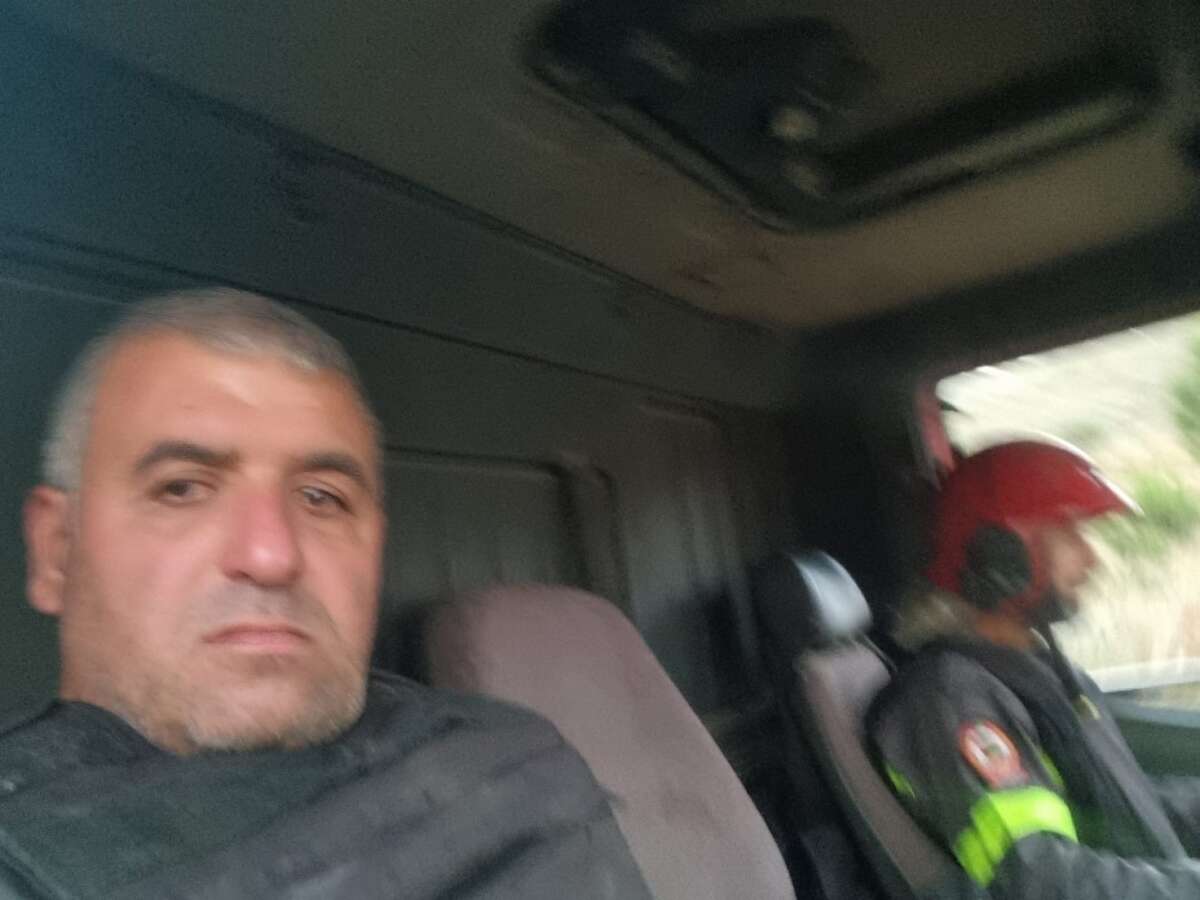
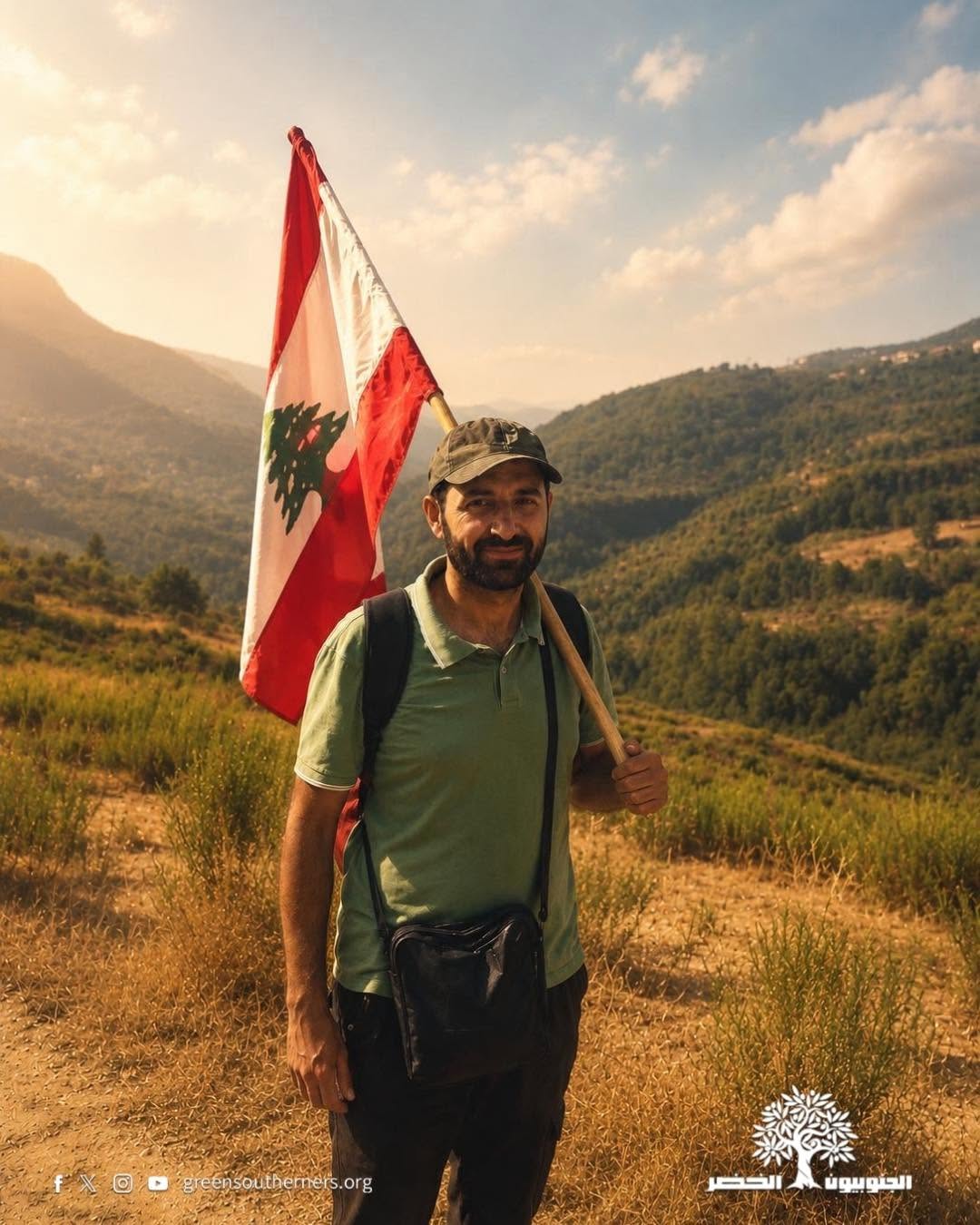
In late April 2025, after 41-year-old farmer Oussama Farhat was discharged from the hospital, two pieces of shrapnel still lodged in his body, he hurried to check on an injured red fox. In his southern Lebanon village of Meiss el-Jabal, Farhat, a volunteer with the environmental organization Green Southerners, had helped rescue the cub from beneath the rubble of ongoing Israeli air strikes — the same kind that has decimated southern Lebanon and its people for the past three years. Now, the young fox was curled atop a starry blanket, its outstretched leg wrapped in a blue bandage.
In a message to Hisham Younes, the founder and president of Green Southerners, Farhat wrote that the fox cub would soon be ready for release.
Concerned, Younes replied: “Oussama, where are you?”
A member of the Lebanese Civil Defense, Farhat had been injured on April 25, 2025, after he and a fellow volunteer went to check for casualties unknowingly halfway through an Israeli double-tap strike — a tactic where an attack is followed by a second in the same location. In the days following October 7, 2023, Hezbollah, an armed group and political party formed in response to Israel’s 1982 invasion of Lebanon, launched rockets and artillery into occupied Shebaa Farms as an act of solidarity with the Palestinian people. Since then, Israel has continued to attack southern Lebanon near-daily, making Farhat’s village — just 700 yards from the UN-demarcated “Blue Line” that separates the two states — a hotspot.
After Farhat was discharged from the hospital, Younes implored him to go to Nabatieh, about an hour north, and rest with his family, including his elderly mother. But, says Younes, steadfast in his commitment to the south, Farhat explained that he needed to stay in Meiss el-Jabal.
“Please Oussama, you need to leave,” Younes replied.
The next day, Farhat was killed.
For the past three years and over two ceasefire agreements, Israel has systematically and violently erased life from southern Lebanon, committing what many, including Lebanon’s environment minister, have deemed an ecocide. An agricultural borderland in the heart of the historic fertile crescent, Israel has transformed southern Lebanon from small-scale and subsistence farms of tobacco, olives, and goats to a landscape set ablaze by white phosphorusmunitions, littered with unexploded ordnance, and poisoned by the pesticide glyphosate. In a region where around 70 percent of families rely on farming, explained Ghassan Makarem, an organizer with the Lebanese food sovereignty organization AgriMovement, Israel has used airstrikes, shelling, and the steady roar of bulldozers to destroy around a quarter of the country’s cultivated land, burning olive groves to ash, slaughtering flocks of livestock, and flattening entire villages.
“Nothing that lives has been spared,” said Makarem. “It’s all part of the genocide that’s occurring.”
Since 2023, that genocidal violence, as described by multiple outlets, has displaced more than 1 million people, killing nearly 9,000 and injuring more than 30,500, mostly in the south. Included within that figure, alongside a high number of emergency services workers, are southern Lebanon’s land and environmental defenders — displaced, disappeared, injured, and killed, because of their commitment to steward and protect the land.
As Julia Choucair Vizoso, a senior fellow at the Arab Reform Initiative and researcher for The Public Source who has written about environmental struggle and food sovereignty in the Middle East and North Africa (MENA), explained, Israel has long had a policy, stretching from occupied Palestine to southern Lebanon, of attacking those who resist occupation by refusing to leave. Because of that, farmers, shepherds, fishers, and beekeepers have not only suffered as Israel destroys their livelihoods and land, but have been marked as a threat because of their very connection to it in the first place.
Among those environmental defenders is Farhat.
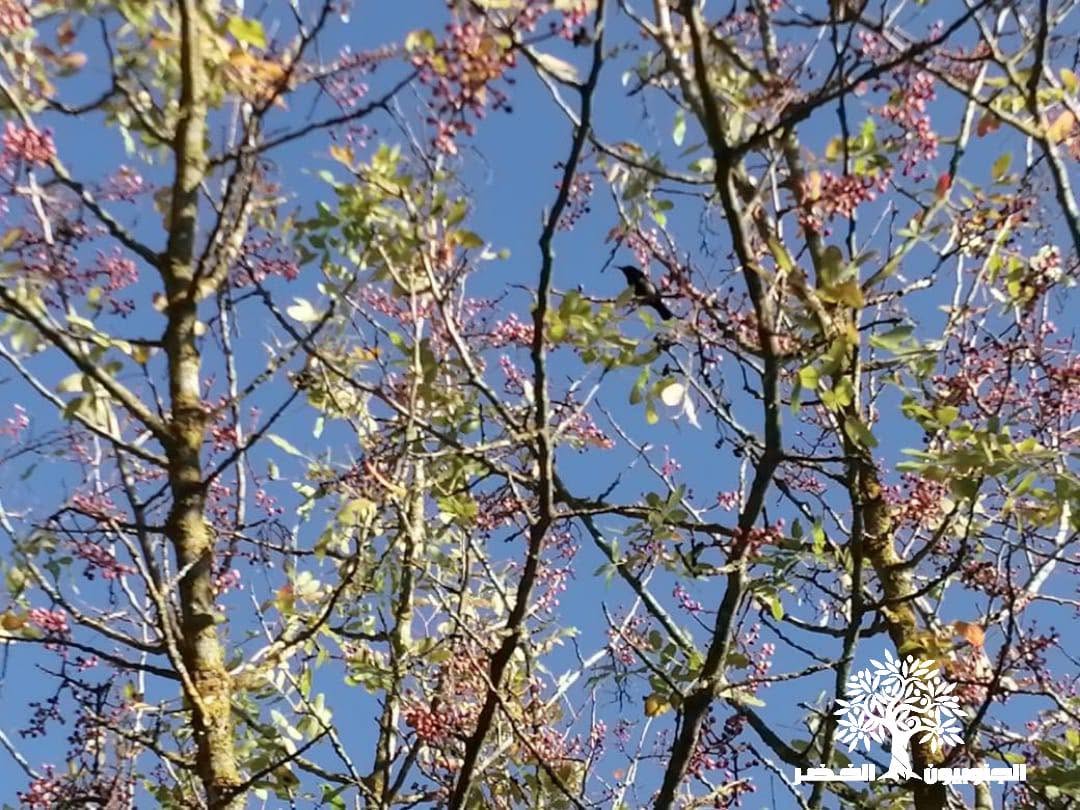
Six years ago, explained Younes, the farmer reached out to Green Southerners asking how best he could help local animals, especially those that were injured or sick. Farhat soon became part of the all-volunteer team, helping map bird habitats in the eastern Mediterranean flyway, documenting illegal logging, and photographing the region’s flora and fauna, including the iridescent Palestine sunbird. But shortly after Israel started bombing southern Lebanon, Farhat’s role changed.
As a field coordinator with Green Southerners, he began documenting the frequency and impact of Israeli white phosphorus strikes, some of which have since been deemed potential war crimes. Alongside two other volunteers, Farhat photographed the white, tentacled clouds caused by the munitions, geolocated and dated the strikes, and, whenever possible, helped quell the phosphorus fires that burned hot and long — often sustaining injuries that landed him in the hospital. From October 2023 to November 2024, volunteers with Green Southerners verified some 285 attacks, many in residential areas and above agricultural land.
While Farhat’s story, much like that of slain sea turtle conservationist Mona Khaliland former Green Southerner volunteer Mohammad Skaff, who was killed in theresidential town of Abbasiya in May 2026, fits a more Western idea of activism, those who tend the land of southern Lebanon without an “activist” title, said Younes, are no less environmental defenders — and no less impacted.
“In every village, the community has environmental defenders for whom it is their culture to take care of livestock, wild animals, pets, and abundant beehives,” said Younes. “It’s not just Mona or Oussama — there are thousands of casualties that go unseen.”
On July 2, 2024, farmer Muhyiddin Abu Dalla was killed in an Israeli airstrike on his home in Zalloutieh shortly after he finished harvesting wheat. “The land was more important than his life,” Dalla’s brother told journalist Amal Khalil, who herself was later killed in an Israeli strike in 2026.
On November 25, 2024, 91-year-old Ali Kdouh, known locally as Abou Hussein, was killed after remaining with his herd and enduring two months of attacks on the region. He was considered the last shepherd of Nabatieh.
On February 2, 2025, fisher Mohammad Juhair was abducted by Israeli soldiers while fishing with his cousin near the southern Lebanese port of Naqoura. According to the most recent reporting, he has not been seen since.
On June 17, 2025, Mohamed Abdel Salam Nasrallah, a dedicated beekeeper, was killed in an airstrike while in the fields of his home in Houla. “I am the type of person who gives from his heart to what he loves,” Nasrallah told Reuters in 2022.
“In Lebanon, a lot of the people who are on the front lines of genocidal violence are just trying to stay on the land and keep living off the land,” Vizoso said. “These are communities at large that are threatened but kind of invisibilized globally.”
Because of this, the term environmental defender can often be an imperfect one. With origins that are more institutional and individualistic, explained Vizoso, it fails to capture the collective struggle of communities operating outside of international, nongovernmental organizations. But patterns of violence and repression against those protecting the environment, the land, and the sea are often repeated around the world, from one government, one corporation, and one paramilitary to the next.
The attacks in southern Lebanon are part of that global context.
From 2012 to 2025, some 2,375 land and environmental defenders were killed or disappeared, according to data from the human rights organization Global Witness. This figure includes well-known defenders such as Indigenous Lenca leader Berta Cáceres, who was killed in her home in Honduras, to farmers, community activists, peasants, and Indigenous peoples targeted for protecting the land from extraction and development projects including mining, logging, agribusiness, renewable energy, and even tourism.
Over the years, both Israel’s public and private sectors have played a role in these attacks, too.
In 2014, private security guards from Israel’s Golan Group were hired to “protect”a Canadian mine in Guatemala. During a demonstration against the mine, the guards shot at Indigenous protesters, injuring seven people. In Indonesia, including in occupied West Papua, the country’s police and military forces use a cellphone hacking system sold by Cellebrite, an Israeli digital intelligence company. Since 2018, seven environmental defenders, including four Indigenous West Papuans, have likely been killed by state forces.
In 2018, as former Philippine President Rodrigo Duterte faced a preliminary examination into war crimes from the International Criminal Court, he publicly committed to solely purchasing weapons from Israel, given the country’s complete lack of human rights restrictions. An investigation I conducted in 2024 found evidence that between 2014 and 2024, the Philippine state was potentially involved in 109 out of 210 killings of environmental defenders recorded in the country.
But while killings and repression by governments, corporations, and paramilitary groups have been consistently documented globally for more than a decade, violence leveled against environmental and land defenders in the Middle East and North Africa is often underreported, in part because of ongoing conflict. Global Witness noted in its 2024 report that a lack of capacity and the challenges of research amid conflict have meant that many victims, including Farhat, are omitted from official tallies. The organization acknowledged, however, that this doesn’t diminish the importance of the victims’ work, the extent of violence and repression they face, or the fact that, in many instances, they have more than likely been targeted for their work.
“I believe the targeting is not secondary — it’s deliberate,” said Ghassan, with a reference to the killing of Khalil. “[The Israelis] say they have information about everyone which means they are saying they know who they’re targeting — they have already admitted it.”
Younes, too, believes Khalil, Skaff, and Farhat were targeted.
In the months before Farhat was injured while volunteering with the Civil Defense, he told Younes that he had appeared in a documentary. While Green Southerners volunteers regularly in coordinated interviews with journalists, the extent and destruction of Israeli aggression had made Younes more cautious. Since 2023, he has preferred that volunteers don’t show their faces on camera as he feared they might become targets. Then, on May 1, 2025, as Farhat drovein his pickup truck through Meiss el-Jabal, he narrowly escaped an Israeli airstrike, according to Younes. Within half an hour, as the farmer and environmental defender neared his home, a drone struck again. This time, before Farhat was even out of the car or in the house, he was killed.
“I think this is part of the policy to push the people out — threaten them, kill them,” said Younes. “This is the easiest way, and the Israelis are professionals.”
In a video from July 2018, Farhat filmed a golden jackal close to the village of Bint Jbeil. As it wanders through long, yellowed grass, the wolf-like animal notices Farhat and pauses, watching him as he watches back. Farhat’s caring relationship with wild animals is among his qualities Younes remembers best. In particular, he says, the time a female golden jackal, normally extremely protective, allowed Farhat to approach her pups.
“This was something really rare,” said Younes. “It was extraordinary.”
Since Farhat was killed, few Green Southerners volunteers have remained in the south and, for now, Younes has continued to encourage everyone to leave. But as the destruction continues, so, too, does the documentation. This year alone, the organization has recorded Israeli airstrikes near UNESCO World Heritage sites, nature reserves set ablaze, and multiple white phosphorus strikes, including several across the densely populated town of Nabatieh in June. While Younes acknowledges that, for now, Israel — supported by the U.S. — operates with impunity, he is optimistic that one day there may be a path for justice and accountability.
“The documents are there, the images are there, the faces of those who were killed — Mona, Mohammad, Oussama — are there, looking at you,” he said. “We hope that through documentation we are keeping the truth alive, we are keeping the collective memory of our land alive.”
“And we hope, one day, this world will wake up.”
We lost 15 percent of our traffic overnight.
We now have three full months of data since Google changed its search to feature AI results. The numbers are worse than we anticipated. Overall readership that comes to Truthout through Google is down 54 percent against last year. The number of new readers who discover Truthout via Google searches is down 49 percent, and returning users from Google are down 51 percent.
We lost 15 percent of our readership overnight. This was a readership we painstakingly built over decades, and it vanished because Google chose corporate greed over a healthy democracy.
We anticipate a loss of roughly $500,000 in online revenue as a result of this massive traffic plunge in the next year alone.
The only way we can keep publishing is with strong reader support. We are asking you to start a monthly donation to Truthout today — anything you can do, whether $5 or $25, makes a difference.


Geen opmerkingen:
Een reactie posten