'Fort Huachuca Intelligence Center Draws Private Contractors By Mike Sunnucks The Business Journal of Phoenix
An increasing amount of U.S. intelligence work - including training related to aggressive interrogation methods - is being parceled out to defense firms making Arizona's Fort Huachuca a major contracting hub. The base, which sits near the Mexican border about 190 miles southeast of Phoenix, is home to the U.S. Army's Military Intelligence Center. Large contractors such as General Dynamics, which has an information technology division in Scottsdale; Lockheed Martin, L-3 Communications, which has operations in Mesa; CACI International; and ManTech International all conduct work at Fort Huachuca and have offices in Sierra Vista adjacent to the base. The companies posted a combined $79 billion in revenue in 2006. There also are smaller companies - including AllSource Global Management, Integrated Systems Improvement Services, both based in Sierra Vista, and Phoenix-based Castillo Technologies, that do work intelligence work at the base. Privatized intelligence work is an increasingly big business, said Pratap Chatterjee, program director for CorpWatch, a California-based watchdog group. Chatterjee estimates that as much as 50 percent to 70 percent of U.S. intelligence work, training and technology is handled by private firms making it a $20 billion to $40 billion sector. But it also is a controversial business. Huachuca is one of the primary training centers for interrogation techniques, data collection and covert operations. Intelligence personnel trained at the Arizona base are stationed in Iraq, Afghanistan and Guantanamo Bay, Cuba. Amnesty International and other human rights groups criticize U.S. policies related to prisoner interrogations and question whether certain techniques and how they are taught at Huachucha amount to or lead to torture. Jumana Musa, advocacy director for Amnesty International USA, said interrogation techniques taught at Huachuca may include water boarding, sleep deprivation, stress positions, phobia exploitation and sexual humiliation of suspects. Musa said Amnesty also is concerned about the oversight and training of private contractors that do intelligence work at the Arizona base. The U.S. Army and Bush administration deny the torture claims. Fort Huachuca spokeswoman Tanja Linton, said contractors perform a wide variety of services at the base, including in the intelligence arena. Linton said intelligence personnel are taught straight from Army field manuals and abide by applicable U.S. laws including those passed after Abu Gharib. She said training is "transparent" and is made open to the media and elected officials.'
Deze foto nam ik zomer 2006 in het zuiden van Arizona.
November 2006 schreef ik dit:
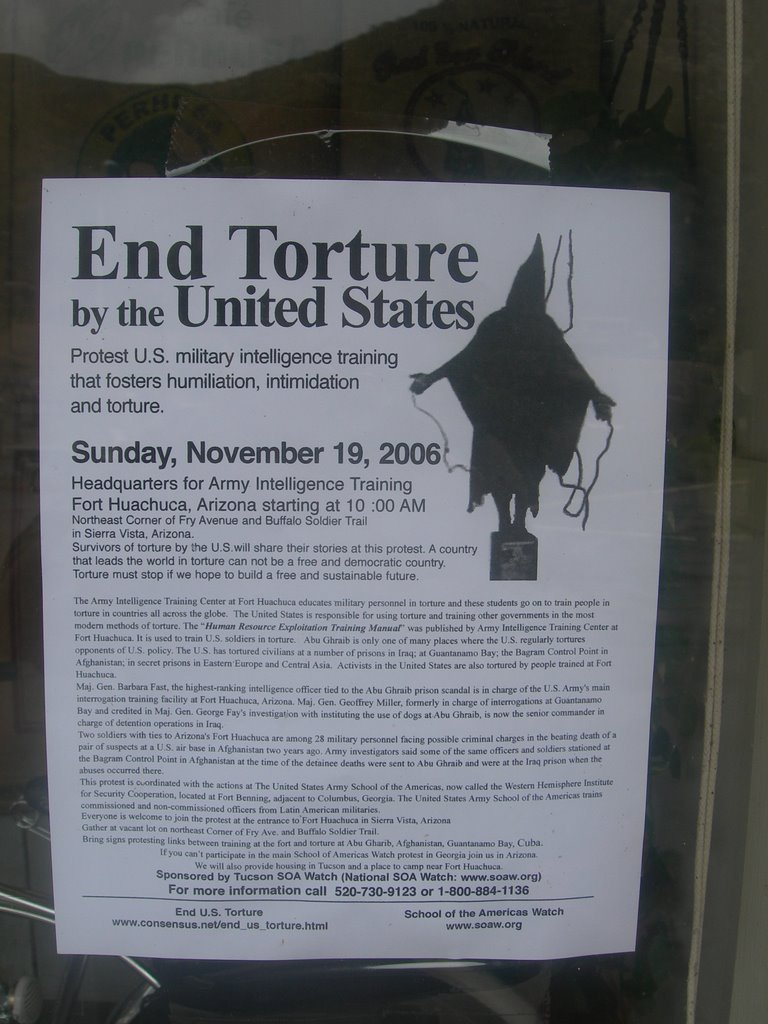
'Deze zomer was ik in het zuiden van Arizona en passeerde bij toeval Fort Huachuca, het hoofdkwartier van de Army Intelligence Training. Van bewoners in het nabijgelegen voormalige kopermijnstadje Bisbee hoorde ik dat militairen daar getraind worden in het martelen. 19 november 2006, morgen dus, zou er een grote demonstratie worden gehouden tegen het bestaan van dit martelcentrum. Op een affiche (zie foto) las ik: 'The Army Intelligence Training Center at fort Huachuca educates military personnel in torture and these students go on to train people in torture in countries all across the globe.' Nu zeg ik niet dat Nederlandse militairen daar, in dat centrum, getraind zijn in marteltechnieken, maar bekend is dat de trainingen van de NAVO-militairen gestandaardiseerd zijn. NAVO-soldaten en officieren leren nagenoeg hetzelfde, dezelfde gevechtstechnieken, dezelfde verhoortechnieken, ze gebruiken dezelfde wapens. Het verbaast me dan ook geenszins dat Nederlandse militairen verhoortechnieken leren die in strijd zijn met de Geneefse Conventies. De regels van de standaardisering zijn opgesteld door het machtigste lid van de bondgenootschap, de VS, een natie die na 2001 nog minder respect heeft voor de mensenrechten.'
Louis Vitale, 75, a Franciscan priest, and Steve Kelly, 58, a Jesuit priest, were each sentenced to five months in federal prison for attempting to deliver a letter opposing the teaching of torture at Fort Huachuca in Arizona. Both priests were taken directly into jail from the courtroom after sentencing. Fort Huachuca is the headquarters of military intelligence in the U.S. and the place where military and civilian interrogators are taught how to extract information from prisoners. The priests attempted to deliver their letter to Major General Barbara Fast, commander of Fort Huachuca. Fast was previously the head of all military intelligence in Iraq during the atrocities of Abu Ghraib.The priests were arrested while kneeling in prayer halfway up the driveway to Fort Huachuca in November 2006. Both priests were charged with trespass on a military base and resisting orders of an officer to stop. In a pre-trial heating, the priests attempted to introduce evidence of torture, murder, and gross violations of human rights in Afghanistan, Abu Ghraib in Iraq, and at Guantanamo. The priests offered investigative reports from the FBI, the US Army, Amnesty International, Human Rights Watch, and Physicians for Social Responsibility documenting hundreds of incidents of human rights violations. Despite increasing evidence of the use of torture by U.S. forces sanctioned by President Bush and others, the federal court in Tucson refused to allow any evidence of torture, the legality of the invasion of Iraq, or international law to be a part of the trial.Outside the courthouse, before the judge ordered them to prison, the priests explained their actions: “The real crime here has always been the teaching of torture at Fort Huachuca and the practice of torture around the world. We tried to deliver a letter asking that the teaching of torture be stopped and were arrested. We tried to put the evidence of torture on full and honest display in the courthouse and were denied. We were prepared to put on evidence about the widespread use of torture and human rights abuses committed during interrogations at Abu Ghraib and Guantanamo in Iraq and Afhganistan. This evidence was gathered by the military itself and by governmental and human rights investigations.”'
De Nederlandse regering steunt de martelpraktijken van het Amerikaanse leger door het verstrekken van troepen in Afghanistan, die vermeende Taliban strijders in feite overdragen aan de Amerikanen. Daarvoor kunnen de Nederlandse politiek verantwoordelijken juridisch vervolgd worden.
Deze misdaden worden militair en politiek gesteund door het Nederlandse kabinet.
'End Torture by the United States. Protest military intelligence training that fosters humiliation, intimidation and torture.Sunday, November 19, 2006 - 2:30 to 4:00 PMHeadquarters for Army Intelligence Training Fort Huachuca, ArizonaNortheast Corner of Fry Avenue and Buffalo Soldier Trail in Sierra Vista, Arizona.Survivors of torture by the United States will share their stories at this protest.The Army Intelligence Training Center at Fort Huachuca educates military personnel in torture and these students go on to train people in torture all across the globe. The United States is responsible for using torture and training other governments in the most modern methods of torture. The Human Resource Exploitation Training Manual was published by Army Intelligence Training Center at Fort Huachuca. It is used to train people in torture. Abu Ghraibis only one of many places where the U.S. tortured opponents of U.S. policy. The Red Cross believes that the U.S. may have tortured Iraqis at a number of prisons as well as at Guantanamo Bay and the Bagram Control Point in Afghanistan. Activists in the United States are also tortured by people trained at Fort Huachuca. Maj. Gen. Barbara Fast, the highest-ranking intelligence officer tied to the Abu Ghraib prison scandal is in charge of the U.S. Army's main interrogation training facility at Fort Huachuca, Arizona. Maj. Gen. Geoffrey Miller, formerly in charge of interrogations at Guantanamo Bay and credited in Maj. Gen. George Fay's investigation with instituting the use of dogs at Abu Ghraib, is now the senior commander in charge of detention operations in Iraq. Two soldiers with ties to Arizona's Fort Huachuca are among 28 military personnel facing possible criminal charges in the beating death of a pair of suspects at a U.S. air base in Afghanistan two years ago. Army investigators said some of the same officers and soldiers stationed at the Bagram Control Point in Afghanistan at the time of the detainee deaths were sent to Abu Ghraib and were at the Iraq prison when the abuses occurred there. This protest is coordinated with the actions at The United States Army School of the Americas, now called the Western Hemisphere Institute for Security Cooperation, located at Fort Benning, adjacent to Columbus, Georgia. The United States Army School of the Americas trains commissioned and non-commissioned officers from Latin American militaries. Many of its graduates have returned to their home countries and committed such atrocities as rapes, disappearances, torture, and assassination; they have organized death squads and paramilitaries to counter insurgencies and maintain power. Sponsored by Tucson SOA Watch (National SOA Watch: www.soaw.org) For more information call 520- 620-0480 or 520- 748-8028 or toll free at 1-800-884-1136 Carpool caravan will leave Southside Presbyterian Church in Tucson at 1PM. http://www.consensus.net/end_us_torture.html '
Let u even op de data. Ik heb deze informatie jarenlang opgestuurd naar Nederlandse parlementariers. Geen 1 van hen heeft ooit een reactie gegeven of daadwerkelijk iets in het parlement ondernomen tegen deze onthulde feiten, terwijl toch Nederlandse militairen hierbij op zijn minst indirect betrokken waren. Geen 1, niet van rechts, niet van links.
Onze bondgenoot in de 'war on terror' heeft zijn gevangenis in Afghanistan uitgebreid. Daar zullen binnenkort ongetwijfeld de belangrijkste gevangenen van de Nederlandse militairen in Uruzgan gemarteld worden. De New York Times bericht: 'An Afghan Prison Expands, Filling Guantánamo's Role. While an international debate rages over the future of the American detention center at Guantánamo Bay, Cuba, the military has quietly expanded another, less-visible prison in Afghanistan, where it now holds some 500 terror suspects in more primitive conditions, indefinitely and without charges. Pentagon officials have often described the detention site at Bagram, a cavernous former machine shop on an American air base 40 miles north of Kabul, as a screening center. They said most of the detainees were Afghans who might eventually be released under an amnesty program or transferred to an Afghan prison that is to be built with American aid. But some of the detainees have already been held at Bagram for as long as two or three years. And unlike those at Guantánamo, they have no access to lawyers, no right to hear the allegations against them and only rudimentary reviews of their status as "enemy combatants," military officials said. Privately, some administration officials acknowledge that the situation at Bagram has increasingly come to resemble the legal void that led to a landmark Supreme Court ruling in June 2004 affirming the right of prisoners at Guantánamo to challenge their detention in United States courts. While Guantánamo offers carefully scripted tours for members of Congress and journalists, Bagram has operated in rigorous secrecy since it opened in 2002. It bars outside visitors except for the international red cross and refuses to make public the names of those held there. The prison may not be photographed, even from a distance. From the accounts of former detainees, military officials and soldiers who served there, a picture emerges of a place that is in many ways rougher and more bleak than its Cuban counterpart. Men are held by the dozen in large wire cages, the detainees and military sources said, sleeping on the floor on foam mats and, until about a year ago, often using plastic buckets for latrines. Before recent renovations, they rarely saw daylight except for brief visits to a small exercise yard. "Bagram was never meant to be a long-term facility, and now it's a long-term facility without the money or resources," said one Defense Department official who has toured the detention center. Comparing the prison with Guantánamo, the official added, "Anyone who has been to Bagram would tell you it's worse." Former detainees said the renovations had improved conditions somewhat, and humans rights groups said reports of abuse had declined steadily there since 2003. Nonetheless, the Pentagon's chief adviser on detainee issues, Charles D. Stimson, declined to be interviewed on Bagram, as did senior detention officials at the United States Central Command, which oversees military operations in Afghanistan. The military's chief spokesman in Afghanistan, Col. James R. Yonts, also refused to discuss detainee conditions, other than to say repeatedly that his command was "committed to treating detainees humanely, and providing the best possible living conditions and medical care in accordance with the principles of the Geneva Convention." Other military and administration officials said the growing detainee population at Bagram, which rose from about 100 prisoners at the start of 2004 to as many as 600 at times last year, according to military figures, was in part the result of a Bush administration decision to shut off the flow of detainees into Guantánamo after the Supreme Court ruled that those prisoners had some basic due-process rights under United States law. The question of whether those same rights apply to detainees in Bagram has not yet been tested in court. Until the court ruling, Bagram functioned as a central clearing house for the global fight against terror. Military and intelligence personnel there sifted through captured Afghan rebels and suspected terrorists seized in Afghanistan, Pakistan and elsewhere, sending the most valuable and dangerous to Guantánamo for extensive interrogation, and generally releasing the rest.' Lees verder: http://nytimes.com/2006/02/26/international/26bagram.html?hp&ex=1140930000&en=5ecf85c2251c315d&ei=5094&partner=homepage
Deze misdaden worden militair en politiek gesteund door het Nederlandse kabinet.
'End Torture by the United States.
Protest military intelligence training that fosters humiliation, intimidation and torture.Sunday, November 19, 2006 - 2:30 to 4:00 PMHeadquarters for Army Intelligence Training Fort Huachuca, ArizonaNortheast Corner of Fry Avenue and Buffalo Soldier Trail in Sierra Vista, Arizona.Survivors of torture by the United States will share their stories at this protest.The Army Intelligence Training Center at Fort Huachuca educates military personnel in torture and these students go on to train people in torture all across the globe. The United States is responsible for using torture and training other governments in the most modern methods of torture. The Human Resource Exploitation Training Manual was published by Army Intelligence Training Center at Fort Huachuca. It is used to train people in torture. Abu Ghraibis only one of many places where the U.S. tortured opponents of U.S. policy. The Red Cross believes that the U.S. may have tortured Iraqis at a number of prisons as well as at Guantanamo Bay and the Bagram Control Point in Afghanistan. Activists in the United States are also tortured by people trained at Fort Huachuca.
Maj. Gen. Barbara Fast, the highest-ranking intelligence officer tied to the Abu Ghraib prison scandal is in charge of the U.S. Army's main interrogation training facility at Fort Huachuca, Arizona. Maj. Gen. Geoffrey Miller, formerly in charge of interrogations at Guantanamo Bay and credited in Maj. Gen. George Fay's investigation with instituting the use of dogs at Abu Ghraib, is now the senior commander in charge of detention operations in Iraq.
Two soldiers with ties to Arizona's Fort Huachuca are among 28 military personnel facing possible criminal charges in the beating death of a pair of suspects at a U.S. air base in Afghanistan two years ago. Army investigators said some of the same officers and soldiers stationed at the Bagram Control Point in Afghanistan at the time of the detainee deaths were sent to Abu Ghraib and were at the Iraq prison when the abuses occurred there.
This protest is coordinated with the actions at The United States Army School of the Americas, now called the Western Hemisphere Institute for Security Cooperation, located at Fort Benning, adjacent to Columbus, Georgia. The United States Army School of the Americas trains commissioned and non-commissioned officers from Latin American militaries. Many of its graduates have returned to their home countries and committed such atrocities as rapes, disappearances, torture, and assassination; they have organized death squads and paramilitaries to counter insurgencies and maintain power.
Sponsored by Tucson SOA Watch (National SOA Watch: www.soaw.org) For more information call 520- 620-0480 or 520- 748-8028 or toll free at 1-800-884-1136 Carpool caravan will leave Southside Presbyterian Church in Tucson at 1PM. http://www.consensus.net/end_us_torture.html '
'Taxi to the Dark SideMust Watch Award-Winning Documentary
The film documents how Rumsfeld, together with the White House legal team, were able to convince Congress to approve the use of torture against prisoners of war. Taxi to the Dark Side is the definitive exploration of the introduction of torture as an interrogation technique in U.S. facilities, and the role played by key figures of the Bush Administration in the process.
Over one hundred prisoners have died in suspicious circumstances in U.S. custody during the "war on terror". Taxi to the Dark Side takes an in-depth look at one case: an Afghan taxi driver called Dilawar who was considered an honest and kind man by the people of his rustic village. So when he was detained by the U.S military one afternoon, after picking up three passengers, denizens wondered why this man was randomly chosen to be held in prison, and, especially, without trial? Five days after his arrest Dilawar died in his Bagram prison cell. His death came within a week of another death of a detainee at Bagram. The conclusion, with autopsy evidence, was that the former taxi driver and the detainee who passed away before him, had died due to sustained injuries inflicted at the prison by U.S. soldiers. The documentary, by award-winning producer Alex Gibney, carefully develops the last weeks of Dilawar’s life and shows how decisions taken at the pinnacle of power in the Bush Administration led directly to Dilawar’s brutal death.'
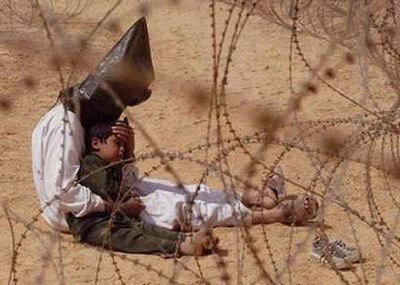
De BBC en Amnesty Intyernational spreken van 'abuses'. In feite gaat het om martelen dat zelfs tot de dood leidt.
Detainees Were Also Murdered at Bagram in Afghanistan
A new report documenting the torture of more than two-dozen former prisoners held at Bagram Air Base in Afghanistan between 2002 and 2008 comes several months after a bipartisan Congressional committee linked the murder of two detainees held at the same prison facility to policies enacted by George W. Bush and ex-Secretary of Defense Donald Rumsfeld. The April report released by the Senate Armed Services Committee on the treatment of prisoners held in US custody in Iraq and Afghanistan concluded that a combination of various torture techniques coupled with a series of brutal beatings administered by military interrogators caused the deaths of the two prisoners in December 2002. One of the detainees, identified in the report as Dilawar, was the subject of the Academy Award-winning documentary "Taxi to the Dark Side."
According to the Armed Services Committee report, another detainee identified as Habibullah was killed two days after Rumsfeld authorized the use of "enhanced interrogation" techniques against prisoners in Afghanistan. Dilawar was murdered six days after Habibullah was killed. The report labeled their deaths homicides.
According to a detailed account in 2005 in The New York Times, Dilawar, a taxi driver, was apprehended December 5 by US forces and taken to Bagram and interrogated about a rocket attack on an American base.
Dilawar was chained by his wrists to the ceiling of his cell for four days and brutally beaten by Army interrogators on his legs for hours on end to the point where he could no longer bend them. He died on December 10, 2002.
Lt. Col. Elizabeth Rouse, an Air Force medical examiner who performed an autopsy on Dilawar, said Dilawar's leg was pummeled so badly that the "tissue was falling apart and had basically been pulpified."
"Had Dilawar lived," Rouse told Army investigators in sworn testimony, "I believe the injury to the legs are so extensive that it would have required amputation. I've seen similar injuries in an individual run over by a bus."
Lees verder: http://www.truthout.org/062509A
Het Parool bericht: '"Martel"-verhoor is deel van training. Den Haag- Officieren mogen van de legertop krijgsgevangenen gekneveld en geblinddoekt ondervragen, waarbij de gevangenen desnoods urenlang in pijnlijke houdingen worden gedwongen... Emeritus hoogleraar humanitair oorlogsrecht Frits Kalshoven vindt dat het Verdrag (Geneefse Conventie svh) met de gebezigde verhoormethode wel degelijk geschonden wordt. "Militairen mogen niets doen wat ook maar een beetje vervelend is. Je overschrijdt artikel 17 al als je tegen iemand vloekt."'
Volgens deskundige juristen is het oorlogsrecht zo strikt om te voorkomen dat er een glijdende schaal ontstaat, die begint bij vloeken en eindigt met martelingen. Voorop staat de integriteit van het lichaam van de gevangene, die vanuit het standpunt van het recht gezien nog steeds onschuldig is. Bovendien: het doel van martelen is informatie verkrijgen. En lukt dat niet met vloeken, dan gebruikt de beul steeds wredere methoden, dat spreekt voor zich. Op den duur verklaart de gevangene van alles om de martelingen te laten ophouden. Waarom het Nederlandse leger dan toch deze verboden methoden leert, is niet zo vreemd. Het Nederlandse leger is onderdeel van de NAVO, een organisatie die onder leiding van de VS staat, waar het leger speciale opleidingscentra heeft waar martelpraktijken worden onderwezen.
Deze zomer was ik in het zuiden van Arizona en passeerde bij toeval Fort Huachuca, het hoofdkwartier van de Army Intelligence Training. Van bewoners in het nabijgelegen voormalige kopermijnstadje Bisbee hoorde ik dat militairen daar getraind worden in het martelen. 19 november 2006, morgen dus, zou er een grote demonstratie worden gehouden tegen het bestaan van dit martelcentrum. Op een affiche (zie foto) las ik: 'The Army Intelligence Training Center at fort Huachuca educates military personnel in torture and these students go on to train people in torture in countries all across the globe.' Nu zeg ik niet dat Nederlandse militairen daar, in dat centrum, getraind zijn in marteltechnieken, maar bekend is dat de trainingen van de NAVO-militairen gestandaardiseerd zijn. NAVO-soldaten en officieren leren nagenoeg hetzelfde, dezelfde gevechtstechnieken, dezelfde verhoortechnieken, ze gebruiken dezelfde wapens. Het verbaast me dan ook geenszins dat Nederlandse militairen verhoortechnieken leren die in strijd zijn met de Geneefse Conventies. De regels van de standaardisering zijn opgesteld door het machtigste lid van de bondgenootschap, de VS, een natie die na 2001 nog minder respect heeft voor de mensenrechten.
Wat de Nederlandse officieren deden is precies hetzelfde als wat de Amerikaanse bewakers in Abu Ghraib deden. Toen die bewakers gevraagd werd waar ze mee bezig waren geweest, antwoordden de Amerikanen dat zij van hun superieuren opdracht hadden gekregen om de gevangenen alvast te 'breken', murw te maken - 'to soften them up' - voordat ze door professionele martelaars, die speciaal waren ingevlogen, onder handen werden genomen. De Nederlandse beulen mochten de betrokken Irakezen niet eens gevangen houden, laat staan martelen. Ze hadden de gevangenen direct moeten overdragen aan de Britten. Althans, zo was het Nederlandse parlement voorgelogen door minster Kamp. Maar in de praktijk werden de gevangenen murw gemaakt voordat ze aan de Britse ondervragers werden overgeleverd.
Voor de lezers die zich verder willen verdiepen, zijn hier enkele websites:
From the Archive: George W. Bush’s torture policies may have been extraordinary in the direct participation of U.S. personnel but they were far from unique, with Ronald Reagan having followed a similar path in his anti-leftist wars in Central America, as Robert Parry reported in 2009.
By Robert Parry (Originally published on Sept. 8, 2009)
The 2004 CIA Inspector General’s report, released in August 2009, referenced as “background” to the Bush-era abuses the spy agency’s “intermittent involvement in the interrogation of individuals whose interests are opposed to those of the United States.” The report noted “a resurgence in interest” in teaching those techniques in the early 1980s “to foster foreign liaison relationships.”
The report said, “because of political sensitivities,” the CIA’s top brass in the 1980s “forbade Agency officers from using the word ‘interrogation” and substituted the phrase “human resources exploitation” [HRE] in training programs for allied intelligence agencies.
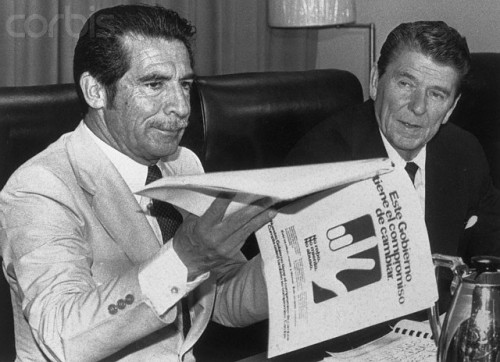
President Ronald Reagan meeting with Guatemalan dictator Efrain Rios Montt.
The euphemism aside, the reality of these interrogation techniques remained brutal, with the CIA Inspector General conducting a 1984 investigation of alleged “misconduct on the part of two Agency officers who were involved in interrogations and the death of one individual,” the report said (although the details were redacted in the version released to the public).
In 1984, the CIA also was hit with a scandal over what became known as an “assassination manual” prepared by agency personnel for the Nicaraguan Contras, a rebel group sponsored by the Reagan administration with the goal of ousting Nicaragua’s leftist Sandinista government.
Despite those two problems, the questionable training programs apparently continued for another two years. The 2004 IG report states that “in 1986, the Agency ended the HRE training program because of allegations of human rights abuses in Latin America.”
While the report’s references to this earlier era of torture are brief – and the abuses are little-remembered features of Ronald Reagan’s glorified presidency – there have been other glimpses into how Reagan unleashed this earlier “dark side” on the peasants, workers and students of Central America.
Project X
A sketchy history of the U.S. intelligence community’s participation in torture and other abuses surfaced in the mid-1990s with the release of a Pentagon report on what was known as “Project X,” a training program in harsh and anti-democratic practices which got its start in 1965 as the U.S. military build-up in Vietnam was underway.
The U.S. Army Intelligence Center and School at Fort Holabird, Maryland, began pulling together experiences from past counterinsurgency campaigns for the development of lesson plans which would “provide intelligence training to friendly foreign countries,” according to a brief history of Project X, which was prepared in 1991. Called “a guide for the conduct of clandestine operations,” Project X “was first used by the U.S. Intelligence School on Okinawa to train Vietnamese and, presumably, other foreign nationals,” the history stated. Linda Matthews of the Pentagon’s Counterintelligence Division recalled that in 1967-68, some of the Project X training material was prepared by officers connected to the so-called Phoenix program in Vietnam, an operation that involved targeting, interrogating and assassinating suspected Viet Cong.
“She suggested the possibility that some offending material from the Phoenix program may have found its way into the Project X materials at that time,” according to the Pentagon report. In the 1970s, the U.S. Army Intelligence Center and School moved to Fort Huachuca in Arizona and began exporting Project X material to U.S. military assistance groups working with “friendly foreign countries.” By the mid-1970s, the Project X material was going to military forces all over the world.
But Reagan’s election in 1980 – and his determination to crush leftist movements in Central America – expanded the role of Project X.
In 1982, the Pentagon’s Office of the Assistant Chief of Staff for Intelligence ordered the Fort Huachuca center to supply lesson plans to the School of the Americas at Fort Benning, Georgia, which human rights activists dubbed the School of the Assassins because it trained some of Latin America’s most notorious military officers.
“The working group decided to use Project X material because it had previously been cleared for foreign disclosure,” the Pentagon history stated. According to surviving documents released in the mid-1990s under a Freedom of Information Act request, the Project X lessons contained a full range of intelligence techniques. A 1972 listing of Project X lesson plans included electronic eavesdropping, interrogation, counterintelligence, break-ins and censorship. Citizens of a country were put on “‘black, gray or white lists’ for the purpose of identifying and prioritizing adversary targets.” The lessons suggested creation of inventories of families and their assets to keep tabs on the population.
The manuals suggested coercive methods for recruiting counterintelligence operatives, including arresting a target’s parents or beating him until he agreed to infiltrate a guerrilla organization. To undermine guerrilla forces, the training manuals countenanced “executions” and operations “to eliminate a potential rival among the guerrillas.”
Cheney Intercedes
The internal U.S. government review of Project X began in 1991 when the Pentagon discovered that the Spanish-language manuals were advising Latin American trainees on assassinations, torture and other “objectionable” counter-insurgency techniques.
By summer 1991, the investigation of Project X was raising concerns inside George H.W. Bush’s administration about an adverse public reaction to evidence that the U.S. government had long sanctioned – and even encouraged – brutal methods of repression.
But the PR problem was contained when the office of then-Defense Secretary Dick Cheney ordered that all relevant Project X material be collected and brought to the Pentagon under a recommendation that most of it be destroyed.
The recommendation received approval from senior Pentagon officials, presumably with Cheney’s blessings. Some of the more innocuous Project X lesson plans – and the historical summary – were spared, but the Project X manuals that dealt with the sensitive human rights violations were destroyed in 1992, the Pentagon reported. [For details, see Robert Parry’s Lost History.]
Even after the Cold War ended, the United States refused to examine this ugly history in any systematic way. Though Democrat Bill Clinton was the first President elected after the collapse of the Soviet Union, he ignored calls for serious examinations of that historical era out of a desire to look forward, not backward.
However, public complaints about the mass slaughter of Guatemalan peasants by a Reagan-backed regime in the 1980s did prompt an examination by the President Intelligence Oversight Board, which issued a “Report on the Guatemala Review” in mid-1996.
The review found that CIA funding – ranging from $1 million to $3.5 million – was “vital” to the operations of the Guatemalan intelligence services including D-2 military intelligence and the “Archivos” unit, which was infamous for political torture and assassinations.
As the Oversight Board noted, the human rights records of the Guatemalan intelligence agencies “were generally known to have been reprehensible by all who were familiar with Guatemala.” The reported added:
“We learned that in the period since 1984, several CIA assets were credibly alleged to have ordered, planned, or participated in serious human rights violations such as assassination, extrajudicial execution, torture, or kidnapping while they were assets – and that the CIA was contemporaneously aware of many of the allegations.”
History of Slaughter
The Clinton administration also released documents in the late 1990s revealing the grim history of U.S. complicity in Guatemala’s dirty wars that claimed an estimated 200,000 lives from the 1960s through the 1980s.
Drones are remote-controlled airborne robots. They come in all shapes and sizes. These unmanned high-tech weapons are remarkably versatile. From thousands of feet in the air some reportedly have heat-detecting and surveillance instrumentation that can distinguish between an automatic weapon that has been recently fired and one that hasn’t.
Unlike the people of Iraq, Afghanistan, Pakistan and Palestine, most US Americans are oblivious to drones. But we’d better wake up. Drones are poised to become tools of domestic surveillance.
The Houston police are now secretly experimenting with drones. Col. Kevin Bradley, local Hancock Airbase drone commander, looks forward to having drones used for domestic police work.1 ACLU please take note.
In Upstate New York we’re beginning to learn about the Reaper drone in our midst – “piloted” via satellite out of Hancock on the outskirts of Syracuse. Syracuse’s Reaper now flies surveillance and assassination missions over Afghanistan. The Pentagon proudly describes the Reaper as a “hunter/ killer.”
But the US isn’t alone in developing and deploying drone technology. I became aware of Israel’s use of drones during its December 2008/January 2009 invasion of Gaza. Israel deploys two types of hunter/killer: the “Hermes,” produced by Elbit Systems Ltd, and the “Heron,” produced by the government-owned Israeli Aerospace Industries.
Recently – by Googling “Israeli drones” – I learned that Israel pioneered the drone and that Israel purveys that cutting edge weaponry throughout the world. As far back as 1982 Israel used drones against Syria. In the early nineties Israeli drones were used in the Kosovo campaign. Israeli drones invade the skies over Lebanon and patrol occupied West Bank and besieged Gaza. Israeli drones reportedly can reach Iran.
Even Israel acknowledges that, during the Gaza invasion, it killed well over 1000 Palestinians. Such was the butchery that over 100 Palestinians were killed for every Israeli killed. Among the wide range of weapon systems deployed in and over Gaza, drones accounted for the deaths of at least 87 civilians, many of them children.
The cold-bloodedness of it all struck me as I read the 39-page, June 2009 Human Rights Watch report: “Precisely Wrong: Gaza Civilians Killed by Israeli Drone-Launched Missiles.” Frequently those killings had no combat or defensive role whatsoever. Like aerial warfare generally, those killings were out-and-out state terrorism.
Israel’s drone technology is so “good,” and now so well demonstrated in Gaza, that other nations are lining up to put in orders. These exports generate enormous revenue for Israel’s weapons industry, an enterprise boosted by $3 billion a year in US military aid to Israel.
Israel’s known drone customers include: Turkey ($185 million for 10 Heron drones); Brazil ($350 million drone deal for border and police work); India (occupying Kashmir and long hostile to Pakistan); Georgia (used Hermes drones against Russia in 2008). Russia, very impressed with Georgia’s drone performance, has acquired three different types of Israeli drones ($53 million) for reverse engineering to kick-start its own drone industry.
To better service Pentagon contracts, Israel even has drone factories in the US – in Starkville, Mississippi and Columbus, Ohio. The US uses Israeli “Skylark” drones in Iraq. Brits, Germans, and Canadians use Herons over Afghanistan. They assassinate those perceived, correctly or not, as enemies. Given the flimsiness of the legal cases against most Guantanamo prisoners, we know that an informant or bounty hunter’s word that someone is a “terrorist” or “enemy combatant” is dubious.
In an ominous indicator of how easily lethal misjudgments can be made by those whose god-like job it is to select drone targets, the aforementioned Col. Bradley sees domestic anti-drone protesters as a “threat” to his pilots.1 Such attitudes help explain how the drone’s “precision” strikes can kill so many civilians. These deaths, whether in occupied Gaza or elsewhere, defy international humanitarian law.
One might suggest that much of US mainstream media is itself “occupied” by the nation’s highly militarized power structure. Otherwise, why aren’t the nation’s newspapers editorializing against the killer drones that rile up hatred against the US? And that subject US military and intelligence facilities to deadly reprisal?
Why doesn’t our media admit that much of the “terrorism” it constantly invokes is blowback from the kind of US policies that deploy hunter/killer drones? Why doesn’t our media point out that those in the chain of command responsible for these extra-judicial executions are war criminals?
Why doesn’t it call those nations deploying armed drones against civilians what they are: rogue states? And why doesn’t it describe their cowardly airborne killings as what they are: terrorism?
Corporations and militarists in the US and Israel promoting killer drones claim that as an unmanned weapon the drone saves lives — i.e., no pilots are shot down in action. This is specious: for every pilot saved, many other humans are killed or maimed.
Drone boosters further argue that, with its extraordinary surveillance capability, the drone’s laser-guided missiles are more precise killers than those of (say) a manned F-16 fighter jet. However, “[D]rones, much like sniper rifles, are only as good at sparing civilians as the care taken by the people who operate them. The accuracy and concentrated blast radius of the missile can reduce civilian casualties, but in Gaza, Israel’s targeting choices led to the loss of many civilian lives.”2
The Heron hunter/killer even has camera-bearing missiles that relay images in real time. This allows a pilot on the ground far away, suddenly realizing that noncombatants are about to be slain, to divert the missile at the last moment. But such capability makes the killing of children and other non-combatants – whether in Gaza, Iraq, Pakistan or Afghanistan — all the more detestable. No more blaming such “collateral damage” on the “fog of war.” Because the surveillance capability of these killer drones is so remarkable, when obvious noncombatants are targeted, the pilots know exactly what they are doing. This means the chain of command also knows exactly what is being done.
Because the drone cameras provide live footage of the strike, and since such footage is archived, the circumstances under which the killings occur are well documented. Such evidence needs to be presented to domestic or international war crimes tribunals. Problem is, just as Israel refused to cooperate with the UN’s Goldstone investigation, it refuses to release the footage. If the Human Rights Watch Gaza investigation were somehow flawed, such footage would refute its damning conclusions.
The US should insist that Israel release the footage. More: US military aid to nations like Israel that flaunt international law should cease.
The Pentagon trains foreign military in “anti-insurgency” tactics at schools such as the US Army’s School of the Americas at Ft. Benning, Georgia. In a further “anti-insurgency” initiative, at Ft. Huachuca, Arizona the US Army trains soldiers to operate drones. Of particular concern to us in Syracuse, Hancock Airbase is becoming the national headquarters for training Reaper drone maintenance crews from all service branches.
Likewise, since at least 2005 Israel has been training many of the world’s drone operators and maintainers. Some of these operators have gone on to deploy in Iraq and Afghanistan.
A similar version was first published in the February 2010 Peace Newsletter.
Ed served 14 months in federal prisons for his civil resistance against the SOA. More recently he has been one of the “Hancock 2,” the “Hancock 15,” the “Hancock 33,” and the “Hancock 38.” Reach him at: edkinane@verizon.net. Read other articles by Ed.
This article was posted on Saturday, January 30th, 2010 at 12:00pm and is filed under Israel/Palestine, Militarism.
Psychologist (retired), blogger, author of "Cover-up at Guantanamo" https://www.amazon.com/Cover-up-Guantanamo-Investigation-Suicides-Mohammed/dp/1520587090/
REVEALED: The long-suppressed official report on US biowarfare in North Korea
Written largely by the most prestigious British scientist of his day, this official report, containing hundreds of pages of evidence about the use of US biological weapons during the Korean War, was effectively suppressed upon its original release in 1952.
Courtesy of researcher Jeffrey Kaye, INSURGE now publishes the report in text-searchable format for the first time for the general public, with an exclusive, in-depth analysis of its damning findings and implications.
The report provides compelling evidence of systematic violation of the laws of war against North Korea through the deployment of biological weapons — a critical context that is essential for anyone to understand the dynamics of current regional tensions, and what might be done about them.
Back in the early 1950s, the U.S. conducted a furious bombing campaign during the Korean War, dropping hundreds of thousands of tons of ordnance, much of it napalm, on North Korea. The bombardment, worse than any country had received up to that point, excepting the effects of Hiroshima and Nagasaki, wiped out nearly every city in North Korea, contributing to well over a million civilian deaths. Because of the relentless bombing, the people were reduced to living in tunnels. Even the normally bellicose Gen. MacArthur claimed to find the devastation wreaked by the U.S. to be sickening.[1]
Most controversially, both North Korea and China alleged that by early 1952, the U.S. was using biological or germ warfare weapons against both North Korea and China. The U.S. government has strenuously denied this.
Nevertheless, captured U.S. flyers told their North Korean and Chinese captors about the use of such weapons. Later, after the prisoners were returned to U.S. custody, counterintelligence experts and psychiatrists interrogated them. They were told under the threat of court martial to renounce their confessions about germ warfare. They all did so.
The Army Criminal Investigative Division officer in charge of interrogating returning prisoners, including airmen who confessed to use of biological weaponry on North Korea and China, was Army counter-intelligence specialist, Col. Boris Pash. Pash had previously been in charge of security for the most sensitive classified operations of the U.S. government in World War II. He was in charge of security at the Manhattan Project’s Berkeley Radiation Laboratory. (The Manhattan Project was the U.S. crash program to develop the atomic bomb.)
In the immediate aftermath of the war, military intelligence officer Pash led the Alsos Mission, which searched for Nazi and Italian nuclear scientists and fissionable materials, as well as gathering “intelligence about any enemy scientific research applicable to his military effort,” including biological and chemical weapons. Later, Pash worked for the CIA, and in the 1970s was called before Congressional investigators concerning his alleged participation in Agency assassinations.[2]
To convince the world of the truth of their claim the U.S. had dropped biological weapons on their countries, and after turning down the suggestion that the International Red Cross look into the charges, the North Koreans and Chinese sponsored an investigating commission. Using the auspices of the World Peace Council, they gathered together a number of scientists from around the world, most of whom were sympathetic to either the Left or the peace movement. Most surprisingly, this commission, which came to be known as the International Scientific Commission, or ISC, was headed by one of the foremost British scientists of his time, Joseph Needham.
The ISC included scientists from a number of countries, including Sweden, France, Italy, and Brazil. The Soviet Union representative, Dr. N. N. Zhukov-Verezhnikov had been the chief medical expert at the Khabarovsk Trial of the Unit 731 Japanese officers accused of participating in bacteriological (aka biological, or germ) warfare before and during World War II, as well as conducting hideous experiments on prisoners to further that aim. Zhukov-Verezhnikov went on to write scientific articles through the 1970s.
Needham himself, though pilloried in the Western press for his opinions on the controversy of U.S. use of biological weapons during the Korean War, remained a highly lauded scientist for years after the ISC report. He was elected a fellow of the British Academy in 1971. In 1992, the Queen conferred on him the Companionship of Honour.[3]
The ISC travelled to China and North Korea in the summer of 1952 and by September produced the “Report of International Scientific Commission for the Investigation of the Facts Concerning Bacterial Warfare in Korea and China,” which corroborated the Chinese and North Korean claims that the U.S. had used biological weapons in an experimental fashion on civilian populations.
The summary report was only some 60 pages long, but the ISC included over 600 pages of documentary material comprising statements from witnesses, including airmen involved in dropping the weaponry, as well as captured enemy agents; reports from doctors; journal articles from the United States; autopsy reports and lab tests; and photos and other materials. Most of this documentary material has been all but inaccessible for decades, with only a handful of copies of the ISC report in a few scattered libraries in the United States.
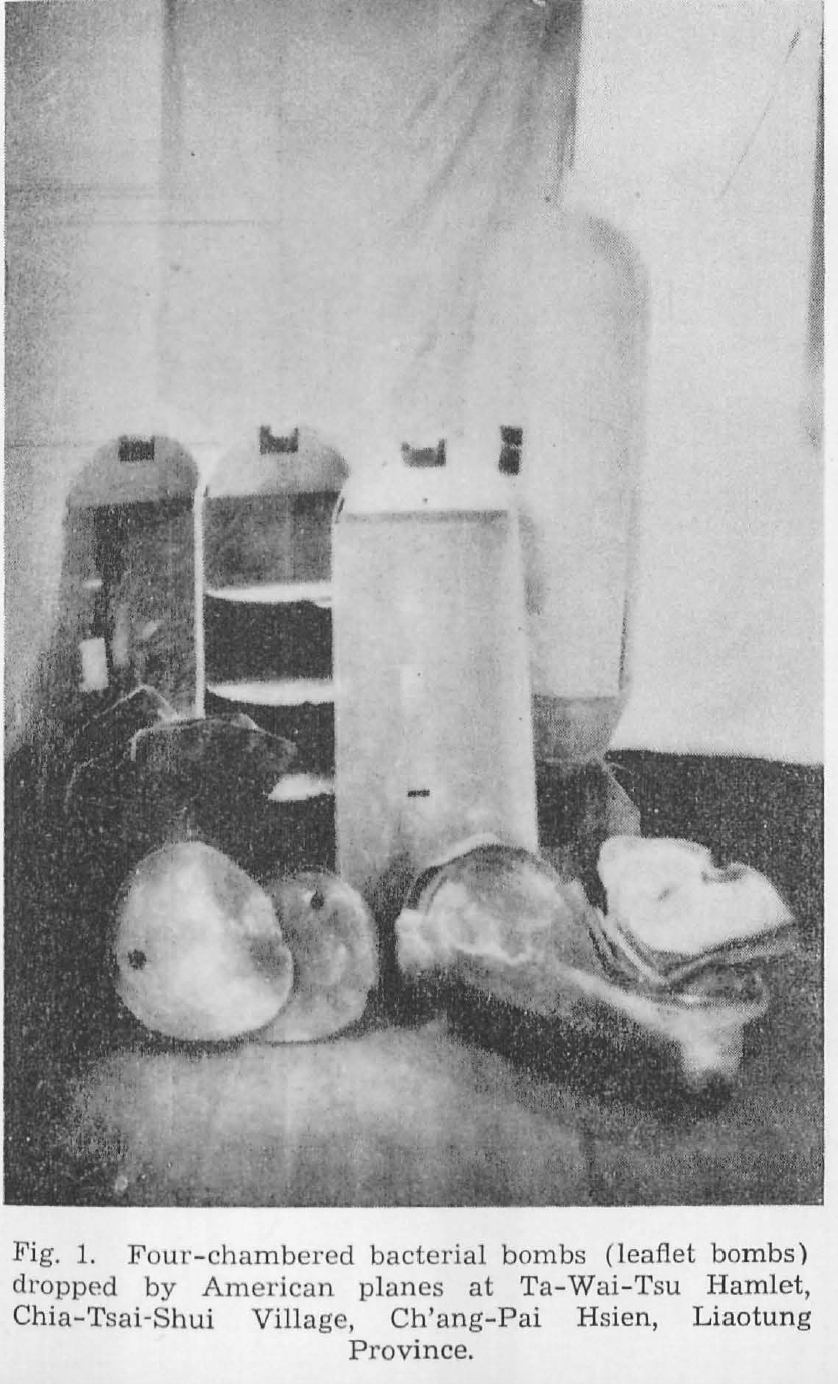
From ISC Report, pg. 403
The report concluded that the U.S. had used a number of biological weapons, including use of anthrax, plague, and cholera, disseminated by over a dozen of different devices or methods, including spraying, porcelain bombs, self-destroying paper containers with a paper parachute, and leaflet bombs, among others.
This article is not meant to examine the full range of opinions or evidence about whether or not the U.S. used biological weapons in the Korean War. It is instead an attempt to publish essential documentation of such claims, documentation that has effectively been withheld from the American people, and the West in general, for decades.
Controversies
The charges of U.S. use of biological warfare during the Korean War have long been the subject of intense controversy. The reliance, in part, on testimony from U.S. prisoners of war led to U.S. charges of “brainwashing.” These charges later became the basis of a cover story for covert CIA experimentation into use of use of drugs and other forms of coercive interrogation and torture that became the basis for its 1963 KUBARK manual on interrogation, and much later, a powerful influence on the CIA’s post-9/11 “enhanced interrogation” program.
Establishment Cold War scholars have been quick to debunk the ISC report. The most notable attempts in recent years included the publication of purported letters written by officials of the Soviet Union discussing the lack of evidence of U.S. biological warfare, and the decision to manufacture such evidence to fool the West.[4] Subsequently, a 1997 memoir by Wu Zhili, the former director of the Chinese People’s Volunteer Army Health Division, was published declaring the purported U.S. use of bacteriological agents in the Korean War was really “a false alarm.” [5]
As two Canadian scholars who spent years researching the Chinese-North Korean claims of biological warfare have noted, if these documents were to be true, then it would go against the bulk of archival evidence, including interviews with pertinent witnesses in both the United States and China.[6]Some of this archival evidence is quite recent, including the CIA declassification of a good deal of formerly top secret daily signal intelligence cables from the Korean War.[7]
The cables dealing with North Korean claims of biological warfare, which claims were dismissed by U.S. officials, prove that the North Koreans were serious about the belief they were being attacked by germ weapons, and that they were concerned that reports from the field not be falsified by assiduous if uninformed people sending in reports from the field. There is no evidence that North Korean officials or personnel ever engaged in falsification of evidence of biological warfare.
There also is plenty of archival evidence to be found in the suppressed Needham report materials. For instance, the Wu Zhili document claims, “‘for the entire year [1952–1953] no sick patient or deceased person was found to have anything to do with bacteriological warfare.”
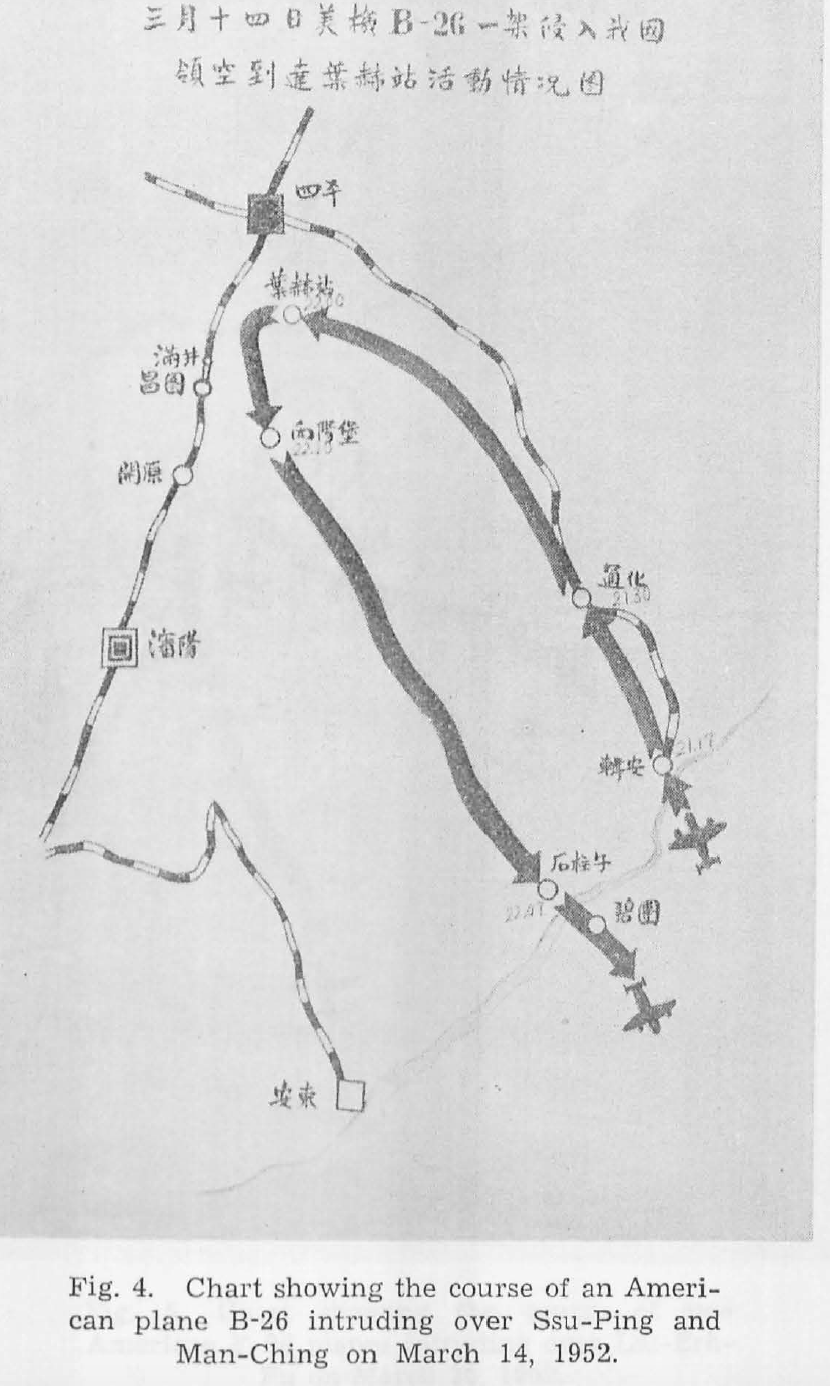
From the ISC report, pg. 470
But the ISC report documents a number of such deaths, including deaths from inhalational anthrax, a very rare disease almost completely unknown in China at that time. Appendix AA of the report, “Report on the Occurrence of Respiratory Anthrax and Haemorrhagic Anthrax Meningitis following the Intrusion of U.S. Military Planes over Northeast China” details the presence of anthrax by autopsy and laboratory examination in five deaths during March-April 1952. According to U.S. experts who have looked at the details of this report, the conclusions regarding death from inhalational anthrax could not have been faked[8].
Until recently, there has been no effort to make the original Needham materials available for other scholars or the public to assess for themselves the truth or falsity of their analysis. Last year, scholar Milton Leitenberg uploaded a copy of the ISC report to Scribd, but it is a very rough scan, and not searchable, or easy to use for the public. The release was not advertised and the public in particular remains ignorant of its findings.
The version of the ISC report published here utilized state-of-the-art book scanning equipment and is text searchable.
Censorship of Unit 731-U.S. Collaboration on Biological Warfare Data
One important part of the ISC report guaranteed its suppression in the United States after its initial publication. The report discussed the activities of Imperial Japan’s biological warfare detachment, Unit 731, and the U.S. interest in its activities.
Back in 1952, collaboration between the U.S. and Japanese war criminals using biological weapons was top secret, and totally denied by the U.S.
But today, even U.S. historians accept that a deal was made between the U.S. and members of Unit 731 and associated portions of the Japanese military that had in fact been experimenting on the use of biological weapons since the mid-1930s, experimentation that included use of human vivisection and barbaric torture of thousands of human beings, most of whom were disposed of in crematoria. In addition, as described in the book chapter by Bernd Martin noted in the bibliography, there was collaboration between the Japanese and the Nazi regime on these issues.
The U.S. collaboration with Japanese war criminals of Unit 731 was formally admitted in 1999 by the U.S. government, though the documentation for this confession wasn’t published until nearly 20 years later.[9]
It is a matter of historical record now that the U.S. government granted amnesty to Japan’s chief at Unit 731, doctor/General Shiro Ishii and his accomplices. The amnesty was kept top secret for decades, until revealed by journalist John Powell in a landmark article for the Bulletin of Atomic Scientistsin October 1981.
What came to be known as the Needham report, due to the fact the ISC was headed by the prestigious British scientist, came under immediate fire upon release. The report still remains a flashpoint for scholars. A 2001 article by the UK’s Historical Association detailed how UN and UK government officials collaborated in attempts to debunk the ISC findings. The UK Foreign Office released memoranda saying that claims of Japanese bacteriological warfare, going back to 1941, were “officially ‘not proven.’” (See article by Tom Buchanan in Bibliography.)
The sensitivity of the material uncovered by the ISC touched two areas of covert US government research. First was the US government’s own plans to research and possibly implement germ warfare. The second issue concerned the confessions of U.S. flyers as to how they were briefed and implemented trial runs of biological warfare during the Korean War.
China published the confessions of 19 U.S. airmen, but those confessions are also notoriously difficult to obtain. The ISC report published herein does include some of those “confessions,” and the public can be allowed to decide for themselves how authentic or genuine they are.
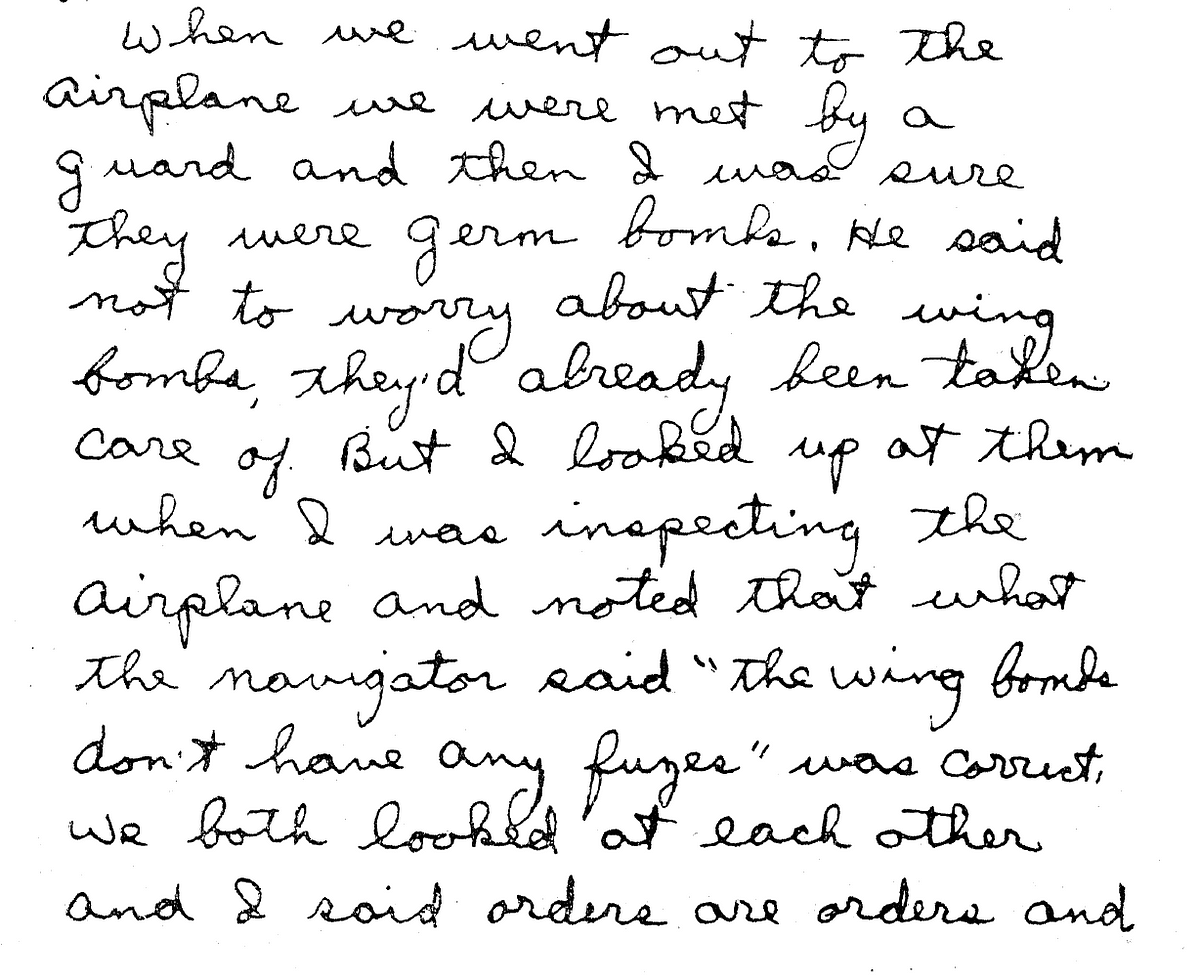
From testimony of Lt. J. Quinn, ISC report, pg. 614 (PDF)
The U.S. claimed that the flyers were tortured, and the CIA promoted the idea they were “brainwashed” by diabolical methods, causing a scare about “commie” mind control programs and “menticide,” which they used to justify the expenditure of millions of dollars for U.S. mind control programs during the 1950s-1970s.
The programs, codenamed Bluebird, Artichoke, and MKULTRA, among others, used experiments on unwitting civilians, as well as soldiers undergoing supposed anti-torture training at the military’s SERE schools. I have shown via public records that CIA scientists continued to use experiments on “stress” at SERE schools after 9/11, and believe such research included experiments on CIA and/or DoD held detainees. That such research did take place can be inferred from the release in November 2011 of a new set of guidelines concerning DoD research. This newest version of a standard instruction (DoD Directive 3216.02) contained for the first time a specific prohibition against research done on detainees. (See section 7c.)
I believe a strong case can be made that while coercive methods, primarily isolation, was used on the U.S. prisoners of war who later confessed, that their confessions were primarily true. The idea that only false confessions result from torture is in fact false itself. While false confessions can result from torture (as well as less onerous methods, such as the Reid Technique, used by police departments throughout the United States today), actual confessions can also sometimes occur. I have first-hand experience working with torture survivors to know that is true.
Even so, it is a fact that all the POWs who confessed use of germ warfare later recanted that upon return to the United States. But the terms of their recantations are suspect. The recantations were made under threat of courts-martial, and after interrogations by U.S. counterintelligence agents and psychiatrists. The archival evidence of the flyers debriefings have been destroyed or lost due to fire (according to the government). Meanwhile at least one scientist working at Ft. Detrick at the time admitted to German documentary investigators before he died that the U.S. had indeed been involved in germ warfare in Korea. (See the documentary video, “Code Name: Artichoke.”[10])
An “actual investigation… could do us psychological as well as military damage”
The charges of U.S. use of biological weapons during the Korean War are even more incendiary than the now-proven claims the U.S. amnestied Japanese military doctors and others working on biological weapons who experimented on human subjects, and ultimately killed thousands in operational uses of those weapons against China during the Sino-Japanese portion of World War Two. The amnesty was the price paid for U.S. military and intelligence researchers to get access to the trove of research, much of it via fatal human experiments, the Japanese had developed over years of studying and developing weapons for biological warfare.
During the Korean War, the U.S. strenuously denied charges of use of germ weapons and demanded an international investigation through the United Nations. The Chinese and North Koreans derided such offers, as it was United Nations-sanctioned forces that were opposing them in war and bombing their cities. But behind the scenes, the U.S. government initiated a campaign to impugn the ISC report, something they found difficult, as it turned out, according to a CIA-released document I revealed in December 2013. The document also showed the U.S. considered the call for a UN investigation to be mere propaganda.[11]
At a high-level meeting of intelligence and government officials on July 6, 1953, U.S. authorities admitted behind closed doors that the U.S. was not serious about conducting any investigation into such charges, despite what the government said publicly.
According to this document, the reason the U.S. didn’t want any investigation was because an “actual investigation” would reveal military operations, “which, if revealed, could do us psychological as well as military damage.” A “memorandum from the Psychological Strategy Board (PSB) detailing this meeting specifically stated as an example of what could be revealed “8th Army preparations or operations (e.g. chemical warfare).”[12]
Charges of chemical warfare by the Americans during the Korean War were part of a report by a Communist-influenced attorneys’ organization visiting Korea, and their findings were dismissed as propaganda by U.S. authorities and commentators. But the PSB memo suggests perhaps they were right.
Not long after I published the PSB document and accompanying article, scholar Stephen Endicott wrote to remind me that he and his associate Edward Hagerman, co-authors of the 1998 book, The United States and Biological Warfare: Secrets from the Early Cold War and Korea (see bibliography), had found material themselves that indicated U.S. calls for “international inspection to counter the Chinese and North Korean charges… was less than candid.”
Endicott and Hagerman found that U.S. Far East Commander, Gen. Matthew Ridgway, had “secretly given permission to deny potential Red Cross inspectors ‘access to any specific sources of information.’” In addition, they documented a State Department memo dated June 27, 1952 wherein the Department of Defense notified that it was “impossible” for the UN ambassador at the time to state that the U.S. did not intend to use “bacteriological warfare — even in Korea.” (p.192, Endicott and Hagerman)
The Khabarovsk War Crimes Trial
The ISC report also references the December 1949 war crimes trial held by the USSR in Khabarovsk, not far from the Chinese border. The trial of Japanese war criminals associated with Units 731, 100 and other biological warfare divisions followed upon a near black-out of such issues at the larger Toyko war crimes trials held by the Allies a few years before.
At the time of the Khabarovsk trial, U.S. media and government officials either ignored the proceedings, or denounced them as yet another Soviet “show trial.” The Soviets for their part published the proceedings and distributed them widely, including in English. Copies of this report are easier to find for purchase used, though expensive, on the Internet. Additionally, in the last few years Google made a copy of the former Soviet volume available online (see Bibliography). But no scholarly edition has ever been published.
Even so, U.S. historians have been forced over the years to accept the findings of the Khabarovsk court, though the general population and media accounts remain mostly ignorant such a trial ever took place. The fact the Soviets also documented the use of Japanese biological experiments on U.S. POWs was highly controversial, denied by the U.S. for decades, was a quite contentious issue in the 1980s-1990s. While a National Archives-linked historian has quietly determined such experiments did in fact take place, the issue has quietly fallen off the country’s radar. (See L. G. Goetz in bibliography.)
The relevancy of these issues is of course the ongoing propaganda war between the United States and North Korea, as well as Pentagon reallocation of resources to the Asian theater for a possible future war against China. But it is the clear threat of a nuclear exchange between North Korea and the United States that calls for clarity around the issues that have led to the mistrust between the two countries. Such clarity demands the release of all information that would help the U.S. populace understand the North Korean point of view. Such understanding, and acting upon such knowledge, may be all that separates us from a catastrophic war that could potentially kill millions of people.
The history behind the Korean War, and U.S. military and covert actions concerning China, Japan, and Korea, are a matter of near-total ignorance in the U.S. population. The charges of “brainwashing” of U.S. POWs, in an ongoing effort to hide evidence of U.S. biological warfare experiments and trials, also has become entwined in the propaganda used to explain the U.S. post-9/11 torture and interrogation program, and alibi past crimes by the CIA and Department of Defense for years of illegal mind control programs practiced as part of MKULTRA, MKSEARCH, ARTICHOKE, and other programs.
I hope that readers will feel free to disseminate this article without any copyright reservations, as well as the ISC report itself, an orphaned document from the Cold War.
Jeffrey Kaye is a retired psychologist who has worked professionally with torture victims and asylum applicants. Active in the anti-torture movement since 2006, he has his own blog, Invictus, previously wrote regularly for Firedoglake’s The Dissenter, as well as at The Guardian, Truthout, Alternet, and The Public Record. He is the author of Cover-Up at Guantanamo, a new book examining declassified files on treatment of prisoners at the Guantanamo detention camp.
If you appreciated this story, please support INSURGE’s efforts to break investigative stories on the world’s most pressing challenges that no one else will cover for as little as $1 a month.
Bibliography
Daniel Barenblatt, A Plague Upon Humanity: The Secret Genocide of Axis Japan’s Germ Warfare Operation, HarperPerennial, 2005
Tom Buchanan, “The Courage of Galileo: Joseph Needham and the ‘Germ Warfare’ Allegations in the Korean War,” The Historical Association, Blackwell Publishers, 2001
Dave Chaddock, This Must Be the Place: How the U.S. Waged Germ Warfare in the Korean War and Denied It Ever Since, Bennett and Hastings Publishers, 2013
Stephen Endicott & Edward Hagerman, The United States and Biological Warfare: Secrets from the Early Cold War and Korea, Indiana University Press, 1998
Stephen Endicott & Edward Hagerman, “Twelve Newly Released Soviet-era `Documents’ and allegations of U. S. germ warfare during the Korean War,” online publication, 1998, URL: http://www.yorku.ca/sendicot/12SovietDocuments.htm
Stephen Endicott & Edward Hagerman, “False Alarm? ‘The Bacteriological War of 1952’: Comment on Director Wu Zhili’s Essay,” online publication, June 1, 2016, URL: http://www.yorku.ca/sendicot/On%20WuZhili-false-alarm.pdf [accessed May 14, 2017]
Sheldon H. Harris, Factories of Death: Japanese Biological Warfare, 1932–45, and the American Cover-up, rev. ed., Routledge Press, 2002
Linda Goetz Holmes, Guests of the Emperor: The Secret History of Japan’s Mukden POW Camp, Naval Institute Press, June 2010.
Materials on the Trial of Former Servicemen of the Japanese Army Charged With Manufacturing Bacteriological Weapons [Testimony and Exhibits from the Khabarovsk War Crimes Trial], Foreign Languages Publishing House, Moscow, 1950, published as free e-book at Google Books, URL: https://books.google.com/books?id=ARojAAAAMAAJ [accessed May 14, 2017]
Milton Leitenberg, “New Russian Evidence on the Korean War Biological Warfare Allegations: Background and Analysis,” Cold War International History Project, Bulletin 11, 1998
Jeffrey A. Lockwood, Six-Legged Soldiers: Using Insects as Weapons of War, Oxford Univ. Press, 2010
Bernd Martin, “Japanese-German collaboration in the development of bacteriological and chemical weapons and the war in China,” in Japanese-German Relations, 1895–1945: War, Diplomacy and Public Opinion (Christian W. Spang, Rolf-Harald Wippich, eds.), Routledge, 2006
John Powell, “A Hidden Chapter in History,” Bulletin of the Atomic Scientists, October 1981
Peter Williams and David Wallace, Unit 731: The Japanese Army’s Secret of Secrets, Hodder & Stoughton, 1989 [Note: The U.S. version of this book, published by Free Press, does not include Chapter 17 on the Korean War, which is only available in the British Hodder & Stoughton version.]
Footnotes
[1] Robert M. Neer, Napalm: An American Biography, 2013, Belknap Press, pg. 100.
[2] “Boris Pash and Science and Technology Intelligence,” Masters of the Intelligence Art series, U.S. Army Intelligence Center, Ft. Huachuca, undated. URL: http://huachuca-www.army.mil/files/History_MPASH.PDF (retrieved 1/20/2018)
In regards to Pash’s association with the CIA, we don’t know when his involvement with the Agency began, but it appears to have been quite early. Watergate defendant E. Howard Hunt told Congressional investigators in 1976 Pash was involved in assassination activities for the CIA during the 1960s. See “Executive Session, Saturday, January 10, 1976, United States Senate, Select Committee to Study Governmental Operations with Respect to Intelligence Activities, Washington, D.C.” URL: http://blog.nuclearsecrecy.com/wp-content/uploads/2015/12/1976-Executive-Session-Hunt-testimony-on-Pash.pdf (retrieved 1/20/2018)
[3] See URL: https://en.wikipedia.org/wiki/Joseph_Needham (retrieved 1/20/18). The article drew the information from Winchester, Simon (2008), The Man Who Loved China: The Fantastic Story of the Eccentric Scientist Who Unlocked the Mysteries of the Middle Kingdom. New York: HarperCollins.
[4] Leitenberg, Milton. (1998). Resolution of the Korean War Biological Warfare Allegations. Critical reviews in microbiology. 24. 169–94. 10.1080/10408419891294271.
[5] “Wu Zhili, ‘The Bacteriological War of 1952 is a False Alarm’,” September, 1997, History and Public Policy Program Digital Archive, Yanhuang chunqiu no. 11 (2013): 36–39. Translated by Drew Casey. https://digitalarchive.wilsoncenter.org/document/123080
[6] “False Alarm? The Bacteriological War of 1952 — Comment on Director WuZhili’s Essay” by Stephen Endicott and Edward Hagerman, Department of History, York University (ret.), June 2016, http://www.yorku.ca/sendicot/On%20WuZhili-false-alarm.pdf
 'Fort Huachuca Intelligence Center Draws Private Contractors