Zoeken in deze blog 🔎🔎

Posts gesorteerd op relevantie tonen voor zoekopdracht bernays. Sorteren op datum Alle posts tonen

vrijdag 15 september 2017

The Birth of Propaganda 2

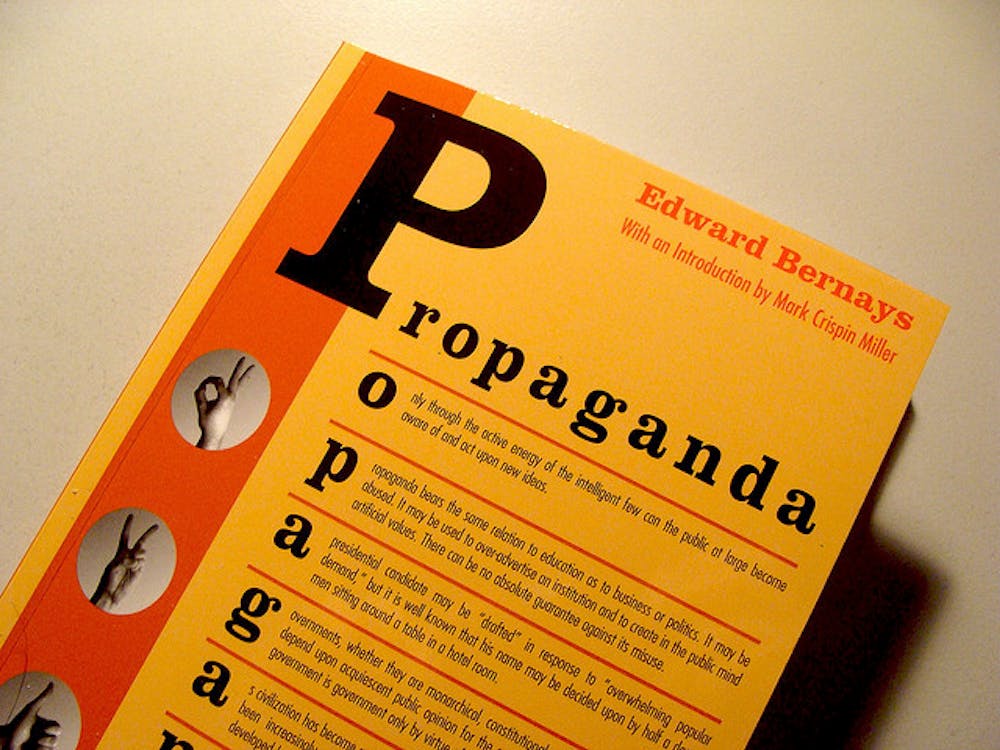
The manipulation of the American mind: Edward Bernays and the birth of public relations

dinsdag 20 oktober 2009

Elsbeth Etty van de NRC 2

Elsbeth, omdat je het kennelijk allemaal nog niet beseft stuur ik je dit:

In de ogen van Bernays en de Amerikaanse elite, voor wie hij werkte, zou de democratie in chaos eindigen als mensen niet constant en via alle beschikbare kanalen verteld werd wat belangrijk is en wat niet, hoe ze zich moeten gedragen en hoe niet, wat de normen en waarden van een kapitalistische samenleving zijn en wat niet. Het spreekt voor zich dat daarmee de belangen van allereerst en vooral de economische en politieke elite worden gediend. Bernays was ervan overtuigd dat de rijken zich moesten concentreren op ‘regimenting the public mind every bit as much as an army regiments the bodies of its soldiers.’ De Amerikaanse hoogleraar Noam Chomsky schreef over hem: ‘Bernays was drawing from his experience in Woodrow Wilson’s state propaganda agency, the Committee on Public Information. “It was, of course, the astounding success of propaganda during the war that opened the eyes of the intelligent few in all departments of life to the possibilities of regimenting the public mind,” he wrote. His goal was to adapt these experiences to the need of the “intelligent minorities,” primarily business leaders, whose task is “The conscious and intelligent manipulation of the organized habits and opinions of the masses.” Such “engineering of consent” is the very “essence of the democratic process,” Bernays wrote shortly before he was honoured for his contributions by the American Psychological Association in 1949. The importance of “controlling the public mind” has been recognized with increasing clarity as popular struggles succeeded in extending the modalities of democracy, thus giving rise to what liberal elites call “the crisis of democracy” as when normally passive and apathetic populations become organized and seek to enter the political arena to pursue their interests and demands, threatening stability and order. As Bernays explained the problem, with “universal suffrage and universal schooling,… at last even the bourgeoisie stood in fear of the common people. For the masses promised to become king,” a tendency fortunately reversed – so it has been hoped – as new methods “to mold the mind of the masses” were devised and implemented.’ Een dergelijke ‘engineering of consent´ was volgens Bernays juist de ´essence of the democratic process.´

Daarbij was ´controlling the public mind´ van eminent belang voor de rijken en machtigen om het volk in het gareel te houden en in de juiste richting te laten marcheren. Het belang van propaganda begreep ook Sam Zemurray, die uitgestrekte bananenplantages bezat in Midden Amerika. Eerder al had hij een staatsgreep in Honduras gefinancierd om de president ten val te brengen, aangezien die erop had gestaan dat de rijken belasting betaalden over hun grondbezit en zich ook nog eens de Hondurese wet zouden houden. Begin jaren vijftig van de vorige eeuw werd Bernays door Zemurray ingehuurd om de democratische regering van Guatemala ten val te brengen omdat die van plan was grote stukken ongebruikt land van het concern van Zemurray, United Fruit, te confisqueren om het onder de arme boeren te herverdelen. Bernays adviseerde zijn client om ogenblikkelijk een mediahetze te starten. ‘I have the feeling that Guatemala might respond to pitiless publicity in this country,’ zo verklaarde hij later trots. Onder andere via een perscampagne werd de democratische regering afgeschilderd als communistisch. Tegelijkertijd werden prominente Congresleden bewerkt en tenslotte viel de regering dankzij een CIA-complot. Het gevolg was dat er een meedogeloze drie decennia durende oorlog burgeroorlog ontstond waarbij tenminste 200.000 doden vielen. 93 procent werd vermoord door het leger, de doodseskaders en andere door de VS opgeleide gangsters, aldus een officieel overheidsrapport. Het toont aan hoe dodelijk propaganda kan zijn. Maar daarvoor moet eerst de vijand goed in beeld zijn gebracht door leugens en vertekening van de werkelijkeid. Er moet natuurlijk een bedreigende vijand zijn, en iemand moet hem aanwijzen, anders lukt de propaganda niet.

Veel van de westerse imperialistische politiek wordt door kranten als de NRC verkocht binnen een nauw omlijnde context die onlangs nog eens door Raymond van den Boogaard zo treffend werd omschreven toen hij mij zonder enige ironie uitlegde dat 'de Amerikanen in Irak zijn om er de democratie te brengen.' Welke feiten ik ook aanvoerde, ik slaagde er niet in om enige nuance in zijn rotsvaste overtuiging aan te brengen.

Voor mogelijke twijfelaars onder ons nog even een boekbespreking:

'The Father of Spin: Edward L. Bernays & The Birth of PR
by Larry Tye
book review by John Stauber and Sheldon


Bernays' life was amazing in many ways. He had a role in many of the seminal intellectual and commercial events of this century. "The techniques he developed fast became staples of political campaigns and of image-making in general," Tye notes. "That is why it is essential to understand Edward L. Bernays if we are to understand what Hill and Knowlton did in Iraq--not to mention how Richard Nixon was able to dig his way out of his post-Watergate depths and remake himself into an elder statesman worthy of a lavish state funeral, how Richard Morris repositioned President Bill Clinton as an ideological centrist in order to get him reelected, and how most other modern-day miracles of public relations are conceived and carried out."
Many of the new insights that Tye offers have to do with Bernays's relationship with his family and his uncle Sigmund Freud, whose reputation as "the father of psychoanalysis" owes something to Bernays' publicity efforts. Bernays regarded Uncle Sigmund as a mentor, and used Freud's insights into the human psyche and motivation to design his PR campaigns, while also trading on his famous uncle's name to inflate his own stature.
There is, however, a striking paradox in the relationship between the two. Uncle Sigmund's "talking cure" was designed to unearth his patients' unconscious drives and hidden motives, in the belief that bringing them into conscious discourse would help people lead healthier lives. Bernays, by contrast, used psychological techniques to mask the motives of his clients, as part of a deliberate strategy aimed at keeping the public unconscious of the forces that were working to mold their minds.
Characteristically (and again paradoxically), Bernays was remarkably candid about his manipulative intent. "If we understand the mechanisms and motives of the group mind, it is now possible to control and regiment the masses according to our will without their knowing it," he argued in Propaganda, one of his first books. In a later book, he coined the term "engineering of consent" to describe his technique for controlling the masses.
"The conscious and intelligent manipulation of the organized habits and opinions of the masses is an important element in democratic society," Bernays argued. "Those who manipulate this unseen mechanism of society constitute an invisible government which is the true ruling power of our country. . . . In almost every act of our daily lives, whether in the sphere of politics or business, in our social conduct or our ethical thinking, we are dominated by the relatively small number of persons . . . who understand the mental processes and social patterns of the masses. It is they who pull the wires which control the public mind."
This definition of "democratic society" is itself a contradiction in terms--a theoretical attempt to reconcile rule by the few with the democratic system which threatened (and still threatens) the privileges and powers of the governing elite. On occasion, Bernays himself recoiled from the anti-democratic implications of his theory.
During Bernays' lifetime and since, propaganda has usually had dirty connotations, loaded and identified with the evils of Nazi PR genius Joseph Goebbels, or the oafish efforts of the Soviet Communists. In his memoirs, Bernays wrote that he was "shocked" to discover that Goebbels kept copies of Bernays' writings in his own personal library, and that his theories were therefore helping to "engineer" the rise of the Third Reich.
Bernays liked to cultivate an image as a supporter of feminism and other liberating ideas, but his work on behalf of the United Fruit Company had consequences just as evil and terrifying as if he'd worked directly for the Nazis. The Father of Spin sheds new and important light on the extent to which the Bernays' propaganda campaign for the United Fruit Company (today's United Brands) led directly to the CIA's overthrow of the elected government of Guatemala.
The term "banana republic" actually originated in reference to United Fruit's domination of corrupt governments in Guatemala and other Central American countries. The company brutally exploited virtual slave labor in order to produce cheap bananas for the lucrative U.S. market. When a mildly reformist Guatemala government attempted to reign in the company's power, Bernays whipped up media and political sentiment against it in the commie-crazed 1950s.
"Articles began appearing in the New York Times, the New York Herald Tribune, the Atlantic Monthly, Time, Newsweek, the New Leader, and other publications all discussing the growing influence of Guatemala's Communists," Tye writes. "The fact that liberal journals like the Nation were also coming around was especially satisfying to Bernays, who believed that winning the liberals over was essential. . . . At the same time, plans were under way to mail to American Legion posts and auxiliaries 300,000 copies of a brochure entitled 'Communism in Guatemala--22 Facts.'"
His efforts led directly to a brutal military coup. Tye writes that Bernays "remained a key source of information for the press, especially the liberal press, right through the takeover. In fact, as the invasion was commencing on June 18, his personal papers indicate he was giving the 'first news anyone received on the situation' to the Associate Press, United Press, the International News Service, and the New York Times, with contacts intensifying over the next several days."
The result, tragically, has meant decades of tyranny under a Guatemalan government whose brutality rivaled the Nazis as it condemned hundreds of thousands of people (mostly members of the country's impoverished Maya Indian majority) to dislocation, torture and death.
Bernays relished and apparently never regretted his work for United Fruit, for which he was reportedly paid $100,000 a year, a huge fee in the early 1950s. Tye writes that Bernays' papers "make clear how the United States viewed its Latin neighbors as ripe for economic exploitation and political manipulation--and how the propaganda war Bernays waged in Guatemala set the pattern for future U.S.-led campaigns in Cuba and, much later, Vietnam."
As these examples show, Tye's biography of Bernays is important. It casts a spotlight on the anti-democratic and dangerous corporate worldview of the public relations industry. The significance of these dangers is often overlooked, in large part because of the PR industry's deliberate efforts to operate behind the scenes as it manages and manipulates opinions and public policies. This strategy of invisibility is the reason that PR academic Scott Cutlip refers to public relations as "the unseen power."
Bernays pioneered many of the industry's techniques for achieving invisibility, yet his self-aggrandizing personality drove him to leave behind a record of how and for whom he worked. By compiling this information and presenting it to the public in a readable form, Tye has accomplished something similar to the therapeutic mission that Freud attempted with his patients--a recovery of historical memories that a psychoanalyst might term a "return of the repressed."
Published in
PR Watch, Second Quarter 1999, Volume 6, No. 2
Maar daarover geen woord in het Hollands Dagboek van theoloog Mario Coolen. Deze feiten waren kennelijk niet relevant voor zijn betoog. Dit soort informatie is kennelijk niet relevant voor de doorsnee NRC-lezer die al die jaren wordt verteld hoe voortreffelijk het westers democratisch model is.
"Those unaware are unaware of being unaware"
- Merrill Jenkins, Monetary Realist


'The corporate mass-media serve to divert the unwashed masses and reinforce the basic social values: passivity, submissiveness to authority, the overriding virtue of greed and personal gain, lack of concern for others, fear of real or imagined enemies, etc. “The goal is to keep the bewildered herd bewildered. It’s unnecessary for them to trouble themselves with what’s happening in the world. In fact, it’s undesirable — if they see too much of reality they may set themselves to change it.” — Noam Chomsky
M.I.T. professor of linguistics prolific author & U.S. foreign policy critic What Uncle Sam Really Wants

zaterdag 28 maart 2009

De Commerciele Massamedia 198


'You Are Living
In A Dream World

"The conscious and intelligent manipulation of the organized habits and opinions of the masses is an important element in democratic society. Those who manipulate this unseen mechanism of society constitute an invisible government which is the true ruling power of our country."Edward Bernays, Nephew of Sigmund Freud, Propaganda (1928)' http://www.geocrisis.com/cp_bp_dream_world.htm

In de NRC rubriek Hollands Dagboek was vandaag de theoloog Mario Coolen aan het woord. Hij 'keert terug naar Guatemala waar hij werkte tijdens de burgeroorlog. Op zoek naar informatie over verdwenen vrienden. Coolen woont samen met vriend Henny en hond Kalos. Woensdag 18 maart Ruim dertien uur duurt de vlucht die me van Nederland naar Guatemala brengt. In het vliegtuig worden onafgebroken films vertoond, maar de beelden die door mijn hoofd spelen gaan vooral over de tijd dat ik in Guatemala woonde. In Santa Lucía Cotzumalguapa aan de tropische zuidkust van het land werkte ik acht jaar als theoloog. Samen met collega’s maakte ik me sterk voor de bewustwording en organisatie van indiaanse seizoenarbeiders op de suikerrietplantages, in de Bijbel vonden we een stimulans om de weg van bevrijding in te slaan. Totdat grootgrondbezitters het leger inschakelden om onbarmhartig toe te slaan. Kort na elkaar werden vier van mijn collega’s en ook mijn beste vriend Macabeo Aguilar ontvoerd. Uiteindelijk zou de golf van geweld die Guatemala vooral in de periode 1979-1984 teisterde aan 200.000 mensen het leven kosten.'

Coolen schreef een opmerkelijk stuk, het is alsof alles in een droom is gebeurd, in een absurde wereld, zonder oorzaak en gevolg. Het is alsof alles onvermijdelijk en tegelijkertijd toch bij toeval gebeurde, alsof er geen sociale en politieke factoren hebben meegespeeld. Ineens was de duivel er en brak de hel los. Ineens, onverklaarbaar, alsof de Duivel plotseling had ingegrepen. In werkelijkheid werd Guatemala een hel doordat de grote concerns van de Verenigde Staten hun economische belangen niet beperkt wilden zien door de belangen van de plaatselijke bevolking. En de centrale figuur die deze terreur mogelijk maakte door het te verkopen als een noodzakelijke ingreep van fatsoenlijke mensen tegen de terroristen van het communisme heette Edward Bernays, dezelfde Bernays die ik de afgelopen dagen citeerde in kritische beschouwingen over mijn vak naar aanleiding van een oproep van H.J.A. Hofland om de commerciële massamedia te subsidiëren met belastinggeld.

Even ter herinnering: Edward Bernays, was een neef van Sigmund Freud en de ‘grondlegger van de public relations’, wiens handboek Propaganda als de bijbel van de pr-industrie werd gezien. Bernays stelde het volgende: ‘If we understand the mechanism and motives of the group mind, is it not possible to control and regiment the masses according to our will without their knowing about it? The recent practice of propaganda has proved that it is possible, at least up to a certain point and within certain limits.' (Propaganda, 2005 ed., p. 71.) Hij noemde 'this scientific technique of opinion-molding the “engineering of consent”.'
In de ogen van Bernays en de Amerikaanse elite, voor wie hij werkte, zou de democratie in chaos eindigen als mensen niet constant en via alle beschikbare kanalen verteld werd wat belangrijk is en wat niet, hoe ze zich moeten gedragen en hoe niet, wat de normen en waarden van een kapitalistische samenleving zijn en wat niet. Het spreekt voor zich dat daarmee de belangen van allereerst en vooral de economische en politieke elite worden gediend. Bernays was ervan overtuigd dat de rijken zich moesten concentreren op ‘regimenting the public mind every bit as much as an army regiments the bodies of its soldiers.’ De Amerikaanse hoogleraar Noam Chomsky schreef over hem: ‘Bernays was drawing from his experience in Woodrow Wilson’s state propaganda agency, the Committee on Public Information. “It was, of course, the astounding success of propaganda during the war that opened the eyes of the intelligent few in all departments of life to the possibilities of regimenting the public mind,” he wrote. His goal was to adapt these experiences to the need of the “intelligent minorities,” primarily business leaders, whose task is “The conscious and intelligent manipulation of the organized habits and opinions of the masses.” Such “engineering of consent” is the very “essence of the democratic process,” Bernays wrote shortly before he was honoured for his contributions by the American Psychological Association in 1949. The importance of “controlling the public mind” has been recognized with increasing clarity as popular struggles succeeded in extending the modalities of democracy, thus giving rise to what liberal elites call “the crisis of democracy” as when normally passive and apathetic populations become organized and seek to enter the political arena to pursue their interests and demands, threatening stability and order. As Bernays explained the problem, with “universal suffrage and universal schooling,… at last even the bourgeoisie stood in fear of the common people. For the masses promised to become king,” a tendency fortunately reversed – so it has been hoped – as new methods “to mold the mind of the masses” were devised and implemented.’ Een dergelijke ‘engineering of consent´ was volgens Bernays juist de ´essence of the democratic process.´
Daarbij was ´controlling the public mind´ van eminent belang voor de rijken en machtigen om het volk in het gareel te houden en in de juiste richting te laten marcheren. Het belang van propaganda begreep ook Sam Zemurray, die uitgestrekte bananenplantages bezat in Midden Amerika. Eerder al had hij een staatsgreep in Honduras gefinancierd om de president ten val te brengen, aangezien die erop had gestaan dat de rijken belasting betaalden over hun grondbezit en zich ook nog eens de Hondurese wet zouden houden. Begin jaren vijftig van de vorige eeuw werd Bernays door Zemurray ingehuurd om de democratische regering van Guatemala ten val te brengen omdat die van plan was grote stukken ongebruikt land van het concern van Zemurray, United Fruit, te confisqueren om het onder de arme boeren te herverdelen. Bernays adviseerde zijn client om ogenblikkelijk een mediahetze te starten. ‘I have the feeling that Guatemala might respond to pitiless publicity in this country,’ zo verklaarde hij later trots. Onder andere via een perscampagne werd de democratische regering afgeschilderd als communistisch. Tegelijkertijd werden prominente Congresleden bewerkt en tenslotte viel de regering dankzij een CIA-complot. Het gevolg was dat er een meedogeloze drie decennia durende oorlog burgeroorlog ontstond waarbij tenminste 200.000 doden vielen. 93 procent werd vermoord door het leger, de doodseskaders en andere door de VS opgeleide gangsters, aldus een officieel overheidsrapport. Het toont aan hoe dodelijk propaganda kan zijn. Maar daarvoor moet eerst de vijand goed in beeld zijn gebracht door leugens en vertekening van de werkelijkeid. Er moet natuurlijk een bedreigende vijand zijn, en iemand moet hem aanwijzen, anders lukt de propaganda niet.
Dit wat betreft de achtergrond die niet door Coolen in de NRC wordt gegeven. Sterker nog, veel van de westerse imperialistische politiek wordt door kranten als de NRC verkocht binnen een nauw omlijnde context die onlangs nog eens door Raymond van den Boogaard zo treffend werd omschreven toen hij mij zonder enige ironie uitlegde dat 'de Amerikanen in Irak zijn om er de democratie te brengen.' Welke feiten ik ook aanvoerde, ik slaagde er niet in om enige nuance in zijn rotsvaste overtuiging aan te brengen.

Voor mogelijke twijfelaars onder ons nog even een boekbespreking:

'The Father of Spin: Edward L. Bernays & The Birth of PR
by Larry Tye
book review by John Stauber and Sheldon


Bernays' life was amazing in many ways. He had a role in many of the seminal intellectual and commercial events of this century. "The techniques he developed fast became staples of political campaigns and of image-making in general," Tye notes. "That is why it is essential to understand Edward L. Bernays if we are to understand what Hill and Knowlton did in Iraq--not to mention how Richard Nixon was able to dig his way out of his post-Watergate depths and remake himself into an elder statesman worthy of a lavish state funeral, how Richard Morris repositioned President Bill Clinton as an ideological centrist in order to get him reelected, and how most other modern-day miracles of public relations are conceived and carried out."
Many of the new insights that Tye offers have to do with Bernays's relationship with his family and his uncle Sigmund Freud, whose reputation as "the father of psychoanalysis" owes something to Bernays' publicity efforts. Bernays regarded Uncle Sigmund as a mentor, and used Freud's insights into the human psyche and motivation to design his PR campaigns, while also trading on his famous uncle's name to inflate his own stature.
There is, however, a striking paradox in the relationship between the two. Uncle Sigmund's "talking cure" was designed to unearth his patients' unconscious drives and hidden motives, in the belief that bringing them into conscious discourse would help people lead healthier lives. Bernays, by contrast, used psychological techniques to mask the motives of his clients, as part of a deliberate strategy aimed at keeping the public unconscious of the forces that were working to mold their minds.
Characteristically (and again paradoxically), Bernays was remarkably candid about his manipulative intent. "If we understand the mechanisms and motives of the group mind, it is now possible to control and regiment the masses according to our will without their knowing it," he argued in Propaganda, one of his first books. In a later book, he coined the term "engineering of consent" to describe his technique for controlling the masses.
"The conscious and intelligent manipulation of the organized habits and opinions of the masses is an important element in democratic society," Bernays argued. "Those who manipulate this unseen mechanism of society constitute an invisible government which is the true ruling power of our country. . . . In almost every act of our daily lives, whether in the sphere of politics or business, in our social conduct or our ethical thinking, we are dominated by the relatively small number of persons . . . who understand the mental processes and social patterns of the masses. It is they who pull the wires which control the public mind."
This definition of "democratic society" is itself a contradiction in terms--a theoretical attempt to reconcile rule by the few with the democratic system which threatened (and still threatens) the privileges and powers of the governing elite. On occasion, Bernays himself recoiled from the anti-democratic implications of his theory.
During Bernays' lifetime and since, propaganda has usually had dirty connotations, loaded and identified with the evils of Nazi PR genius Joseph Goebbels, or the oafish efforts of the Soviet Communists. In his memoirs, Bernays wrote that he was "shocked" to discover that Goebbels kept copies of Bernays' writings in his own personal library, and that his theories were therefore helping to "engineer" the rise of the Third Reich.
Bernays liked to cultivate an image as a supporter of feminism and other liberating ideas, but his work on behalf of the United Fruit Company had consequences just as evil and terrifying as if he'd worked directly for the Nazis. The Father of Spin sheds new and important light on the extent to which the Bernays' propaganda campaign for the United Fruit Company (today's United Brands) led directly to the CIA's overthrow of the elected government of Guatemala.
The term "banana republic" actually originated in reference to United Fruit's domination of corrupt governments in Guatemala and other Central American countries. The company brutally exploited virtual slave labor in order to produce cheap bananas for the lucrative U.S. market. When a mildly reformist Guatemala government attempted to reign in the company's power, Bernays whipped up media and political sentiment against it in the commie-crazed 1950s.
"Articles began appearing in the New York Times, the New York Herald Tribune, the Atlantic Monthly, Time, Newsweek, the New Leader, and other publications all discussing the growing influence of Guatemala's Communists," Tye writes. "The fact that liberal journals like the Nation were also coming around was especially satisfying to Bernays, who believed that winning the liberals over was essential. . . . At the same time, plans were under way to mail to American Legion posts and auxiliaries 300,000 copies of a brochure entitled 'Communism in Guatemala--22 Facts.'"
His efforts led directly to a brutal military coup. Tye writes that Bernays "remained a key source of information for the press, especially the liberal press, right through the takeover. In fact, as the invasion was commencing on June 18, his personal papers indicate he was giving the 'first news anyone received on the situation' to the Associate Press, United Press, the International News Service, and the New York Times, with contacts intensifying over the next several days."
The result, tragically, has meant decades of tyranny under a Guatemalan government whose brutality rivaled the Nazis as it condemned hundreds of thousands of people (mostly members of the country's impoverished Maya Indian majority) to dislocation, torture and death.
Bernays relished and apparently never regretted his work for United Fruit, for which he was reportedly paid $100,000 a year, a huge fee in the early 1950s. Tye writes that Bernays' papers "make clear how the United States viewed its Latin neighbors as ripe for economic exploitation and political manipulation--and how the propaganda war Bernays waged in Guatemala set the pattern for future U.S.-led campaigns in Cuba and, much later, Vietnam."
As these examples show, Tye's biography of Bernays is important. It casts a spotlight on the anti-democratic and dangerous corporate worldview of the public relations industry. The significance of these dangers is often overlooked, in large part because of the PR industry's deliberate efforts to operate behind the scenes as it manages and manipulates opinions and public policies. This strategy of invisibility is the reason that PR academic Scott Cutlip refers to public relations as "the unseen power."
Bernays pioneered many of the industry's techniques for achieving invisibility, yet his self-aggrandizing personality drove him to leave behind a record of how and for whom he worked. By compiling this information and presenting it to the public in a readable form, Tye has accomplished something similar to the therapeutic mission that Freud attempted with his patients--a recovery of historical memories that a psychoanalyst might term a "return of the repressed."
Published in PR Watch, Second Quarter 1999, Volume 6, No. 2
Maar daarover geen woord in het Hollands Dagboek van theoloog Mario Coolen. Deze feiten waren kennelijk niet relevant voor zijn betoog. Dit soort informatie is kennelijk niet relevant voor de doorsnee NRC-lezer die al die jaren wordt verteld hoe voortreffelijk het westers democratisch model is.
"Those unaware are unaware of being unaware"
- Merrill Jenkins, Monetary Realist


'The corporate mass-media serve to divert the unwashed masses and reinforce the basic social values: passivity, submissiveness to authority, the overriding virtue of greed and personal gain, lack of concern for others, fear of real or imagined enemies, etc. “The goal is to keep the bewildered herd bewildered. It’s unnecessary for them to trouble themselves with what’s happening in the world. In fact, it’s undesirable — if they see too much of reality they may set themselves to change it.” — Noam ChomskyM.I.T. professor of linguistics prolific author & U.S. foreign policy critic What Uncle Sam Really Wants

dinsdag 20 oktober 2009

Elsbeth Etty 4


Elsbeth, vele decennia voordat Sloterdijk zich uitliet over de mssamedia schreef Bernays:
"The conscious and intelligent manipulation of the organized habits and opinions of the masses is an important element in democratic society. Those who manipulate this unseen mechanism of society constitute an invisible government which is the true ruling power of our country." Propaganda (1928)

Adward Bernays stelde het volgende: ‘If we understand the mechanism and motives of the group mind, is it not possible to control and regiment the masses according to our will without their knowing about it? The recent practice of propaganda has proved that it is possible, at least up to a certain point and within certain limits.' (Propaganda, 2005 ed., p. 71.) Hij noemde 'this scientific technique of opinion-molding the “engineering of consent”.'
Bernays was ervan overtuigd dat de rijken zich moesten concentreren op ‘regimenting the public mind every bit as much as an army regiments the bodies of its soldiers.’ De Amerikaanse hoogleraar Noam Chomsky schreef over hem: ‘Bernays was drawing from his experience in Woodrow Wilson’s state propaganda agency, the Committee on Public Information. “It was, of course, the astounding success of propaganda during the war that opened the eyes of the intelligent few in all departments of life to the possibilities of regimenting the public mind,” he wrote. His goal was to adapt these experiences to the need of the “intelligent minorities,” primarily business leaders, whose task is “The conscious and intelligent manipulation of the organized habits and opinions of the masses.” Such “engineering of consent” is the very “essence of the democratic process,” Bernays wrote shortly before he was honoured for his contributions by the American Psychological Association in 1949. The importance of “controlling the public mind” has been recognized with increasing clarity as popular struggles succeeded in extending the modalities of democracy, thus giving rise to what liberal elites call “the crisis of democracy” as when normally passive and apathetic populations become organized and seek to enter the political arena to pursue their interests and demands, threatening stability and order. As Bernays explained the problem, with “universal suffrage and universal schooling,… at last even the bourgeoisie stood in fear of the common people. For the masses promised to become king,” a tendency fortunately reversed – so it has been hoped – as new methods “to mold the mind of the masses” were devised and implemented.’ Een dergelijke ‘engineering of consent´ was volgens Bernays juist de ´essence of the democratic process.´

In 1984 concludeerde de Amerikaanse historicus Marvin Olasky dat de grondlegger van de public relations-industie, Edward Bernays, in het begin van de twintigste eeuw 'een van de eersten' was geweest 'to realize fully that American 20th Century liberalism would be increasingly based on social control posing as democracy, and would be desperate to leran all the opportunities for social control that it could.' En de Amerikaanse historicus Stewart Ewen kwam in zijn studie PR! A Social History of Spin tot de slotsom dat al vanaf de jaren twintig van de vorige eeuw 'the mass media, dominated by commercial interests, would provide subservient channels through which as broad public might be schooled to a corporate point of view.'

Het was deze Edward Bernays, neef van Freud, die in zijn boek Crystallizing Public Opinion al in 1923 over en voor zijn rijke opdrachtgevers schreef: 'The minority has discovered a powerful help in influencing majorities. It has been possible so to mould the mind of the masses that they will throw their newly gained strength in the desired direction. Propaganda is the executive arm of the invisble government.' Het spreekt voor zich dat hij rijkelijk beloond werd voor zijn inzicht in 'the concious and intelligent manipulation of the organized habits and opinions of the masses', dat een 'indispensable feature of democratic society' is geworden, zoals hij zelf het zo treffend omschreef en zoals jij Elsbeth als opinie-maker maar al te goed had kunnen weten. Je verdient je inkomen aan het maken van de juiste opinies voor de gegoede massa. Maar dit terzijde. Vanaf toen wist de 'intelligent few', deze 'invisible wire pullers', zoals Bernays hen noemde, hoe ze 'continuously and systematically' de voorname taak van 'regimenting the public mind' het best konden uitvoeren. Als geen ander wist Joseph Goebbels hoe goed het werk van Bernays te gebruiken was, de nazi had Bernays' boek Propaganda onder handbereik in zijn werkkamer.

Edward Bernays, tesamen met andere vooraanstaande Amerikaanse intellectuelen, waarschuwde de elite al een eeuw geleden voor de gevaren van de democratie. Immers, op die manier konden grote groepen burgers een greep krijgen op hun eigen toekomst en deze ontwikkeling zou de macht van de elite drastisch beperken. In 1947 schreef Bernays een belangrijk artikel voor het prestigieuze Annals of the American Academy of Political and Social Sciences, getiteld 'The Engineering of Consent'. Bernays stelde daarin dat 'the engineering of consent is the very essence of the democratic proces, the freedom to persuade and suggest.' Het zal duidelijk zijn dat die 'freedom' alleen in handen kan zijn van de machtigen en rijken, die de middelen hebben om die 'freedom' vorm en inhoud te geven. Voor alle duidelijkheid wees Bernays erop dat de gemiddelde Amerikaan 'has only six years of schooling... [Therefore] democratic leaders must play their part in... engineering consent... Today it is impossible to overestimate the importance of engineering consent; it affects almost every aspect of our daily lives.'


Voor zijn baanbrekende wetenschappelijke bijdragen werd Bernays in 1949 geëerd door de prestigieuze American Psychological Association. Hoe invloedrijk de inzichten van Bernays waren werd hetzelfde jaar nog eens duidelijk gemaakt door Fortune. De redactie van dit tijdschrift stelde zonder enige ironie dat 'it is as impossible to imagine a genuine democracy without the science of persuasion [ i.e. propaganda] as it is to think of a totalitarian state without coercion. The daily tonage output of propaganda and publicity... has become an important force in American life. Nearly half of the contents of the best newspapers is derived from publicity releases; nearly all the the contents of the lesser papers... are directly or indirectly the work of PR departments.'

In 1933, het jaar dat Hitler democratisch aan de macht kwam, schreef de gezaghebbende Amerikaanse hoogleraar Harold Lasswell in de Encyclopedia of the Social Sciences dat aangezien de 'masses are still captive to ignorance and superstition' de komst van de democratie 'compelled the development of a whole new technique of control, largely through propaganda.' Want, zo stelt Lasswell, propaganda is 'the one means of mass mobilisation which is cheaper than violence, bribery or other possible control techniques.' En om een hoog technologische massamaatschappij zo efficient mogelijk te laten draaien is propaganda de goedkoopste en veiligste manier voor de elite om de massa gehoorzaam te houden. Let wel, Lasswell was geen marginale figuur met wat maffe standpunten. Hij werd en wordt nog steeds alom bewonderd. Dit is wat de Nederlandse versie van Wikipedia over hem meldt:

'Lasswell was één van de meest creatieve en invloedrijke wetenschappers van zijn tijd.Door gebruik te maken van een scala van psychologische en sociologische methoden in een discipline die tot dan toe alleen gebruik maakte van historische, juridische en filosofische methoden werd Harold Lasswell de grondlegger van de hedendaagse politieke wetenschap en met name de politieke psychologie. Ook op het gebied van de communicatiewetenschappen heeft hij met zijn communicatiemodel een grote invloed gehad. Op het gebied van beleidsstudies was het Harold Lasswell die de richting aangaf met de omschrijving waaraan deze (toen) nieuwe discipline moest voldoen (multi-disciplinair, probleem oplossend, expliciet normatief).' Zie: http://nl.wikipedia.org/wiki/Harold_Lasswell

Als een van de belangrijkste adviseurs van de politieke en economische elite verklaarde Lasswell dat propaganda onmisbaar was in een democratie omdat 'men are often poor judges of their own interests' en dus bewerkt moeten worden om zaken te steunen die ze normaal niet zouden steunen. De commerciele massamedia spelen in dit proces een doorslaggevende rol, dat was en is nog steeds de algemene opvatting van de toonaangevende westerse intellectuele elite. Ook de invloedrijke Lippmann, een fervent adept van de imperialistische presidenten Theodore Roosevelt en Woodrow Wilson, was uiterst sceptisch over de mogelijkheid van een ware democratie in een complexe moderne samenleving. Het gewone volk kon zijn eigen belangen niet zomaar gaan formuleren, want dan zou het een chaos worden. Het publiek mocht tijdens verkiezingen zijn stem geven aan - door coöptatie gekozen – beleidsbepalers en verder niets. Om dit proces mogelijk te maken en zo glad mogelijk te laten verlopen, moest de pers worden gebruikt. Zij was verantwoordelijk voor ‘het fabriceren van consensus… een zelfbewuste vaardigheid en standaard instrument van een regeringen die namens het volk besturen.’ Keer op keer onderstreepte Lippmann het belang dat journalisten de juiste ‘reflexen’ ontwikkelden en voldoende ‘geconditioneerd’ zouden worden waardoor ‘de aandacht van de media natuurlijk voor een belangrijk deel gestuurd’ kon worden ‘door de politieke machten.’ Hij besefte de propagandistische waarde van een gecontroleerde pers, die er diep van doordrongen is dat ze ‘moet… kiezen.’ Als lid van Wilson’s Commissie voor Publieke Informatie, speciaal in het leven geroepen om de oorlogspropaganda te coördineren, was hij erin geslaagd de sentimenten zo te bespelen dat de aanvankelijke brede oppositie tegen Amerikaanse deelname aan de Eerste Wereldoorlog uiteindelijk als sneeuw voor de zon verdween.

Maar zoals gesteld, niet alleen Lippmann, die onder president Wilson als assistent van de minister van Oorlog diende, was zo negatief over de wenselijkheid van een echte democratie. Het was de heersende opvatting in brede kringen van de Amerikaanse elite. Zo verklaarde Robert Lansing, minister van Buitenlandse Zaken onder president Wilson, dat de grote massa van de bevolking ‘onwetend en geestelijk onvolwaardig’ was en dus via de pers in de juiste richting gemanipuleerd moest worden. En ook Reinhold Niebuhr, hoogleraar Praktische Theologie uit New York, de ‘officiële theoloog van het establishment,’ waarschuwde voor ‘de domheid van de gemiddelde mens… het proletariaat,’ die niet de rede volgde maar het geloof en daarom door de media gevoed moest worden met ‘emotioneel krachtige oversimplificaties,’ die dienden om de ‘noodzakelijke illusie,’ in stand te houden. De illusie dat de VS een echte democratie was, waarbij iedere burger in alle vrijheid de politieke koers van zijn land bepaalt, en de pers 'onafhankelijk' is. Dezelfde illusie dus die jij, Henk, tegen beter weten in, verspreidt. Volgens Niebuhr moet men ‘de verantwoordelijkheden van de macht onder ogen zien,’ zodat de ‘noodzakelijke illusie’ kon blijven bestaan. Die was noodzakelijk wilde de economische en politieke elite ongestoord haar werk kunnen doen, wat in de praktijk neerkwam op het uitbuiten en onderdrukken van het ‘proletariaat’ dat wereldwijd ‘onwetend en geestelijk onvolwaardig’ was. Het volk moest door de media gedisciplineerd worden en gedirigeerd, anders zou de westerse beschaving ten onder gaan, zo vreesde Niebuhr. Het resultaat van deze strategie is niet uitgebleven, want ondanks of beter nog dankzij de overvloed aan massamedia is de constatering van John Berger correct dat ‘er grote delen van de… arbeiders en middenklasse bestaan die zich niet helder kunnen uitdrukken als gevolg van de grootscheepse culturele deprivatie. De middelen om datgene wat ze weten te vertalen in gedachten is hen ontnomen… Ze bezitten geen voorbeelden die ze kunnen volgen, waarbij woorden ervaringen duidelijk maken.’ Een avondje televisie kijken en men weet wat Berger bedoeld. ‘Wat kan er, uitgezonderd halve waarheden, grove simplificaties of onbenulligheden, overgebracht worden aan dat halfgeletterde massale gehoor, dat… overal de voorstelling mag bijwonen?’ zo schreef de hoogleraar George Steiner, die aan Yale en Oxford doceerde.

Het is de voormalige hoofdredacteur van Trouw, en huidige hoofdredacteur van Vrij Nederland, Frits van Exter, die het zo treffend verwoordde toen hij tegenover Extra, een tijdschrift dat de media kritisch volgde, onder de kop: 'De conditionering van de kudde' het volgende verklaarde: 'Lezers horen wantrouwend te zijn tegenover de media ... De aandacht van de media [wordt] natuurlijk voor een belangrijk deel gestuurd … door de politieke machten … Dat geldt voor de nationale politiek, maar natuurlijk ook voor de internationale politiek … Het heeft voor een deel te maken met de vluchtigheid van het medium. Deels ook volgen de media elkaar, sommige zijn dominanter, en andere lijden aan kuddegedrag … Als je volgend bent, dan betekent dat als een autoriteit, of iemand die gekozen is om een bepaald gezag uit te oefenen, zegt “ik vind dit een belangrijk onderwerp, daar gaan we nou es wat aan doen,” dat je dat ook bekijkt. De dingen waar hij (sic) het niet over heeft, die volg je dus minder… het werkt voor een deel reflexmatig. Reflexen zijn het, je bent daar geconditioneerd in.'

Maar nu, Elsbeth, nu je weet who the man is en in welk systeem je functioneert, hoe nu verder? Daarover later meer.

maandag 12 oktober 2020

Chris Kijne en de Gesubsidieerde Onwetendheid 15


De in Wenen geboren Amerikaan Edward Bernays, die door het tijdschrift 
Life in 1999 werd uitgeroepen tot 'one of the 100 most influential Americans of the 20th century,' stelde al in 1928: 

the engineering of consent is the very essence of the democratic proces.  


Wikipedia omschrijft Bernays als: 


één van de grondleggers van de communicatievorm propaganda, wat later tot public relations werd gedoopt. Hij gebruikte een interpretatie van Sigmund Freuds — Bernays' oom — theorie van de psychoanalyse en paste die in de jaren twintig voor het eerst als tactiek toe op het grote Amerikaanse publiek. Het doel was manipulatie van het onderbewustzijn. Bernays leerde het Amerikaanse bedrijfsleven hoe dit mensen kon laten verlangen naar producten die ze wilden, in plaats van naar spullen die ze nodig hadden… Bernays bedacht ook dat zijn tactieken ruimer toepasbaar moesten zijn dan om een afzetmarkt te creëren. Dat uitte zich in politieke denkbeelden, die met name neoconservatief Amerika omarmde.

https://nl.wikipedia.org/wiki/Edward_Bernays 


Zo maakte hij al een eeuw geleden de elite erop attent dat:


The conscious and intelligent manipulation of the organized habits and opinions of the masses is an important element in democratic society. Those who manipulate this unseen mechanism of society constitute an invisible government which is the true ruling power of our country.


In zijn boek Corporate Public Relations. A New Historical Perspective (1987) concludeerde de Amerikaanse historicus Marvin Olasky dat Bernays in het begin van de twintigste eeuw 'één van de eersten' was geweest: 


to realize fully that American 20th Century liberalism would be increasingly based on social control posing as democracy, and would be desperate to learn all the opportunities for social control that it could. 


Naar aanleiding van zijn interview met Bernays  schreef Olasky dat de geïnterviewde ‘spoke highly of presidents whose programs led to greater governmental power.’ Over Bernays’ boek Take Your Place at the Peace Table (1945) merkte Olasky op dat het een 'pleidooi' was:


for a form of corporate socialism. Professor Pitman Potter, reviewing the latter book in the American Political Science Review, noted with some puzzlement that the book was ‘a mixture of honest liberalism and incipient cynical fascism.’ But that mixture was exactly what Bernays believed to be essential, given his understanding of the failure of 19th-century liberalism, and the 20th-century ‘necessity’ of uniting liberalism with social control to avoid chaos. 


Potter made much sense in his specific criticisms. He noted that in Bernays' writing:


There is much talk of the individual common man and open discussion and truth and accuracy, but much more of molding public opinion by various tools and weapons and plans and strategies, of swaying individuals and masses by powerful techniques of persuasion ‘by the tested skills and practices of the professional public relations expert.’ 


Olasky merkte tevens op dat de Angelsaksische emeritus hoogleraar Pitman Potter: 


spotted the apparent contradiction on one page warning the reader that he was about to be duped, and on the next page providing specific instructions concerning the most effective ways of duping others,’ 


waardoor:


for Bernays, means were subsidiary (ondergeschikt. svh) to ends: ‘If inaccuracy is to be abjured (afgezworen. svh), it is — as far as we are told — only because it may provoke mistrust and loss of interest.’ Potter wrote that those means had been given a recent test: Bernays ‘presumably intends only welfare and happiness for humanity, but his methods are largely identical with those portrayed in Chapters VI and XI of Mein Kampf.’  


Het is niet verwonderlijk dat Bernays’ lessen bepalend waren voor zowel politici en commerciële media in ‘liberal democracies’ als voor de leiders en de gelijkgeschakelde pers in nazi-Duitsland. Zo is bekend dat de nationaal-socialistische minister van Volksvoorlichting en Propaganda Joseph Goebbels: 


kept copies of Bernays' writings in his own personal library, and that his theories were therefore helping to 'engineer' the rise of the Third Reich.


De Amerikaanse onderzoeksjournalist Larry Tye beschrijft in zijn boek The Father of Spin. Edward L. Bernays and the Birth of Public Relations (2002), hoe sluw deze ‘spindoctor’ te werk ging. In de woorden van één van de recensenten van het boek:


The term ‘banana republic’ actually originated in reference to United Fruit's domination of corrupt governments in Guatemala and other Central American countries. The company brutally exploited virtual slave labor in order to produce cheap bananas for the lucrative U.S. market. When a mildly reformist Guatemala government attempted to reign in the company's power, Bernays whipped up media and political sentiment against it in the commie-crazed 1950s.


'Articles began appearing in the New York Times, the New York Herald Tribune, the Atlantic Monthly, Time, Newsweek, the New Leader, and other publications all discussing the growing influence of Guatemala's Communists,’ Tye writes. ‘The fact that liberal journals like the Nation were also coming around was especially satisfying to Bernays, who believed that winning the liberals over was essential… At the same time, plans were under way to mail to American Legion posts (bestaande uit militairen en veteranen van de Amerikaanse strijdkrachten. svh) and auxiliaries 300,000 copies of a brochure entitled ‘Communism in Guatemala — 22 Facts.’


His efforts led directly to a brutal military coup. Tye writes that Bernays ‘remained a key source of information for the press, especially the liberal press, right through the takeover. In fact, as the invasion was commencing on June 18, his personal papers indicate he was giving the “first news anyone received on the situation” to the Associate Press, United Press, the International News Service, and the New York Times, with contacts intensifying over the next several days.’


The result, tragically, has meant decades of tyranny under a Guatemalan government whose brutality rivaled the Nazis as it condemned hundreds of thousands of people (mostly members of the country's impoverished Maya Indian majority) to dislocation, torture and death.


Bernays relished and apparently never regretted his work for United Fruit, for which he was reportedly paid $100,000 a year, a huge fee in the early 1950s. Tye writes that Bernays' papers ‘make clear how the United States viewed its Latin neighbors as ripe for economic exploitation and political manipulation — and how the propaganda war Bernays waged in Guatemala set the pattern for future U.S.-led campaigns in Cuba and, much later, Vietnam.’

https://ironlight.wordpress.com/2010/06/01/p-r-opaganda/      


De Amerikaanse historicus, professor Stewart Ewen, komt in zijn studie PR! A Social History of Spin (1996) tot de slotsom dat al sinds de jaren twintig van de vorige eeuw: 


the mass media, dominated by commercial interests, would provide subservient channels through which as broad public might be schooled to a corporate point of view.


Bernays zelf wees in zijn boek Crystallizing Public Opinion (1923) erop dat: 


The minority has discovered a powerful help in influencing majorities. It has been possible so to mould the mind of the masses that they will throw their newly gained strength in the desired direction. Propaganda is the executive arm of the invisible government.


Natuurlijk werd hij rijkelijk beloond door de elite voor zijn inzichten in 


the conscious and intelligent manipulation of the organized habits and opinions of the masses,


die een 'indispensable feature of democratic society' was geworden, zoals hij zijn propagandatechnieken zo treffend omschreef. Vanaf toen wisten — in Bernays’ woorden — de 'invisible wire pullers’ hoe ze 'continuously and systematically' de cruciale taak van het 'regimenting the public mind’ in de praktijk konden brengen. Edward Bernays waarschuwde zijn rijke opdrachtgevers al in het begin van de twintigste eeuw voor de gevaren van de democratie. Op die wijze konden immers grote groepen burgers een greep krijgen op hun eigen toekomst en dit zou de macht van de elite drastisch inperken. 'Freedom' kan alleen in handen zijn van de machtige gefortuneerden die de middelen bezitten om ‘de vrijheid' vorm en inhoud te geven, waardoor het vandaag de dag ‘impossible’ is to overestimate the importance of engineering consent; it affects almost every aspect of our daily lives.’

https://drwho.virtadpt.net/files/The-Engineering-of-Consent.pdf 


Voor zijn baanbrekende bijdrage aan de beheersing van de massa werd Bernays in 1949 door de prestigieuze American Psychological Association gehuldigd. Hoe invloedrijk de inzichten van Bernays werden gezien, bleek andermaal hetzelfde jaar toen de redactie van het bekende Amerikaanse tijdschrift Fortune zonder enige ironie vaststelde dat:


it is as impossible to imagine a genuine democracy without the science of persuasion [that is: propaganda] as it is to think of a totalitarian state without coercion. The daily tonnage output of propaganda and publicity... has become an important force in American life. Nearly half of the contents of the best newspapers is derived from publicity releases; nearly all the the contents of the lesser papers... are directly or indirectly the work of PR departments.

https://www.amazon.com/American-Media-Mass-Culture-Perspectives/dp/0520044967 


Bernays noemde de ‘scientific technique of opinion-molding,’ kortweg de ‘engineering of consent,’ oftewel het fabriceren van de instemming van het grote publiek, dat het politieke toneelstuk mag bijwonen, maar zeker niet mag beïnvloeden. Daarom benadrukte Bernays dat de rijke elite zich moest concentreren op ‘regimenting the public mind every bit as much as an army regiments the bodies of its soldiers.’ Ook de gezaghebbende Amerikaanse media-ideoloog Walter Lippmann was uiterst sceptisch over de mogelijkheid van een ware democratie in een complexe moderne samenleving. De macht moest er daarom op toezien dat door middel van een strikte orde en een streng gehandhaafde uniformiteit, karakteristiek voor militaire- of totalitaire systemen, de bestaande orde gehandhaafd bleef.


Het gewone volk mocht, aldus Lippmann, zijn eigen belangen niet formuleren, want dan zou het een chaos worden. Het publiek kon wel tijdens verkiezingen zijn stem geven aan — door coöptatie aangewezen —  beroepspolitici, maar verder niets. Om dit proces zo glad mogelijk te laten verlopen, moesten de media worden ingezet. Zij waren verantwoordelijk voor ‘het fabriceren van consensus,’ dat Bernays omschreef als ‘een zelfbewuste vaardigheid en het standaard instrument van regeringen die namens het volk besturen.’ En juist daarom was van ultiem belang dat de pers ervan doordrongen blijft dat zij ‘moet kiezen,’ want, de commerciële pers verkeert voortdurend in de situatie waarbij ‘either you are with us, or you are with the terrorists,’ om president Bush junior eens te citeren. De Franse geleerde Jacques Ellul schreef in dit verband over ‘the formation of men’s attitudes.’ Propaganda:


must create a complete environment for the individual, one from which he never emerges. And to prevent him from finding external points of reference, it protects him by censoring everything that might come in from the outside.


In de huidige werkelijkheid kan ‘[p]ropaganda not be satisfied with partial successes, for it does not tolerate discussion.’ Ellul besefte de propagandistische waarde van een gecontroleerde pers, die er diep van doordrongen moet zijn dat zij ‘moet… kiezen,’ voor de belangen van de macht. 


In de VS was het niet alleen Walter Lippmann, die in 1917 onder president Woodrow Wilson als assistent van de minister van Oorlog diende, was zo negatief over de wenselijkheid van een echte democratie. Zijn visie werd gedeeld in brede kringen van de Amerikaanse elite. Zo verklaarde Robert Lansing, minister van Buitenlandse Zaken onder president Wilson, dat de grote massa van de bevolking ‘onwetend en geestelijk onvolwaardig’ was en dus via de pers in de juiste richting gemanipuleerd moest worden. En ook Reinhold Niebuhr, hoogleraar Praktische Theologie uit New York, de officiële theoloog van het establishment,waarschuwde voor ‘de domheid van de gemiddelde mens… het proletariaat,’ de massa die niet de rede volgde maar het geloof en daarom door de media gevoed moest worden met ‘emotioneel krachtige oversimplificaties,’ die dienden om de ‘noodzakelijke illusie,’ over de niet bestaande 'democratie.' Volgens deze vooraanstaande adviseur van degenen die ‘de verantwoordelijkheden van de macht onder ogen zien,’ moest dit een ‘noodzakelijke illusie’ blijven, wilde tenminste de economische- en politieke elite ongestoord haar werk kunnen doen, wat in de praktijk neerkwam op het manipuleren van het ‘proletariaat’ om het kapitalistische systeem zo glad mogelijk te laten verlopen. Het volk moest door de media gedisciplineerd worden en gedirigeerd, anders zou de Westerse beschaving ten onder gaan, zo vreesde Niebuhr. Het resultaat van deze strategie is niet uitgebleven, want dankzij de overvloed aan massamedia is de constatering van de Britse auteur John Berger correct dat 'er grote delen van de' moderne: 


arbeiders en middenklasse bestaan die zich niet helder kunnen uitdrukken als gevolg van de grootscheepse culturele deprivatie. De middelen om datgene wat ze weten te vertalen in gedachten is hen ontnomen.


En dat zij 'geen voorbeelden [bezitten] die ze kunnen volgen, waarbij woorden ervaringen duidelijk maken.' Een avondje televisie kijken en men weet wat Berger bedoelde. ‘Wat kan er, uitgezonderd halve waarheden, grove simplificaties of onbenulligheden, overgebracht worden aan dat half-geletterde massale gehoor, dat… overal de voorstelling mag bijwonen?’ zo schreef op zijn beurt professor George Steiner, die aan Yale en Oxford doceerde. Op zijn beurt noemt de auteur Milan Kundera journalisten de ‘termieten van de reductie,’ die ‘over de hele wereld dezelfde simplificaties en clichés uit[strooien], waarvan mag worden verwacht dat ze door de meerderheid zullen worden aanvaard, door allen, door de hele mensheid.’ Iedereen die deze consensus verbreekt, iedereen die weigert de rol van propagandist te spelen, vormt per definitie een bedreiging en moet dan ook worden gestigmatiseerd en gemarginaliseerd  als een populistische ‘fake news’ verspreider. Toch weet de mainstream-pers maar al te goed wat zij doet. Zo verwoordde Frits van Exter, voormalig hoofdredacteur van Trouw en Vrij Nederland en huidige  voorzitter van de Raad voor de Journalistiek en het Stimuleringsfonds voor de Journalistiek, de neoliberale journalistieke corruptie op een treffende manier. Onder de kop: 'De conditionering van de kudde' verklaarde hij: 


Lezers horen wantrouwend te zijn tegenover de media... De aandacht van de media [wordt] natuurlijk voor een belangrijk deel gestuurd… door de politieke machten… Dat geldt voor de nationale politiek, maar natuurlijk ook voor de internationale politiek… Het heeft voor een deel te maken met de vluchtigheid van het medium. Deels ook volgen de media elkaar, sommige zijn dominanter, en andere lijden aan kuddegedrag… Als je volgend bent, dan betekent dat als een autoriteit, of iemand die gekozen is om een bepaald gezag uit te oefenen, zegt ‘ik vind dit een belangrijk onderwerp, daar gaan we nou es wat aan doen,’ dat je dat ook bekijkt. De dingen waar hij het niet over heeft, die volg je dus minder… het werkt voor een deel reflexmatig. Reflexen zijn het, je bent daar geconditioneerd in.


Kortom, centraal staan de ‘reflexen,’ waarin de mainstream-journalist ‘geconditioneerd’ is, om zodoende zijn taak naar behoren te kunnen vervullen, te weten de ‘engineering of consent,’ zoals de invloedrijke Bernays dit een eeuw geleden formuleerde. Het resultaat van het spervuur aan propaganda is enerzijds de huidige massale lethargie en geestelijke armoede, en anderzijds de groeiende haat onder een toenemend aantal westerlingen tegen het corrupte bestel, waarvan de kiesgerechtigde steeds meer vervreemd is geraakt, omdat de bevolking er geen rol van betekenis in speelt. Ondertussen is zelfs politiek-links vandaag de dag ervan overtuigd dat er geen ‘alternatief’ bestaat voor het neoliberale kapitalisme, want zelfs het vermogen een andere mogelijkheid te bedenken  is door het voortdurende propaganda-offensief volledig uitgehold. 

In tegenstelling tot het woord communisme, zal het publiek zelden tot nooit het begrip kapitalisme van de ‘corporate press’ vernemen. De hedendaagse machteloosheid manifesteert zich eveneens door het feit dat het ‘easier’ is ‘to imagine a total catastrophe which ends all life on Earth than it is to imagine a real change in capitalist relations,’ zoals de auteurs van Meme Wars. The Creative Destruction of Neoclassical Economics (2012) terecht constateren. De huidige totalitair functionerende technocratie accepteert geen levensvatbaar alternatief, omdat techniek domweg geen tegenstand duldt. Die realiteit verordonneert ondermeer dat in ons tijdperk bomvol massavernietigingswapens uiteindelijk alleen massaal geweld een uitweg biedt voor de greep op de grondstoffen en markten. In die werkelijkheid kan de ongeveer 55 procent van de Amerikaanse stemgerechtigden die nog opkomt, kiezen tussen twee presidentskandidaten die beiden de Amerikaanse oligarchie dienen, en geen oplossingen hebben voor de kolossale wereldwijde gevaren die op ons afkomen. Tegelijkertijd is Europa via de NAVO gedwongen de strijd van de elite in Washington en op Wall Street te steunen, tot het Avondland opnieuw het slagveld zal worden van ditmaal de Derde en finale Wereldoorlog tussen de grootmachten.  


De steun aan de NAVO is precies de reden waarom de Nederlandse staat bereid is ‘Raam op Rusland’ met belastinggeld te subsidiëren. Typerend voor de corrupte houding van Hubert Smeets, één van de oprichters van deze anti-Russische  propaganda-site, is dat hij in NRC Handelsblad de Russische/Israelische gangster Michail Chodorkovski niet alleen als betrouwbare bron opvoerde, maar tevens als democratisch alternatief voor ‘Poetin’ en diens zogenaamde ‘Poetinisme.’ Chodorkovski, voormalig ‘deputy head of Komsomol (the Communist Youth League),’ wist in het ineengestorte Rusland binnen een decennium de op zestien na rijkste man ter wereld te worden, tot de regering Poetin een einde maakte aan Chodorkovski's plunder-praktijken. De rooftocht van deze oligarch vond plaats onder de heerschappij van Boris Jeltsin. Maar In 1999 kwam een eind aan het neoliberale beleid van de uiterst onpopulaire Jeltsin, die:


transformed Russia's state socialist economy into a capitalist market economy by implementing economic shock therapy, market exchange rate of the ruble, nationwide privatization, and lifting of price controls. Economic collapse and inflation ensued. Amid the economic shift, a small number of oligarchs obtained a majority of the national property and wealth, while international monopolies came to dominate the market.


Het gevolg van de door Amerikaanse neoliberale economen ontwikkelde ‘shocktherapy’ was dat ruim 40 procent van de Russische bevolking onder de armoedegrens zakte en de gemidelde leeftijd van Russische man naar 58 jaar daalde, het niveau van de Derde Wereld, terwijl zeven oligarchen, onder wie Chodorkovski, via malversaties en sommigen zelfs door het vermoorden van concurrenten erin slaagden zeker 50 procent van de Russische economie in handen te krijgen. Het gevolg was dat:  


Amid growing internal pressure, in 1999 he (Jetsin. svh) resigned and was succeeded by his chosen successor, former Prime Minister Vladimir Putin.

https://en.wikipedia.org/wiki/Boris_Yeltsin 


Na zijn aantreden zagen president Poetin en zijn regering zich genoodzaakt de macht van de corrupte oligarchen terug te dringen om zodoende de ontstane chaos te stoppen. Volgens de filmdocumentaire CitizenK was:


Michail Chodorkovski een van de zakenmannen die in de jaren negentig rijk werden door handig gebruik te maken van de mogelijkheden in het kwetsbare economische systeem tijdens de overgang van het communisme naar het kapitalisme in post-Sovjet Rusland. Als bankier en later oliemagnaat vergaarde hij niet alleen kapitaal, maar ook invloed, en wisten hij en zes andere oligarchen zich gesteund door de politieke leiders. Enkele jaren later keerde het tij echter. De economie stortte in en de nieuwe president Poetin bleek geen enkele vorm van inmenging in, of kritiek op zijn beleid te dulden. Chodorkovski werd gearresteerd en zat tien jaar in de gevangenis in Siberië.

https://www.idfa.nl/nl/film/53ef7a16-9bdf-4429-86f5-13c518391ed8/citizen-k  


In deze IDFA-aankondiging verzuimt de organisatie te vermelden dat Chodorkovski werd veroordeeld vanwege grootscheepse fraude, verduistering en belastingontduiking,’ en dat het ‘handig gebruik maken van de mogelijkheden’ een absurd eufemisme is voor misdrijven die ook in Nederland strafbaar zijn. Het stabiliseringsbeleid onder Poetin werd ogenblikkelijk bekritiseerd door de neoliberale westerse elite en haar ‘vrije pers,’ een kritiek die al snel uitmondde in een georkestreerde hetze, gericht tegen de toenemende binnenlandse en buitenlandse invloed van de nieuwe beleidsbepalers. Eind 2013 verleende president Poetin, de veroordeelde Chodorkovski gratie waardoor hij vervroegd werd vrijgelaten. 


'Khodorkovsky flew directly to Berlin after the release, where he was greeted by the former German Foreign Minister Hans-Dieter Genscher, who had assisted in negotiating the pardon,' waarmee opnieuw het politieke en economische belang van het neoliberale Westen werd aangetoond om Russische gangsters te omarmen.


Welnu, de gesubsidieerde Hubert Smeets laat de oligarch Chodorkovski -- die in een decennium vijftien miljard bijeen wist te plunderen in een volkomen ineengestorte grootmacht --  onweersproken beweren dat Poetin 'niet op[komt] voor het Russisch belang,’ daarmee implicerend dat Chodorkovski dit wel doet. Juist deze gangster opvoeren als een betrouwbare bron getuigt hoe journalistiek gecorrumpeerd Hubert Smeets is. De Russische gangster was namelijk een ‘oligarch, snel rijk geworden over de ruggen van vele anderen, een man die absoluut over lijken ging,’ aldus de voormalige Volkskrant-correspondent in Rusland, Olaf Koens. De wijze waarop de westerse commerciële media Chodorkovski doorgaans presenteren verraadt hun doortraptheid. Zo luidde op 21 september 2014 de kop boven een artikel in dezelfde Volkskrant over de ‘man die absoluut over lijken ging’ blijmoedig: 


Chodorkovski is terug en bereid Rusland te leiden. 


De strekking van het bericht is dat er licht aan het einde van de tunnel was, dat Rusland een neoliberale democratie kan worden, door de inzet van een  roofzuchtige miljardair, dus dankzij een parasitaire en veroordeelde ‘oligarch’ met een dubbele nationaliteit. De westerse elite leek weer een stroman te hebben, bereid om van Rusland een copie te makean van de neoliberale parlementaire democratie, die in het Westen door een groeiend aantal stemgerechtigden wordt gewantrouwd, omdat juist die ‘democratie’ het mogelijk heeft gemaakt dat alleen al sinds de corono-lockdown de allerrijkste plutocraten ‘significantly richer’ zijn geworden ‘in the midst of a pandemic that has seen world economies battered.’ Tijdens de pandemie zagen:


seven of the world’s richest people their fortunes increase by over 50%,’ terwijl ‘Beyond the realm of the billionaires, many people with more modest wealth invested in stock markets have also made gains. Wall Street’s benchmark S&P 500 index set a new record high yesterday, having recovered the sharp losses it suffered in March,


The New York Times berichtte al op 27 maart 2020 dat in:


some respects, the pandemic is an equalizer: It can afflict princes and paupers alike, and no one who hopes to stay healthy is exempt from the strictures of social distancing. But the American response to the virus is laying bare class divides that are often camouflaged — in access to health care, child care, education, living space, even internet bandwidth… a kind of pandemic caste system is rapidly developing: the rich holed up in vacation properties; the middle class marooned at home with restless children; the working class on the front lines of the economy, stretched to the limit by the demands of work and parenting, if there is even work to be had.


The New York Times wijst bovendien op de volgende veelbetekenende ontwikkeling in de VS:


the rich aren’t going east or west, but down. Gary Lynch, general manager of Rising S, a Texas maker of safe rooms and bunkers that range in price from $40,000 to several million dollars, said he had added a second shift of 15 workers to handle the flood of new orders, mostly for underground bunkers.


‘I’ve never seen interest like there is now,’ said Mr. Lynch, who has taken to turning his phone off at night so he can get some sleep. ‘It has not let up.’

https://www.nytimes.com/2020/03/27/business/economy/coronavirus-inequality.html?referringSource=articleShare 


Daarnaast is algemeen bekend dat ‘The net worth of the world's billionaires increased from less than $1 trillion in 2000 to over $7 trillion in 2015.’ Dit alles voltrok zich in een tijd van neoliberale deregulering en privatisering en het overhevelen van de productie van goederen en diensten naar lage lonen landen, terwijl de reële lonen en uitkeringen in het Westen door de permanente bezuinigingspolitiek nauwelijks tot niet stegen. De NOS maakte op 19 augustus 2018 bekend dat:


al tientallen jaren, de inkomens in Nederland maar amper [stijgen]. De lonen gaan nauwelijks harder omhoog dan de inflatie. Ook in periodes van economische groei.’ 

https://nos.nl/op3/artikel/2246692-waarom-ons-inkomen-al-30-jaar-bijna-niet-meer-stijgt.html  


Omdat zowel Rusland als China een dergelijke neoliberale ‘democratie’ niet willen of kunnen invoeren, worden de leiders van deze twee grootmachten door de westerse ‘corporate press’ afgeschilderd als een bedreiging van de ‘democratische wereld.’ Het feit dat de westerse zogenaamde ‘democratie’ met haar toenemende kloof tussen arm en rijk en haar vervreemding van zichzelf, de medemens en de natuur niet door de gehele mensheid wordt omarmd, is voor de westerse elite en haar woordvoerders absoluut onaanvaardbaar, en demonstreert hoe diep de totalitaire houding is geïnternaliseerd. De opiniewebsite Joop.nl van televisieomroep BNNVARA geeft hiervan een klassiek voorbeeld. Hoewel Joop, met zijn ‘linkse signatuur,’ een reactie was op ‘de dominantie van de rechtse mening op het internet’ -- dat volgens de oprichters een ‘ongezonde situatie’ was -- berichtte deze website op 21 september 2014 onder de kop ‘Poetin krijgt concurrentie: Chodorkovski wil leiderschap’ ondermeer het volgende:


Chodorkovski opent platform in Parijs om pro-Europese Russen te verenigen.


De in ballingschap verkerende Russische oligarch Michael Chodorkovski wil Rusland gaan leiden. Dat maakte hij zaterdag bekend tegen de Franse krant Le Monde. Vandaag gingen tienduizenden Russen de straat op uit protest tegen het Oekraïne-beleid van Poetin. Het was de grootste vredesmars in maanden.


Chodorkovski had van te voren zijn steun aan het protest toegezegd. Verwacht wordt dat hij wel wat los kan maken en dat vooral jongeren, liberalen en intellectuelen wat zullen voelen voor zijn leiderschap. Hij wil de macht van Poetin en het parlement inperken en die van de rechtbanken vergroten.


‘Als Rusland zich normaal zou ontwikkelen, zou ik niet geïnteresseerd zijn in het presidentschap,’ zei Chodorkovski tegen de Franse krant. ‘Maar als blijkt dat het noodzakelijk is om de crisis te overwinnen en constitutionele hervormingen door te voeren, ben ik bereid deze taak op me te nemen.’

https://joop.bnnvara.nl/nieuws/poetin-krijgt-concurrentie-chodorkovski-wil-leiderschap 


Ook hier is sprake van dezelfde lachwekkende voorstelling van zaken. Een door de rechterlijke macht tot een langdurige gevangenisstraf veroordeeld lid van de Russische mafia, die zegt de ‘macht’  van de rechterlijke macht te willen vergroten, zou op zijn minst door een onafhankelijke journalist gewantrouwd moeten worden. Immers, als Willem Holleeder hetzelfde in Nederland zou verklaren, zou de voltallige journaille in een bulderend gelach uitbreken. Maar omdat het hier een tegenstander betreft van president Poetin wordt Chodorkovski gepresenteerd als een groot staatsman, een democraat van het zuiverste water, die zich geheel belangeloos wil inzetten voor ‘de democratie.’ Terwijl toch president Vladimir Poetin, volgens The New York Times van 18 maart 2018, een ‘Broad Mandate for 4th Term’ won met 76.6 procent van de uitgebrachte stemmen.


Ondanks de voorspelling van Joop in 2014 dat: ‘Verwacht wordt dat’ Chodorkovski ‘wel wat los kan maken en dat vooral jongeren, liberalen en intellectuelen wat zullen voelen voor zijn leiderschap,’ werd Poetin vier jaar later met een ruime meerderheid herkozen. Door wie werd dan ‘verwacht’ dat de grote democraat Chodorkovski ‘wel wat los kan maken en dat vooral jongeren, liberalen en intellectuelen’? Joop verzwijgt het, en wel omdat deze formulering in de  media gebruikt wordt om te suggereren dat, in dit geval, de macht van Poetin flinterdun is, en dat Rusland een gevaarlijke dictatuur is. Zo portretteert ook Geert Mak in zijn in 2019 verschenen boek Grote verwachtingen in Europa 1999-2019 — geschreven onder toeziend oog van Hubert Smeets — de Russische Federatie als een grote bedreiging voor het Westen, door ondermeer te beweren dat Vladimir Poetin ‘binnen de kortste keren een infarct in het hart van de westerse wereld [schiep],’ omdat diens ‘doelstellingen’ zouden neerkomen op ‘een gestage verzwakking van Amerika en de Europese Unie.’  


Meer over onze toegewijde propagandisten de volgende keer. 


Dr Hysterische Zionistische Haat

  Richard @ricwe123 That moment when Israeli police officers decided it would be a good idea to attack the Christian funeral procession of P...