Zoeken in deze blog 🔎🔎

zaterdag 14 december 2019

America's Longest War Is a Lie

OPINIONTD ORIGINALS


The Afghanistan Papers Confirm America's Longest War Is a Lie
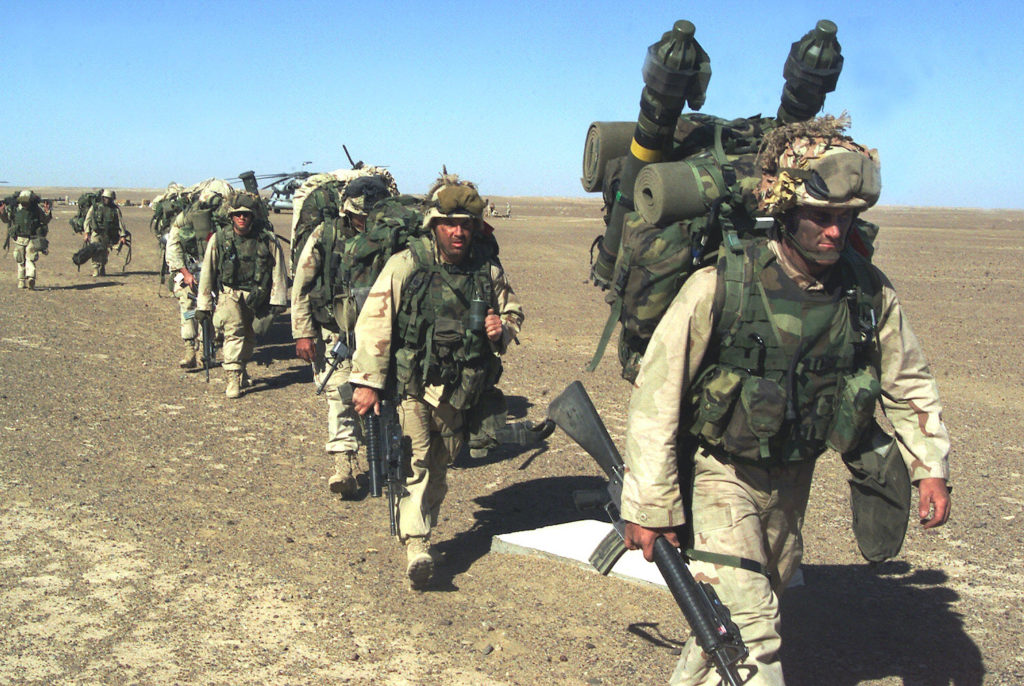

U.S. Marines in Afghanistan, 2001. (Sergeant Joseph R. Chenelly / United States Marine Corps)
The Washington Post’s Afghanistan Papers, detailing a true history of the nation’s longest official war, reveals nothing new about the war’s futility or about the fact that it was doomed to failure from almost the beginning. The Post fought a legal battle for three years to obtain the documents from the Special Inspector General for Afghanistan Reconstruction (SIGAR), a federal government watchdog agency that interviewed hundreds of officials about their honest assessments of the war.
What the Afghanistan Papers do offer is a confirmation of what critics had already been asserting for nearly two decades: that there is no clearly defined goal or endpoint to the war to help determine when to stop fighting, and that our efforts have been futile at best and deeply destructive at worst.
More than 10 years ago I wrote, together with James Ingalls, a critical assessment of the Afghanistan war. The title of our book was Bleeding Afghanistan: Washington, Warlords, and the Propaganda of Silence (Seven Stories, 2006). Those last three words, “the Propaganda of Silence,” are a direct reference to poor media coverage and the irresponsible manner in which the press took an uncritical view of the war. The evidence was there for all to see that the U.S. war was doomed to failure once you scratched beneath the surface of officials’ rosy rhetoric.


The most important function of the Afghanistan Papers is to confirm that government officials have been utterly dishonest with the public about U.S. achievements and progress in Afghanistan. John Sopko, the Special Inspector General at SIGAR, admitted to the Post that the documents prove that “the American people have constantly been lied to.”
The picture that emerges of how insiders have viewed the war is startlingly similar to how critics have portrayed it over the years. Earlier this year I wrote a “Brief History” of the Afghanistan war for Truthdig in which I assessed the early years of the conflict:
The Bush plan to build a stable Afghan government as a bulwark against the Taliban and al-Qaida failed for reasons that had as much to do with imperial hubris as it did with the practical shortcuts taken by an outsider to patch together a precarious government—as if that were a sufficient substitute for real democracy. 
In comparison, one economist told SIGAR, as revealed in the Afghanistan Papers, that he:
… blamed an array of mistakes committed again and again over 18 years — haphazard planning, misguided policies, bureaucratic feuding. Many said the overall nation-building strategy was further undermined by hubris, impatience, ignorance and a belief that money can fix anything.
In my history of the war, I also wrote: “Obama’s strategy included a temporary increase in troops, as if throwing more American soldiers at the problem would help any one of his goals stick.” But, I continued, “The Taliban appears to have had a ‘wait it out’ strategy with respect to Americans, stringing along the U.S. and the Afghan government over several years of talks until it had the upper hand to return to power.”
By comparison, the Afghanistan Papers revealed that “Obama’s strategy was also destined to fail,” as it relied on “a massive counterinsurgency campaign, backed by 150,000 U.S. and NATO troops.” In the end, I concluded: “Obama tried to set artificial dates for ending the war before it was over. All the Taliban had to do was wait him out.”
In 2015 I wrote in another piece for Truthdig titled “We Have Failed Afghanistan Again and Again,” that:
Despite spending billions of dollars—the U.S. offered its largest share of foreign aid to Afghans last year—there is little to show for it. Nearly $10 billion was spent on arming and training Afghan forces. But as the dismal state of the Afghan National Army shows, that money may as well have been poured down the drain. 
By comparison, the Afghanistan Papers reveal that officials privately knew they were fueling corruption, and that “Much of the money … ended up in the pockets of overpriced contractors or corrupt Afghan officials, while U.S.-financed schools, clinics and roads fell into disrepair, if they were built at all.”
The U.S. has also been lining the pockets of Afghanistan’s most notorious warlords, who have a long and bloody history going back to the era of Soviet occupation, when the CIA doled out cash to fight its Cold War enemy. In my 2006 book, my co-author and I warned against this practice, devoting a whole chapter to it, titled “Replacing One Brutal Regime With Another.” We suggested that instead of rewarding them with cash and government positions, the U.S. ought to disarm the warlords and help Afghans bring them to justice. The U.S. did the opposite, and the result was entirely predictable.
The Afghanistan Papers confirm that:
According to the interviews, the CIA, the U.S. military, the State Department and other agencies used cash and lucrative contracts to win the allegiance of Afghan warlords in the fight against al-Qaeda and the Taliban. Intended as a short-term tactic, the practice ended up binding the United States to some of the country’s most notorious figures for years. 
One senior government official told SIGAR, “We were giving out contracts to pretty nasty people, empowering people we shouldn’t have empowered, in order to achieve our own goals.” American tax dollars have lined the pockets of mass killers to an unimaginable extent. In my 2015 article, I referred specifically to Abdul Rashid Dostum, who was elevated to the position of vice president even though he had been “implicated in numerous atrocities and mass killings.” Among the few new revelations from The Washington Post’s investigative report is the assertion that “the United States and other sources had been giving Dostum $100,000 a month ‘to not cause trouble.’ ”
Now the Trump administration is hoping to resume peace negotiations with the Taliban with a plan to reinstall the very regime the U.S. claimed was harboring terrorists and harming Afghans. If the point of the war was to go from point A to point B and then back to point A, with an unimaginably high death toll in between, then by that measure alone the U.S. war in Afghanistan has been a success.
What American officials and the mainstream media has consistently failed to do in Afghanistan is actually pay attention to what ordinary Afghans say and want. The biggest toll of the failed American war has been the death and destruction of lives in a country that was already torn apart by years of war in 2001. We may never get a full accounting of how many Afghans have died or been maimed for life as a direct result of a war that insiders knew was a mistake.
But what we do know is all armed forces in Afghanistan are implicated in war crimes. In 2018, in a little-covered story, Afghans submitted a whopping 1.17 million complaints to the International Criminal Court that “include accounts of alleged atrocities, not only by groups like the Taliban and the ISIS, but also Afghan Security Forces and government-affiliated warlords, the U.S.-led coalition, and foreign and domestic spy agencies.”
The Post’s investigative series is a welcome addition to mountains of evidence that the Afghanistan war is a failure. But it was clear to those of us who had been paying attention that U.S. officials were lying about the war for nearly two decades. The important question today is: Will the Afghanistan Papers bring about the end of the longest war?

THE GENERALS’ LONG CON ON AFGHANISTAN


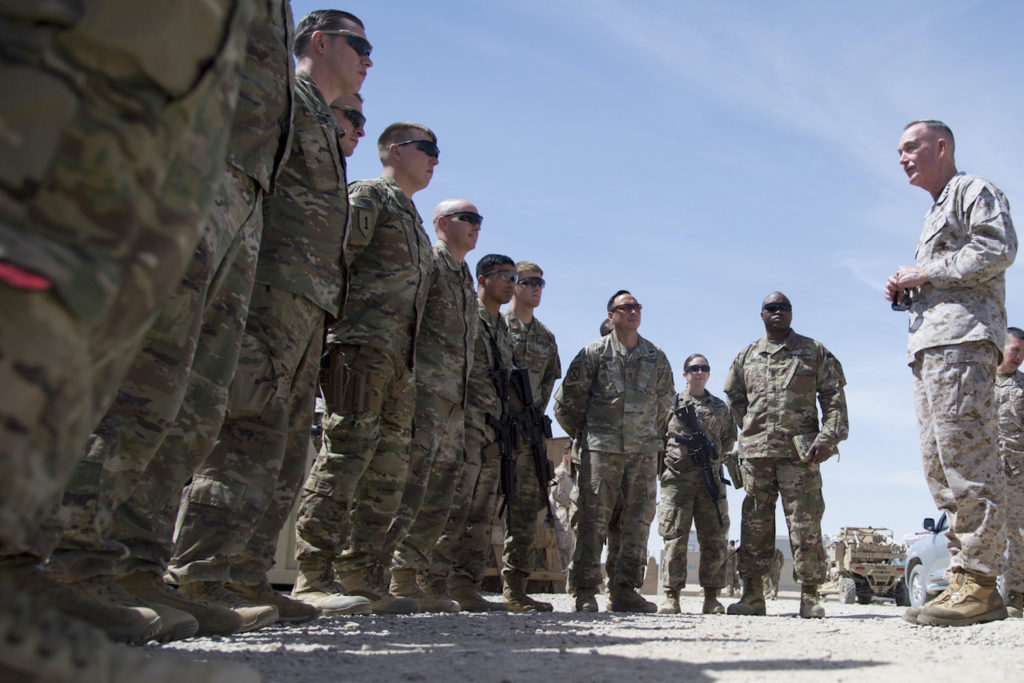
Marine Corps Gen. Joe Dunford, chairman of the Joint Chiefs of Staff, speaks to soldiers in Afghanistan’s Helmand province in 2018.  (Navy Petty Officer 1st Class Dominique A. Pineiro / Department of Defense)
So now we know that which many of us long surmised. The generals lied, repeatedly; in fact, the whole damn Afghan War was a lie. I wish I could take some pleasure in the vindication, but I can’t seem conjure any. Too many of my own boys died in, or took their own lives after, that ongoing nightmare of a war. Deep melancholy seems, for an Afghan veteran, the only appropriate response. No amount of “I-told-you-so’s” will bring back the 2,440 American soldiers, and more than 30,000 Afghan civilians who’ve perished (so far), in that aimless, endless conflict.
What, then, can one learn from The Washington Post’s recent release of the Afghanistan Papers? Perhaps this: Forever war is a bipartisan enterprise (the lies spanned three administrations) and more importantly, the time has come to stop trusting the generals—although I’m not sure we Americans ever will. The latest revelations most certainly count as the (remarkably similar) Vietnam-era, Pentagon Papers of my generation.
In 1971, there was a large, active antiwar movement in the streets, and Daniel Ellsberg’s leaked documents enflamed it. Today, in the absence of a broad military draft, and with President Trump’s impeachment-as-entertainment hearings dominating the media, I doubt the Afghanistan Papers will amount to much in the way of results.
If, as an activist-writer, I felt a touch vindicated, and as a career soldier, I felt sad, then as a historian, I can’t say I was surprised by the Post’s disclosure. Back in the Vietnam War, successive commanding generals—most famously William Westmoreland just before the massive enemy Tet Offensive—had assured the White House and the American public that there was “light at the end” of the conflict’s “tunnel.”
Similarly, throughout the Afghan War, and across all the countless theaters of America’s expansive post-9/11 theaters, literally dozens of generals provided optimistic predictions that the U.S. military had “turned the corner.” For almost two decades, Washington insiders and an entertained-to-death public took the resplendently dressed, strong-jawed flag officers at their word. The Afghanistan Papers should, but probably won’t, break the spell.
In the wake of the revelations, the most famous Afghan War commander, former four-star general and CIA Director David Petraeus, couldn’t help but take the bait and self-righteously defend himself within a day. His defense made me want to vomit in my mouth a bit. “I stand by the assessments I provided as the commander in Afghanistan,” Petraeus said in a statementemailed to The Daily Beast. He said he believes “the security gains, while very hard fought and fragile, were indisputable. We clearly reversed the momentum the Taliban had on the battlefield.”
Is he serious?
The self-styled intellectual, “enlightened” general sounds, in this mea culpa, like a defensive, impetuous child. Just as “King David” never divined that his own stated purpose in the Iraq surge—to create space and time for an ethno-sectarian political settlement—hadn’t come to pass, he can’t seem to admit that a temporary lull in Taliban violence was irrelevant. Sorry, general, but if Afghanistan is worse off today than it was when you left, well then, your pet counterinsurgency strategy—by its very definition—failed. You lost … deal with it. The whole damn military, myself included, lost.
Sure, maybe I do have a vendetta, of sorts, against Petraeus. Why shouldn’t I? I met the prima donna general back in mid-2007 in Iraq. In preparation for his visit, my squadron set up for hours, repeatedly practiced our stock briefings, so he could proceed to pay no attention to us as he devoured the snacks we’d prepared—“the general loves fresh fruit,” one of his aides had told me—then treat us to one of his anodyne, canned lectures on counterinsurgency theory.
On a grander scale, Petraeus must stand as the biggest, most unapologetic villain of all. No one better personifies the gilded military culture of the “terror wars.” Under his carefully self-promoted veneer lay defeat in the two wars he led, his wrong-on-all-counts Vietnam War Ph.D., and a profound moral scandal—a criminal conviction for sharing classified data with his young mistress-come-biographer. Symbolically, at least, Petraeus is the forever war.
Nonetheless, he’s not the only vacuous general or senior intelligence official to blow smoke up our proverbial you-know-what’s. Consider recently retired Chairman of the Joint Chiefs Gen. Joseph Dunford. It wasn’t too long ago that this clown—in an impressively Orwellian stretch of the English language—claimed it was “premature” (after 18 years!) to discuss withdrawal from Afghanistan. Let that sink in. The hard truth is, all of us officers in that war were complicit—up and down the chain of command—by deceiving each other about the “progress” on the ground.
To please the bosses, keep them away from my outpost and protect my troopers, I, too, played the game.
Promotions, especially for general officer careers built on the terror wars, depended on the illusion of success. Senior colonels and budding flag officers had a status, and a pecuniary interest in reporting improvement in their sectors. The Afghanistan Papers prove, indisputably, that the generals lied to us. But it’s far more complicated (and unsettling) than all that. I truly believe they also lied to each other, to themselves. They had to believe, wanted to believe, needed to believe, that their wars could be won. A good number graduated from West Point, where we were forced to memorize General Douglas MacArthur’s famous mantra: “There is no substitute for victory.”
Seen in that light, the entire war was, for those who led it, one grand delusion. Thus, when the statistical measures of effectiveness—unsustainable Afghan Army casualties and the number of districts contested by the Taliban—proved inconvenient, the generals had them classified, or they simply quit counting. Perhaps that’s why it took The Washington Post so long to compilethese documents; to force the U.S. government to release them.
Yet there’s something else at work here that society must grapple with: Whyare Americans so apt to trust the generals when, throughout modern U.S. history, they’ve been wrong time and again? I, for one, blame the contemporary (post-Vietnam) penchant for—rather dangerous—public military adulation.
Take, for example, the charade that is generals’ testimony before Congress. Whether it’s Petraeus—who absolutely reveled in the spotlight—or another senior general, the military man shows up in an intimidating dress uniform replete with a “fruit salad” chest-full of superfluous medals. Frankly, they look sharper than the poor schlub legislators attired like country lawyers. Perhaps it’s no surprise, then, when those congresspeople veritably kowtow before the generals–fawningly “thanking” them for their service both before and after they are questioned.
It is not supposed to be that way. Congresspeople are the bosses. The generals are supposed to answer to them, and by extension, to the People. Legislative oversight, hearings and questioning, are by design meant to be like legal trials, confrontational. So, assuming it’s the fancy uniforms intimidating the congresspeople, I’ve got a ready proposal: Until further notice, generals summoned to Capitol Hill must wear rumpled, ill-fitting, Bernie-style civilian suits. Let them win a few wars and speak some hard truths before they earn their snazzy attire back.
By the way, there’s precedent for this. In a far more modest era, Army Chief of Staff Gen. George Marshall—architect of victory in World War II—wore civilian clothes at government meetings in Washington, D.C., declaring: “I didn’t want to antagonize the public and the Congress with the easily aroused feelings toward the military that always existed.” Let us bring back a tad bit of that humility.
I, for one, doubt that I’ll ever again trust the assertions and promises of most generals. And I’m not in bad company. Recall that some 56 years ago, President John F. Kennedy, himself a heroic young officer in the Second World War, mistrusted his senior military advisers. After they, to a man, all recommended outrageously pugnacious policies almost certain to cause worldwide nuclear war during the Cuban Missile Crisis, JFK flippantly—but correctly—reflected that “These brass hats have one great advantage in their favor. If we listen to them, and do what they want us to do, none of us will be alive later to tell them that they were wrong.”
Will we never learn?
————
Copyright 2019 Danny Sjursen


US Military Is Preparing for the War It Wishes to Fight

US Military Is Preparing for the War It Wishes to Fight — Not for the War Russia Is Actually Going to Deliver 

"We’re preparing to fight a war of neat columns of data, sophisticated user interfaces, systems of systems, and... spreadsheets"

Russian drone-guided artillery did indeed prove devastating in Donbass, 2014
There’s an old saying that Generals are always preparing to fight the last war. Well, there’s a related and previously unknown phenomenon developing within the US military which is that the Generals are preparing to fight the wrong next war.
To give some credit where credit is due, the US military is devoting a fair amount of effort to preparing to fight the next war. The problem is that the next war that our military envisions is one entirely of their own creation rather than one defined by consideration of the enemy’s capabilities and intent.
We’re not preparing to fight the war that China and Russia are going to deliver; we’re preparing to fight the war that we want to see: a war of high technology, with lots of cross-domain buzzwords, artificial intelligence assisted joint battle command, with dispersed, small, flexible, light units creating havoc deep within enemy territory, tiny unmanned vehicles roving the air, land, and sea and applying nearly magical capabilities, all supported by an exquisite, ephemeral network providing perfect situational awareness.
What kind of war are the Russians and Chinese preparing to deliver? They’re building heavier and heavier armored units with more, bigger, and far more lethal conventional explosives delivered by massed artillery and ballistic missiles. The Chinese are building for a war of attrition and are on a quick path to outnumbering us in every category of military capability. The Russians are telling us exactly what kind of war they’ll deliver with their semi-proxy invasion of Ukraine. It’s a war of unimaginable destruction delivered by artillery supported by electronic warfare and UAVs, all backed by heavy armored units. Entire mechanized units are wiped out in seconds. Our enemies are preparing to employ lethal battlefield unmanned vehicles without a care for unintended casualties.
In short, our enemies are preparing to deliver a war with massive firepower, heavy armored units, widespread and effective electronic warfare, and Terminator style unmanned killing machines.
Now look at the kind of war games we’re conducting.
We’re preparing to conduct the first multi-domain command and control exercise, Cross Domain One.
The Air Force will lead the first experiment of Joint All-Domain Command and Control (JADC2) capabilities in two weeks, tying fighter jets to Army ground systems and Navy ships in a real-world example of Multi-Domain Operations.
Preston Dunlap, Air Force chief architect for acquisition, told Breaking D that the exercise in Florida will “be powered by” the service’s nascent Advanced Battle Management System (ABMS). (1)
We’re preparing to fight a war of neat columns of data, sophisticated user interfaces, systems of systems, and cross-domain synergistic spreadsheets all backed up by dispersed light infantry and distributed logistics ships with a few anti-ship missiles. Our idea of heavy firepower is the 30 mm machine gun that we’ve so proudly stuck on the Strykers and dubbed ‘Dragoon’. The Russians in their heavily armored, T-90 or T-14 Armata tanks with 125 mm guns must be quaking in their boots over the prospect of facing unarmored Strykers with machine guns for main weapons.
Stryker Dragoon — cute
While Russia is developing improved cluster munitions and China is mass producing conventional ballistic missiles, we’ve established a Department of Defense, Non-Lethal Weapons Program (2).
Where’s our war game that examines the devastating effects of pure firepower? Where’s our wargame that tries to figure out how to defeat an armored pincer?Where’s our wargame that looks at how to deal with massive artillery barrages? Where’s our exercise that forces units to operate with jammed communications, no GPS, jammed radar, and constant cyber attack? Where’s our wargame that looks at trying to operate under enemy controlled skies?
Our [badly] misguided military leadership has created a fantasy vision of what a future war will look like – a war that doesn’t match the predictable reality – and are now contentedly ‘validating’ our weapons and systems against that unrealistic fantasy war. Our Generals and Admirals are busy congratulating themselves for the rosy results of these fantasy wargames that are concocted from wishful thinking rather than the enemy’s demonstrated capabilities and plans.
We’ve left firepower far behind in the rear view mirror in our pursuit of perfect data awareness. We’ve forgotten that even perfect awareness is useless without the means to destroy what we see. We’ve forgotten that firepower trumps awareness – you don’t need to know exactly where that enemy unit is if you’ve got the firepower and are willing to wipe out a grid square (and all the collateral damage that might go with it) to destroy it. An unstoppable barrage of artillery fire doesn’t require precision guidance – close counts in horseshoes and artillery.
The decades of low intensity, low threat conflict have led our military leaders who have grown up in that environment to believe that war with Russia/China/Iran/NKorea will be more of the same and that the war can be won with data and networks. These ignorant leaders have now concocted fantasy wargames because they simply can’t grasp the horror, devastation, and barbarity that will be a modern peer war.
Source: Navy Matters
(1) Breaking Defense website, “First Multi Domain C2 Exercise Planned: Cross Domain One”, Theresa Hitchens, 6-Dec-2019,


vrijdag 13 december 2019

Holocaust Training for American Police

Holocaust Training for American Police

Law enforcement copies Israeli brutality


Jewish groups in the United States are adept at creating mechanisms that benefit themselves and also frequently Israel at the expense of the American taxpayer. The proliferating holocaust museums are a good example, sometimes built by private donations but then paid for and operated by the local government. The national holocaust museum in Washington is, for example, supported by the taxpayer to the tune of $54 million per year. When one considers that the so-called holocaust occurred nearly eighty years ago and did not involve the United States at all, it is a remarkable achievement to so memorialize the claimed uniqueness of Jewish suffering, which then is used to justify other abuses and excuse Israel’s ongoing war crimes.
For those who deny that claims of the uniqueness of Jewish suffering are exploited and even promoted in order to be able to influence public opinion while also obtaining special favors from government, one might cite specific instances where that has most definitely been the case. Jewish organizations receive over 90% of discretionary grants from the Department of Homeland Security, for example, and Israel benefits from $3.8 billion in aid annually plus another $10 billion through bogus charities, trade concessions and U.S. government funded projects approved by Congress that the American public knows little or nothing about.
And benefiting Jews worldwide is also part of the agenda. Apart from the creation of the state of Israel itself, which was opposed by most of the U.S. foreign policy establishment, the first major effort to condition U.S. foreign policy to benefit Jews specifically came with the Jackson-Vanik Amendment of 1975, which made some aspects of relations with the Soviet Union conditional on that country’s willingness to let Jews emigrate. Far more outrageous was the so-called Lautenberg Amendment enshrined in the 1990 Public Law 101-167 that granted refugee status to Russian Jews even though they were not actually being persecuted or in any way endangered. The refugee status is significant as it provided food stamps, housing, social security, Medicaid and educational benefits along with a free ticket into the U.S. to an “estimated…350,000 to 400,000 Jews [who] entered the United States …”
Holocaust education is mandatory in the public schools of 15 states and Jewish groups are active in determining just what appears in textbooks about Israel, which means that the propagandizing about Jews and Israel begins early and continues throughout one’s education. Twenty-seven states have laws criminalizing or otherwise punishing anyone who advocates boycotts of Israel while the federal government has similar legislation in the pipeline and has declared that criticism of Israel is ipso facto anti-Semitism.
Given all of that it is perhaps not surprising to learn that policemen in Tampa Florida are now undergoing “holocaust training,” sponsored by the Anti-Defamation League. Conveniently, there is a holocaust museum located just down the road in St. Petersburg where the first group of officers was taken to be indoctrinated.
The training is mandatory and is reported to be the first in the state of Florida, though more such initiatives will likely be in the pipeline as governor Ron DeSantis has declared himself to be the most pro-Israel head of any state in the U.S. The newscaster discussing the training also observed in passing that “holocaust awareness training” has been mandatory “for about a decade” for all federal law enforcement officers. It is difficult to imagine what such training is intended to do in the American context, though it clearly seeks to remind trainees that in Nazi Germany policemen were involved in concentration camps and the claimed execution of Jews.
One would think that the public will eventually arrive at an “enough already” point when it comes to government and private sector efforts to exploit the holocaust and monetize Jewish suffering. Unless the Jewish creators of the “training” program honestly believe that something like Germany 1939-45 is coming to the United States and are intent on giving a warning, it would seem to be yet one more tip of the hat to Jewish power in America, quite likely also intended to send a positive message about what Israel represents. What it all has to do with U.S. national security or in benefiting the American people is, of course, irrelevant.
Joint training programs run in Israel are also being used to indoctrinate American police forces and are equally difficult to comprehend as the Israelis are clueless when it comes to conducting investigations or protecting all of their country’s citizens. Israel’s cops are at the forefront of state violence against Palestinians as well as serving as protectors of rampaging heavily armed settlers who destroy Arab livelihoods so they can steal their land. The Israeli police are also quite good at using the “Palestinian chair” for torture when they are not shooting Arab teenagers in the back, skills that American cops hopefully will not emulate.
In fact, there have been suggestions that certain policemen might well be picking up some unanticipated pointers from the Israelis. Georgia has been experiencing a surge in officer involved shootings, nearly half of the victims being unarmed or shot from behind. As this has unfolded, the state continues to pursue a “police exchange” program with Israel run through Georgia State University.
The police “exchange programs” began twenty-seven years ago in 1992 and are paid for through grants from the U.S. Department of Justice as well as from the state and local governments. Reportedly “law enforcement from [a number of] U.S. states have participated in the program, including those from Tennessee, Alabama, Arizona, Arkansas, California, Florida, Georgia, Indiana, North Carolina, Kansas, Kentucky, Louisiana, Michigan, Mississippi, Nevada, Michigan, New Jersey, New York, New York, North Carolina, North Dakota, Ohio, Oklahoma, Pennsylvania, South Carolina, Texas, Utah, Virginia, Washington, Washington, D.C., and West Virginia.” In some states and local jurisdictions, the Israel exchange program is managed by the Anti-Defamation League, which also sponsors propagandistic seminars on Israeli “counter-terrorism” practices throughout the U.S.
Some states and cities, however, concerned over being linked to Israel’s militarized police forces and their brutal occupation of Palestinian land, are beginning to withdraw from the training program. Recently the Vermont State Police, the Northampton, Massachusetts police department and the Durham North Carolina city police have canceled their planned training in Israel.
There has been particular concern expressed over the Israeli “us-versus-them” dual track mode of policing where the 20% of the country’s citizens that are Arab are regarded as an enemy while the settlers who prey on the Palestinians are automatically protected by police solely because they are Jewish. Lethal force is frequently resorted to on a “shoot-to-kill” basis in any incident involving Arabs and Jews, even when there is no serious threat. Some critics of the training note how that type of policing is basically racial profiling while areas on what was once the Palestinian West Bank and along the Gaza border have become free fire zones for the Israeli army and law enforcement, killing hundreds of Arabs, many of them children. Palestinians injured by policemen or settlers also obtain no redress from the Israeli courts with only 3 per cent of investigations resulting in a conviction.
That some American police forces are now questioning the wisdom of training in an Israel where police officers can freely shoot and kill members of an oppressed religious and ethnic minority should not be a surprise but for the fact that it took so long. That Jewish groups in the United States get away with obtaining taxpayer money to promote an essentially criminal Israeli enterprise is perhaps just as discouraging as it suggests that Jewish power and money will continue to prevail in the brainwashing of the American public. Holocaust training and exchanges in Israel for police officers are shameful ideas, promoted by the usual ambitious government officials who pander to the Jewish lobby for their own personal gain.
Philip M. Giraldi, Ph.D., is Executive Director of the Council for the National Interest, a 501(c)3 tax deductible educational foundation (Federal ID Number #52-1739023) that seeks a more interests-based U.S. foreign policy in the Middle East. Website is councilforthenationalinterest.org, address is P.O. Box 2157, Purcellville VA 20134 and its email is inform@cnionline.org.

The elimination of the war crimes court is near-complete

  With Karim Khan's dismissal, the elimination of the war crimes court is near-complete Millions of people around the world will now fin...