Zoeken in deze blog 🔎🔎

zaterdag 26 januari 2019

Criticizing The 'Jewish State'

Michelle Alexander Is Right About Israel-Palestine
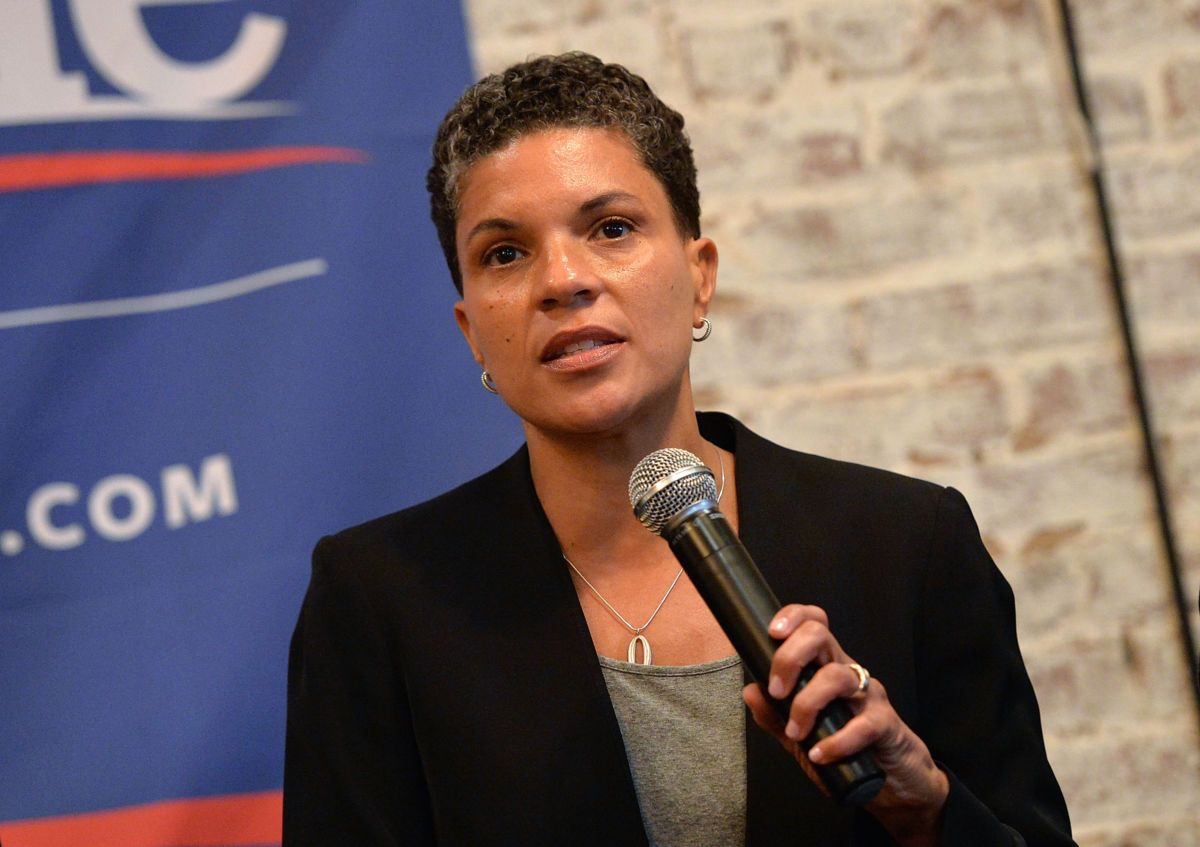
As a progressive Jew, I find that many of my family members and friends are still what we call “PEP” — progressive except Palestine. Amid ever-worsening injustices created by the Israeli system of apartheid and Israel’s illegal occupation of Palestinian lands, it is past time for this to change.
I am hopeful that the firestorm sparked by Michelle Alexander’s recent New York Times column, “Time to Break the Silence on Palestine,” will finally generate the heat necessary to force more people and groups on the left to overcome the fundamental hypocrisy of the “progressive except Palestine” approach.
I was deeply inspired by Alexander’s column and her decision to speak so honestly about the difficulty of overcoming the fear of backlash over taking a public stand against the Israeli occupation of Palestine.
Striking a comparison between the risk taken by prominent critics of Israel and the risk Dr. Martin Luther King Jr. took by publicly criticizing the Vietnam War, Alexander observes, “Those who speak publicly in support of the liberation of the Palestinian people still risk condemnation and backlash.”
Invoking Dr. King’s exhortation that “a time comes when silence is betrayal,” Alexander reflects on “the excuses and rationalizations that have kept me largely silent on one of the great moral challenges of our time: the crisis in Israel-Palestine.”
Alexander’s words resonated with me, a Jew who uncritically supported Israel for many years until I saw the parallels between US policy in Vietnam and Israel’s occupation of the Palestinian territories. My activism and critical writings have followed a trajectory from Vietnam to South Africa to Israel to Iraq to Afghanistan and other countries where the United States continues its imperial military actions.
Although many of my articles are controversial as they criticize the actions of the US government — under both Democratic and Republican regimes — I get the most pushback from my writings about Israel-Palestine. When I analyze Israel’s illegal occupation and crimes against the Palestinians, I am often called a “self-hating” Jew.

My Own Path Toward Speaking Out Against the Israeli Occupation of Palestine

I was born in 1948, the year Israel was created out of whole Palestinian cloth. When tasked with finding a destination for Jews displaced by the Holocaust, the United Nations chose Palestine. Thus began a brutal and illegal occupation that continues to this day.
In his book, Injustice: The Story of the Holy Land Foundation Five, Israeli-American Miko Peled describes the 1948 “ethnic cleansing campaign that was sweeping through Palestine like wildfire, destroying everything in its path.” Palestinians call it the “Nakba,” Arabic for “catastrophe.”
My family was not religious but we were proud of our Jewish heritage. My father fought the Nazis in World War II and relatives perished in the Holocaust. My paternal grandmother was an activist against the Tsar during the Russian pogroms. On her way to a Siberian prison, she escaped and, at the age of 18, boarded a ship bound for the United States.
We revered Israel as the homeland of the Jews. At the Passover Seder, we would raise our glasses and intone, “Next year in Jerusalem!” At Sunday School, we gathered coins to plant trees in the Holy Land. It wasn’t until I left home that I learned the truth about Israel and became an outspoken critic of its policies.
In 1967, during my freshman year at Stanford, I came to oppose the war in Vietnam and joined The Resistance, a group of draft resisters and their allies. The following year, I signed up for Students for a Democratic Society, where I learned the war was not an isolated event, but rather part of a long history of US imperialism. But I was still unaware that the war Israel launched in 1967 “completed its occupation of Palestine,” in the words of Peled.
The anti-Vietnam War movement at Stanford challenged my long-held assumptions about US foreign policy. My commitment to ending an unjust war against a people fighting for liberation eventually opened my eyes to the plight of the Palestinian people and Israel’s role in repressing them.
After college, I went to law school and became a peoples’ lawyer. I joined the National Lawyers Guild (NLG), a progressive political-legal organization which I later served as president. The NLG’s guiding motto is, “Human rights are more sacred than property interests.” In the NLG, I met many people who criticized Israel’s illegal policies and US complicity in them.
In 1977, the NLG sent a delegation to Israel and Palestine. The report they issued was the first comprehensive analysis of Israel’s practices published by a non-governmental organization dedicated to the protection of human rights. It documented violations of the 1949 Geneva Conventions by Israel as a belligerent occupant of the West Bank and Gaza.
The allegations in the report disturbed me greatly. They described Israel’s mistreatment of the Palestinians, including house demolitions, administrative detention and torture. The report documented beatings, burning with cigarettes, forced standing while naked for long periods exposed to heat or cold, dousing with hot or cold water, cutting the body with razor blades, biting by dogs, sensory deprivation, sodomizing with bottles or sticks, inserting wires into the penis, electric shocks to sensitive parts of the body, and suspension from the floor with hands or feet tied to a pulley device. Reading the case studies made me physically ill.

Apartheid – From South Africa to Palestine

Alexander, author of The New Jim Crow: Mass Incarceration the Age of Colorblindness, wrote that some of Israel’s practices are “reminiscent of apartheid in South Africa and Jim Crow segregation in the United States.”
After the Palestinians launched the second intifada, or uprising, NLG members went to the region and published a report in 2001. It documented a system of apartheid in Israel and the Occupied Palestinian Territories, as well as the United States’ uncritical support of Israel.
That report describes illegal settlements and bypass roads, restricted movement of Palestinians, discriminatory land policies, differential treatment of Jews and Palestinian non-Jews, and Israeli policing of Palestinian political expression. It also analyzed indiscriminate and excessive use of lethal force against Palestinians, indiscriminate and excessive use of force against Palestinian property, delay and prevention of medical treatment, and collective punishment against the Palestinians.
South Africa’s Archbishop Desmond Tutu, winner of the Nobel Peace Prize, pointed to similarities between apartheid in his country and Israel’s oppression of the Palestinians. “My voice will always be raised in support of Christian-Jewish ties and against the anti-Semitism that all sensible people fear and detest. But this cannot be an excuse for doing nothing and for standing aside as successive Israeli governments colonize the West Bank and advance racist laws,” Tutu wrote in a Tampa Bay Times article. He noted “Israel’s theft of Palestinian land,” and “Jewish-only colonies built on Palestinian land in violation of international law.”
Tutu cited a 2010 Human Rights Watch report that “describes the two-tier system of laws, rules, and services that Israel operates for the two populations in areas in the West Bank under its exclusive control, which provide preferential services, development, and benefits for Jewish settlers while imposing harsh conditions on Palestinians.” Tutu wrote, “This, in my book, is apartheid. It is untenable.”
On July 19, 2018, the Israeli Knesset passed a law that illegally enshrines a system of apartheid. The legislation, which has the force of a constitutional amendment, says, “The State of Israel is the national home of the Jewish people, in which it fulfills its natural, cultural, religious and historical right to self-determination.” It continues, “The right to exercise national self-determination in the State of Israel is unique to the Jewish people.” There is no guarantee of self-determination for the 1.8 million Arabs who make up 20 percent of Israel’s population.
Tutu called on “people and organizations of conscience to divest from . . . Caterpillar, Motorola Solutions and Hewlett Packard,” which profit “from the occupation and subjugation of Palestinians.” He was advocating participation in the non-violent Boycott, Divestment and Sanctions movement (BDS), which Alexander also mentions in her column.
When representatives of Palestinian civil society launched BDS in 2005, they called upon “international civil society organizations and people of conscience all over the world to impose broad boycotts and implement divestment initiatives against Israel similar to those applied to South Africa in the apartheid era … [including] embargoes and sanctions against Israel.”
Israel continues to attack Gaza, described as the world’s largest “open air prison” as Israel maintains a tight blockade, restricting all ingress and egress. Headlines in the mainstream media falsely portray an equivalence of firepower between Israelis and Palestinians in Gaza. But Israel’s use of force greatly exceeds that of the Palestinians, and the asymmetric warfare continues to escalate. 
In 2014, Israel mounted an offensive called “Operation Protective Edge,” relentlessly bombing Gaza for nearly two months, killing 2,251 Palestinians, the majority of them civilians. The number of Palestinians wounded was 11,231, including 3,540 women and 3,436 children. On the Israeli side, six civilians and 67 soldiers were killed and 1,600 were injured. Tens of thousands of Palestinians lost their homes and the infrastructure was severely damaged. Israel targeted numerous schools, UN-sanctioned places of refuge, hospitals, ambulances and mosques.
As Operation Protective Edge was winding down, the NLG and other legal organizations sent a letter to the chief prosecutor of the International Criminal Court, urging her to investigate war crimes, genocide and crimes against humanity in Gaza committed by Israel and aided and abetted by US leaders. The letter was based on an article I wrote documenting those crimes.

Criticism of Israel Is Not Anti-Semitic

I have become sharply critical of Israel. An active member of the NLG’s Palestine Subcommittee, I write frequent articles and do media commentary about Israel’s violations of international law. I am also a member of Jewish Voice for Peace and I work in support of BDS.
Years after I first read the 1977 NLG delegation report, I visited Ellis Island, where my grandparents arrived in the United States. It is now a museum. As I walked the route they traveled, I felt very emotional about what they endured. But my deep feelings about the suffering of my ancestors during the Holocaust are not inconsistent with my criticisms of Israel for subjecting the Palestinians to a different kind of oppression.
As stories continue to emerge about Israel’s killing of unarmed protesters at the Gaza border during the Great March of Return, it is increasingly difficult to ignore the facts. Yet even those who see the truth about Israel’s oppression of the Palestinians worry about reprisals for speaking out.
Alexander describes the silence of many civil rights activists and groups, “not because they lack concern or sympathy for the Palestinian people, but because they fear loss of funding from foundations, and false charges of anti-Semitism.” She mentioned the case of Bahia Amawi, a US citizen of Palestinian descent, who lost her Texas elementary school job last year after refusing to pledge in writing that she would not participate in the BDS movement. Glenn Greenwald pointed out the grave danger anti-BDS laws pose to freedom of speech, tweeting, “The proliferation of these laws – where US citizens are barred from work or contracts unless they vow not to boycott Israel – is the single greatest free speech threat in the US.”
There is a false equivalency between criticizing Israel and being anti-Semitic. Any criticism of Israeli policy is labeled anti-Semitism, even though many Jews—including members of Jewish Voice for Peace, Jewish Center for Nonviolence and IfNotNow—oppose the occupation.
The BDS movement is not anti-Israeli, as it targets the policies, not the people, of Israel. And actions against Israel’s policies, including BDS, do not equate to anti-Semitism. Rafeef Ziadah, a spokesperson for the Palestinian Boycott, Divestment and Sanctions National Committee, says, “As a matter of principle, the BDS movement has consistently and categorically opposed all forms of racism, including anti-semitism and Islamophobia.”
Palestinian human rights activist Omar Barghouti wrote in The New York Times in 2014, “Arguing that boycotting Israel is intrinsically anti-Semitic is not only false, but it also presumes that Israel and ‘the Jews’ are one and the same. This is as absurd and bigoted as claiming that a boycott of a self-defined Islamic state like Saudi Arabia, say, because of its horrific human rights record, would of necessity be Islamophobic.”
Even though many persist in equating condemnation of Israel with anti-Semitism, groups like Jewish Voice for Peace continue to gain traction. Jews are increasingly willing to examine the facts on the ground in Israel and the Occupied Palestinian Territories.
And although Congress, dominated by the powerful Israel lobby, continues to give more money to Israel than any other country, two new members of Congress — Representatives Ilhan Omar (D-Minnesota) and Rashida Tlaib (D-Michigan) — support BDS.
Alexander is optimistic: “There seems to be increased understanding that criticism of the policies and practices of the Israeli government is not, in itself, anti-Semitic.”
We in the Jewish community have a special responsibility to fight against the Israeli system of apartheid and its illegal occupation of Palestinian lands. The BDS movement is an effective weapon in this struggle. I urge my fellow Jews to join BDS and oppose Israel’s illegal and inhumane policies in whatever way they can.


Zionists Against Freedom of Speech


The Israeli government just launched an extraordinary attack on the Guardian

Emily Apple


On 22 January, the Guardian published an editorial about Israel. Called The Guardian view on Israel’s democracy: killing with impunity, lying without consequence?, the piece describes what happened on the so-called Israel/Gaza border during the Great March of Return protests in 2018.
Written in advance of Israel’s general election in April, the piece concluded:
There is no new plan – just a rebranding of the status quo, maintained by force by Israel, and with Palestinians within and without Israel’s borders subjugated and dependent. Israelis must turn away from the occupation, which is debasing their society and suffocating the Palestinians
Spokesperson for Israel’s Foreign Ministry Emmanuel Nahshon claimed the piece was “cheap moralizing”, saying:


The Guardian has decided to engage in an exercise of cheap moralizing, deliberately ignoring Palestinian terror and violence.
He continued:
The Guardian knows very well that the Gaza Strip has been transformed by Hamas into a launch pad of rockets and violent attacks, endangering Israeli civilians on a daily basis, but prefers to ignore thisreality, which would deprive it of the perverse pleasure of attacking Israel.
The Guardian editorial had highlighted figures showing that, in the last nine months of 2018, an average of one Palestinian per day was killed during the protests. It said:
Most of the dead were unarmed and posed no danger to anyone, with little more than rocks in their hands and slogans on their lips. Yet Israel continued with an immoral and unlawful policy that sees soldiers of its military, which is under democratic civilian control, shoot, gas, shell and kill protesters, including those who pose no credible threat.
“Killing with impunity”
According to the United Nations (UN):
Over 150 Palestinians have been killed by the Israeli security forces and more than 10,000 demonstrators have been wounded; half of them by live fire.
And as The Canary previously reported, those killed in the protests included childrenmedics and journalists.
At the same time as killing these people, the Israeli military stated in a later deleted tweet that it “know[s] where every bullet landed”.
In October 2018, UN special rapporteur Michael Lynk condemned Israeli violence, saying its actions could “amount to… a war crime”. Lynk continued:
Lethal force against demonstrators is absolutely forbidden unless strictly unavoidable in the case of an imminent threat to life or threat of serious injury. …[M]any of those killed and wounded appear to have presented no such imminent threat.
No wonder the Guardian editorial was called “killing with impunity”.
Nahshon: ‘Left-wing antisemites will be very happy’
But Nahshon’s attack went even further, claiming the editorial would make “left-wing antisemites” “very happy”:
One can only assume that left-wing antisemites in the UK will be very happy with this editorial.
Presumably referencing the ongoing antisemitism row in the Labour Party, the attack is a strange one. Because the Guardian has been one of the main papers pushing such allegations. The paper was named, for example, in a Media Reform Coalition report into biased coverage of the row. And the report identified eight “false statements or claims” made by the paper.
A letter about the report, signed by Ken Loach and Noam Chomsky, stated:
We have long had serious concerns about the lack of due impartiality and accuracy in the reporting of allegations of antisemitism against Jeremy Corbyn and the Labour party.
It claimed the coverage:
served to weaken the Labour leadership and to bolster its opponents within and outside of the party.
Criticism of Israel – off limits?
Nahshon shows just how far the Israeli government is prepared to push antisemitic accusations. Because even if he doesn’t go quite as far as explicitly stating that the Guardian piece is antisemitic, his implication is clear: criticism of Israel is antisemitic. But this is counter to the IHRA‘s guidelines on antisemitism, which says:
criticism of Israel similar to that leveled against any other country cannot be regarded as antisemitic
Nahshon’s accusation is also sickening. Because the idea that anyone could be “very happy” reading about the killing of children and unarmed civilians is a vile one.
This is an extraordinary attack on the Guardian. And it’s a real shame that Nahshon focused on wild accusations rather than actually addressing the important points which the paper made.
https://www.thecanary.co/global/world-analysis/2019/01/23/the-israeli-government-just-launched-an-extraordinary-attack-on-the-guardian/?fbclid=IwAR2gRf4DK4UlEqJ9VbL3MebNo2oyFqzT8JOSyhZh5pgMoiUQLa0oPkgMtsc

vrijdag 25 januari 2019

Michelle Obama's Establishment

Becoming the establishment

Michelle Obama's autobiography is a bland, sugar-coated tale of establishment America.

Ella Whelan


ELLA WHELAN
COLUMNIST


Twenty-two pages into Becoming, Michelle Obama tells the story of a school teacher she once had – one who, in Michelle’s words, was ‘incompetent’. Michelle’s mother, Marian, lobbied her daughter’s school to put Michelle and other ‘high-performing kids’ in a separate class. But something else happened, too, which Michelle only found out about years later. Marian had also ‘made a point of seeking out the second-grade teacher and telling her, as kindly as possible, that she had no business teaching and should be working as a drugstore cashier instead’.
Becoming, then, is not a book intended for an audience of drugstore cashiers, low-performers or tired teachers. Rather, it’s aimed at the aspirational, those who think of themselves as ‘high-performers’. Indeed Becoming is littered with nods to the fact that Michelle’s ‘mom friends’ are all ‘professionals’, women who had children ‘deep into our thirties’ and worked ‘in all sorts of careers, from banking and government to nonprofits’. As if to ram home the point that she and her friends are serious, professional people, Michelle claims to be bemused that people cared what she wore as FLOTUS. Yet, given she wore $3,900 Balenciaga boots to one of the stops on the Becomingbook tour, she clearly does care about what she wears.
For the most part, Becoming is a relatively tame story, about how Michelle succeeded at school, then university (Princeton) and law school (Harvard), before landing a job at a law firm. We’re told, too, of how her and Barack got together, and her subsequent struggle to decide between a high-flying legal career on $120,000 a year and a ‘fulfilling’ role on half the salary. She later boasts of how she ‘humanised’ the White House by putting in some scented candles and new artworks. Oh, and she kissed a few veterans and talked about childhood obesity along the way. Michelle ends Becoming by describing it as the story of an ‘ordinary person who found herself on an extraordinary journey’. But the end product is disappointingly dull.

The issue of racism is touched on, but not in much depth. There is a moving account of an incident that happened when she was young. Her father had driven the family out to visit friends in the suburbs. When they returned to their car, they discovered their father’s prized Buick had been keyed. It was, for Michelle, a reminder that black people weren’t welcome in that sort of neighbourhood. And towards the end of Becoming she reflects on the ‘unfounded fears and racial stereotypes that lay just beneath the surface of the public consciousness, ready to be stirred up by rumour and innuendo’. This latent threat, in Michelle’s eyes, was finally expressed by the vote for Trump, which she describes in the book as ‘funereal’. But that’s about as hard-hitting as Becoming gets.
Michelle herself is often held up as an inspiration. But Becoming tells an oddly unremarkable, and, dare I say it, uninspiring story. There are no revelations here, and little light is shed on the inner workings of the Obama White House. The most controversial parts of the Obama presidency – his immigration policies and reputation as deporter-in-chief, for instance – are, naturally, passed over. But in the end there is little politics in here at all. Becoming is a thoroughly sugar-coated tale. This is perhaps to be expected from someone who has spent so long in the ‘First Lady pigeonhole’, as Michelle puts it, ‘a place lined with tea leaves and pink linen’. But it doesn’t make for compelling reading.

https://www.spiked-online.com/2019/01/25/becoming-the-establishment-michelle-obama/?utm_source=Weekly+newsletter&utm_campaign=f30fd54f08-EMAIL_CAMPAIGN_2019_01_25_05_14&utm_medium=email&utm_term=0_7e9712ba33-f30fd54f08-65615993


Novini: De Skripals Propaganda


Een aanslag op de zenuwen van de Britten
door JONATHAN VAN TONGEREN op 25 JANUARI 2019

Inzake de gifgasaanslag op de Russische dubbelspion Sergej Skripal en zijn dochter Julia in het Engelse Salisbury lijkt de Britse regering veel te willen verbergen. Onduidelijk is waarom het huis van de Skripals door militairen afgebroken wordt, welke rol een zeker beïnvloedingsnetwerk speelde en waarheen de Skripals verdwenen zijn.
Nog niet zo lang geleden beheerste de zogenaamde zaak Skripal de krantenkoppen. De zaak over de voormalige Russische dubbelagent en zijn dochter was niet zozeer interessant vanwege wat er feitelijk gebeurd was, als wel omdat het een welkom voorbeeld van Russisch wangedrag zou zijn. Sindsdien is het hierover opvallend rustig geworden, hoewel de zaak nog altijd niet opgehelderd is.

Beschermingspakken

Wat zich onder de radar van de publieke aandacht afgespeeld heeft en nog afspeelt, verdient deze aandacht echter wel. Zo waren er eerst de mannen in welhaast galactische beschermingspakken die huis en tuin van de Skripals doorzochten naar een dodelijk gif, terwijl de aanslagpleger(s) het naar het schijnt zonder dergelijke voorzorgsmaatregelen aangebracht zouden hebben.

Dak afgebroken

Toen gebeurde er een tijd lang niets, tot het nieuws de ronde deed dat de staat de woning van de Skripals gekocht zou hebben. Daar lijkt iets van aan te zijn, want begin 2019 kwam het bericht naar buiten dat het huis gedemonteerd wordt. Militairen zullen het dak van het huis volledig afbreken. Dat de Britse krijgsmacht deze klus uitvoert en niet een aannemer, wordt verklaard met het gegeven dat er nog “sporen van de stof” waarmee vader en dochter vergiftigd zouden zijn verwijderd zouden moeten worden. Dit alles is des te opmerkelijker, aangezien het gif volgens de officiële verklaring aan de knop van de voordeur gesmeerd zou zijn.

Volledig gezuiverd

De buren werden met een brief van de lokale overheid, Wiltshire County Council, op de hoogte gesteld. Het verwijderde materiaal zal worden verzegeld en afgevoerd. Daarna zal men de beide gebouwen waar het om gaat, het woonhuis en de garage, van een nieuw dak voorzien. “Hoofdzaak is voor ons, ons er van te vergewissen dat de twee objecten volledig gezuiverd zijn van de gebeurtenissen in 2018 en weer in gebruik genomen kunnen worden”, zo citeert een lokale krant het gemeentebestuur. Over een nieuwe deurknop wordt met geen woord gerept.

Integrity Initiative

Maar niet alleen de county council doet geheimzinnig. De internationaal beruchte hackergroep Anonymous heeft op internet documenten openbaar gemaakt, die in samenhang met de affaire Skripal ook over het door de Britse staat gefinancierde project Integrity Initiative gaan. Bij dit project gaat het om een beïnvloedingsnetwerk, dat bij het bredere publiek  de geesten rijp moet maken voor de Britse politiek, en dat op internationale schaal. De groep riep al een paar jaar geleden ertoe op Russische diplomaten uit te zetten uit het Verenigd Koninkrijk. Daartoe had men echter een “catastrofe” nodig als aanleiding, zo onthulde Anonymous.

Jeremy Corbyn

Dat het lek van Anonymous überhaupt in de openbaarheid kwam, lag eraan dat het Integrity Initiative de linkse oppositieleider in het Lagerhuis, Jeremy Corbyn ervan beschuldige een handlanger van het Kremlin te zijn. Reden daarvoor was dat Corbyn zich tegen wat hij als anti-Russische propaganda van zijn land zag gekeerd en daarmee het misnoegen van politiek-correcte kringen gewekt.

Berichtgeving verhinderen

David Miller, professor voor politieke sociologie aan de School for Policy Studies van de Universiteit Bristol, verklaarde daarover: “Dat heeft de operaties van het Initiative tamelijk gehinderd. Deze lui besteden hun tijd nu noodgedwongen vooral eraan berichtgeving over henzelf te verhinderen. Maar dat is natuurlijk in wezen niet hetgeen waarvoor ze betaald worden, namelijk de bestrijding van de Russen.” De financiering komt overigens van het Britse ministerie van Buitenlandse Zaken, de NAVO en Facebook.

Institute of Statecraft

Het Integrity Initiative is een spruit van een raadselachtige organisatie genaamd Institute of Statecraft (IoS), die officieel als liefdadigheidsorganisatie te boek staat. Direct na de vergiftiging van de Skripals bood het IoS het Britse ministerie van Buitenlandse Zaken echter zijn diensten aan, en wel om “de activiteiten van de sociale media met betrekking tot de gebeurtenissen, de verbreiding van nieuwsberichten en de taxatie van de perceptie van de zaak te onderzoeken”. De regering stemde toe en het Integrity Initiative startte ‘Operatie Iris’. Ze trok de firma Hardo Associates aan, die de reacties op sociale media op de zaak Skripal analyseerde. Bovendien stelde ze een lijst van “pro-Russische troll-berichten” samen. Het programma wordt vervolledigd door aanbevelingen die de zaak Skripal overstijgen. Die reiken van afwijzing van de Nord Stream 2-pijpleiding tot de uitsluiting van Rusland uit het internationale betalingssysteem Swift.

Verblijfplaats

Terwijl dus een aantal vragen dichter bij beantwoording lijken te komen, blijven andere volledig in het duister. Bijvoorbeeld die naar de verblijfplaats van vader en dochter Skripal. De Russische ambassade in Londen staat nog altijd achter zijn beschuldiging dat Skripal en zijn dochter Julia tegen hun wil in Groot-Brittannië vastgehouden worden. In strijd met haar herhaaldelijk geuite wens, is Julia nog altijd niet naar Rusland teruggekeerd. Het contact met haar nicht Viktoria is al maanden verbroken en ook de moeder van Skripal weet niets van zoon en kleindochter.

"Supporting Ukraine is a very cheap way to make sure that Russia is not a threat to the NATO alliance."

  In 2023 schreef ik het volgende " Nu wij ruim driekwart eeuw na de Tweede Wereldoorlog in een nieuw fascisme zijn beland -- waarin de...