Zoeken in deze blog 🔎🔎

vrijdag 28 april 2023

Mr. Lavrov’s New York Shuffle


Mr. Lavrov’s New York Shuffle

Foreign Minister Sergey Lavrov’s New York moment performed the diplomatic equivalent of bringing the house down, writes Pepe Escobar.

Now picture a true gentleman, the foremost diplomat of these troubled times, in total command of the facts and endowed with a delightful sense of humor, taking a perilous walk on the wild side, to quote iconic Lou Reed, and emerging unscathed.

In fact, Foreign Minister Sergey Lavrov’s New York moment – as in his two interventions before the UN Security Council on April 24 and 25 – performed the diplomatic equivalent of bringing the house down. At least the sections of the house inhabited by the Global South – or Global Majority.

April 24, during the 9308th meeting of the UNSC under the agenda “Maintenance of international peace and security, effective multilateralism through the protection of the principles of the UN Charter”, was particularly relevant.

Lavrov stressed the symbolism of the meeting happening on the International Day of Multilateralism and Diplomacy for Peace, deemed quite significant by a 2018 UN General Assembly resolution.

In his preamble, Lavrov noted how “in two weeks, we will celebrate the 78th anniversary of Victory in World War II. The defeat of Nazi Germany, to which my country made a decisive contribution with the support of the Allies, laid the foundation for the post-war international order. The UN Charter has become its legal basis, and our organization itself, embodying true multilateralism, has acquired a central, coordinating role in world politics.”

Well, not really. And that brings us to Lavrov’s true walk on the wild side, pinpointing how multilateralism has been trampled. Way beyond torrents of denigration by the usual suspects, and their attempt to submit him to an ice cold shower in New York, or even confine him to the – geopolitical – freezer, he prevailed. Let’s take a walk with him across the current wasteland. Mr. Lavrov, you’re the star of the show.

Our way or the highway

That “rules-based order”: “The UN-centric system is going through a deep crisis. The root cause was the desire of some members of our organization to replace international law and the UN Charter with a kind of ‘rules-based order.’ No one saw these ‘rules’, they were not the subject of transparent international negotiations. They are invented and used to counteract the natural processes of the formation of new independent centers of development, which are an objective manifestation of multilateralism. They are trying to contain them with illegitimate unilateral measures, including cutting off access to modern technologies and financial services, ousting them from supply chains, confiscating property, destroying competitors’ critical infrastructure, and manipulating universally agreed norms and procedures. As a result, the fragmentation of world trade, the collapse of market mechanisms, the paralysis of the WTO and the final, already without disguise, transformation of the IMF into a tool for achieving the goals of the United States and its allies, including military goals.”

Destroying globalization: “In a desperate attempt to assert its dominance by punishing the disobedient, the United States went on to destroy globalization, which for many years was extolled as the highest good of all mankind, serving the multilateral system of the world economy. Washington and the rest of the West, which has submitted to it, use their ‘rules’ whenever it is necessary to justify illegitimate steps against those who build their policies in accordance with international law and refuse to follow the selfish interests of the ‘golden billion’. Dissenters are blacklisted according to the principle: ‘Whoever is not with us is against us.’ It has long been ‘inconvenient’ for our Western colleagues to negotiate in universal formats, such as the UN. For the ideological justification of the policy of undermining multilateralism, the theme of the unity of ‘democracies’ as opposed to ‘autocracies’ has been introduced. In addition to the ‘summits for democracy’, whose composition is determined by the self-proclaimed Hegemon, other ‘clubs of the elite’ are being created, bypassing the UN.”

“Garden” vs. “Jungle: “Let’s call a spade a spade: no one allowed the Western minority to speak on behalf of all mankind. It is necessary to behave decently and respect all members of the international community. By imposing a ‘rules-based order’, its authors arrogantly reject a key principle of the UN Charter – the sovereign equality of states. The quintessence of the ‘exclusivity complex’ was the ‘proud’ statement by the head of EU diplomacy, Josep Borrell, that ‘Europe is the Garden of Eden, and the rest of the world is a jungle.’ I will also quote the NATO-EU Joint Statement of January 10 of this year, which states: the ‘United West’ will use all the economic, financial, political and – I pay special attention – military tools available to NATO and the EU to ensure the interests of ‘our one billion’.

NATO’s “line of defense”: “At last year’s summit in Madrid, NATO, which has always convinced everyone of its ‘peacefulness’ and the exclusively defensive nature of its military programs, declared ‘global responsibility’, the ‘indivisibility of security’ in the Euro-Atlantic region and in the so-called Indo-Pacific region. That is, now the ‘line of defense’ of NATO (as a defensive Alliance) is shifting to the western shores of the Pacific Ocean. Bloc approaches that undermine ASEAN-centric multilateralism are manifested in the creation of the AUKUS military alliance, into which Tokyo, Seoul and a number of ASEAN countries are being pushed. Under the auspices of the United States, mechanisms are being created to intervene in maritime security issues with an eye to ensuring the unilateral interests of the West in the South China Sea. Josep Borrell, whom I have already quoted today, promised yesterday to send EU naval forces to the region. It is not hidden that the goal of the ‘Indo-Pacific strategies’ is to contain the PRC and isolate Russia. This is how our Western colleagues understand ‘effective multilateralism’ in the Asia-Pacific region.”

“Promoting democracy”: “Since World War II, there have been dozens of criminal military adventures by Washington – without any attempt to gain multilateral legitimacy. Why, if there are ‘rules’ unknown to anyone? The shameful invasion of Iraq by the U.S.-led coalition in 2003 was carried out in violation of the UN Charter, as was the aggression against Libya in 2011. A gross violation of the UN Charter was U.S. interference in the affairs of post-Soviet states. ‘Color revolutions’ were organized in Georgia and Kyrgyzstan, a bloody coup d’état in Kiev in February 2014, and attempts to seize power by force in Belarus in 2020. The Anglo-Saxons, who confidently led the entire West, not only justify all these criminal adventures, but also flaunt their line of ‘promoting democracy.’ But again, according to its ‘rules’: Kosovo – to recognize independence without any referendum; Crimea – not to recognize (although there was a referendum); Do not touch the Falklands/Malvinas, because there was a referendum there (as British Foreign Secretary John Cleverly said recently). That’s funny.”

The geopolitics of the “Ukrainian issue”: “Today, everyone understands, although not everyone talks about it out loud: this is not about Ukraine at all, but about how international relations will be built further: through the formation of a stable consensus based on a balance of interests – or through the aggressive and explosive promotion of hegemony. It is impossible to consider the ‘Ukrainian issue’ in isolation from the geopolitical context. Multilateralism presupposes respect for the UN Charter in all the interconnectedness of its principles, as mentioned above. Russia has clearly explained the tasks that it pursues as part of a special military operation: to eliminate the threats to our security created by NATO members directly on our borders and to protect people who have been deprived of their rights proclaimed by multilateral conventions, to protect them from the direct threats of extermination and expulsion from the territories where their ancestors lived for centuries publicly declared by the Kyiv regime. We honestly said what and for whom we are fighting.”

The Global South fights back: “True multilateralism at the present stage requires the UN to adapt to the objective trends in the formation of a multipolar architecture of international relations. The reform of the Security Council must be accelerated by increasing the representation of countries in Asia, Africa and Latin America. The West’s current outrageous overrepresentation in this main UN organ undermines multilateralism. At the initiative of Venezuela, the Group of Friends in Defense of the UN Charter was created. We call on all States that respect the Charter to join it. It is also important to use the constructive potential of BRICS and the SCO. The EAEU, the CIS, and the CSTO are ready to contribute. We are in favor of using the initiative of the positions of regional associations of the countries of the Global South. The Group of Twenty can also play a useful role in maintaining multilateralism if Western participants stop distracting their colleagues from topical issues on its agenda in the hope of muffling the topic of their responsibility for the accumulation of crisis phenomena in the world economy.”

So who’s breaking the law?

After this concise tour de force, it would be immensely enlightening to track what Lavrov has been telling the world since February 2022, in consistent, excruciating detail: the serial international law breakers, in contemporary history, have been the Hegemon and its sorry gaggle of vassals. Not Russia.

So Moscow was completely within its rights to launch the SMO – as it had no alternative. And that operation will be brought to its logical conclusion – inbuilt in the new Russian Foreign Policy Concept published on March 31st. Whatever may be unleashed by the Collective West will be simply ignored by Russia, as it regards the entire combo to be acting outside the norms of international law laid down in the UN Charter.

The views of individual contributors do not necessarily represent those of the Strategic Culture Foundation.

donderdag 27 april 2023

What Xi Jinping told Zelensky By Phone. A Must See!!!


Chinese President Xi Jinping spoke with Ukrainian President Volodymyr Zelenskyy


OPINION / EDITORIAL
Xi's call with Zelenskyy demonstrates responsibility of a major country: Global Times Editorial
Published: Apr 27, 2023 01:10 AM
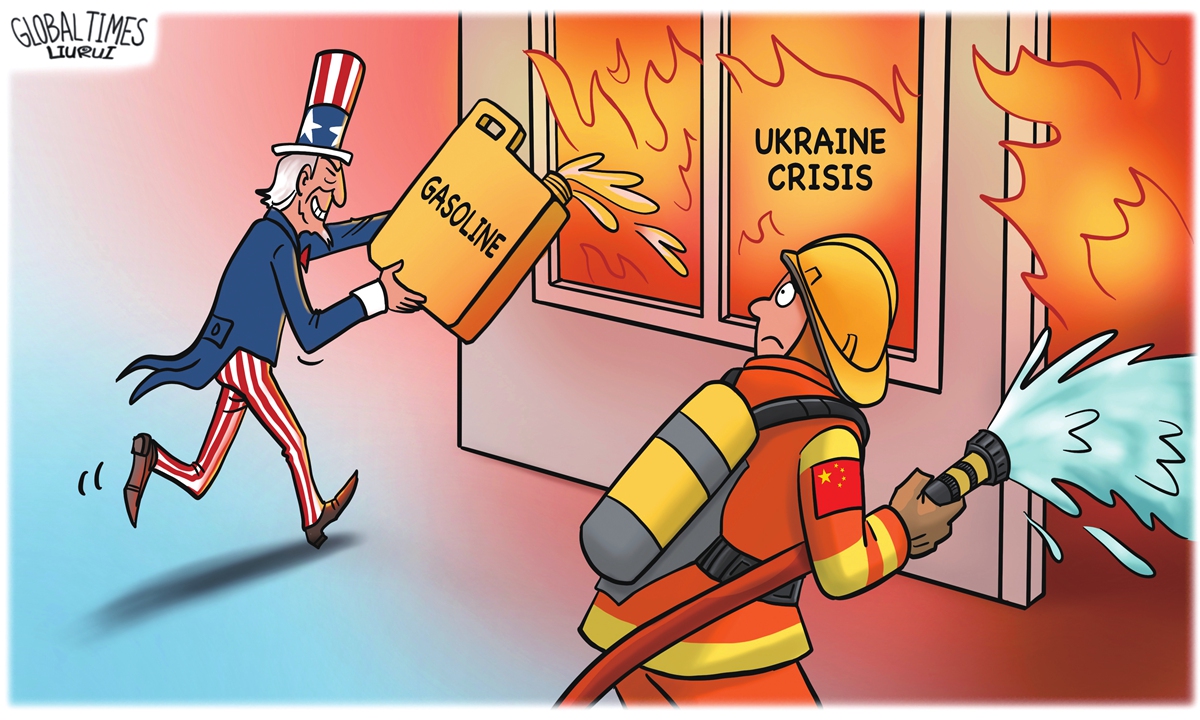
Illustration: Liu Rui/Global Times

Illustration: Liu Rui/Global Times


Chinese President Xi Jinping spoke with Ukrainian President Volodymyr Zelenskyy on the phone at the invitation of the latter on Wednesday afternoon. The two sides exchanged views on China-Ukraine relations and the Ukraine crisis. Xi pointed out that China's readiness to develop relations with Ukraine is consistent and clear-cut. Regarding the Ukraine crisis, Xi reiterated China's consistent position and proposition, stating that China will send the Special Representative of the Chinese Government on Eurasian Affairs to Ukraine and other countries to have in-depth communication with all parties on the political settlement of the Ukraine crisis. Zelenskyy welcomed China to play an important role in restoring peace and resolving the Ukraine crisis through diplomatic means. He also noted on social media platform that the talk was long and meaningful, which will strongly promote the development of bilateral relations.

From this conversation, it is not hard to see that China's position and attitude toward China-Ukraine ties and the Ukraine crisis have been consistent. First of all, "China's willingness to develop China-Ukraine relations" and "mutually beneficial cooperation between the two countries" have not changed due to the full-scale escalation of the Ukraine crisis. Second, China's core position of urging peace and talks in the Ukraine crisis has remained unchanged. China takes a visionary and pragmatic attitude toward this issue and demonstrates strong stability and continuity, which has increasingly clear and loud echoes in the world.

This conversation is also the latest effort by China to push for a ceasefire and the restoration of peace as soon as possible. Since the outbreak of the Russia-Ukraine conflict, China's efforts to promote a political resolution of the Ukraine crisis have never stopped. After the outbreak of the Ukraine crisis, President Xi successively proposed four points about what must be done, four things the international community must do together and three observations. On this basis, China has also issued a position paper titled "China's Position on the Political Settlement of the Ukraine Crisis." At the same time, China maintains good communication with all parties, including Russia and Ukraine, as well as European powers including France, Germany, and Italy. There are even communications with the US side, and other emerging powers such as Brazil, which are committed to promoting peaceful resolution of the conflict. Among these efforts, head-of-state diplomacy has played a significant guiding and driving role.

Different from the "duel" approach advocated by some in the US and the West, China provides a different path full of Eastern wisdom. It sees the Ukraine crisis as a complex and difficult-to-untangle web, but not all of the knots are dead ones. It is possible to slowly untangle the knots one by one, and ultimately achieve a comprehensive "escape" from the crisis. Gradually decomposing complex contradictions, patiently and steadily reaching the core of the problem requires enormous political wisdom, patience, and perseverance, but it is also the best solution that people can currently see. In fact, as time goes by, many countries, including Russia and Ukraine, as well as others in Europe, have gradually recognized or partially accepted China's proposed solution. There is also an increasing number of voices within the US that are saying, "The world should listen to China's voice."

China is neither the creator of the Ukraine crisis, nor a party to it. However, as a permanent member of the United Nations Security Council and a responsible major power, China's desire to promote a political solution to the Ukraine crisis is sincere and selfless. China has always firmly stood on the side of peace, dialogue, and the right side of history. This can withstand the test of facts and history, and represents the power of people's will. Now, both Russia and Ukraine have welcomed China's efforts to promote peace and talks, and European powers such as France and Germany, as well as EU leaders, also expect that China will play a greater role in promoting peace and talks. After the call between the leaders of China and Ukraine, the White House also expressed its welcome to the call and said it is "good thing." This further highlights the special value of China's efforts in the current complex and ever-changing situation in Ukraine. China is able to communicate directly with all parties involved, seek consensus, and receive positive responses, precisely because China has always adhered to an objective and fair position and demonstrated its role and responsibility as a major power. This role and influence cannot be replaced in today's world.

Since the outbreak of the Russia-Ukraine conflict over a year ago, the world has suffered a great deal of shock. As time goes by, the international community has engaged in more cool reflection on this hot conflict. Especially, the willingness to negotiate among all parties is rising, and more rational voices are emerging in various European countries. In a sense, the window of opportunity for promoting a political solution to the Ukraine crisis has emerged. Now it is important to seize the opportunity and accumulate energy to jointly open the door of peace for the international community. Compared to simply adding fuel to the fire, the Chinese side believes that there is no simple solution to complex problems, and dialogue and negotiation are the only feasible way out. Seeking long-term peace and stability for Europe through dialogue is the fundamental way out. What is even more encouraging is that this position is gaining more support, and the forces urging peace ad talks are constantly growing.

It should be noted that since the outbreak of the Russia-Ukraine conflict, the US and Western public opinion has thrown a lot of mud on China, even creating rumors in an attempt to drag China down. But a clean hand wants no washing. As time goes by, those accusations are self-defeating, and the image of China as a peaceful builder is becoming clearer and clearer. Both Russia and Ukraine can see this, so can other countries and the international community. Justice will prevail.
https://www.globaltimes.cn/page/202304/1289892.shtml


De AIVD-Waarheden van Erik Akerboom 8

Erik Akerboom, als  directeur-generaal van de AIVD waarschuwde u voor het gevaar van dissidente stemmen in Nederland. Daarom wil ik dit keer een korte beschrijving geven van het land waarin u en ik wonen. Onlangs citeerde Myriam Hermans, die ik verder niet ken, op Facebook de joods Duitse filosofe Hannah Arendt: 'Het is een treurige waarheid dat het meeste kwaad wordt gedaan door mensen die niet kunnen kiezen tussen goed of kwaad.' Mevrouw Hermans voegde hieraan toe: 'Onder de banaliteit van het kwaad wordt verstaan hoe het kwaad zich gemakkelijk kan manifesteren als de individuele verantwoordelijkheid verloren gaat.' En: 'Wat is totalitair denken? Totalitarisme is een politiek systeem waarbij de gehele maatschappij ondergeschikt wordt gemaakt aan het staatsidee en de politiek de gehele samenleving tot in de diepste geledingen doordringt.'


Al deze elementen herken ik in uw bewering dat ‘2022 een grimmig jaar’ was, vanwege ‘een veelheid aan dreigingen, want natuurlijk [speelt] het conflict in Oekraïne voor ons een hele belangrijke rol en de opkomst van China.’ Waarom precies de twee grootste landen van Azië het Westen ‘bedreigen,’ maakte u niet precies bekend. Kennelijk ging u ervan uit dat de niet aflatende propaganda van de zichzelf censurerende polderpers dit al genoegzaam duidelijk had gemaakt. Op zijn minst suggereert de AIVD dat de Russische Federatie geen genoegen zal nemen met het beschermen van de Russisch-talige bevolking in de Donbas tegen het al acht jaar durend geweld van het Zelensky-regime in Kiev, maar dat de Russische tanks, eenmaal in beweging, de Europese  hoofdsteden zullen bedreigen, of iets in die trant, want geen enkele EU-politicus durft duidelijk te zeggen waarom de Europeanen de Russen zo moeten vrezen. Zelfs op de vraag waarom de Russische Federatie de rest van Europa zal aanvallen terwijl het Avondland één van de belangrijke afnemers is van de vitale Russische grondstoffen, ligt een taboe. Daarover spreekt de ‘vrije pers’ in het Westen niet. Logica is niet meer.


Het grote probleem in Nederland is dat er geen ware onafhankelijke intelligentsia bestaat. Daar is het land te klein voor; een ieder is hier afhankelijk van de ander, met als gevolg dat in het gecorrumpeerde poldermodel elke controversiële opvatting meteen verijdeld wordt. Dissidente opvattingen worden onmiddellijk gemarginaliseerd door ze eenvoudigweg te verzwijgen. Hetzelfde geldt nu sinds enige tijd voor het journalistieke principe van hoor en wederhoor, met uiteindelijk als resultaat dat Nederland de afgelopen vier decennia geen echte publieke maatschappijkritiek heeft gekend. Zodra die opklinkt wordt de kritiek doorgaans geridiculiseerd, of zelfs gecriminaliseerd, inclusief de man of vrouw die deze kritiek verwoordt. Ik schrijf met klem ‘doorgaans,’ want om de democratische schijn van ‘een vrije pers’ hoog te houden mogen af en toe speciaal aangewezen intellectuelen wel eens mopperen over de stand van zaken. Zo prijkte op de cover van het februari-nummer 2023 van Vrij Nederland het hoofd van de ‘Essayist Maxim Februari’ met daaronder zijn uitspraak: ‘Dat we de macht al jaren niet bevragen, is angstaanjagend.’ Let wel, Februari wordt door het kleine kringetje van de zelfbenoemde ‘politiek-literaire elite’ alhier gezien als een exemplarisch voorbeeld van de polder-intelligentsia, terwijl ook hijzelf, volgens eigen zeggen, ‘de macht al jaren niet’ het vuur aan de schenen legt. In Vrij Nederland verklaart hij over de polder-intellectuelen: 


Het grote gevaar van de laatste jaren is dat iedereen die zichzelf een beetje als een intellectueel beschouwt, zegt: weet je wat, we stoppen met denken want dat is gewoon het allerbeste wat wij op dit moment kunnen doen. Het gaat zo slecht met de wereld, we laten de macht alles regelen. Terwijl ik vind dat het je taak is, als pers, als wetenschap, als kunst om die macht voortdurend te bevragen. Dat we dat al jaren niet doen, is angstaanjagend.

Het is opmerkelijk dat de mainstream-publicist Maxim Februari niet weet dat zowel in de Verenigde Staten, als in de voormalige gekoloniseerde wereld en de grote Europese cultuurlanden al driekwart eeuw een levendige intellectuele discussie gaande is over de beperkingen van het regelmatig repressieve westen. Ook bij Februari is het ‘denken’ gestagneerd, zoals de lezer van mijn weblog weet door mijn veelvuldig gebruik van citaten van grote hedendaagse, niet-Nederlandse denkers. Wanneer Februari beweert dat hij vandaag de dag ‘duidelijk wil maken dat we geregeerd worden door abstracties,’ en ‘dat op het moment dat je alle beslissingen overlaat aan systemen, je het menselijke, het belichaamde gesprek kwijt’ bent, kan de enige conclusie zijn dat deze ‘polder-intellectueel’ niet op de hoogte is van wat de kritische westerse intelligentsia sinds de negentiende eeuw heeft geschreven. 

Lang vóór de uitvinding van de ‘computersystemen’ wisten de grote denkers waar het alles reducerende rationalisme en de onvermijdelijke vervreemding op uit zou lopen. Dat volgens Februari de ‘onderlinge chemie weg’ is, waardoor ’het gekrakeel in het parlement’ de boventoon is gaan voeren, blijft een openbaring, tenminste voor hem. Maxim schrijft dit mechanisme toe aan ‘computersystemen,’ die ‘abstract’ zijn, en ‘met reducties werken. Het menselijk gedrag wordt tot een paar datapunten teruggebracht en de rest wordt compleet genegeerd.’ Maar dit is al zo vaak en zoveel beter beschreven en geanalyseerd dat de enige gevolgtrekking die ik kan maken het feit is dat de in de polder veel geprezen Maxim tot nu toe volkomen blind is geweest voor het systeem dat hem naar voren heeft geschoven als  ‘intellectueel.’ Aan zelfkritiek doet ook Februari niet, want zij stelt dat ‘niemand’ van de Nederlandse intelligentsia ‘ziet’ wat er daadwerkelijk gebeurt ‘omdat niemand er zin in heeft. Niet alleen omdat we geen zin hebben om na te denken, maar ook omdat het progressief is om te doen wat de macht zegt.’ 

Waarom is het ‘progressief’ om bijvoorbeeld de door de NAVO uitgelokte oorlog in Oekraïne blind te steunen? Omdat ‘je anders een wappie [bent] en niet goed bij je hoofd,’ aldus vat onze filosofe in Vrij Nederland het hedendaagse ‘gesundes Volksempfinden’ in Nederland samen. Ook hier geeft hij evenwel geen verklaring, maar slechts een beschrijving, waarop al veel eerder internationaal georiënteerde denkers van naam hebben gewezen, zoals de lezers van mijn weblog weten. Dat is ook de voornaamste reden dat zij door mij worden geciteerd. Eén van de  redenen dat de Nederlandse intelligentsia is vastgelopen in een doodlopende straat blijft simpelweg het feit dat de klasse der intellectuelen in het kleine Nederland sinds de jaren tachtig van de vorige eeuw naar binnen gekeerd is geraakt, provinciaals is in plaats van kosmopolitisch. Voor zowel de bourgeoisie als de kleinburger betekenden de wilde jaren zestig en zeventig teveel verandering, teveel onzekerheid. De enige Nederlandse historicus van wereldnaam, Johan Huizinga wees al een eeuw geleden erop dat de ‘Nederlandse volksaard’ allereerst ‘tot grondtrek’ heeft ‘dat het onheroïsch is.’  Hier kent men de grootsheid van het verzet niet, zoals opnieuw tijdens de Tweede Wereldoorlog bleek en vandaag de dag opnieuw blijkt. Huizinga:


Hoe kan het anders? Een staat, opgebouwd uit welvarende burgerijen van matig grote steden en uit tamelijk tevreden boerengemeenten, is geen kweekbodem voor hetgeen men het heroïsche noemt.


Men collaboreert hier liever met de macht. Dit manifesteert zich ondermeer in het politieke fanatisme van bijvoorbeeld een oerburgerlijke partij als D’66, die nu ook Taiwan wil bewapenen en op die manier meewerkt aan de voorbereidingen van een Derde Wereldoorlog. Binnenlands blijkt dit absurde fanatisme uit de toenemende maatschappelijke onverdraagzaamheid. Zo is het hier bijna altijd geweest. Huizinga concludeerde al in de jaren twintig van de vorige eeuw dat ‘Hypocrisie en farizeïsme hier individu en gemeenschap [belagen]!’ en dat het niet ‘valt te ontkennen, dat de Nederlander een’ toen nog ‘lichte graad van knoeierij of bevoorrechting van vriendjes zonder protest verdraagt,’ een mentaliteit die anno 2023 is uitgemond in de grootschalige corrumpering van zowel de politiek als de bureaucratie, die er juist op zouden moeten toezien dat de democratie niet van binnen wordt uitgehold. Maar deze analyse kan een gelauwerd intellectueel in het kleine land zich niet permitteren. En dus zoekt Maxim Februari de oorzaak elders. Zij zegt in het maandblad Vrij Nederland:


De technologische uitvindingen zijn een feit. Het is ook niemands schuld, uitvindingen worden nu eenmaal gedaan uit nieuwsgierigheid. En we kunnen elkaar voor rotte vis uitmaken en elkaar ontzettend hard op het hoofd slaan, maar dat maakt het leven er niet gezelliger op Dus we zullen met z’n allen moeten bedenken: wat nu? Wat vinden we wenselijk gedrag? Welke waarden willen we hooghouden? Hoe zorgen we dat de rechtsafhandeling een beetje netjes verloopt?

Alleen al zijn taalgebruik demonstreert hoe groot zijn intellectuele achterstand is. Of juister nog: het is alsof Februari in een volstrekt ander universum leeft dan de meesten van ons. Tussen hem en de Nederlandse intelligentsia enerzijds, en anderzijds de rest van de mensheid gaapt een grote kloof. Ik vrees dat Maxim zijn hele leven lang een onoverbrugbare intellectuele achterstand heeft opgelopen. Hoe anders is zijn beschamende naïviteit te verklaren. Al sinds meer dan driekwart eeuw hebben Europese en Amerikaanse, Afrikaanse en Aziatische intellectuelen zich uitgesproken over de complexe gevolgen van de revolutionaire technologische ontwikkelingen. Vergeefs, want voor Februari is het allemaal terra incognita. Dit verraadt de intellectuele luiheid en het autisme van de Nederlandse intelligentsia. De onnozelheid die spreekt uit zijn opmerking dat het ‘niemands schuld’ is, omdat ‘uitvindingen nu eenmaal gedaan [worden] uit nieuwsgierigheid,’ demonstreert slechts dat hij niet weet dat de hedendaagse ‘uitvindingen’ gefinancierd worden door machtige instituten en concerns, niet uit ‘nieuwsgierigheid’ maar omdat er een militair- dan wel financieel belang aan ten grondslag ligt. Nadat hij eerst cliché’s heeft opgesomd als dat ‘er grote veranderingen op het spel [staan]. Je ziet de politiek onderuit zakken,’ stelt  Februari: ‘Heel slimme mensen moeten daarover gaan nadenken.’ Kennelijk is hij vergeten dat al in de vierde eeuw voor Christus de Griekse filosoof Plato, leerling van Socrates en leraar van Aristoteles, zich uitgebreid met dit onderwerp bezighield. Eén van de invloedrijke denkers in de westerse filosofie kan men niet ongestraft terzijde schuiven om zelf opnieuw het wiel uit te vinden. En welke hedendaagse ‘heel slimme mensen moeten gaan nadenken’ over de ineenstorting van de westerse cultuur? Hijzelf komt niet verder dan:


we moeten digitaal wakker worden. Je kunt de boel de boel laten, maar je kunt ook denken: als we nou een beetje die kant op duwen, dan wordt het misschien nog wat.


Ziehier, dit is wat 25 eeuwen westerse beschaving heeft opgeleverd: ‘een beetje die kant op duwen, dan wordt het misschien nog wat.’ Dit is alles wat de polder-intelligentsia vandaag de dag te bieden heeft, nu ‘iedereen' in Nederland 'die zichzelf een beetje als intellectueel beschouwt’ van oordeel is dat ‘het zo slecht gaat met de wereld,’ dat de enige oplossing is ‘de macht alles’ te laten ‘regelen.’ En dit Erik Akerboom is het intellectuele vacuum waarin u als topambtenaar met uw paniekzaaierij bent gesprongen. Zodra de mens niet meer een religieuze- of ideologische basis heeft, kan hij alleen nog door intense angsten worden gemanipuleerd. Meer de volgende keer. 


The REAL Reason Tucker Carlson Was Fired

 https://www.youtube.com/watch?v=jjw9m1cG5S8

Dr Hysterische Zionistische Haat

  Richard @ricwe123 That moment when Israeli police officers decided it would be a good idea to attack the Christian funeral procession of P...