Zoeken in deze blog 🔎🔎

zondag 18 juli 2021

US Concern for Cuba, Latin America Is Really Spin for Intervention
 

US Concern for Cuba, Latin America Is Really Spin for Intervention


Tamara Pearson says Washington’s recent discourse is aimed at dressing itself, the bully, as the savior.

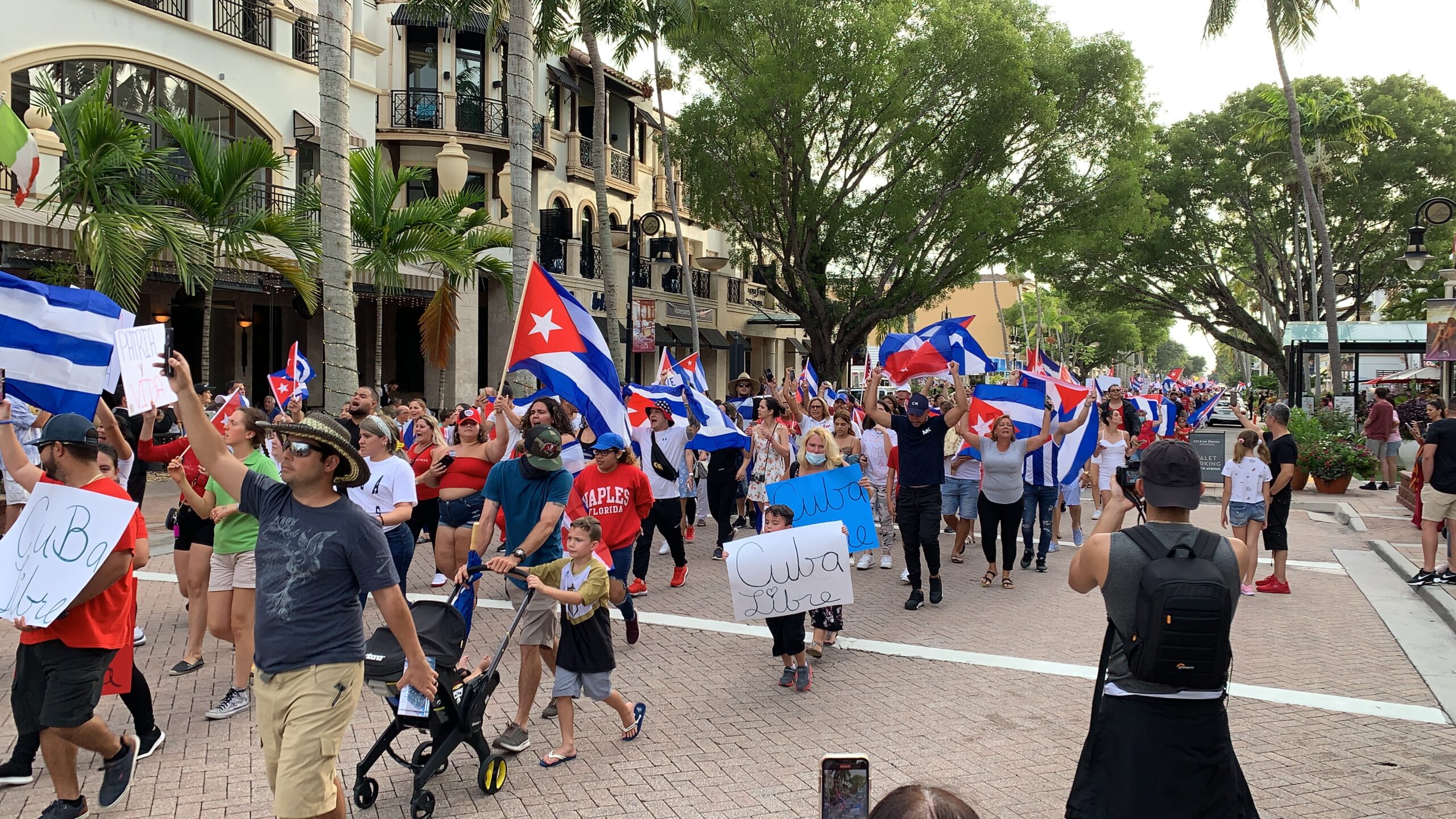
Protest against the Cuban government in Naples, Florida, July 13. (PTO 19104, CC BY-SA 4.0, Wikimedia Commons)

By Tamara Pearson
Common Dreams

The U.S. government says it is going to help Central America fight corruption, will combat the “root causes” of migration in Mexico and Central America, and it wants to help the Cuban people with freedom too.

But the U.S. domestic and foreign track record demonstrates that Washington isn’t qualified to teach anyone about democracy, combating poverty, ending corruption or anything related to human rights. Instead, its recent discourse regarding Latin American countries is aimed at dressing itself, the bully, as the savior.

By manufacturing problems (i.e. by directly causing hunger and medicine shortages), as well as by magnifying or distorting existing problems and combining those with real hardships, the U.S. has been framing its intervention and dominance in certain countries as help that no one can reasonably oppose. The help discourse makes it hard for many people to perceive the real agenda and political interests of the U.S. and makes it very easy for the mainstream media to cover up the U.S. desire to increase its exploitation of Latin America.

In U.S. help speak, financial support for anti-government (read pro-U.S. agenda) groups is spun as aid, particularly through USAID. Bringing a pro-U.S. leader to power is framed as toppling a cruel dictator. Building towns where U.S. corporations and manufacturing plants can do whatever they want (i.e. the ZEDES, or zones for employment and economic development, in Honduras; or industrial parks in Mexico) and imposing privatization policies on poor countries is called “freedom,” “democracy,” “investment” or “economic support.”

While the U.S. blockade of Cuba for the past six decades has caused over $144 billion in losses to the country’s economy, U.S. President Joe Biden last week sided with protests there, and called for “relief from the tragic grip of the pandemic … and economic suffering.” The blockade is what is causing severe shortages in Cuba, an oil crisis and making it hard for the country to manufacture enough vaccines.

Democracy Now! talked to Daniel Monterro, an independent journalist in Havana who was arrested during the protests. He noted that the media had skipped over the fact that most people arrested were released the same day and that there was violence by both police and protesters. He said the sanctions were the main cause of economic hardships, and the Cuban-USians in Florida calling for a military intervention in Cuba was “some of the most colonial behavior I’ve seen in my life.”

Hypocritical Stance 

Biden called on the Cuban government to “refrain from violence” — a hypocritical stance given the police murders and repression in his own country. “We are assessing how we can be helpful to the people of Cuba,” said White House spokesperson Jen Psaki, using the savior discourse, but not considering repealing the sanctions.

Meanwhile, U.S. Vice-President Kamala Harris has been making a show of helping Central America and Mexico by ostensibly addressing corruption and the “root causes” of migration in the region. Seven months into the year and no actual help has arrived, but she did tell migrants fleeing for their lives not to come to the U.S. and the U.S. has kept its border closed — in stark violation of human rights and its own asylum seeker laws.

In June, the White House declared a “fight against corruption” in Central America and made it a U.S. national security interest. In general, a security interest is code for war, intervention and attacks on countries that don’t conform to U.S. interests. Further, the State Department was involved in the Car Wash anti-corruption operation in Brazil which saw pro-poor president Luiz Inacio Lula arrested. “A gift from the CIA,” said one U.S. prosecutor of Lula’s imprisonment. The main liaison for the FBI at the time, Leslie Backschies, boasted that it had “toppled presidents in Brazil.”

During a press conference in May, Harris hinted at the real U.S. intentions with the latest so-called fight against corruption, “In the Northern Triangle, we also know that corruption prevents us from creating the conditions on the ground to best attract investment.” Even the White House statement admits the anti-corruption efforts are about securing “a critical advantage for the United States.”

The U.S. government recently released its list of powerful corrupt figures in Central America who will be denied U.S. visas. The list includes former Honduran President Jose Lobo, whom the U.S. helped bring to power by supporting a coup in 2009, and a current legal adviser to the Salvadoran president. But it doesn’t include proven criminal and current Honduran President Juan Hernández — suggesting that political interests underlay the chosen figures.

The U.S. also wants to increase the financing, resource support and “political assistance” for actors in foreign countries who “exhibit the desire to reduce corruption” (conveniently vague phrasing) and promote “partnerships with the private sector.” An Anticorruption Task Force will provide “training” to Central American authorities and U.S. law enforcement experts will be deployed to “provide mentoring.” Here, it is worth noting the long U.S. record in training coup leaders, repressive military leaders and counter-revolutionaries.

Strategy to Ensure Compliance

For at least a century, the U.S. has had an abusive relationship with Latin America, using it as a source of cheap labor, gutting its land for minerals, pillaging its resources and demanding (in an authoritarian way — ironic, given its overtures to “freedom”) total compliance with its self-benefiting trade policies.

When countries refuse to obey, when they assert their identity, strive for dignity, and combat poverty (and therefore that cheap supply of labor), the U.S. reacts. It supported the counter revolution in Nicaragua with money and training, the CIA carried out a coup to remove Guatemalan President Jacobo Arbenz and end the revolution there, the U.S. sided with the coup plotters recently in Bolivia, it repeatedly supported anti-democratic movements to overthrow Venezuela’s Hugo Chavez, and time and again it has tried to kill or remove the Cuban president.

It systematically supports repressive, conservative governments because they are the ones that protect its business interests. And despite its current discourse on the “root causes of migration,” the U.S. consistently and violently opposes movements and governments that side with the poor and could actually decrease inequality and prevent forced migration.

The U.S., and the U.S.-centric mainstream media, have two sets of standards: one for rebellious countries, another for pro-U.S. countries.

That’s why the U.S. and the media are speaking out about arrests in Cuba, while staying silent about disappearing activists and journalists in Mexico. It’s why the U.S. State Department talked about the “violence and vandalism” of the protesters in Colombia recently instead of criticizing the brutal repression. Biden has publicly supported Plan Colombia (currently called Peace Colombia), which makes the country one of the largest buyers of U.S. military equipment.
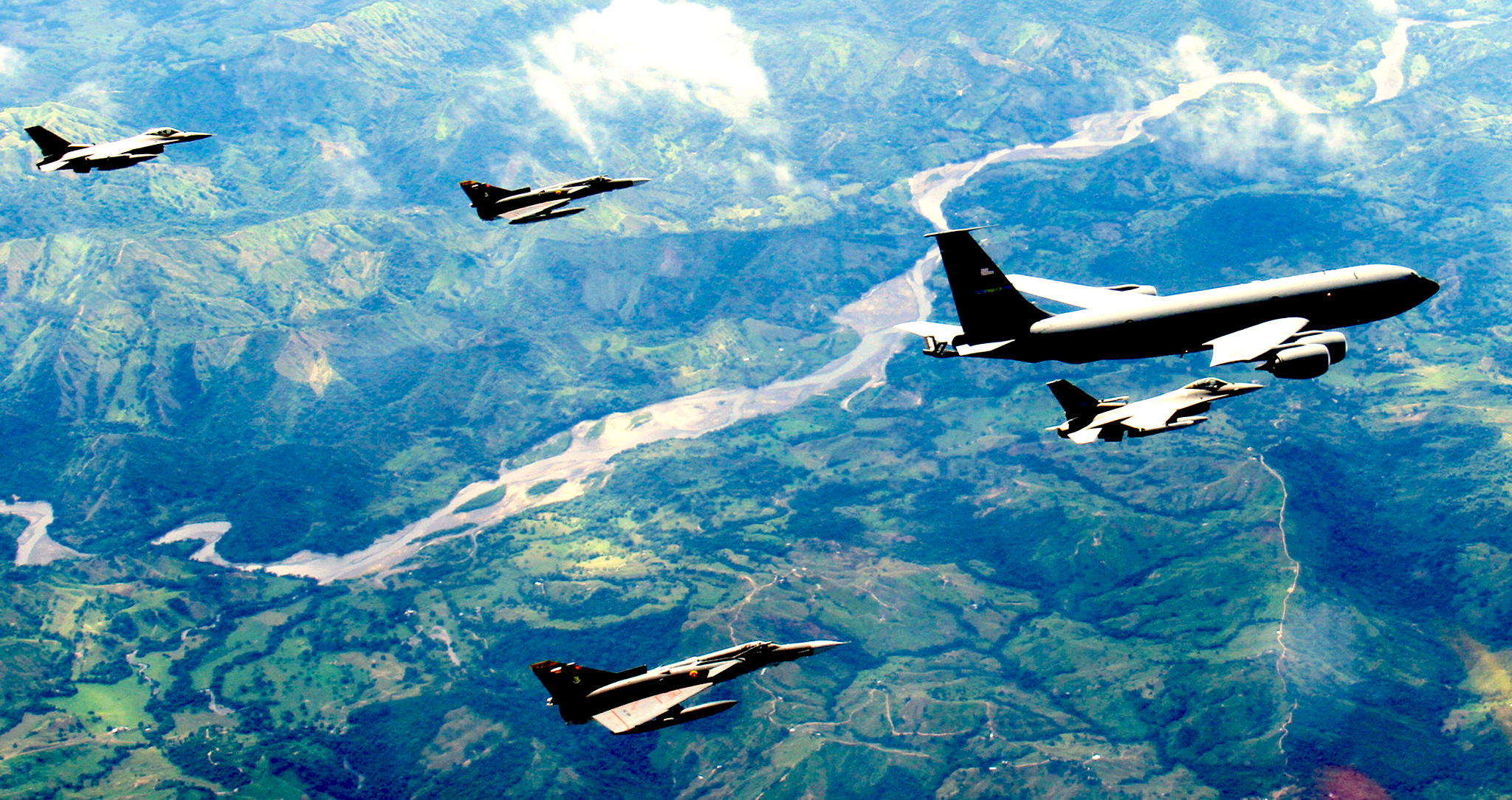
July 11, 2017: South Carolina Air National Guard F-16 Fighting Falcon fighter jets conduct training exercises with the Colombian air force en route to an air show in Rionegro, Colombia. (U.S. Air National Guard)

The two sets of standards are also why U.S. Secretary of State Antony Blinken talked about Cubans being allowed to “determine their own future” — something he would never call for in most other countries of the world where the majority are excluded from economic and political decision making.

What we’re seeing at the moment regarding the U.S. attitude towards Cuba is nothing new. I witnessed very similar tactics being employed in Venezuela. It was #SOSVenezuela placards and tweets when I was there, then #SOSEcuador was used against President Rafael Correa while I was working in Ecuador, and now #SOSCuba is being used.

The formula also includes versions of the following: causing or worsening food and medicine scarcity through blockades and hoarding, a media campaign portraying the government as a dictatorial regime, marches by mostly white and upper-class people, media and social media coverage of anti- government marches that exaggerates their size with selective visuals or even photos from other countries (or in the recent case of Cuba, using pro-government rallies as photos of opposition rallies), and a total media boycott of any pro-government marches. There is a focus on “freedom” and an absence of any context, historical causes of problems, or any real solutions, while everything is blamed on the government the U.S. seeks to change.

The #SOSCuba social media campaign began just a week before the marches. The first tweets came from an account in Spain (with over a thousand tweets in a few days and automated retweets), which was then supported by other bots and recently created accounts. The tweets coincided with an increase in Covid-19 cases in Cuba, though the figures (around 40 deaths a day) are well below even the U.S.’s current death rate.

Any help or aid from the U.S. always comes with conditions and ulterior motives. No matter how intricate his manipulations are, the bully isn’t actually going to help anyone.

Tamara Pearson is a long-time journalist based in Latin America, and author of The Butterfly Prison. Her writings can be found at her blog. Twitter: @pajaritaroja

This article is from  Common Dreams.

https://consortiumnews.com/2021/07/16/us-concern-for-cuba-latin-america-is-really-spin-for-intervention/


RUSSIAGATE


RUSSIAGATE: Luke Harding’s Hard Sell


The only interests this leak serves — if it was a leak — are those of Harding and U.S. intelligence, who were hung out to dry by the collapse of the Russiagate narrative, writes Joe Lauria.

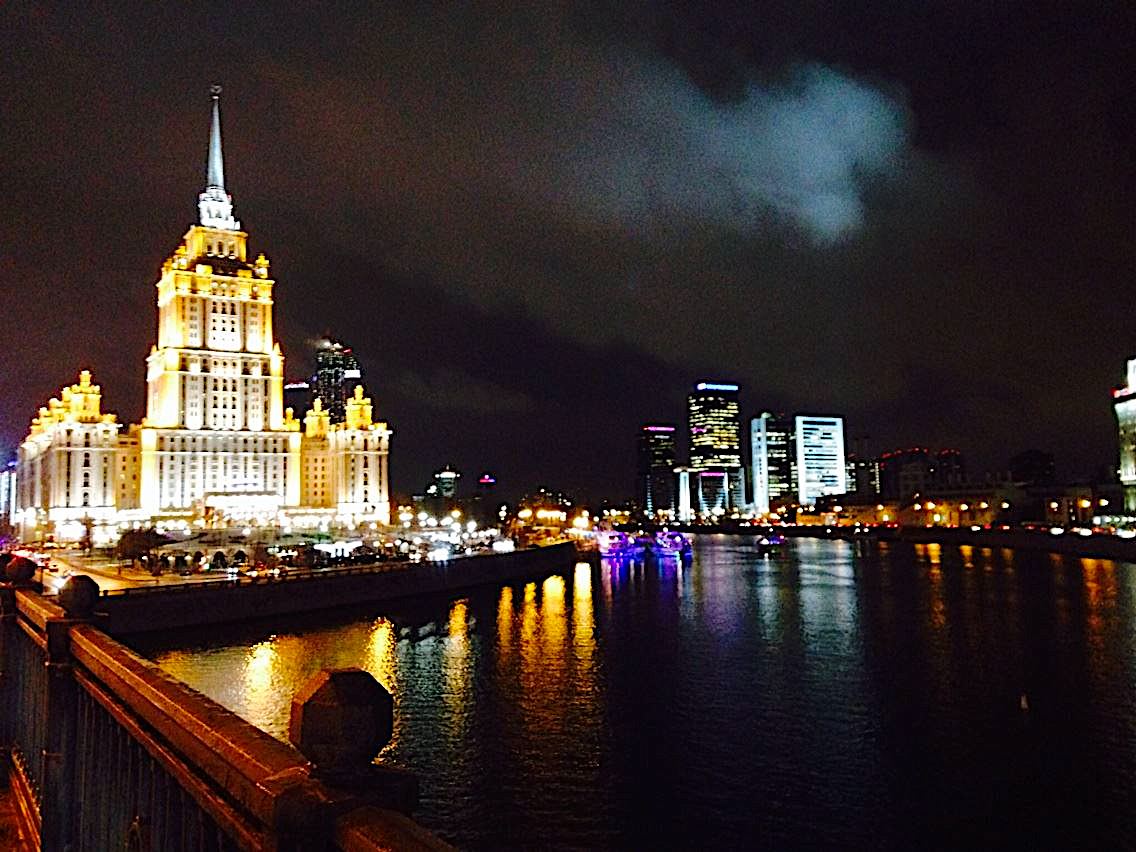
Moscow River, 2015. (Joe Lauria)

Read in ItalianGermanFrenchSpanishChineseJapanese, Russian, KoreanPortuguese and Arabic.

By Joe Lauria
Special to Consortium News

Luke Harding of The Guardian on Thursday came out with a new story that looks at first glance like an attempt to rescue the Russiagate story and the reputations of Harding and U.S. intelligence. 

The headline reads, “Kremlin papers appear to show Putin’s plot to put Trump in White House” with the subhead: “Exclusive: Documents suggest Russia launched secret multi-agency effort to interfere in US democracy.”

Harding’s report says that during a Jan. 22, 2016 closed session of the Russian national security council, President Vladimir Putin ordered Russian spies to back a “mentally unstable” Donald Trump for the White House to “help secure Moscow’s strategic objectives, among them ‘social turmoil’ in the US.”

“Russia’s three spy agencies were ordered to find practical ways to support Trump, in a decree appearing to bear Putin’s signature,” Harding writes. “A report prepared by Putin’s expert department recommended Moscow use ‘all possible force’ to ensure a Trump victory.”

The article, starting with the headline, is littered with the use of qualifiers such as “appears,” “suggests,” “apparent,” and “seems.” Such qualifiers tell the reader that even the newspaper is not sure whether to believe its own story.

Quoting from what he says is an authentic document marked “secret,” Harding writes that there is “apparent confirmation” that the Kremlin had dirt on Trump it could use to blackmail him, gathered during earlier Trump “‘non-official visits to Russian Federation territory.’”

This would seem to confirm a central part of the so-called Steele dossier, which Harding hawked in his bestselling book Collusion.

Harding’s newest story though says nothing about the involvement of Trump operatives with this Kremlin plot, as that was unfounded by Special Counsel Robert Mueller’s report.

Harding also suggests that the documents that came into his possession provides evidence of a Russian hack of Democratic National Committee computers.

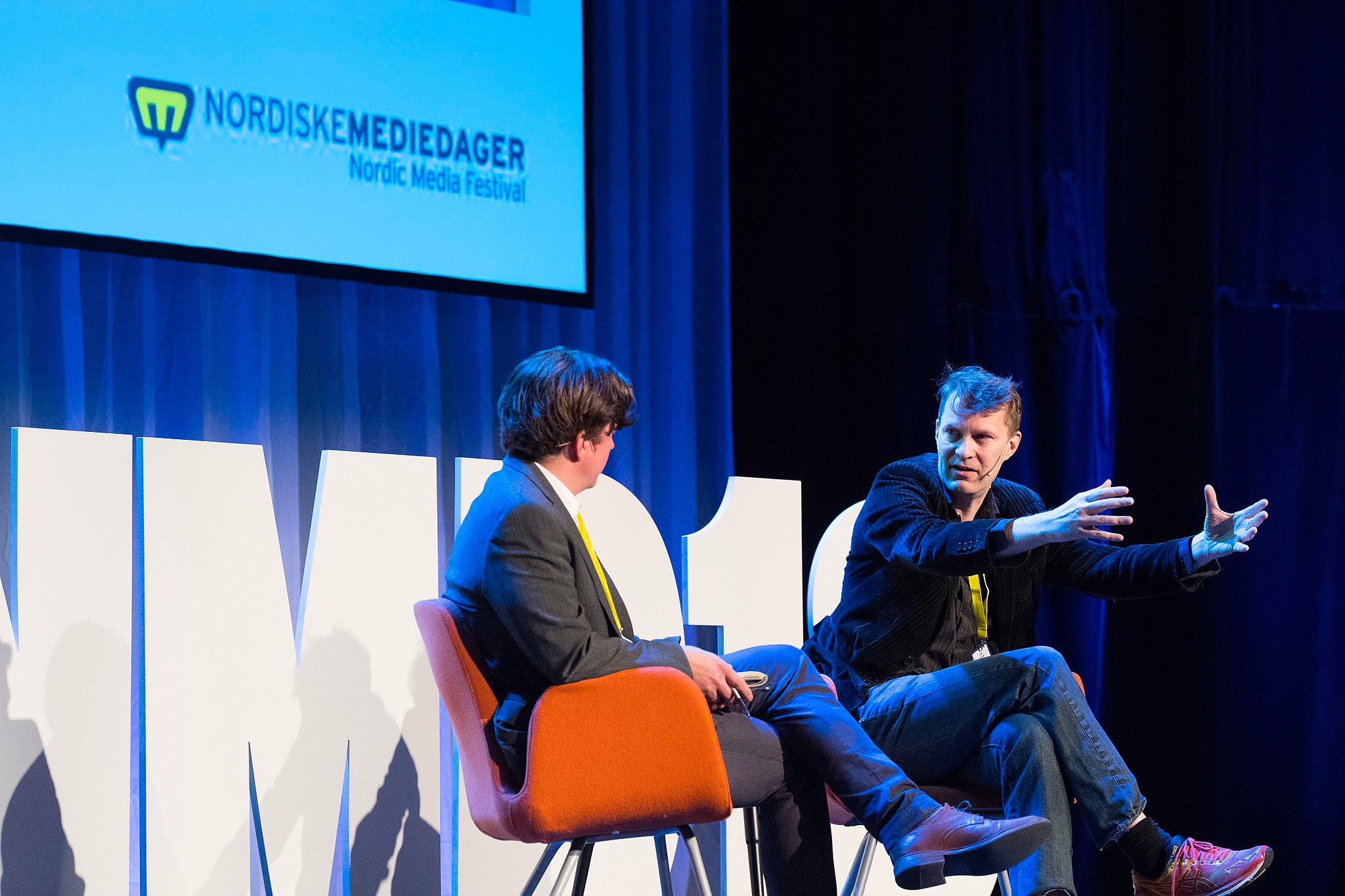
Harding at the Nordic Media Festival, 2018. (Thor Brødreskift / Nordiske Mediedager/ Wikimedia Commons)

He writes:

“After the meeting, according to a separate leaked document, Putin issued a decree setting up a new and secret interdepartmental commission. Its urgent task was to realise the goals set out in the ‘special part’ of document No 32-04 \ vd. … 

The defence minister was instructed to coordinate the work of subdivisions and services. [Sergei] Shoigu was also responsible for collecting and systematising necessary information and for “preparing measures to act on the information environment of the object” – a command, it seems, to hack sensitive American cyber-targets identified by the SVR. … 

The papers appear to set out a route map for what actually happened in 2016.

A matter of weeks after the security council meeting, GRU hackers raided the servers of the Democratic National Committee (DNC) and subsequently released thousands of private emails in an attempt to hurt Clinton’s election campaign.”

These documents would perfectly confirm the story put out by U.S. intelligence and an eager Democratic media: that Russia’s defense intelligence agency GRU hacked the DNC and Russia leaked DNC emails to damage Hillary Clinton. 

Except that Shawn Henry, the head of the company CrowdStrike hired by the Democratic Party and the Clinton campaign (while keeping the FBI away) to examine the DNC servers declared under oathto the House Intelligence Committee that no evidence of a hack was discovered. “It appears it was set up to be exfiltrated, but we just don’t have the evidence that says it actually left,” Henry told the committee.

WikiLeaks, which Harding doesn’t mention, has also denied getting the DNC material from Russia that Harding says was released by Moscow. And Harding ignores the true contents of the emails.

Dmitri Peskov, Putin’s spokesman, told The Guardian the story was “great pulp fiction.”

Let’s look at the motives of the players involved in this story.

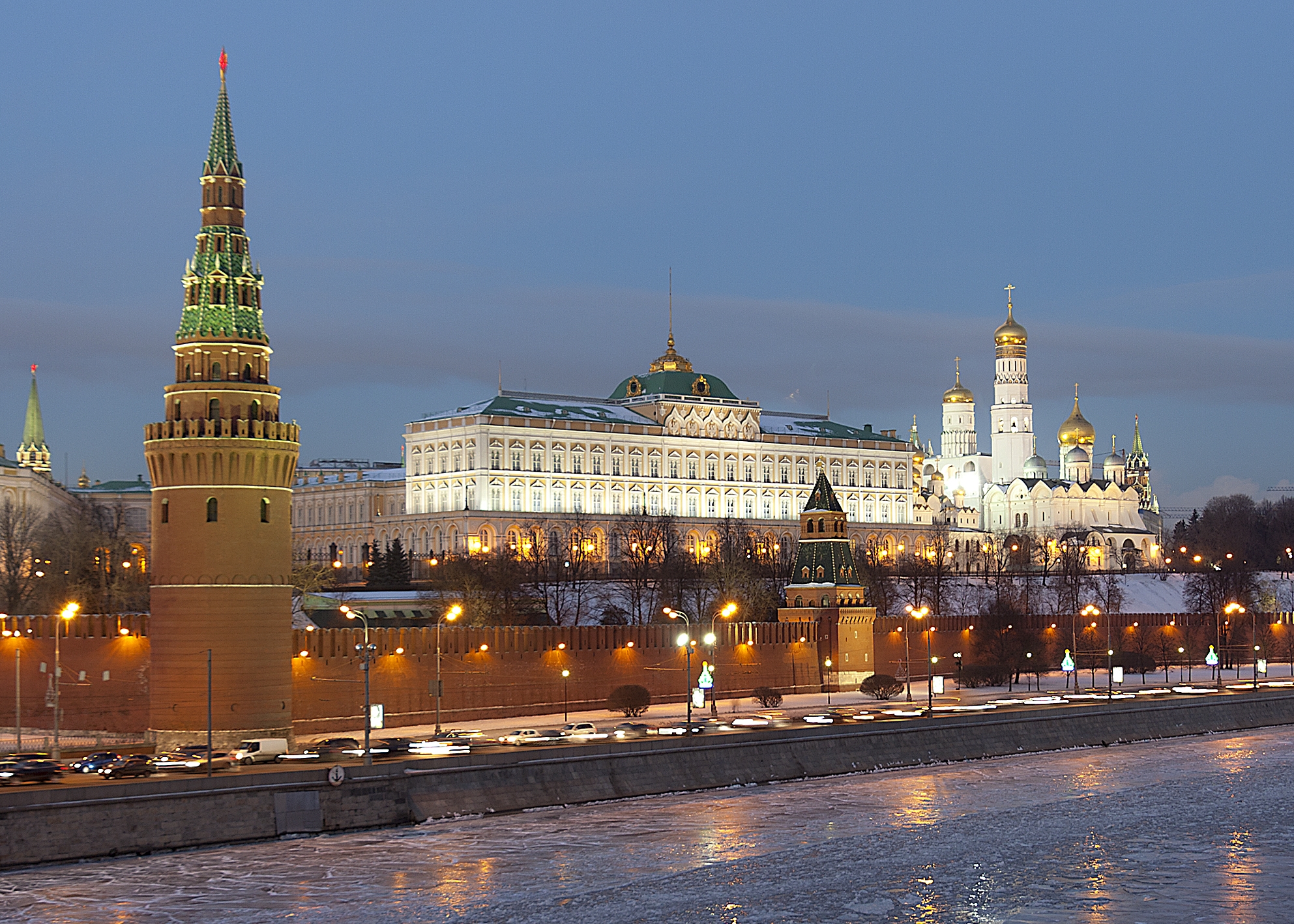
The Kremlin, Moscow. (Pavel Kazachkov/Flickr, CC BY 2.0, Wikimedia Commons)

Harding’s Motives

Henry’s denial of a hack and Mueller’s inability to prove Collusion, embarrassed Harding after he staked his reputation on his bestseller of that name. The book is essentially the story of Christopher Steele, the ex-MI6 agent, who was paid by the DNC and the Clinton campaign to come up with opposition research against Trump. 

Harding, like the Democratic media establishment, mistook opposition research, a mix of fact and fiction to smear a political opponent, for an intelligence document paid for by taxpayers, presumably in the interests of protecting the country rather than a political candidate. Of course, the FBI and the CIA sold it to the media as such to undermine the other candidate. 

Harding has had a major omelet on his face after the Russiagate tale was ultimately exposed as opposition research paid for by the Democrats, who elevated it to a new Pearl Harbor. 

Now I will engage in qualifiers here but it seems Harding is desperate to find anything that might rescue the story and his reputation. That’s a vulnerable position to be in, easily exploited by intelligence operatives, the way he was exploited with the original story.

An earlier attempt by Harding at rescuing himself was the disastrous piece he wrote for The Guardian that Paul Manafort, briefly Trump’s 2016 campaign manager, had visited Julian Assange at the Ecuador Embassy in London. It blew up in Harding’s face though his paper has never pulled the story. 

U.S. Intelligence Motives

Members of the U.S. intelligence committee were staring at possible prosecution in the investigation run by U.S. Attorney John Durham for their role in pushing the opposition research as truth, leading, among other things, to a doctored FBI report to the Foreign Intelligence Surveillance Court to monitor a Trump campaign worker. 

The Steele dossier became the basis for other shenanigans by U.S. intelligence. Though in the end there were no indictments, the reputation of especially the FBI took a hit.

Leaking a story now that it was all true, after all, might do wonders to restore its standing among wide sections of the U.S. public who lost faith in the bureau over Russiagate.

A Kremlin Leakers’ Motives

A military parade on Red Square. May 9, 2016 Moscow. (Kremlin) 

Harding writes in a cryptic way about how he got hold of these materials. He says the story is based on “what are assessed to be leaked Kremlin documents.” As they were marked “secret,” and supposedly came from Putin’s innermost circle, as Harding says, it stands to reason that few people in the Russian government would have had access to them outside of that circle.

We are being asked to believe that someone closet to Putin leaked these documents either directly to Harding or to U.S. or British intelligence who then passed it on to Harding. (Harding calling it a leak would rule out that they were obtained through a Western intelligence hack.)

It can’t be dismissed that U.S. intelligence may have an active mole inside the Kremlin. But one must ask would that mole — if he or she exists — risk their freedom by leaking documents that have absolutely no current strategic or even political significance, rather than, say, classified information about Russian troop movements and military intentions?

The only interests this leak serves — if it was a leak — are those of Harding and U.S. intelligence, who were hung out to dry by the collapse of the Russiagate narrative.

Evaluating the Story

Harding is clearly reporting from Russian-language documents, snapshots of which are reproduced in The Guardian article. He writes that these documents were shown to “independent experts” who said they “appear” to be “genuine.” Harding does not reveal who these experts are. 

To evaluate the credibility of Harding’s story would require knowing how he got the documents, not the names of the person or persons who gave them to him, but the interests they represent. He is especially vague about this. 

Harding writes:

“Western intelligence agencies are understood to have been aware of the documents for some months and to have carefully examined them. The papers, seen by the Guardian, seem to represent a serious and highly unusual leak from within the Kremlin.”

If they were handed to Harding by U.S. or British intelligence who had them for months, the idea that these are the products of spycraft cannot be dismissed. Crafting what looks like classified evidence from an adversarial power and then leaking it to friendly press has long been in the arsenal of intelligence agencies around the world. 

It is unlikely we will ever know how Harding came into possession of these documents or who the experts are who said they “seem” genuine.

But the purpose of this piece may have already been achieved.

Joe Lauria is editor-in-chief of Consortium News and a former UN correspondent for The Wall Street Journal, Boston Globe, and numerous other newspapers. He was an investigative reporter for the Sunday Times of London and began his professional career as a stringer for The New York Times.  He can be reached at joelauria@consortiumnews.com and followed on Twitter @unjoe  


https://consortiumnews.com/2021/07/17/luke-hardings-hard-sell/


Wie is Marcia Luyten

Wie is Marcia Luyten dat zij als journaliste nu pas, vier decennia nadat het neoliberalisme begon het volgende ontdekt:


COLUMN
MARCIA LUYTEN

De BV Nederland begon als metafoor, maar is inmiddels de harde werkelijkheid

Marcia Luyten nieuw column Beeld -

The Humiliating US Retreat from Afghanistan

 Seyed Mohammad Marandi

The Humiliating US Retreat from Afghanistan and Implications for Iraq and Syria

the US sacrificed the people of Afghanistan twice: In service of US Cold War machinations, where it introduced Wahhabi terror to the country, then again, after 2001 when it compounded the suffering of the population under the pretense of fighting terrorism

  • The Humiliating US Retreat from Afghanistan and Implications for Iraq and Syria

In late 1962, at West Point military academy, the US presidential advisor and former Secretary of State Dean Acheson said, “Great Britain has lost an Empire and has not yet found a role.” One can already envision a senior political figure making a similar statement about the US and its crumbling Empire in the not so distant future. As in the 18th Century, Irish politician and philosopher Edmund Burke said, “a great empire and little minds go ill together.”

After the Al-Qaeda attacks on September 11, 2001, and the subsequent US-led occupation of Afghanistan and Iraq, key Iranian thinkers initiated what can perhaps be called a “rope-a-dope strategy.” In 1974, the legendary boxer Mohammad Ali famously used this strategy against his physically superior opponent George Foreman to wear him down and knock him out.

Fast forward 15 years to 2018, when then-President Donald Trump announced that the US had spent over 7 trillion dollars in its wars of aggression across West Asia. While this admission does not take into account the incalculable damage to US soft power, nor does it include the trillions of dollars spent during the subsequent three and a half years of his term, it is clear that US hegemony across the region is nowhere near as secure as it was in 2003.

The misery was largely self-inflicted, since in the 1980s the US and Saudi Arabia supported the rise of Salafi/Wahhabi extremists in Afghanistan. In fact, even before the Soviet invasion, US President Jimmy Carter’s Machiavellian US National Security Advisor Zbigniew Brzezinski was working to lure the Soviet Union into invading Afghanistan in order to create a “Vietnam” for Moscow. However, Brzezinski not only helped destroy a relatively prosperous Afghanistan, but he also unwittingly set the course for the 9/11 attacks a little over two decades later.

The US sacrificed the people of Afghanistan twice: first, in service of US Cold War machinations, where it introduced Wahhabi terror to the country, and then again, after 2001, when it compounded the suffering of the population under the pretense of fighting terrorism. The humiliation of a brutal and unaccountable occupation aside, the dramatic rise of opium-related poppy farming and enormous civilian death tolls made a mockery of attempts by western media, think tanks, “human rights” organizations, and state officials to frame this US occupation as somehow benign or progressive.

After the welcome - yet suspiciously hasty - departure of western troops, the Islamic Republic of Iran invited high ranking delegations from Afghanistan’s collapsing government, the Taliban, and senior Afghani political figures for two days of talks to prevent another devastating civil war. On the sidelines, officials and stakeholders from various Asian countries held private talks with the delegations and Iranian officials.

As usual, Iran and other states directly impacted by nations destroyed by Western-led adventurism, dirty wars, and occupation must pick up the pieces. The reality of the Pashtun-dominated Taliban must be accepted, but the security and dignity of other ethnic groups and religious sects must be protected as well.

During numerous negotiations, the Taliban provided senior Iranian military and political officials with strong assurances that these groups will be respected, women’s roles in civil society and their right to education preserved, ISIS combated, and internationally recognized boarders maintained. For the time being, the dominant belief in Tehran is that the Taliban today is probably not the same as the Saudi, Pakistani, and UAE-backed Taliban of the 1990s. While Iran is not by any means assured and remains fully prepared to assist potential targets of Taliban-linked intolerance, it is also prepared to give the Taliban an opportunity to prove it will abide by commitments, as well as help create a new environment for an inclusive Afghanistan, free of foreign occupation and domination, that can be a center for regional growth and stability.

Meanwhile, eyes are turning to Iraq and Syria. Those Iraqis and Syrians who are affiliated with western occupation and domination should keep in mind that the overburdened and declining US Empire is not even faithful to its sacrificing loyal subjects, let alone mercenaries. As in Afghanistan, they will ultimately be forced to leave in the dead of night and without properly informing their proxies. It is time for them to start seriously thinking about jumping off this USS Titanic.

https://english.almayadeen.net/articles/opinion/1494826/the-humiliating-us-retreat-from-afghanistan-and-implications

De Groene NAVO-Propagandist Maarten Muns

  Op zoek naar een modus vivendi met Rusland Containment of detente? Welke ideologie er ook regeert, Rusland blijft een expansieve macht. ‘H...