Zoeken in deze blog 🔎🔎

maandag 8 maart 2021

Biden Iran envoy boasted of depriving civilians of food

Richard Nephew sanctions Iran Biden

Biden Iran envoy boasted of depriving civilians of food, driving up Iranian inequality in sadistic sanctions manual


Richard Nephew has taken personal credit for depriving Iranians of food, driving up their unemployment rates, and celebrated the economic destruction he caused as “a tremendous success.” Under Biden, he will help direct policy on Iran.

The Joseph Biden administration has named Richard Nephew as its Deputy Iran Envoy. As the former Principal Deputy Coordinator of Sanctions Policy for Barack Obama’s State Department, Nephew took personal credit for depriving Iranians of food, sabotaging their automobile industry and driving up unemployment rates. He has described the destruction of Iran’s economy as “a tremendous success,” and lamented during a visit to Russia that food was still plentiful in the country’s capital despite mounting US sanctions.

Nephew’s appointment to a senior diplomatic post suggests that rather than immediately returning to the JCPOA Iran nuclear deal, the Biden administration will finesse sanctions illegally imposed by Trump to pressure Iran into an onerous, reworked agreement that Tehran is unlikely to join.

After coordinating Obama’s sanctions regime against Iran, Nephew left the administration for a position at the energy industry-funded Center on Global Energy Policy at Columbia University. There, he published a book outlining in blunt terms how he honed the craft of economic warfare and applied it against Iran.

Entitled “The Art of Sanctions: A View From The Field,” the book’s cover image features two Caucasian hands drawing a rope for a noose, presumably to strangle some insufficiently pliant Global South government. Its contents read like a list of criminal confessions, detailing in chillingly clinical terms how the sanctions Nephew conceived from inside an air conditioned office in Washington immiserated average Iranians.

With his candor, Nephew has shattered the official US rhetoric about “targeted sanctions” that exclusively punish “bad actors” and their business cronies while leaving civilian populations unharmed.

The application of pain to a country’s civilian population is central to Nephew’s sanctions strategy. As he explains in “The Art of Sanctions,” for the unilateral coercive measures to succeed, they must impose significant pain to a state’s most vulnerable sectors, shatter the state’s political and social resolve, and ultimately force the state to cry uncle in the face of Washington’s demands.

Nephew detailed how, as JCPOA negotiations got underway in January 2012, he led a process to reduce Iran’s oil revenue and starve its economy. After the administration successfully pushed for a wholesale reduction in oil exports and other unilateral coercive measures, Iran’s economy went from a period of growth to sudden and staggering contraction while the value of its currency tumbled. Nephew pronounced the economic assault he engineered to be “a tremendous success.”

Nephew also patted himself on the the back for tripling the price of chicken “during important Iranian holiday periods,” thereby “contribut[ing] to more popular frustration in one bank shot than years of financial restrictions.”

Next, he boasted of more sanctions targeting civilians to prevent Iranians from obtaining the assistance they needed to repair their cars. “Iran’s manufacturing jobs and export revenue were the targets of this sanction,” Nephew wrote.

There were some goods that Nephew wanted Iran to import, however. In hopes of fomenting social unrest, he said Washington “expanded the ability of US and foreign companies to sell Iranians technology used for personal communications” so they could “learn more about the dire straits of their country’s economy…”

During a December 6, 2017 panel discussion about his book at Columbia University’s Center on Global Energy Policy, Nephew detailed with a chilling smile how he not only sabotaged Iran’s automotive industry, but targeted “things like unemployment, to try to drive that up and make things a little more sticky.”

In response to online criticism, Nephew has claimed that “the main target” of the sanctions regime he designed was “the oligarchs.” But his book on “The Art of Sanctions” tells another story.

Nephew fondly recalls how he structured sanctions to sabotage Iranian economic reforms that would have improved the purchasing power of average people. The Obama administration destroyed the economic prospects of Iran’s working class majority while ensuring that “only the wealthy or those in positions of power could take advantage of Iran’s continued connectedness,” he wrote. As “stories began to emerge from Iran of intensified income inequality and inflation,” Nephew pronounced another success.

As he made clear, the rising inequality “was a choice” that Washington “made on the basis of helping to drive up the pressure on the Iranian economy from internal sources.” Nephew went on to claim credit for October 2012 protests brought on by the devaluation of Iran’s currency.

In a fairly stunning admission, Nephew admits at one point that despite providing Iran with supposed humanitarian exceptions on US sanctions, the economic war he helped design caused a catastrophic shortage of medicine and medical devices, largely because average Iranians could not afford them.

Despite acknowledging the heavy toll of human suffering brought on by the sanctions he personally conceived, suggesting they could have prompted high numbers of excess deaths, Nephew appears to be devoid of contrition. During a December 2016 trip to Moscow, he complained that despite the sanctions imposed on Russia by the US, food was still widely available at local restaurants – “hardly a level of pain” that was necessary to bring the Kremlin to heel.

He called to “develop a strategy to carefully, methodically, and efficiently increase pain on those areas [of the Russian economy] that are vulnerabilities and avoid those that are not.”

So who is Richard Nephew? Does he lurk in the shadow world of intelligence intrigues and spook wars, keeping a low profile while he waits to strike the enemy? Or is he a fire-breathing hardliner bellowing threats against America’s adversaries from Beltway think tank panels? The reality is much more banal.

When he is not snatching chicken from Iranian kids during their winter holiday, Nephew is spending quality time with his own, amusing them with his tattered dad rock t-shirts and flashing arms adorned with tribal tattoos.

In an administration filled with fun-loving, ethnically diverse characters who moonlight as rock guitaristsdecorate the walls of their homes with Haitian art, bob their heads to Tupac and even enjoy an occasional toke, all while keeping the gears of a ferociously violent empire grinding along, the tattooed sanctions artist seems like a perfect fit.

In Iran, where a leading daily recently portrayed Nephew as Keanu Reeves in The Devil’s Advocate, his elevation to a senior diplomatic role is seen as a sign of more pain to come.


Wereldvrouwendag


Wel gefeliciteerd Nederlandse Dames. Speciaal de feministen onder jullie. 


zondag 7 maart 2021

Pop Culture Portrays Aerial Bombardment of Middle East as “Business as Usual”


Pop Culture Portrays Aerial Bombardment of Middle East as “Business as Usual”

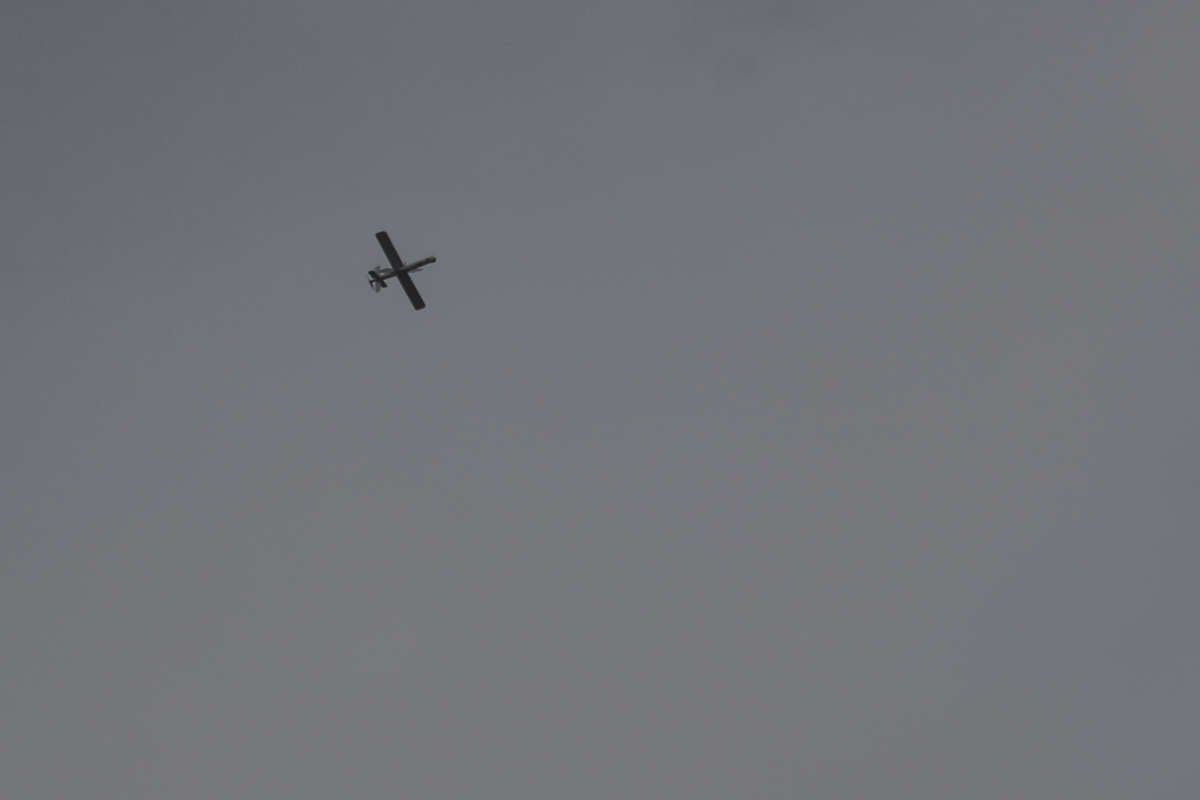
President Biden’s airstrike on the Syrian border on February 25 was received in some quarters as though it was his first act of presidential warfare. But U.S. military operations in the Middle East, particularly remote drone operations, are a matter of routine, rather than an exceptional rarity. No matter the personality or predispositions of the commander-in-chief — whether they are statesmanlike and grandfatherly like Biden, or vulgarly reactionary like his predecessor — the continuous military violence of the forever wars initiated by George W. Bush’s administration is ingrained into the structure of everyday power. Biden’s letter to Congress rationalized the strike in terms of the U.S.’s inherent right of self-defense, and in some ways this shows that Biden doesn’t even need to think of a new justification for these strikes. Despite his announcement of a review of his drone policy, presidential aerial bombardment of the Middle East is “business as usual.”

But how did death from above become business as usual? Part of the answer lies in the popular narratives about drone warfare that circulate in film, fiction and TV. Popular culture is one of the major ways that we civilians encounter drone warfare. Even though we understand that fictional stories do not show us reality, very often the novels we read, the movies and TV we watch, and the video games we play can be a major resource that we draw on when forming our understanding of what military drones are, who operates them and what they do. For those of us without specialist knowledge, the images and stories we absorb from popular culture can frame the ways that we think about the politics and ethics of what is at stake in drone warfare: in particular, they tell us who drones kill and why.

One of the major preoccupations of drone fiction is distinguishing between “legitimate targets” and “collateral damage” — the latter being innocent civilians killed in the course of otherwise “acceptable” military violence. Legitimate targets are shown as people who, quite simply, deserve to die, and “collateral damage” is shown as unfortunate but, in the long run, acceptable. Perhaps surprisingly, one of the effects of this distinction is not to show some deaths as acceptable and others as unacceptable, but rather to show that every death caused by drones — whether unfortunate or desirable — can and should be acceptable.

Most broadly, the major way that drone stories legitimize drone warfare is by showing drone strikes as a solution to terrible dilemmas. In this respect, it is not so different from the ways that many other forms of military violence are represented throughout popular culture. “Ticking time bomb” stories very often show torture as tragically necessary when nothing else will get the job done, including in some of the most successful novels, films and TV series of the 20th and 21st centuries: “24,” Zero Dark Thirty, Dirty Harry, even the stories of some Marvel heroes such as DaredevilCaptain America and The Punisher. Impossible choices, tragic sacrifice and urgent races against time are, after all, some of the most commonly found features of stories across many popular genres, from sci-fi, through political thrillers, to military action fiction. These stories dramatize one-off events, but their broader effect, when taken as a whole, is the consistent, repetitive circulation of justifications for violent and oppressive systems, from violent counterterrorism practices to police brutality.

Drone stories very often follow a similar pattern. In the film Good Kill, for instance, the drone pilot protagonist Major Thomas Egan repeatedly witnesses — via his long-distance surveillance camera — a man raping a woman at gunpoint, and he is just as often told by his superiors that it is not his problem. At the film’s climax, when Egan can take it no more, he defies his orders and kills the rapist, vaporizing him in his tracks. This is the “good kill” for which the film is named, and it is explicitly framed as Egan defiantly breaking the law in order to do the right thing.

Likewise, in an episode of the first season of “Tom Clancy’s Jack Ryan,” a drone operator codenamed Tombstone kills a man about to kidnap a woman and her children in defiance of his commanding officer’s direct order that he stand down. Mike Maden’s 2016 novel Drone Threat, too, is bookended by our heroes summarily executing ISIS fighters with drone missiles purely out of what is represented as righteous rage. In Dan Fesperman’s 2014 novel Unmanned, protagonist Darwin Cole rescues a young girl by crashing a drone into the brutes who are chasing her; since Cole was convinced that he had wrongfully killed this girl in a previous drone strike, he describes this act, which rescues her from harm at the very last minute, as his “salvation” because it rights the previous wrong. These powerfully drawn scenarios may leave us with a feeling that good has been done despite the impossibility of the situation, but they are justifications for summary execution by remote missile.

These “valiant” kills are very often contrasted with the tragic deaths of innocent civilians who have been involuntarily caught up in drone operations. Many writers, including Sam Harris and Daniel Byman, have made the argument that collateral damage is unfortunate but inevitable if modern warfare is to be conducted as ethically as possible. This argument is essentially a way of licensing the disregard of international law, and a way of legitimating extreme military violence as routine practice. Perhaps the best known example of this is Gavin Hood’s 2015 film Eye in the Sky, in which an innocent young girl is killed in a drone strike that prevents Al Shabab fighters from committing suicide attacks in Nairobi.

The film foregrounds the difficulty and the ethical complexity of the decision to take the shot in the full knowledge that an innocent girl will die. Naturally, the attack goes ahead, simply because the strategic mathematics of the situation make the choice, though horrible, the only possible course of action. It is laboriously highlighted that it is sad that the little girl had to become the collateral damage of a legitimate attack. Nonetheless, the framing of the situation is engineered specifically to make us, the audience, conclude that the sacrifice, however harrowing, is worth it, and that the reason that it is a terrible choice is that the characters appear to have no alternative, that killing the girl was the only ethical way to act. David Swanson, more polemically perhaps, wrote in his brief 2016 essay on Eye in the Sky that the film attempts to persuade us that “murdering is wise.”

Lots of drone fiction explicitly makes the same argument. Jonathan Maberry’s characters in Predator One (2015) describe collateral damage as “Unfortunate but unavoidable.” Dan Fesperman’s characters in Unmanned consider it “Worth it if we stopped [the villain].” Novelist Mike Maden is notable here for his flamboyant, bombastic style. When, in Drone Threat, an antagonist is killed alongside his girlfriend, our hero thinks: “Too bad about the girl, he thought to himself. But as his nana told him years ago, You sleep with the devil in a bed of your own ashes.” In Maden’s earlier novel Blue Warrior (2014), however, the deaths of unknown people are repeatedly, flippantly and callously disregarded: “Fuck ’em. If they don’t want to get blistered, they shouldn’t put their dicks in the toaster.” Another: “Worst-case scenario? It’s a signature strike. You take out a few bad guys, even if it’s not the right bad guy.” Yet again: “After all, if it walked like a duck and quacked like a duck, it must be a duck.”

Importantly, Maden’s writing here — which has the arrogant, nasty and racist tone of a Trumpian joke — blurs the line between noncombatant deaths and the deaths of those who are simply assumed, due to the drone program’s analysis of their behavior, to be legitimately targetable. This blurring confuses the important distinction between combatants and noncombatants, leading Maden to basically declare that whoever is killed in a drone strike deserves it, whether we know who they are or not.

And this is, in some ways, not so far from the racism on which the drone program actually relies. That is, people who are designated “terrorists” by the military-political apparatus of the “war on terror,” often arbitrarily or with little certainty, are available to a great deal of securitizing violence — torture, detention, death by drone — and are often described to us as people who do not deserve sympathy, compassion or the protections of international law. Once somebody is designated a “military-age male,” a “terrorist” or an “insurgent” (terms which echo the way that colonial regimes describe the populations they oppress as “savages”), their life is treated as forfeit, and their death is somehow not a human death, simply the bureaucratic elimination of a threat.

In his well-received 2010 memoir Predator, for example, drone operator Matt J. Martin describes his human targets as “cockroaches,” “vermin,” “cancer,” “like a rat,” “this savage,” “some dirtbag,” “rats,” “bugs” and “silly rabbits”; he repeatedly uses the slur “skinnies” to refer to Somalians; Afghanistan is characterized by “primitive squalor not far removed from the Stone Age.” The purpose of this barrage of racism is, of course, to dehumanize his human targets and to legitimize his killing them. You don’t have to read between the lines or infer this when reading his memoir: “I found it easier and easier,” he writes, “to justify bombing barbarians like these back to the hell that had spawned them.”

The racist dehumanization of the people that drone operators observe through their viewfinders is central to the aesthetic and intellectual economy of drone fiction. Daniel Suarez, for instance, in his 2014 novel, Kill Decision, describes a woman in a burqa as “a walking bag” and makes a throwaway reference to “Pakistan’s population of Taliban sympathizers and Islamic fundamentalists.” In Bloodmoney (2011), David Ignatius writes that, “the devil lived in Pakistan.” In Dale Brown and Jim DeFelice’s Collateral Damage (2014), a pilot refers to Libyan mosques as “nests” that harbor terrorists, and the narrator earlier refers to the leader of the Libyan resistance, with whom the U.S. forces are reluctantly cooperating (and the only named Muslim character in the novel), as “a despicable creature, ignorant and wilful,” whose bodyguards “smelled of fish and Moroccan hashish” and “growled in an indecipherable language.” Author of Drone Games (2014) Joel Narlock inserts passages from the Quran directly alongside passages detailing the terrorists’ plot, drawing a direct connection between Muslim religiosity and the preparation for atrocity. Mike Maden, as ever, is particularly colorful, with a sympathetic character in Drone Threat casually remarking that there are ISIS sympathizers “in every mosque and madrassa from Mecca to Detroit.”

Very often, the people who are killed by drones in these stories are either “terrorists” who clearly “deserve” to be immolated from 10,000 feet, or they are innocent victims whose destruction is unfortunate, but necessary. Collateral damage is shown as one of the inevitable aspects of contemporary warfare, and, as a consequence, these deaths are often shown as being somehow nobody’s fault: Drone fiction often does not admit that drone operators are responsible for collateral damage, even when these drone operators are simultaneously shown as being heroic for conducting the very drone strikes that at once save the day and kill innocent people by accident.

In some ways, then, drone fiction is simply another iteration of military thriller fiction that provides fairly transparent ideological support for imperial counterterrorism. It does, however, have its own unique contributions, most notably the way in which civilian and combatant deaths are blurred into one as “unfortunate but necessary,” and the way in which this means that drone victims are, somehow, nobody’s responsibility.

Open Doos Voordat Pizza Gegeten Wordt


Ook deze consumenten mogen stemmen in onze democratie!

Ian Buruma. Geert Mak en White Trash


Begin oktober 2016 was Ian Buruma als mainstream-opiniemaker van oordeel dat Hillary Clinton ‘was more right than wrong’ om de Trump-aanhang te criminaliseren als een ‘basket of deplorables,’ oftewel 'White Trash.' 

Nog geen vijf jaar later, op 18 januari 2021 trekt Buruma met evenveel aplomb de volgende conclusie uit zijn en Clinton's opvatting:


Dismissing Trump’s supporters as deluded, deplorable, ignorant racists will solve nothing. Their sometimes-justified fears and resentments must be addressed. People have been shabbily treated by corporate interests that care only about enriching their stockholders. Globalization has left many behind. Urban attitudes about gender and sexuality can be alarming to people with different notions about who they wish to be. Educated elites should not presume that they always know best what is good for other people.

https://www.project-syndicate.org/onpoint/overcoming-trumpism-requires-class-politics-by-ian-buruma-2021-01?barrier=accesspaylog


Zijn verhulde bekentenis dwingt een onafhankelijke waarnemer als ik te zoeken naar de oorzaken van Burma’s radicale omslag. Wat dreef deze bejaarde, wiens ‘oeuvre,’ volgens de jury van de Erasmusprijs, ‘wordt gevoed door een fascinatie voor de wereld aan gene zijde van de burgerlijke bekrompenheid en door ondogmatisch, kritisch denken’ om eerst een dogmatisch elitair standpunt in te nemen -- dat naadloos aansloot bij het alles behalve ‘kritisch denken’ van zijn door ‘bekrompenheid’ gekenmerkt bourgeois-publiek -- en zich vervolgens af te zetten tegen zijn eerder verspreide mening? Met andere woorden: waarom moeten zijn ‘deplorables’ ineens niet meer worden gecriminaliseerd als ‘betreurenswaardige’ sujetten?  En waarom zijn nu ineens, in zijn ogen, hun ‘angsten en ressentimenten soms' wel ‘gerechtvaardigd’ en in 2016 niet? 


Dit zijn geen makkelijk te beantwoorden, maar desondanks, voor de hand liggende vragen. Hoe kan iemand die, zo mogen we aannemen, als opiniemaker van de ‘corporate press’ niet alleen geloofwaardig moet zijn, maar tevens moet kunnen bogen op een aanzienlijke levenservaring, als 69-jarige nog zo fundamenteel van opinie veranderen? Het feit dat, volgens hem, ‘angsten en ressentimenten’ van de ‘deplorables’ voortaan wel ‘moeten worden aangesproken,’ maakt het des te interessanter te weten waarom zij voorheen door Ian Buruma en zijn ‘liberal urban elites’ werden genegeerd, alsof ze niet bestonden. Wij hebben het hier over ruim 62 miljoen Amerikanen, die in 2016 op de ‘populist Trump’ stemden. De motieven van zo’n aanzienlijk aantal stemmers kunnen in een ware democratie natuurlijk nooit worden genegeerd, zonder volkomen lak te hebben aan deze bestuursvorm. Dat Buruma en Clinton dit wel deden is illustrerend voor de respectloosheid van de Democraten en hun commerciële pers tegenover de vele tientallen miljoenen ‘losers’ die de neoliberale ideologie heeft gecreëerd. 


Het zou vanzelfsprekend voor hen fantastisch zijn als politici een ander volk konden kiezen, maar zover is het nog niet, dus zullen ze het moeten doen met in  het bestaande volk. En juist dit is nu langzaam maar zeker doorgedrongen tot de woordvoerders van de liberal elite, onder wie mijn oude vriend Ian Buruma. Zo schrijft hij thans dat:


The underestimation of such voters, and the complacent belief that a Biden landslide was almost a foregone conclusion, revealed the widening gulf between urban, educated, more or less progressive America and rural and working-class America. Like other progressive parties in the Western world, the Democratic Party once represented the interests of the working class — the white working class above all, but often workers of color, too. Republicans represented the interests of big business and the wealthier classes.


As the role of heavy industry shrank, the class allegiance of both major parties began to shift. Progressives everywhere paid increasing attention to racial, sexual, and gender equality. These are laudable and necessary goals, but this form of identity politics appeals more to highly educated urban citizens than to workers, miners, or farmers, whose identities are focused less on social justice than on religion and the right to own guns.


The Democratic Party’s repudiation of these voters’ views as ‘deplorable’ or ‘racist’ stoked resentment of urban elites, driving many in search of a new political home. When Donald Trump appeared before workers and farmers in his red baseball cap, he articulated their antipathies coarsely but effectively. A louche product of a milieu in which shady real-estate deals skirted the world of organized crime, Trump shared some of the class resentment of people who could only dream of his wealth. Trump became their savior, and tied the Republican Party firmly to hard-right populism. Even without Trump as president, the GOP will remain his party for a long time.  


Buruma stelt vandaag de dag dat ‘het onderschatten’ van de Trump-stemmers en het ‘zelfgenoegzame geloof’ dat Biden met klinkende cijfers zou overwinnen, ‘de almaar wijder wordende kloof onthulde tussen het geschoolde, min of meer progressieve Amerika en het rurale Amerika van de arbeidersklasse.’ Maar dit onthult nog iets anders, te weten dat de ‘corporate press’ haar werk niet heeft gedaan. In feite geeft opiniemaker Buruma zichzelf hier een brevet van onvermogen. Al begin 2002 ontdekte ik, voor de VPRO op reportage door het besneeuwde Pennsylvanië, hoe de aanslagen van 11 september 2001 een aan hysterie grenzende angst hadden veroorzaakt in de machtige en gewelddadige U.S. of A. Overal wapperden Amerikaanse vlaggen, niet als teken van kracht maar van vrees, de televisie sprak de bevolking bemoedigend toe, burgers die ik tegenkwam begonnen zich te beklagen over het miljarden verslindende Amerikaanse expansionisme, terwijl anderen de vijand het liefst met kernwapens hadden willen bestoken. In de jaren daarna reisde ik regelmatig met mijn gezin door de VS en merkte hoe de onderlinge meningsverschillen zich razendsnel verhardden, en dat gewone mensen begonnen te spreken over een burgeroorlog. Ondertussen was extreem rechts druk doende zich te bewapenen  om in actie te kunnen komen tegen de ‘swamp’ in Washington en op Wall Street, zodra het moment was aangebroken. Geen van de 'progressieve' journalisten die ik sprak, inclusief Ian Buruma en Geert Mak, realiseerden zich het gevaar van het feit dat al een halve eeuw lang het opkomstcijfer tijdens presidentsverkiezingen onder de zestig procent was gedoken, en dat tijdens de tussentijdse Congres- en gouverneursverkiezingen bijna tweederde niet meer de moeite nam te stemmen. ‘Niemand die ooit een Amerikaanse verkiezingscampagne van nabij heeft meegemaakt,’ zo beweerde Geert Mak nog in zijn bestseller Reizen zonder John. Op zoek naar Amerika ‘zal licht denken over het vitale karakter van de Amerikaanse democratie,’ terwijl zijn collega opiniemaker Ian Buruma pas in 2020 tegenover de Volkskrant wist op te merken dat ‘Amerika geen plek meer [is] om naar te vluchten als het elders misgaat,’ en ‘zijn vertrouwen [verloor] in de Verenigde Staten.’  


Al die jaren gingen de zelfvoldane opiniemakers, zowel hier als elders, er blind vanuit dat de toekomst een weerspiegeling zou zijn van het verleden, en de status quo desnoods met massaal geweld zou kunnen worden afgedwongen. Vandaar dat zowel Mak als Buruma van oordeel waren dat, gezien het gevaar dat Rusland en China zouden vormen, Europa zich zwaarder moest bewapenen en zelfs een deel van de ‘dirty work’ uit handen moest nemen van NAVO-bondgenoot ‘Amerika.’ Beide geprivilegieerde heren, die nooit een oorlog van nabij hadden meegemaakt, leken regelmatig net zo stoer als Braveheart, maar dan zonder zelf hun hoofd uit te steken. Een ieder met een beetje gezond verstand zal het gevaar beseffen van dit slag opiniemakers van de massamedia. Dit is dan ook de voornaamste reden om  te onderzoeken waarom zowel Geert Mak als Ian Buruma als het ware van het ene op het andere moment fundamenteel van mening kunnen veranderen. Daarover later meer. 


Het Joodse Raadslid Naomi Italiaander en de Zionistische Terreur

Ik las in  het  Joodse propaganda-orgaan NIW dat " Het kersverse Amsterdamse gemeenteraadslid Naomi Italiaander," zowaar " J...