Veteran diplomat: US confronts China to protect supremacy, not security
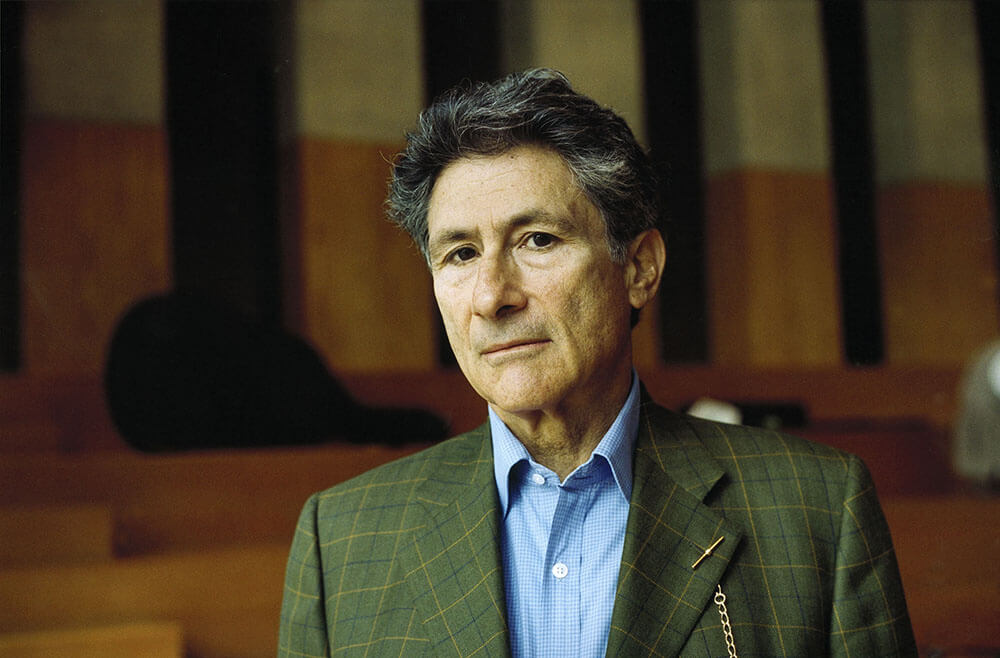
Veteran US diplomat Chas Freeman says that despite talk of a New Cold War between the US and China, the US in reality is reacting aggressively to a rising Chinese power whose economic gains threaten US global supremacy. “We’ve become accustomed over the past 75 years to be the overlord in East Asia,” Freeman says.
Chas Freeman, who served in top State Department positions and as Richard Nixon’s chief interpreter on his historic 1972 visit to China, discusses the state of US-China relations and flashpoints of conflict such as Hong Kong, Taiwan, and Xinjiang.
“Since around 1870, we have been the preeminent society on the planet – the wealthiest and technologically most advanced, the most influential. And China’s overtaking us,” Freeman says. “So there’s a psychological issue here. The good deal of what we’re doing is better explained by psychology than by statecraft. China does threaten American economic supremacy, may have already passed us in many ways… Whether that’s a threat or not depends on your perceptions. We’ve chosen to treat it as a national security or a military threat. It’ll be very good for the military industrial complex for a while.”
Guest: Chas Freeman. Veteran U.S. diplomat and public servant who has served in many senior positions, including as Assistant Secretary of Defense for International Security Affairs, U.S. Ambassador to Saudi Arabia, Director for Chinese Affairs at the U.S. Department of State, and as the principal US interpreter during President Nixon’s historic visit to China in 1972.
TRANSCRIPT
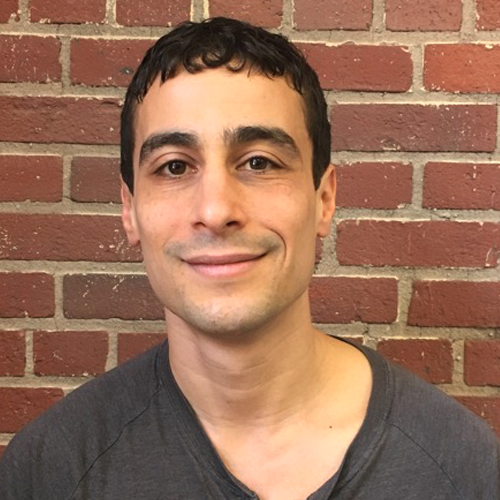
AARON MATÉ: Welcome to Pushback, I’m Aaron Maté. Joining me is Ambassador Chas Freeman. He is a visiting scholar at the Watson Institute for International and Public Affairs at Brown University. He is a veteran us diplomat and public servant who has served in many positions, including as the Assistant Secretary of Defense for International Security Affairs, the US ambassador to Saudi Arabia, the director for Chinese affairs at the US State Department. And as the principal US interpreter during the late President Nixon’s historic visit to China in 1972. Ambassador Freeman, welcome to Pushback.
CHAS FREEMAN: Glad to be here.
AARON MATÉ: So your experience, as the interpreter for Nixon in China, I think will be very relevant for a topic I wanted to discuss with you today. And that is, China, there is a lot of talk now of the US now being in a new Cold war with China. Do you think that that is an accurate term to use?
CHAS FREEMAN: No, I don’t think so. The Cold War was an ideological struggle as much as a strategic one. There’s no ideology that China is pushing on anyone. And the Cold War results are the struggle between two blocs of states. We called ours the free world, the Soviets had their camp. And but China doesn’t have any allies. It doesn’t believe in them, it considers them liabilities. So this is very much not the same sort of thing. And, more importantly, China’s not the Soviet Union in any respect. It has an economy that is about the size of ours, slightly smaller, in nominal currency exchange terms, quite a bit larger in purchasing power terms. It’s not failing, its military expenditures are low.
We arguably spent the Soviet Union into bankruptcy, through our arms race with it. Unfortunately, if we get into a full arms race with China, we’re more likely the ones to go bankrupt. So you can’t contain China. It’s fully integrated into the global capitalist world. And, and in fact, the main problem with it from the perspective of the Trump administration has been that it’s too successful in the capitalist game internationally. So there really many, many differences, and the analogy is a very poor one. Finally, I suppose there is zero prospect that like the Cold War with the Soviet Union, this contention will end with the Chinese, dispirited, bankrupt, and dropping out of the contest. That is just not going to happen. So I think it’s a very glib, thoughtless, misleading analogy.
AARON MATÉ: I wanted to ask you your reaction to the speech in July from Secretary of State Mike Pompeo. It didn’t get a lot of attention. But it struck me as very significant. He said, among other things, that China is the threat of our time, that the US has to confront it. What was in response to Pompeo’s speech?
CHAS FREEMAN: Well, in essence, he was calling for regime change in China. He draws a spurious distinction between the Chinese Communist Party and it’s 90 million or so members, and Chinese society as a whole, and calls for the overthrow of the Chinese Communist Party. And that speech was a milestone of diatribe; invective guaranteed to infuriate the Chinese, and calculated to rally the faithful behind the Trump administration in the 2000 election. But as foreign policy, it was a farce.
AARON MATÉ: And when the Trump administration and not just actually the administration, but many others, it’s become very bipartisan to speak about China, they paint it as a bipartisan — they paint it as a national security threat, in a bipartisan way. So taking action against Huawei, the telecommunications company is presented to us as being in defense of national security. Trump taking action against TikTok, the social media company, also seen as a national security issue. Do you see it that way?
CHAS FREEMAN: I think China does present national security issues to the United States, mostly because since around 1870, we have been the preeminent society on the planet, the wealthiest and technologically most advanced, the most influential. And China’s overtaking us. So there’s a psychological issue here. And the good deal of what we’re doing is better explained by psychology than by statecraft.
China does threaten American economic supremacy, may have already passed us in many ways. 30% of the world’s manufacturers are now made in China, versus about 16% here. Technologically, it is now becoming a major innovator, about one fourth of the world’s scientists, technologists, engineers, and mathematicians are Chinese. And the proportion is growing. In a couple of years, China’s going to have a larger number of STEM workers, as they call it, then the entire OECD, which is the entire West Europe than the United States, combined. So I think it’s definitely a challenge. Whether that’s a threat or not depends on your perceptions. We’ve chosen to treat it as a national security or a military threat. It’ll be very good for the military industrial complex for a while.
But of course, the problem is we don’t have any strategy for confining the contest with China, to any particular realm, we started out with a trade war that quickly metastasized to affect every other part of the relationship. And now in many ways, we seem to be on the verge of a war over Taiwan. Going to war with a nuclear power over its territorial integrity and sovereignty is something we’ve never tried before. And it’s probably not a good thing to try at all.
AARON MATÉ: When US officials speak about China now, China, analysts that I follow have pointed out that they don’t even refer anymore to Xi Jinping as the president of China, they refer to him as the General Secretary. And they don’t refer to the Chinese government, they refer to the Communist Party. What to you is the significance of that?
CHAS FREEMAN: Well, that’s part of the regime change game. You know, if you say the regime is Chinese Communist Party, it’s illegitimate somehow, you can pretend to yourself that that is not an attack on the Chinese people. But every poll that’s been done in China, and there have been many that are quite reliable, shows a high level of satisfaction, if not active support for the Chinese Communist Party — quite a bit higher, by the way, than the support in the United States for our system of government, which I’m so sorry to say has been badly battered, much of the constitutional separation of powers is eroded. The bill of rights is partially in suspense. You know, we have a system which more and more Americans are deeply disillusioned about.
That is not the case in China, which doesn’t depend on an ideology or a set of ideas, and doesn’t present itself to the world in that manner, but rather relies on performance the government delivers, it delivers growth that delivers effective responses to issues like the pandemic we are now in. China’s now the only major economy that is actually growing. And it’s the only society [growing] ironically, because of the history of wearing masks in China to protect people from contagious diseases. It’s more consideration by the mask wearer than it is protection. In China, you don’t have to wear a mask anymore. The coronavirus is pretty much contained. No doubt it will flare up from time to time. But the Chinese response has been effective. Whereas ours has been a shambles.
AARON MATÉ: If there were to be a military conflict between the US and China, what do you think would be the main Flashpoint? And what kind of consequences could you foresee?
CHAS FREEMAN: Well I think we have to understand what the source of the conflict would be, which would almost certainly be the Taiwan issue. From the Chinese perspective, and from indeed from the perspective of many in Asia, the Taiwan question is a continuation of an unfinished civil war. In 1949, the Chinese Communist Party was victorious on the mainland but [former Chinese president] Chiang Kai-shek and the Kuomintang retreated to Taiwan.
After the Korean War broke out, the United States intervened to prevent the Chinese civil war from continuing. So it’s been in suspense, but it’s never ended. Meanwhile, Taiwan is of course, evolved and become an admirably democratic society. But it is still the heir to the contending parties in the Civil War. So from the Chinese point of view, this is a war about who runs China. And what Chinese territory is, and Chinese feel very strongly about that. The balance of fervor, in other words, favors China.
Americans, some Americans may care about Taiwan, and I care about it. But I certainly don’t make it the centerpiece of my national policy in the same way that the Chinese do. The Chinese didn’t really do much, by way of preparation for an actual conquest of Taiwan until fairly recently. We have some understandings with the Chinese, which we worked out on the Nixon trip in 1972 and subsequently with normalization, under Jimmy Carter and [former Chinese Deputy Premier] Deng Xiaoping in 1979.
And progressively the United States has begun to violate these. We agreed to cap the quantity and quality of arms sales gradually, to reduce them, to Taiwan; we’ve completely blown that restriction away. We agreed, no official relationship with Taiwan; we’ve just spent $250 million to build something that looks an awful lot like an embassy in Taipei. We agreed there would be no official relations; were just sent to Cabinet Secretaries, or people with cabinet rank rather, to Taipei. We agreed that all military installations and facilities and troops would be withdrawn; and we’re clandestinely reinserting forces into Taiwan.
So in response to this, the Chinese have built a formidable capacity to take Taiwan, and my understanding — although I’m no longer privy to classified information — is that every war game, every scenario that we’ve played, with the war over Taiwan has had the United States losing. And you have to ask yourself, what does it mean to win? If you win Taiwan? Is it smoking ruin, its democracy destroyed? Perhaps it’s still separate from the People’s Republic of China. But China’s not going away, it will rebuild and come back.
You know, this happened once before in history, people don’t seem to know that. In the 17th century when the Ming Dynasty fell, and the Manchu or Ching Dynasty came in, Taiwan was for about 40 years under a pretender Ming government. There were 11 invasion attempts by the Manchus or the Ching against Taiwan. The first 10 failed, cost about a half million troops. The last, the 11th, succeeded. China is not going to give up on this. So there’s a real question in my mind, about why we’re pushing for military deterrence rather than political dialogue in the Taiwan Strait.
AARON MATÉ: Well, what do you think the explanation is? Why are we doing that?
CHAS FREEMAN: Well, to be coarse: because we can. We’ve become accustomed over the past 75 years to be the Overlord in East Asia. We have a habit as a country of taking other countries under our protection, without asking them to do very much on their own. This is something that Mr. Trump I think, rather sensibly has called out. Taiwan has actually reduced its defense budget and cut the size of its military forces based on the presupposition that Americans are willing to die for it. And I’m not sure that’s correct. We’ll find out I suppose, when and if there actually is a war.
AARON MATÉ: So it’s interesting to compare the way you characterize US policy towards China as one of essentially, regime change – if we take Mike Pompeo’s words at face value — and then how Trump’s China policy is discussed because when you hear Trump being criticized on China or media coverage of Trump’s approach to China, in the US, it’s characterized as that he’s overly friendly and deferential to Xi Jinping. Which is similar to how the US media and even Trump’s critics in Congress characterize his policy towards Russia. They speak about the fact that he has a lot of nice words to say about Vladimir Putin and never criticizes him. While meanwhile, Trump is overseeing a very hawkish posture towards Russia. I’m wondering your thoughts on the contrast between the way Trump’s policy towards Russia and China is discussed, and then what the reality is, when it comes to the actual policy.
CHAS FREEMAN: Mr. Trump, Trump’s version of so-called diplomacy involves adulation of leaders of other countries, whether it’s Putin, or Kim Jong-un or Xi Jinping. And don’t forget, he also in the case of North Korea, threatened to turn the place into a parking lot, basically. And in the case of China, he’s pulled out all the stops. There is not a single aspect of US-China relations — whether it is economic interaction, technology, cultural exchange, student presence, science and technology cooperation, whatever it is, and military intercourse, whatever it is. We’re trying very hard to push China back. So all the smiles and so forth… at the top are obvious hypocrisy, and I think have been seen that way by foreign leaders from the very beginning. They are insincere. They are simple flattery. They are transparent hypocrisy, and they don’t work. This is not a successful diplomatic technique.
AARON MATÉ: A major issue in US-China relations now or at least issues that the US government invokes a lot are both Hong Kong, the whatever you want to call it, the separatist movement or the pro-democracy movement of Hong Kong, depending on your perspective, and also the plight of the Uighurs, the Uighur Muslims, who, according to a lot of what we read in the US media are undergoing a genocide under the Chinese government. That’s the prevailing rhetoric. I’m wondering your thoughts on these issues, and how you think they should be seen from the outside, from those of us who are not there in China?
CHAS FREEMAN: I think they’re very different in many ways. So the case of Hong Kong, we had “One country, two systems”, which was working. However, Hong Kong had an obligation under the handover agreement to pass a national security law which would protect the “One country” part of “One country, two systems” deal, and it was unable to do that, because of local opposition. People talk about protecting democracy in Hong Kong, we have to remember that Hong Kong has never had democracy. The British took it in 1842. And they just never got around to thinking about the virtues of democracy until just before they handed it back to China in 1997. So there’s been no democracy in Hong Kong. But there has been free speech, there’s been the rule of law, and that is the “two systems” part of the deal.
The demonstrators, whether they were sincere in advocating democracy or not, is in a way almost beside the point. The demonstrators were attacking the “One China” part of the deal, they were not defending the two systems. And that had the inevitable tragic result that you get when you wave a cape in front of a bull or a dragon. And China felt it had no alternative but to do for Hong Kong, what Hong Kong can fail to do itself, despite its obligation to do — so that is pass law on national security protecting the integrity of Hong Kong’s relationship with China. Now that that’s gone, and we don’t know how it’s gonna work out. I’m sure it’s going to be difficult. It’s certainly a setback for press freedom in Hong Kong judging by early accounts. But it’s entirely possible that the results will not be as bad as many predict.
AARON MATÉ: Did the US play a role here, Ambassador Freeman? It was recently revealed that the US earmarked millions of dollars to directly fund the Hong Kong protesters. The National Endowment for Democracy has spoken about how it was involved in supporting the Hong Kong protests. Do you think that the US played a role in the escalation of tensions and unrest in Hong Kong?
CHAS FREEMAN: I don’t know. But certainly the US has played a role in terms of an overall advocacy, as I said, of regime change in China. We have been, we have considered — or much of the US body politic considers — any regime that calls itself communist to be inherently illegitimate and worthy of overthrow. And certainly, the National Endowment for Democracy takes that view. So I don’t know what we did on the ground. The Chinese claim that they have evidence that we were in fact active and promoting the unrest in Hong Kong. I’m not prepared to accept that. But I think we certainly bear some degree of responsibility for creating a context for that unrest and essentially, anarchy. I mean, you had riots that were, in many ways, on a par with those that we’ve had here on the Black Lives Matter issue. And we rather, I think, hypocritically condemn the Chinese, even though no one in Hong Kong was killed by the police, no one was killed by the police. There were very few injuries. That is not the case in the United States with the urban rioting we have had. Our police are apparently not as well-trained and gentle as those that the British left behind in Hong Kong.
You asked about Xinjiang? That’s a different issue. Xinjiang is an ethnic minority issue. It is the far west of China. If you meet Uyghurs, as I have, some of them will lament that the Soviet Union — which under Stalin attempted to peel them off from the rest of China and failed — did not succeed. Because they say: “Well, if we just been part of the Soviet Union, we’d be an independent country now,” like Kazakhstan, or Kyrgyzstan, or Uzbekistan, or Turkmenistan, Tajikistan — the other Central Asian republics. All of those ethnicities, by the way — with the exception of the Uzbeks — are present in Xinjiang, as are Mongols and so on. There are 52 different ethnic minorities. But there is no majority of anything. The Uyghurs are at most a plurality, perhaps 40% of the population, maybe less now, because they’re both migrating into China, and Han-Chinese are migrating into Xinjiang.
I don’t think what the Chinese are doing in Xinjiang is at all well conceived, or likely to work, and it’s certainly highly objectionable. From any perspective, whether it’s genocide or not, is a matter of dispute. It is certainly an attack on the the culture of the Uyghurs, and on their practice of Islam. And it is very un-Chinese because Chinese traditionally have not forced assimilation on other peoples. They have, they have created incentives, which cause that to happen gradually.
I mean, when I remember 25 years ago in Xinjiang talking to some of the Uyghurs — who by the way, some of them speak pretty good Arabic, having been educated in Islam. Many of them are very fluent in Chinese. You know, I asked them, “Well, why are you sending your kid to a Chinese medium elementary school or nursery school? And they’d say, “Well, it’s very simple. You know, if I if my kid goes to the Chinese school, he or she will start English in the third grade. And now, he or she could be a petroleum engineer or some other member of the scientific elite in the country as a whole. But if I send my kid to a Xinjiang language medium school, they’ll start Chinese in the third grade, starting English in the seventh grade, and they’ll end up selling pots in the market.”
And so that was a sort of pressure that was gradually producing some degree of assimilation. It was interrupted by terrorism, frankly, the Chinese have a real terrorism problem with the Uyghurs. Many Uyghurs fought in Afghanistan. Some were captured by us and imprisoned in Cuba, where they were.
And then we said, well, we can’t send them elsewhere — because if we if they weren’t in our custody, they might be subject to extraordinary interrogation methods, which of course, ironically, we had been applying to them and in Cuba. So we ended up dispersing them in places like Albania, and the Marshall Islands, and Palau, and whatnot. So there were supposedly 3000 Uyghurs fighting with ISIS in Syria. So this isn’t an imaginary issue, and there have been serious terrorist incidents. But I think the Chinese response is both misguided and frankly, from any liberal perspective, completely appalling.
AARON MATÉ: The risk of the US though trying to exploit that and turn it into an issue to support regime change in China, do you think that is a fair concern?
CHAS FREEMAN: Well, we have a long history of doing that. I mean, we spent something like $300 million, trying to destabilize Tibet. And actually, there’s a CIA team that escorted the Dalai Lama out of Lhasa in 1959. The same time we were trying to do the same thing with the Uyghurs in Xinjiang, not very successfully, in partnership with Turkey. The Turks who are a pivotal country; I mean, you can’t run a successful policy toward a huge number of countries in issues without Turkish acquiescence or support. I’m speaking of Syria, Israel, Iraq, Iran, the Caucasus, the Black Sea, Central Asia, Russia, the EU, NATO, Greece, Cyprus, the Balkans, the Islamic world, and so on.
And Turkey is an enormously important country, and it is currently adrift and sort of wobbling between North and South and East and West. And it’s trying to cultivate good relations with China, and so it is somewhat toned down its support for the Turks, the Uyghurs, and Kazakhs in Xinjiang. But we have a history of this. The Chinese know about it, and very few people in the United States remember it. And I don’t think — it’s an annoyance to the Chinese, it’s not going to do anything serious.
AARON MATÉ: At the Grayzone, we’ve done some reporting on the sources that are being used to make the claims about the plight of the Uyghurs. And certainly, there’s no denying that China has built this massive surveillance state. And there are these internment camps, reeducation camps, whatever you want to call them, some call them even concentration camps. But the reporting that we’ve done, by especially my colleague, Ajit Singh, has pointed out that the figures that are adduced — this idea of millions of Uyghurs inside these camps, is not supported by the evidence. And in fact, these claims come from right-wing groups that are directly funded by the US government and other Western states. In general, do you have some words of caution about the need to be skeptical of US government claims that further regime change goals, and in your experience, do they rely on dubious sources like this?
CHAS FREEMAN: Well, I think there’s just a general atmosphere in the US government and present of anti-China sentiment, and a great deal of credulity about charges against China. So the bias is in favor of accepting any claim against China no matter how ill founded or lacking in evidence it may be. I don’t have any doubt whatsoever that there are horrors going on in Xinjiang. The precise details — the numbers and other things, I think are highly questionable, and no doubt they change over time.
I wouldn’t call these concentration camps, by the way. The British invented those in the Boer War in South Africa, to confine the Afrikaners — women and children, men behind barbed wire. They were horrible. They were starving them and mistreating them. I think there is certainly psychological abuse of what I would consider to be an intolerable nature going on in these facilities in Xinjiang, but they’re not properly called concentration camps.
You know, and I also I wonder, they resemble prisons, they are supposed to re-educate people. I suspect that they’re rather like our own prisons, which actually educate people to be more criminal than they were when they went in the beginning. This is all going to be counterproductive for the Chinese. And I, in my own conversations with those who listen among Chinese friends, I have told them I think they’re making a great mistake.
AARON MATÉ: What do they tell you in response?
CHAS FREEMAN: They tell me that they don’t want to talk about the subject. This is a problem at the moment, that for a variety of reasons… China is having gone through a period of increasing openness over 40 years, is now in a period of closure. Things are closing down people are politically constrained. The honesty of dialogue, which one used to have with Chinese interlocutors is now more strained and difficult. And the insistence on what John Fuster Dulles, called “positive loyalty” is alive and well in China. So I think the current trend politically in China makes China increasingly unattractive as a society. And that too, I think is a mistake for the Chinese.
AARON MATÉ: And if the US changed its posture towards China, do you think that would have an impact on this internal character you’re talking about?
CHAS FREEMAN: I’m not sure that the two are directly related. I don’t think the United States has the capacity to liberalize China. I’m not sure we have the capacity to make it more authoritarian. But certainly, if you’re going through an all out virtual war with China on every conceivable front, what normally happens in wartime is people rally behind the flag. liberties are curtailed. And that is happening in China. So I think to some extent, you can see the current trends, as in part a reaction to the very serious deterioration in US-China relations, and the serious prospect that we may actually end up in a war between the two countries.
AARON MATÉ: Since you served in the US government, and how to take part in the 1990s, in establishing the new NATO system, the post-Cold War, European security system, I want to ask you about a very pivotal issue. It’s happening right now, which is not getting very much attention, which is the talks over New Start — the last remaining treaty that limits the nuclear stockpiles of both the US and Russia. The Trump administration, essentially threatening to kill this treaty, they’ve made a series of demands on Russia, that include having a shorter window of extending the treaty, and also adding new conditions. Russia has proposed simply having a unconditional renewal of New START. I’m wondering your thoughts on what it would mean if New START is allowed to die?
CHAS FREEMAN: Well, let’s begin by acknowledging that the administration started off with the preposterous notion of forcing the Chinese into these talks. Preposterous because China has a No-First-Use policy, whereas neither Russia nor the United States do. And China’s nuclear forces are configured accordingly. They are very, very small by comparison with those of the United States and Russia. For China to be included in these talks would require the United States and Russia to build down the Chinese levels which are probably around 300 warheads or so versus many thousands. So this was a ploy –campaign rhetoric and the anti-China campaign. It seems to have been pushed aside.
Frankly, I think the Russians have a point: if it ain’t broke, don’t fix it. This is a treaty that has worked very well for both sides. No doubt there could be improvements to it. But starting off with the assumption that somehow or other, you’re going to turn the negotiation into a zero-sum game, when the whole purpose of arms control is to create a situation in which both sides gain from self-restraint and reciprocity, that that invites the other side to follow. I think this is crazy.
AARON MATÉ: And finally, what do you make of China’s evolvement, when it comes to international affairs, and especially affairs that touch on issues of US supremacy. China taking a stronger posture, for example, at the UN Security Council, in allying with Russia on issues relating to Syria. There was some talk recently of China helping to rebuild Syria after the decade-long US-backed proxy war there. China entering into agreements with Iran, which has also been targeted by US regime change. What do you make of China’s role here, how it’s changed from the past? And does it help explain why the US has been so increasingly hostile towards it?
CHAS FREEMAN: Well China, of course — Beijing that is [the People’s Republic of China] — was kept out of the UN by the United States for 23 years, and it was seated in place of Taipei [the Republic of China], a rival Chinese government, only in 1971. During that earlier period, by the way, the United States prevented any Chinese representative from appearing in any international organization, in any role whatsoever.
So there’s that background. When China did enter the UN, it was essentially in a learning mode, it was cautious. It was prudent. For example, the only vetoes China cast were in defense of the sovereignty of other nations, in the face of Western sponsored notions like “Responsibility to Protect,” or notions of limited sovereignty. And the Chinese have been very sparing in the use of the veto, until recently didn’t really cooperate much with the Russians. They kept their distance. But the United States has basically pushed the two together — we have enormous pressure on the Russians to their West, and enormous pressure on China to their East. So the two have found common ground and entered an entente — not an alliance, an entente is a limited partnership.
So the Chinese are now more assertive than they were; what was notable really was how long they were passive. They defend their interests, including their interests in certain interpretations of international law, that are consistent with the UN Charter, having to do with sovereignty. That was the basis of their position on Syria, that no country had the right to invade the territory and attempt to overthrow the regime of another country, no matter how much one it might dislike the regime that was in power. Same thing in Libya.
And China stands against the annexation of territory; it has not endorsed either NATO’s detachment of Kosovo, or the Russian use of that precedent to annex Crimea back to Russia from Ukraine. You can work with China, but Chinese have their own interests and their own principles. And they’re now much less diffident in defending and asserting those principles.
AARON MATÉ: Ambassador Chas Freeman, I really appreciate your time and I look forward to be able to speak to you again about these issues soon.
CHAS FREEMAN: My pleasure.