The Great Hoax Against Venezuela: Oil Geopolitics Disguised as a War on Drugs
X/ @Newsday_TT
By: Pino Arlacchi
August 28, 2025 Hour: 7:52 am
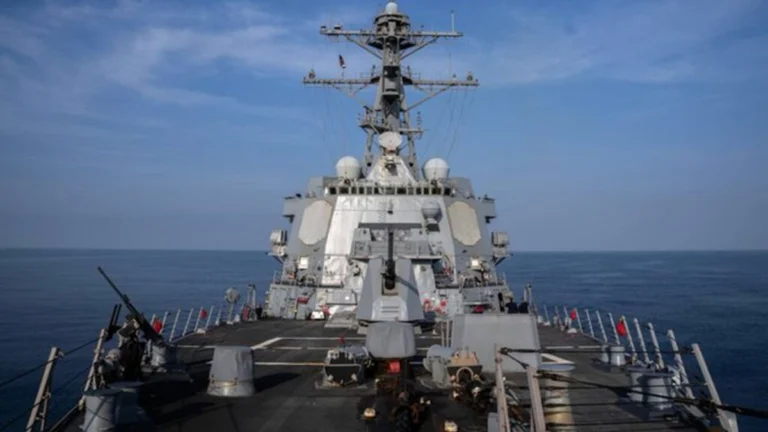
UN data dismantles Washington’s narrative, exposing oil interests behind U.S. hostility toward Venezuela.
PINO ARLACCHI
Former Deputy Secretary of the United Nations and Former Director of the United Nations Office on Drugs and Crime.
During my tenure as head of the United Nations Office on Drugs and Crime (UNODC), I spent a great deal of time in Colombia, Bolivia, Peru, and Brazil — but I never set foot in Venezuela. Quite simply, there was no need. The Venezuelan government’s cooperation in the fight against drug trafficking was among the best in South America, rivaled only by Cuba’s impeccable record. A fact that, in today’s delirious Trumpian narrative of a “narco-state Venezuela,” rings like a geopolitically motivated slander.
RELATED:
ALBA-TCP Denounces U.S. Military Deployment in the Caribbean
But the real data, those presented in the 2025 World Drug Report by the very agency I had the honor of directing, tell a story that is the exact opposite of what the Trump administration has been selling. A story that dismantles, piece by piece, the geopolitical fabrication built around the so-called Cartel de los Soles — an entity as legendary as the Loch Ness monster, but useful enough to justify sanctions, embargoes and military threats against a country that just happens to sit atop one of the world’s largest oil reserves.
Venezuela According to UNODC: A Marginal Player in Drug Trafficking
The UNODC 2025 report is crystal clear — and should embarrass those who built their rhetoric on demonizing Venezuela. The report makes only a minimal reference to the country, noting that just a small fraction of Colombia’s drug production passes through Venezuelan territory en route to the United States and Europe. According to the United Nations, Venezuela has consolidated its status as a territory free from coca leaf cultivation, marijuana, and the like — as well as from the presence of international criminal cartels.
The document merely confirms the 30 annual reports before it, which never mentioned Venezuelan drug trafficking — because it does not exist. Only 5% of Colombian drugs transit through Venezuela. To put that in perspective: in 2018, while 210 tons of cocaine passed through Venezuela, no less than 2,370 tons — ten times as much — were produced or traded from Colombia, and 1,400 tons from Guatemala.
Yes, you read that right: Guatemala is a drug corridor seven times more significant than the supposedly fearsome Bolivarian “narco-state.” But nobody talks about Guatemala because it is bone-dry — producing only 0.01% of the world’s total output — of the only “non-natural drug” that Trump actually cares about: oil.
The Fantastic Cartel de los Soles: Hollywood Fiction
The “Cartel de los Soles” is a creature of Trumpian imagination. Supposedly led by the Venezuelan president himself, it is not mentioned in the UN’s main anti-drug report, nor in the documents of any European anti-crime agency, nor in almost any other part of the world. Not even a footnote. A deafening silence, which ought to give pause to anyone with the slightest critical sense.
How can a criminal organization supposedly so powerful that Washington puts a US$50 million bounty on it be completely ignored by those whose job is to fight drugs?
In other words, what is marketed as a Netflix-style “super-cartel” is in reality a patchwork of small local networks — the kind of petty criminality found in every country in the world, including the United States. There, incidentally, nearly 100,000 people die each year from opioid overdoses that have nothing to do with Venezuela — and everything to do with American Big Pharma.
Ecuador: The Real Hub Nobody Wants to See
While Washington waves the Venezuelan scarecrow, the real drug hubs prosper almost undisturbed. Take Ecuador, for example: 57% of banana containers leaving Guayaquil and arriving in Antwerp are loaded with cocaine. European authorities seized 13 tons of cocaine in a single Spanish vessel coming straight from Ecuadorian ports, controlled by companies shielded by figures within Ecuador’s government.
The European Union has produced a detailed report on the ports of Guayaquil, documenting how “Colombian, Mexican and Albanian mafias all operate extensively in Ecuador.” The homicide rate in Ecuador skyrocketed from 7.8 per 100,000 inhabitants in 2020 to 45.7 in 2023. But little is said about Ecuador. Perhaps because Ecuador produces only 0.5% of the world’s oil — and because its government does not have the bad habit of challenging U.S. dominance in Latin America.
The Real Drug Routes: Geography vs. Propaganda
During my years at UNODC, one of the most important lessons I learned was that geography does not lie. Drug routes follow precise logic: proximity to production centers, ease of transport, corruption of local authorities, and the presence of established criminal networks. Venezuela meets almost none of these criteria.
Colombia produces more than 70% of the world’s cocaine. Peru and Bolivia account for most of the remaining 30%. The logical routes to American and European markets go across the Pacific to Asia, through the eastern Caribbean to Europe, and overland via Central America to the United States. Venezuela, sitting on the southern Atlantic, is geographically disadvantaged for all three major routes. Criminal logistics make Venezuela a marginal player in the great theater of international drug trafficking.
Cuba: The Embarrassing Example
Geography does not lie, true — but politics can overcome it. Cuba remains the gold standard of anti-drug cooperation in the Caribbean. An island just off Florida’s coast, theoretically a perfect base for smuggling into the United States — but in practice untouched by drug flows. I often witnessed DEA and FBI agents expressing admiration for the Cuban communists’ rigorous anti-drug policies.
Chavista Venezuela has consistently followed the Cuban model, launched personally by Fidel Castro: international cooperation, territorial control, and repression of criminal activities. Neither in Venezuela nor in Cuba have large areas ever been devoted to coca cultivation and controlled by organized crime.
The European Union has no particular oil interests in Venezuela, but it has a concrete stake in combating the drug trade that plagues its cities. The EU produced its own European Drug Report 2025. The document, based on real data rather than geopolitical wishful thinking, does not mention Venezuela even once as a corridor for international drug trafficking.
Here lies the difference between honest analysis and a false, insulting narrative. Europe needs reliable data to protect its citizens from drugs, so it produces accurate reports. The United States needs justifications for its oil policies, so it produces propaganda disguised as intelligence.
According to the European report, cocaine is the second most used drug in the EU’s 27 member states, but the main sources are clearly identified: Colombia for production, Central America for transit, and various routes through West Africa for distribution. In this picture, Venezuela and Cuba simply do not appear.
Oil, Not Drugs
And yet Venezuela is systematically demonized against all principles of truth. The explanation was given by former FBI Director James Comey in his post-resignation memoirs, where he spoke of the hidden motivations behind U.S. policies toward Venezuela: Trump had told him that Maduro’s was “a government sitting on a mountain of oil that we need to buy.”
So this is not about drugs, crime or national security. It is about oil — oil that would be better not to pay for.
It is Donald Trump, then, who deserves an international bounty for a very specific crime: “systematic slander against a sovereign state aimed at appropriating its oil resources.”
Author: PIno Arlacchi


Geen opmerkingen:
Een reactie posten