Zoeken in deze blog 🔎🔎

zondag 11 januari 2026

Ronny Naftaniel, See here The Sjah is like you a Collaborator With Genocidal Israel

 Ounka

During Iran Israel 12 days war, Reza Pahlavi, defends Israeli attacks on his own country Because nothing secures your imaginary throne like aligning with an apartheid state that was bombing your own region

Hind’s mother is speaking.

OPINION M. GESSEN 

The Movie I Was Afraid to See 
Dec. 17, 2025 

Hands are holding or reaching for a photograph of a young girl smiling. Credit...Yara Nardi/Reuters Listen to this article · 7:42 min Learn more M. Gessen By M. Gessen Opinion Columnist I was afraid to see “The Voice of Hind Rajab.” I knew that the movie is based on the recordings of a 5-year-old Gazan girl, trapped in a car with the bodies of her family members, speaking with rescue workers. I knew that the girl — Hind Rajab — was eventually killed, too. And I knew that the film was made by Kaouther Ben Hania, the Tunisian director who has invented ways to mix documentary and fiction filmmaking that make it impossible to look away. The movie isn’t suspenseful, in the sense that you know how the story ends. And it is eerily kind to the viewer, who never has to see the little girl stuck in the car, the little girl terrified of being killed, the little girl dying. All you see are the rescue-center workers at their office in Ramallah (the film was actually shot on a set in Tunisia) — computers, glass partitions, a soaring but sterile view of the sky. Their task is to coordinate: to get clearance for an ambulance in Gaza to pick up the child. It’s an eight-minute drive for the ambulance, but the car can’t set off until its mission and route are approved — we never know exactly by whom. Eventually, as I knew going in, the ambulance would be shelled by Israeli forces and everyone would die. What I didn’t realize when I resisted seeing the movie was that these deaths were not its subject. The subject of the movie is the moral injury inflicted on people who became implicated in these deaths, even as they tried to prevent them. Had I known, I might have been even more scared of seeing “The Voice of Hind Rajab,” because this focus hits even closer to home. The most important word in this film is “coordination.” This word is whispered and yelled, mouthed with desperate need, shouted with disdain, and called forth as though it were a magic spell. Coordination is the process by which rescue workers arrange for a safe route for an ambulance. At one point, Mahdi, one of the four central characters in the film, explains the process: He calls the Red Cross in Jerusalem; the Red Cross calls a unit of the Israeli Defense Ministry called COGAT, which stands for Coordination of Government Activities in the Territories; COGAT and troops on the ground agree on a route, which is communicated to the Red Cross, which sends it to Mahdi — who said, “But receiving the route doesn’t mean we have the green light. The green light to deploy the ambulance is another step from A to Z. I have to follow this procedure to the letter, because if we don’t, they could shoot at our ambulance and say it’s our fault.” It’s a long process, and like any bureaucratic process, it consists primarily of waiting. Omar, another rescue worker, who has been speaking to Hind directly, finds the waiting intolerable. He wants to bypass coordination and dispatch the ambulance directly. But Mahdi can’t risk the lives of the rescue workers on the ground. The word “coordination” jumped out at me because this word — Gleichschaltung in German — had a special meaning in 1930s Germany. It was used to describe the process of people and institutions falling in line: universities adopting Nazi policies, prominent entrepreneurs and academics swearing allegiance to Hitler or wearing Nazi symbols. Some people “coordinated” because they believed in the Nazi project, others coordinated because they felt it would advance their careers or bring profits to their businesses, and still others coordinated because they felt they had no choice. (Ben Hania, the director, told me by email that she was not aware of that resonance. “In the film, the term ‘coordination’ is the direct translation” of the Arabic word “tanseeq,” she wrote. “Any resemblance to other historical uses of the term is purely coincidental and was not part of my intention or reference while making the film.”) The people in this film have no choice but to coordinate, but their relationships to coordination are different. Mahdi seems to see it as his duty to follow the rules, because that will keep the maximum number of people alive. Omar sees himself and his colleagues as becoming complicit in inflicting fear, injury and ultimately death on the little girl. Mahdi points to photographs of Gazan rescue workers who have died: He is struggling to protect those who remain. Omar yells at him. “How can you coordinate with the army who killed them and all those people?” he asks. Eventually, they come to blows. Omar curses about green lights and coordination, and shouts, “It’s because of people like you that we’re occupied.” Editors’ Picks What Can I Watch With My Kids? A Fiery Coat and Socks to Match 6 Mobility Exercises for Runners A couple of years ago, I spent several months reporting on an underground network of Russian volunteers who were doing similar work, getting people out of occupied or besieged parts of Ukraine. The people I interviewed were opposed to the war, but their work involved a seemingly endless series of compromises, big and small. The hardest cases — very sick or elderly people who needed to be evacuated by ambulance, for example — required the volunteers to work with the Russian military, the same military that was reducing Ukrainian towns to rubble, the rubble from underneath which people had to be rescued. I was told that sometimes, after people were rescued, Russian propaganda outlets would use them to illustrate the supposed cruelty of Ukrainians and the humanity of the Russian state. The volunteers continued their work, at great personal risk, because they had decided that they cared about saving lives more than they cared about being used by the propaganda machine. At one point in “The Voice of Hind Rajab,” Omar proposes that the Palestinian Ministry of Health call the Israeli military to pitch the idea that they rescue Hind and use her for propaganda purposes. The people in the room seem stunned at the suggestion. It may sound brilliant, but it would not work. An unspoken understanding hangs in the air — Palestinians have been so thoroughly dehumanized by the Israeli media that it’s unimaginable that even a 5-year-old girl could be seen as anything but the enemy. Eventually, there is an approved route, but still no “green light.” The little girl, of course, cannot understand how it is that adults are failing to help her. One of the women rescue workers, Rana, tries to explain that the rescue workers are like a big family, and that “my brothers and sisters at the Red Crescent are coordinating,” adding, “I swear, we are doing what we can.” She repeats: “We need to coordinate to get there.” It has been more than two hours. One of the last times we hear the word, it’s Hind’s mother who is speaking. She has been patched in so she can speak with her child. She wants to know whether the team has coordinated. The rescue workers assure her they have. They were about 200 feet from Hind when the ambulance was shelled. She lived for at least an hour after that. “The Voice of Hind Rajab” had its premiere at the Venice Film Festival in September and took the Grand Jury Prize, the second-highest honor. A few days later, it was screened to great acclaim at the Toronto International Film Festival. High-profile U.S. distribution companies came calling. But then, the producers Odessa Rae and Elizabeth Woodward told me, one by one the companies peeled off. In the end, Woodward, who has a small distribution company, put together something akin to self-distribution. The movie opens in New York and Los Angeles on Wednesday. Elsewhere in the world this film, shortlisted for the Oscar for best foreign movie, has major distributors — but not in the United States or Israel. That’s a kind of coordination, too. More on Gaza Opinion The Gaza I Once Knew Is Gone Opinion | Ben Rhodes This Is the Story of How the Democrats Blew It on Gaza Dec. 1, 2025 Opinion | Samer Sinijlawi An Invitation to President Trump: Come to Gaza Oct. 9, 2025 M. Gessen is an Opinion columnist for The Times. They won a George Polk award for opinion writing in 2024. They are the author of 11 books, including “The Future Is History: How Totalitarianism Reclaimed Russia,” which won the National Book Award in 2017. The Times is committed to publishing a diversity of letters to the editor. We’d like to hear what you think about this or any of our articles. Here are some tips. And here’s our email: letters@nytimes.com. Follow the New York Times Opinion section on Facebook, Instagram, TikTok, Bluesky, WhatsApp and Threads. M. Gessen is an Opinion columnist for The Times. They won a George Polk Award for opinion writing in 2024. They are the author of 11 books, including “The Future Is History: How Totalitarianism Reclaimed Russia,” which won the National Book Award in 2017. READ 178 COMMENTS Related Content 


Kou, blokkade en bommen: De genocide gaat door


Kou, blokkade en bommen: De genocide gaat door

Door aanhoudende bombardementen, het blokkeren van hulpgoederen en slopen van Palestijnse huizen gaat Israël meedogenloos door met het onleefbaar maken van de Gazastrook, en daarmee het vernietigen van de Palestijnse bevolking.
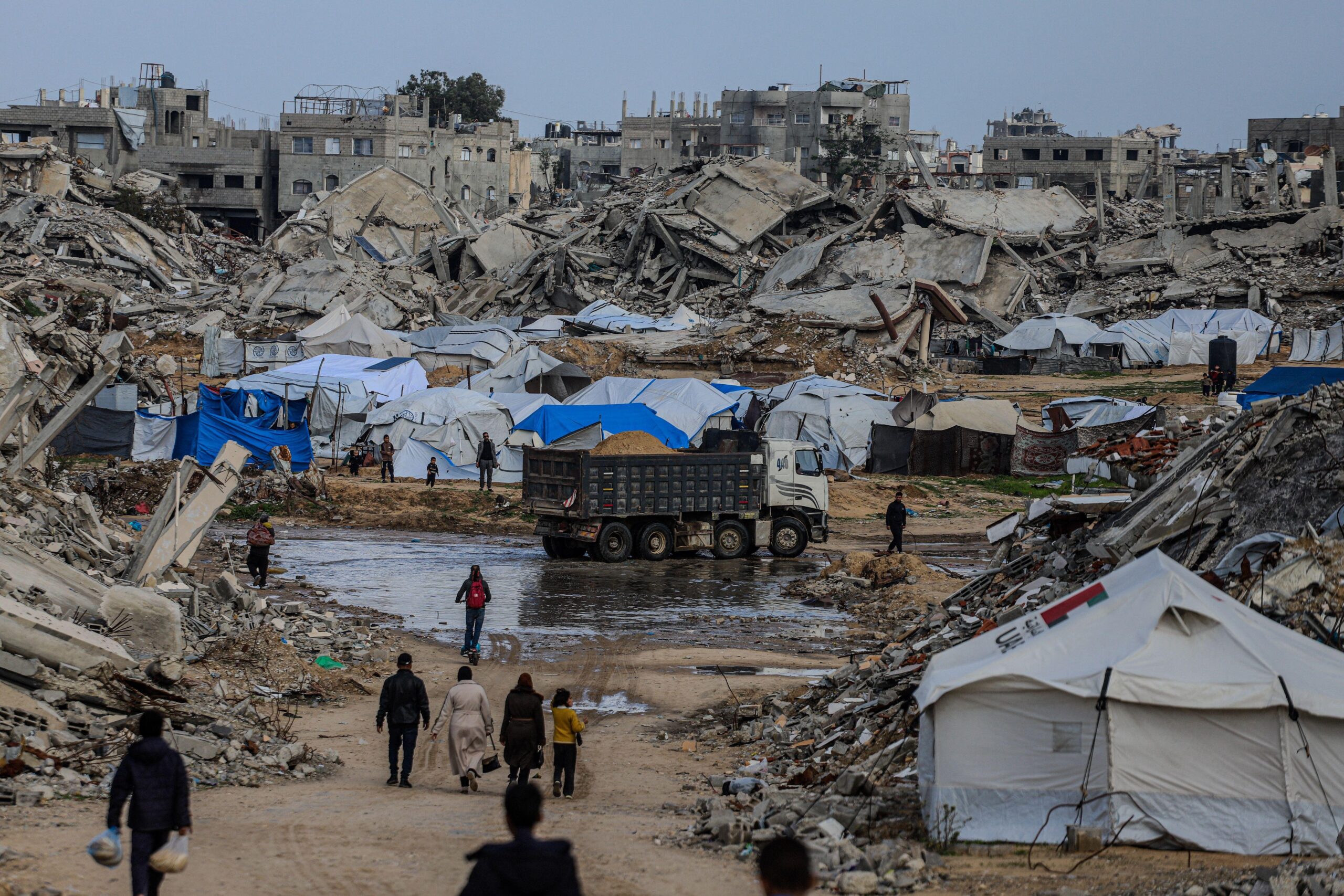
Palestijnen proberen te overleven in barre weersomstandigheden in een tentenkamp tussen de de ruïnes van Jabalia in het noorden van de Gazastrook © Habboub Ramez/ Abaca press / Alamy

Israël heeft sinds zondag zeker 21 Palestijnen in de Gazastrook gedood, onder wie zeven kinderen. Het blokkeert nog altijd hulpgoederen waardoor de levensomstandigheden nauwelijks zijn verbeterd. Al is de bommenregen niet zo hevig als voor het in oktober overeengekomen bestand, de genocide op de Palestijnen in Gaza gaat door.

Hamsa Nidal Hosso, een 11-jarig meisje, werd donderdagochtend doodgeschoten door Israëlische militairen in de buurt van het vluchtelingenkamp Jabalia in het noorden van de Gazastrook.

Bij een drone-aanval op een tent in Mawasi in het zuiden van de Gazastrook werden donderdagmiddag vier Palestijnen gedood, vertellen dokters tegen Al Jazeera. Onder de doden zijn drie kinderen.

Vijf-jarige ‘bedreiging’

Bij een andere aanval, ook in het zuiden, werd één Palestijn gedood. Een Israëlische bombardement in de wijk Zaytun in Gaza-stad doodde vier mensen. Op woensdagavond werden bij een Israëlische luchtaanval in Gaza-stad ook al twee Palestijnen gedood.

Eerder deze week, op maandag, bestookten Israëlische helikopters en artillerie de zuidelijke Gazastrook en bombardeerde daarbij een tent van ontheemde Palestijnen. Een vijfjarig meisje en haar oom in de tent werden gedood. Israël beweerde te hebben ingegrepen tegen een vermeende ‘op handen zijnde bedreiging’ .

Een dag daarvoor: drie doden bij Israëlische aanvallen, onder wie een visser en een vijftienjarige jongen. Geen van deze dodelijke aanvallen haalden de Nederlandse media, zo genormaliseerd is het doden van Palestijnen. Dit is precies wat de Palestijnse journalist Mariam Barghouti bedoelde toen ze in gesprek met The Rights Forum zei: ‘Voordat we op de grond werden uitgewist, waren we op papier al uitgewist.’

Stenografie voor Israëlische leger

Het AD maakte het wel erg bont. De krant heeft nog een liveblog over ontwikkelingen in het Midden-Oosten, waar geen enkele van de Palestijnse doden deze week in werd vermeld. Wél vermeldde het AD dat Israël Hamas had beschuldigd van een mislukte poging een projectiel af te vuren.

Dit is geen journalistiek meer te noemen, maar eerder stenografie voor het Israëlische leger en, inderdaad, het witwassen van genocide.

Sinds het ingaan van het bestand in oktober vorig jaar heeft Israël al meer dan 425 Palestijnen in Gaza gedood, en nog eens tientallen op de bezette Westelijke Jordaanoever. Dit gaat om éénzijdig Israëlisch geweld tegen Palestijnen en voortdurende Israëlische schendingen van het bestand. Drie Israëlische militairen kwamen om in Gaza tijdens het bestand, allen in oktober.

Media en politici verhullen de situatie op de grond en spreken nog altijd over een ‘staakt-het-vuren’, ook al heeft Israël het vuren nooit gestaakt.

Genocide gaat ‘onverminderd’ door

In november verklaarde Amnesty International al dat de genocide ‘onverminderd’ voortduurt. ‘Het staakt-het-vuren dreigt de gevaarlijke illusie te scheppen dat het leven in Gaza weer normaal wordt. Maar [..] de wereld mag zich niet laten misleiden. Israëls genocide is nog niet voorbij’, schreef de mensenrechtenorganisatie.

Bommen zijn niet de enige manier waarop de vernietiging van het Palestijnse volk doorgaat. Israël blijft hulpgoederen voor de enclave blokkeren – tevens een schending van het bestand. Dat heeft als gevolg dat honderdduizenden Palestijnen nog altijd in versleten en provisorische tenten verblijven en niet de materialen hebben huizen te repareren of noodwoningen op te zetten.

Artsen zonder Grenzen (AzG) waarschuwde woensdag dat baby’s lijden onder ‘extreme kou’ in Gaza. ‘Mensen hebben te maken met stromende regen en zware windstoten terwijl ze in geïmproviseerde onderkomens verblijven’, schreef AzG. ‘Ondertussen blijft Israël de aanvoer van essentiële goederen zoals tenten, dekzeilen en tijdelijke huisvesting blokkeren of vertragen.’

Kou, storm en regen

Daardoor hebben Palestijnen niet de middelen zich te beschermen tegen het koude winterweer dat de Gazastrook de afgelopen weken teisterde. Veel tenten gingen kapot in de storm. In december kwamen zes kinderen om het leven door de extreme weersomstandigheden, aldus VN-organisatie Unicef. Op 27 december verdronk de zevenjarige Ata Mai toen het tentenkamp waar hij verbleef overstroomde door hevige regen.

Israël maakt de Gazastrook verder onleefbaar door systematisch hele stadsdelen op te blazen. Het doel is dat Palestijnen geen huizen meer hebben om ooit naar terug te keren en gedoemd zijn weg te kwijnen in de erbarmelijke tentenkampen. Mid-november meldde de BBC al dat Israël sinds het ingaan van het bestand als meer dan 1500 gebouwen had gesloopt in het deel van de Gazastrook dat het bezet.

Eerder deze week breidde het Israëlische leger het gebied dat het bezet, in totaal zo’n 56 procent van de Gazastrook, verder uit. De commandant van het Israëlische leger heeft al gezegd dat Israël niet van plan is deze bezette gebieden te verlaten, maar dat de ‘gele lijn’ die nu de grens markeert tussen het Israëlische leger en de Palestijnse bevolking ook de definitieve grens tussen Gaza en Israël wordt.

Hulporganisaties verboden

Naast dat Israël ook hiermee de afspraken van het bestand schendt – het zou zich namelijk op termijn vrijwel geheel terugtrekken uit de Gazastrook – betekent dit ook dat het merendeel van de landbouwgrond in Gaza onder controle van het Israëlische leger valt en dus niet meer toegankelijk is voor Palestijnen. Immers: Israëlische troepen schieten elke Palestijn die te dicht bij de gele lijn komt zonder pardon neer.

Het is een volgend kenmerk van de genocide: bestaansmiddelen om zichzelf in leven te houden worden de Palestijnen ontzegd. Een gevolg is dat Palestijnen nog meer dan ze al waren afhankelijk zullen worden van hulp. Maar ook dat wil Israël niet. Net voor de jaarwisseling verbood het zevenendertig internationale hulporganisaties te opereren in de Gazastrook, waaronder Oxfam Novib, War Child Holland en Artsen zonder Grenzen Nederland.

Nederlandse media herhaalden braaf de Israëlische propaganda dat dit gedaan zou zijn omdat de hulporganisaties medewerkers met banden met Hamas zouden hebben. De eigenlijk reden en cruciale context om het nieuws echt te begrijpen werd niet vermeld: dat het de zoveelste actie van Israël is om Palestijns leven onmogelijk te maken.

Dat het een onderdeel is van de voortdurende genocide op de Palestijnen.

De dodentallen genoemd in dit artikel zijn op 9 januari 11:30u bijgewerkt.


Professor Marandi RIPS into Epstein lawyer, Dershowitz with precision

https://x.com/DD_Geopolitics/status/2083669958685254033 Professor Marandi RIPS into Epstein lawyer, Dershowitz with precision. 11:43 p.m. · ...