Zoeken in deze blog 🔎🔎

maandag 13 november 2006

The Empire 50

Niet de Amerikaanse oorlogsmisdaden in Irak zullen de genadeklap zijn voor de Bush Bende, maar de enorme corruptie in Irak, begaan door concerns die de bende aan de macht hebben geholpen.

De New York Times bericht over de eerste voorbereidingen voor deze ontwikkeling:

'Democrats Aim to Save Inquiry on Work in Iraq.

Washington - Congressional Democrats say they will press new legislation next week to restore the power of a federal agency in charge of ferreting out waste and corruption in Iraq and greatly increase its investigative reach.
The bills, the first of what are likely to be dozens of Democratic efforts to resurrect investigations of war profiteering and financial fraud in government contracting, could be introduced as early as Monday morning.
The move would nullify a Republican-backed provision, slipped into a huge military authorization bill, that set a termination date for the agency, the Office of the Special Inspector General for Iraq Reconstruction. The agency's findings have consistently undermined Bush administration claims of widespread success in the reconstruction of Iraq.
Oversight, the power wielded by Congressional committees to demand information and internal documents and to haul executive branch officials to hearings, by subpoena if necessary, is reverberating through Congress as a Democratic battle cry.
"The unilateral decision made by House Republicans to shut down this critical office should be reversed immediately," said Senator Harry Reid, the Nevada Democrat who is poised to become the majority leader.
The House version of the bill will be introduced by Ike Skelton, the Missouri Democrat likely to take over as chairman of the House Armed Services Committee, a member of Mr. Skelton's staff said Friday. Mr. Skelton also said he would resurrect a subcommittee on oversight and investigations that was jettisoned by Republicans to investigate military spending.
In the Senate, Carl Levin, the Michigan Democrat who is in line to become chairman of the Senate Armed Services Committee, said that seeking a new strategy for Iraq would be his primary focus, but that he would also look carefully at military contracting.
"There have been serious allegations and evidence of misconduct among suppliers," Mr. Levin said. "And the taxpayers, of course, get socked on that. And the troops are not properly taken care of when that happens."'

Lees verder: http://www.nytimes.com/2006/11/12/washington/12oversight.html Of:
http://www.truthout.org/docs_2006/111206Z.shtml

De Israelische Terreur 117


Langzaam maar zeker groeit ook in het Westen het verzet tegen de dagelijkse terreur van Israel. Desondanks staat de VS vierkant achter het Israelisch terrorisme.
Democracy Now bericht:
'U.S. Vetoes UN Resolution Condemning Israeli Attack on Gaza, Arab League Lifts Financial Blockade
The United States vetoed a UN Security Council resolution condemning Israel's recent attack on the Gaza town of Beit Hanoun that killed at least 19 Palestinian civilians and left dozens wounded. In response, the Arab League announced it would lift the financial blockade on the Palestinians in defiance of the U.S. We go to Ramallah to speak with Diana Butto, the former legal adviser to the PLO. [includes rush transcript]
The United States vetoed a UN Security Council resolution condemning Israel's recent attack on the Gaza town of Beit Hanoun that killed at least 19 Palestinian civilians and left dozens wounded.
One family lost 16 members when Israel tanks opened fire on their house. Seven children died, the youngest was just a year old. The UN resolution called on Israel to abide by its obligations and responsibilities under the Geneva Convention.
The U.S veto was widely criticized in part because the United States has repeatedly used its veto to shield Israel from criticism at the United Nations.
Arab League chief Amr Moussa said the veto was incomprehensible. In response, the Arab League announced it would lift the financial blockade on the Palestinians in defiance of the United States.
In other developments, a deal appears to have been reached between leaders of Hamas and Fatah over a new coalition Palestinian government. Under the reported agreement, a former university official named Mohammed Shbeir will become the new Palestinian Prime Minister replacing Hamas leader Ismail Haniya.
Diana Butto, political analyst and the former legal advisor to the PLO. She joins us on the line from Ramallah in the West Bank.'

Joseph Stiglitz


Afgelopen vrijdag werd in het Amsterdamse Felix Meritus de zeventiende globaliseringslezing gehouden door professor Joseph Stiglitz, voormalig economisch adviseur van president Clinton. Stiglitz bekleedde een hoge functie bij de Wereldbank en kreeg in 2001 de Nobelprijs voor Economie. Al enkele jaren heeft Stiglitz scherpe kritiek op het functioneren van zowel de Wereldbank als het IMF. Hun beleid leidt niet tot een eerlijkere spreiding van rijkdom op aarde, maar integendeel tot een verdere verpaupering van de Derde Wereld. Een thema dat hij verder uitwerkt in zijn laatste boek Making Globalization Work, dat in Nederlands zal verschijnen bij uitgeverij Het Spectrum onder de titel Eerlijke Globalisering. U kunt hier naar zijn lezing luisteren onder de rubriek Lectures: http://webdisk.planet.nl/houck006/default.aspx
Eerder verscheen in het Nederlands zijn boek Perverse Globalisering

The Empire 49


En het Amerikaanse militair industrieel complex draait op volle toeren. De VS produceert zelf in feite alleen nog maar wapens en amusement.
De Boston Globe bericht:
'US is top purveyor on weapons sales list.

Shipments grow to unstable areas.

WASHINGTON -- The United States last year provided nearly half of the weapons sold to militaries in the developing world, as major arms sales to the most unstable regions -- many already engaged in conflict -- grew to the highest level in eight years, new US government figures show.
According to the annual assessment, the United States supplied $8.1 billion worth of weapons to developing countries in 2005 -- 45.8 percent of the total and far more than second-ranked Russia with 15 percent and Britain with a little more than 13 percent.
Arms control specialists said the figures underscore how the largely unchecked arms trade to the developing world has become a major staple of the American weapons industry, even though introducing many of the weapons risks fueling conflicts rather than aiding long-term US interests.
The report was compiled by the nonpartisan Congressional Research Service.
"We are at a point in history where many of these sales are not essential for the self-defense of these countries and the arms being sold continue to fuel conflicts and tensions in unstable areas," said Daryl G. Kimball , executive director of the nonpartisan Arms Control Association in Washington. "It doesn't make much sense over the long term."
The United States, for instance, also signed an estimated $6.2 billion worth of new deals last year to sell attack helicopters, missiles, and other armaments to developing nations such as the United Arab Emirates, Pakistan, India, Israel, Egypt, Kuwait, and Saudi Arabia. Developing nations are designated as all those except in North America, Western Europe, Russia, Australia, and New Zealand.
In addition to weapons already delivered, new contracts for future weapons deliveries topped $44 billion last year -- the highest overall since 1998, according to the report. Nearly 70 percent of them were designated for developing nations.
Many of the US sales are justified by American officials as critical to the war on terrorism or other foreign policy goals such as checking an emerging China. One such example is the recent decision to sell F-16 fighter jets to Pakistan.'
articles/2006/11/13/us_is_top_purveyor_on_weapons_sales_list/

De Israelische Terreur 116


Israelische kinderen die terwijl moeder tevreden toekijkt hatelijke teksten schrijven op Israelische raketten die arabische leeftijdgenootjes doden.

De Israelische journalist Gideon Levy schrijft een artikel dat u niet in de commerciele massamedia zult aantreffen. Opmerkelijk dat de talloze joodse correpondenten van de Nederlandse media in het beloofde land dit ook niet uitzoeken:

'No one is guilty in Israel

By Gideon Levy.


Nineteen inhabitants of Beit Hanun were killed with malice aforethought. There is no other way of describing the circumstances of their killing. Someone who throws burning matches into a forest can’t claim he didn’t mean to set it on fire, and anyone who bombards residential neighborhoods with artillery can’t claim he didn’t mean to kill innocent inhabitants.Therefore it takes considerable gall and cynicism to dare to claim that the Israel Defense Forces did not intend to kill inhabitants of Beit Hanun. Even if there was a glitch in the balancing of the aiming mechanism or in a component of the radar, a mistake in the input of the data or a human error, the overwhelming, crucial, shocking fact is that the IDF bombards helpless civilians. Even shells that are supposedly aimed 200 meters from houses, into “open areas,” are intended to kill, and they do kill. In this respect, nothing new happened on Wednesday morning in Gaza: The IDF has been behaving like this for months now.
But this isn’t just a matter of “the IDF,” “the government” or “Israel” bearing the responsibility. It must be said explicitly: The blame rests directly on people who hold official positions, flesh-and-blood human beings, and they must pay the price of their criminal responsibility for needless killing. Attorney Avigdor Klagsbald caused the death of a woman and her child without anyone imagining that he intended to hit them, but nevertheless he is sitting in prison. And what about the killers of women and children in Beit Hanun? Will they all be absolved? Will no one be tried? Will no one even be reprimanded and shunned?
GOC Southern Command Yoav Galant will say with exasperating coolness that apparently there was “a problem with the battery’s targeting apparatus,” without moving a facial muscle, and will that be enough? Deputy Defense Minister Ephraim Sneh will say, “The IDF is militarily responsible, but not morally responsible,” and will he thus exculpate himself?
And who will bear the responsibility for the renewal of the terror attacks? Only Hamas? Who will be accused of the tumble in Israel’s status and its depiction as a violent, leper state, and who will be judged for the danger that hovers over world Jewry in the wake of the IDF’s acts? The electronic component that went on the blink in the radar?
No one is guilty in Israel. There is never anyone guilty in Israel. The prime minister who is responsible for the brutal policy toward the Palestinians, the defense minister who knew about and approved the bombardments, the chief of staff, the chief of command and the commander of the division who gave the orders to bombard - not one of them is guilty. They will continue with the work of killing as though nothing has happened: The sun shone, the system flourished and the ritual slaughterer slaughtered. They will continue to pursue the routine of their daily lives, accepted in society like anyone else, and remain in their posts despite the blood on their hands.
A few hours after the disaster, while the Gaza Strip was still enveloped in sorrow and deep in shock, the air force was already hastening to carry out another targeted killing, an arrogant demonstration of just how much this disaster does not concern us.
Israel after the disaster was split: There were those who did their duty and “expressed sorrow,” like the prime minister and the defense minister, and there were those who hastened with appalling insensitivity to cast the responsibility onto the Palestinians, like the “moderate” foreign minister, Tzipi Livni, and the deputy defense minister from the Labor Party, Sneh. The silent majority did not bother to emerge from its yawning indifference. The entertainment shows on television continued to make people laugh, and one of the radio stations even broadcast, in a demonstrable lack of taste, Sarit Hadad’s song “You’re a Big Gun.” Mourning, of course, did not descend on Israel, and there was not even a single manifestation of genuine participation in the sorrow. It did not occur to Israel to promise compensation to the families and it did not provide help, apart from transferring some of the wounded to hospitals in Israel. We provided more aid to the victims of the earthquake in Mexico, even though there we didn’t have a hand in the disaster. For the most part, the media were not very disturbed by the killing and devoted less attention to it than to the Gay Pride parade.
A day or two after the disaster it was totally forgotten and other affairs are filling our lives. But it is impossible just to go on to the next item on the agenda. This disaster is not an act of God. There are people who are clearly responsible for it, and they must be brought to justice. The fact that the International Court of Justice in The Hague still looks very far from Israel, and the various “Halutzes” and “Galants” can still move around freely in the world, because in Israel they forgive nearly everything, does not mean that war crimes are not being committed here.
The IDF may well be a big gun, but an army that is responsible for needless killing in such large dimensions, as in recent months in Lebanon and in Gaza, is a failed and dangerous army that must urgently be repaired. The Defense Forces are not only killing Arabs for no reason, they are also directly endangering Israel’s security, disgracing it in the world and embroiling it again and again.
The heedless and arrogant reaction to such deeds contains a dangerous moral message. If it is possible to dismiss mass killing with a wealth of technical excuses, and not take any drastic measure against those who are truly guilty of it, then Israel is saying that, as far as it is concerned, nothing happened apart from the faulty component in the radar system or the glitch in balancing the sights. But what happened at Beit Hanun, what happened in Israel on the day after and what is continuing to happen in Gaza day after day is a far more frightening distortion than the calibrating of a gun sight.'

zondag 12 november 2006

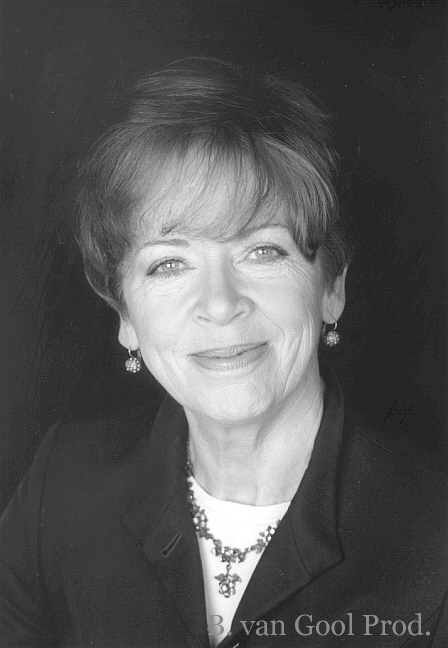
Sonja Barend


Voor de jonge lezers: dit is Sonja Barend, decennialang een spraakmakende programmamaakster van de Nederlandse televisie. Ik voeg dit laatste eraan toe omdat ik op internet zag dat Sonja 156.000 vermeldingen heeft en de bij jongeren populaire Bridget Maasland maar liefst 370.000. Zo vergankelijk is televisieroem.

Sonja is zeven jaar ouder dan ik, maar toch iemand van mijn generatie. Ik ben als het ware met haar opgegroeid. Zij drukte een stempel op het bewustzijn van de oudere televisiekijkers. Ze behandelde in haar gespreksprogramma's 1001 al dan niet belangrijke onderwerpen, en ze liet nagenoeg iedereen aan het woord.

Nu, op haar oude dag, kijkt ze op de televisie met verwondering terug op het fenomeen dat haar - voor zolang het duurt - beroemd heeft gemaakt. Het lijkt op een soort verantwoording afleggen voor de ontwikkeling die mede zij in gang heeft gezet en is uitgemond in een steeds ordinairdere, steeds platttere programmering waarvan het einde nog niet in zicht is.

Gisteravond werd Sonja's programma voorafgegaan door enkele fragmenten van oude programma's waarin zij zei: 'Buitengewoon openhartig om dat op televisie te zeggen.' En: 'Is dat echt waar?' En: 'Heel vaak durven ze er niet over te praten.' Vervolgens leidde ze haar uitzending als volgt in: 'Je kunt je afvragen waarom mensen in die iets meer dan 50 jaar dat de televisie bestaat steeds meer bereid zijn om hun verhalen op de televisie te vertellen terwijl - laten we eerlijk zijn - het de meest rare omgeving is om iets van jezelf prijs te geven, vaak met een hoop mensen om je heen, een zaal, een microfoon op, een hoop licht, camera's en ook nog in de wetenschap dat - in die tijd dat ik het deed - een paar miljoen mensen naar je zaten te kijken.' Na dertig jaar lang haar gasten te hebben ondervraagd over van alles en nog wat, zonodig ook hun priveleven, moest deze vraag ooit eens opkomen.

Een aantal gasten werd naar hun mening gevraagd en die gaven keurig antwoord, maar pas echt interessant werd het nadat Sonja een niets- en gelijktijdig veelzeggend fragment uit Big Brother liet zien. Ze zei: ‘Je zat te kijken naar iets waarvan je alles verwachtte, maar er gebeurde eigenlijk heel erg weinig. Niettemin werd het een doorslaand succes. Miljoenen mensen gingen er naar kijken.' Aan de inmiddels aangeschoven eindredacteur van Big Brother, Tummie van der Tonnekreek, vroeg ze: 'Weet jij waarom er zoveel keken?’ Van der Tonnekreek antwoordde: ‘Wij gingen de therapie voorbij. Het waren geen mensen die iets te vertellen hadden. Het waren doodnormale mensen die niet dachten: ‘’We gaan eens effe in dat huis want dan krijg ik gehoor of mijn ziekte gaat over.” Het was gewoon: “Hé, ik wou weleens wat anders. Doe die deur maar open, ik ga er zitten.” En het is zo simpel als wat, je kijkt naar jezelf, want je dacht: “Hé, dat herken ik. Hé, wat gelukkig, niet al die mensen drinken dure drankjes, die hebben niet allemaal een probleem, die liggen gewoon op de bank. En eigenlijk begon zich af te tekenen dat Pim Fortuyn ooit een eind zou maken aan pluche en fluweel van bekende Nederlanders, niet voor zichzelf maar wel: “Wij zijn er ook nog, ik ben een doodnormale burger, ik ga naar mijn werk, ik doe verder niks en ik ben een ster. En dat was met internet erbij de bevestiging van: wij tellen weer me, het de burger mondig gemaakt en van gewone mensen sterren. Simpel.’

Sonja begreep de strekking niet van deze eenvoudige maar toch zo haarscherpe analyse. Ze zei: ‘Ja maar die mensen… Je doet nu net alsof de burger voor het eerst op de televisie was, maar die was er al, die zat al twintig jaar bij mij zijn verhaal te vertellen… En deze mensen hadden geen verhaal. Waarom gingen wij er naar kijken?’ Van der Tonnekreek: ‘Het was, denk ik, voor een heleboel mensen een enorme opluchting dat je geen verhaal hoefde te hebben… men dacht ik hoef niks, ik heb niks, ik ben niet zielig, ik ben niet ziek, ik ben niet boos. Ik wil gewoon lekker op de televisie zitten. En er zitten allemaal camera’s, ik zie wel waar het schip strandt.’

Het verbaasde Sonja dat iets wat in feite niets was kon worden uitgezonden en nog succes kon hebben ook, terwijl het waarschijnlijk niet eens echt was. En dus wilde ze van een Big Brother deelneemster weten of Big Brother wel allemaal echt was geweest. Nog steeds was ze op zoek naar zin en betekenis van een ontwikkeling die zijzelf onbewust op gang had gebracht. Een ontwikkeling waarbij alles gelijk geschakeld werd, elke mening, emotie, gedachte, waar niets meer echt belangrijk was, omdat alles als even belangrijk werd gepresenteerd, op alles kon je een camera zetten. Dus iemand die tegen het bombarderen van de Iraakse bevolking was, zette men tegenover iemand die dat wel een prijzenswaardig idee vond. Kennelijk was de post moderne gedachte van dit soort programma's dat de waarheid niet meer bestaat en dat uit twee tegenstelde meningen een waarheid zou voortvloeien. Emoties spelen daarbij een doorslaggevende rol en niet een weloverwogen gedachte.

Uitgangspunt was dat hetgeen 'de gewone man' te vertellen had, belangrijk genoeg was om te worden uitgezonden, hoe onnozel de meeste verhalen ook waren. Het maakte niet meer uit of iemand kennis van zaken had of een diep inzicht in een bepaalde materie bezat. Het enige belangrijke was dat iedereen gehoord werd. En toen bleek dat men bij gebrek aan kennis en inzicht na enkele jaren was uitgesproken, was de logische volgende stap: Big Brother. Terwijl Sonja nog zocht naar inhoud, blijkt nu na al die jaren dat er geen inhoud nodig is. De televisie gaat net als de verkiezingen in een parlementaire democratie in feite over niets essentieels meer. In een comsumptiemaatschappij wordt uiteindelijk alles verpakking.

Terwijl ik zat te kijken besefte ik hoe scherp de beroemde Amerikaanse kunstenaar Andy Warhol naar de consumptiemaatschappij en de massamedia had gekeken. Van de zomer bezocht ik in San Diego een drukbezochte tentoonstelling van zijn werk. In de zalen hingen ook enkele van zijn teksten, zoals deze: 'If you want to know all about Andy Warhol, just look at the surface of my paintings and films and me, there I am. There's nothing behind it.' Warhol begreep dat de massamaatschappij niet veel meer was dan de verpakking, marketing, public relations, een wereld voorbij goed en kwaad, massaproductie. De Amerikaanse schrijver Tom Wolfe zei dat Warhol's houding tegenover die overweldigende consumptiecultuur het volgende was: 'Oh, it is so horrible. I love it.' Toen Warhol gevraagd werd of hij zich kon verdedigen tegen de vernietigende kritiek op zijn werk antwoordde hij: 'Dat kan ik niet. Ze hebben gelijk.' In een van zijn films, 'Sleep', kan men 6,5 uur naar een slapende man kijken. Toen een interviewer hem vroeg waarom hij die films maakte antwoordde Warhol met 'Uhm, het is makkelijker te maken dan schilderijen. De camera heeft een motor, en die zet je aan en dan loop je gewoon weg, het neemt alles op.' Gevraagd naar zijn motieven zei hij: 'Well, I guess I really don't know... It is too hard to care... Don't get too involved.'

In de moderne samenleving hoeft men niets te vertellen te hebben en wil de massa niet betrokken raken bij de wereld. Men functioneert in een eendimensionale werkelijkheid, die is wat het is, meer is er niet. Wat overblijft is de drang om in die wereld beroemd te worden, of zoals Warhol zei: 'In the future, everyone will be world-famous for 15 minutes.' In 1979 herhaalde hij die stelling toen hij verklaarde "...my prediction from the sixties finally came true: In the future everyone will be famous for fifteen minutes.'

En zo zijn we via een omweggetje weer beland bij Sonja en Hummie. Waar Sonja nog zocht naar een motief bij de massamens beseft Hummie dat er geen enkel ander motief bestaat dan de drang naar op zijn minst 15 minuten beroemdheid. Dat is het resultaat van een parlementair democratisch waarin iedereen gelijk is aan de ander, waar verschillen in niveau niet bestaan en waar de meerderheid meent het recht te hebben om de ander te beledigen of lastig te vallen met nonsense. En door de onbeperkte aandacht van de televisie was men ervan overtuigd geraakt dat men recht van spreken had. Dat proces bleef niet beperkt tot de amusementswereld, het is inmiddels ook een van de belangrijkste politieke factoren geworden, zoals Van der Tonnekreek heel goed besefte.

Dat is de gelijk geschakelde wereld waarin de Sonja's van mijn generatie de consumenten hebben binnengevoerd. In al haar onschuld verwoordde en verbeeldde zij slechts de tijdgeest. Dat deed ze niet eens bewust en zeker niet met kwaaie bedoelingen. Integendeel, als een verbaast kind die een hooiberg ziet affikken, kijkt zij nu met een zekere verbijstering naar wat de televisie allemaal heeft aangericht. Aan het einde van haar programma liet ze alvast enkele beelden van haar volgende programma zien. De kijkers zagen een blonde man en vrouw die geheel naakt aan het 'neuken' waren. Een beeld met veel blank vlees waar de foto's van Leni Riefensthal van zwarte naakte kerels totaal bij verbleken.

Waar het 'venster op de wereld' onvermijdelijk in gaat eindigen is -denk ik - permanente live uitzendingen uit een arena waar gladiatoren al kickboksend, met drietanden of een machinegeweer elkaar om zeep helpen. Ik benadruk onvermijdelijk omdat de verveling gigantisch is en het volk moet worden bezig gehouden om de totale chaos te voorkomen. Die programma's zullen worden afgewisseld met veel aandacht voor mensen die zonder enige consequentie naar zichzelf willen kijken en - in de woorden van Hummie - niets te vertellen hebben en zich toch een ster willen voelen.

Voor het programma van Sonja Barend zie: http://omroep.vara.nl/tvradiointernet_detail.jsp?maintopic=424&subtopic=307663

Irak 114

Jim Nolan, mensenrechten advocaat uit Sidney, schrijft in The Australian:

'Bye bye, butcher.

Good riddance to one of the most bloodthirsty tyrants of the modern era


SADDAM Hussein's conviction for the massacre of 148 Shi'ites in 1982 in the Iraqi village of Dujail was the first in an expected series of such trials. It was also only one small episode from the former Iraqi tyrant's blood-soaked years.
In his 1989 book Republic of Fear, the Iraqi exile Kanan Makiya told anyone prepared to listen about the depraved regime of the Iraqi Baath party under Saddam. Makiya's Iraq Memory Foundation documents the multiple crimes and personal stories of Saddam's victims, their relatives and friends (http://www.iraqmemory.org/).
Iraq's democratically elected President Jalal Talabani recently reminded us that Saddam's Baathist Iraq was the longest lived fascist regime in history. It has rightly been described by Christopher Hitchens as a "charnel house above ground and mass grave below".
The most comprehensive work on Saddam's crimes, the French Le Livre Noir de Saddam Hussein (The Black Book of Saddam Hussein), has yet to be translated into English. But those with the desire to know have had the means, through Makiya and others, to appreciate if not comprehend the scale of Saddam's atrocities.
Just last month, two Kurdish witnesses at Saddam's trial for the massacre at Anfal, in Iraqi Kurdistan, gave harrowing accounts of surviving killing fields where guards executed hundreds of detainees at a time.
Saddam's henchman and cousin Ali Hassan al-Majid - the gruesome "Chemical Ali" - was asked in 1998 how he would deal with the Kurds. He said: "I will kill them all with chemical weapons. Who is going to say anything? The international community? F-- them!" He did as he threatened, and the international community did nothing.
Saddam and his genocidal family had it nailed. The odds were well and truly on their side. Just ask the people of Darfur.
From February to September 1988, 100,000 to 180,000 Iraqi Kurds died or disappeared. Saddam's Baathist tyranny used chemical weapons at least 60 times against Kurdish villages during the Anfal campaign.
Of course, the Kurds were not Saddam's only victims. Saadoun Kassab, a Shi'ite engineer who in 1957 helped build Abu Ghraib (designed to hold 4000 prisoners), himself became an inmate. Kassab told the editor of The Black Book: "When I was imprisoned in Abu Ghraib in 1985, there were 48,500 prisoners. I was imprisoned for eight months in a space 1mx1.5m, a box. All that because I said hello to (the son of a former Shi'ite prime minister from the time of the monarchy)."
Because of periodic overcrowding, Saddam and his sons decided to execute a proportion of the inmates at random, just to cull the population. Next the warders visited the families of the prisoners, asking how much it would be worth to keep their loved ones off the list.
The English novelist Ian McEwan observed that there were, in relation to Iraq, two kinds of people: those who recognised the words Abu Ghraib before 2004 and those who only did so afterwards.'

Lees verder: http://www.theaustralian.news.com.au/story/0,20867,20711860-7583,00.html

Nogmaals: dit gebeurde allemaal nog in de tijd dat Saddam Hoessein onze bondgenoot was in de strijd tegen Iran. Al die stijd steunde de VS zijn regime militair, economisch en politiek, inclusief de oorlogsmisdaden. Nederland protesteerde hier niet tegen, net zomin als het uit de Israelische oorlogsmisdaden politieke consequenties trekt. Handel gaat voor.

The elimination of the war crimes court is near-complete

  With Karim Khan's dismissal, the elimination of the war crimes court is near-complete Millions of people around the world will now fin...