Zoeken in deze blog 🔎🔎

zaterdag 25 januari 2020

An Open Letter to the Green Party for 2020

An Open Letter to the Green Party for 2020


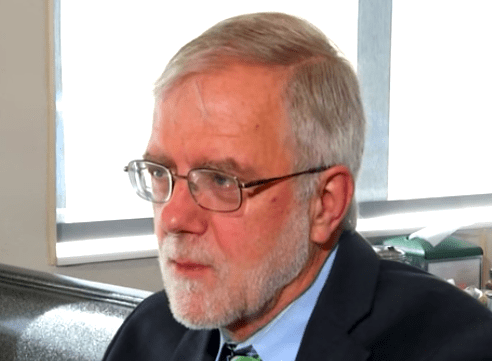
Green Party leader Howie Hawkins.
Green Party leader Howie Hawkins. (YouTube screenshot) 
As the 2020 presidential election approaches the Green Party faces the challenge of settling on a platform, choosing a candidate for president, and deciding its campaign strategy. In that context, Howie Hawkins, a contender for Green Party presidential candidate, recently published a clear and cogent essay titled “The Green Party Is Not the Democrats’ Problem.” It represents a precedent Green Party stance which may guide Green campaign policy. We agree with much, but find some ideas very troubling.
The stance offered in Hawkins’ article says “the assertion that the Green Party spoiled the 2000 and 2016 elections is a shallow explanation for the Democrats’ losses;” that in 2000, “the Supreme Court…stopped the Florida recount;” that many factors “elected Trump in 2016…including black voter suppression, Comey publicly reopening the Clinton email case a week before the election, $6 billion of free publicity for Trump from the commercial media, and a Clinton campaign that failed to get enough of its Democratic base out;” that the Electoral College “gave the presidency to the loser of the popular vote;” that most Greens are “furious” at a Democratic party “that joins with Republicans to support domestic austerity and a bloated military budget and endless wars;” “that the Green Party’s Green New Deal science-based timeline, would put the country on a World War II scale emergency footing to transform the economy to zero greenhouse gas emissions and 100% clean energy by 2030;” and that “the Green Party want(s) to eliminate poverty and radically reduce inequality“ including a job guarantee, a guaranteed income above poverty, affordable housing, improved Medicare for all, lifelong public education from pre-K through college, and a secure retirement;” and finally that the Green Party strategy “is to build the party from the bottom up by electing thousands to municipal and county offices, state legislatures, and soon the House as we go into the 2020s.”
We agree that many factors led to Democratic Party losses and that the Supreme Court was a big one as was the Electoral College, and we too are furious at Democrats joining Republicans in so many violations of justice and peace. Likewise, we admire the Greens’ Green New Deal and economic justice commitments, and also support a grassroots, local office approach to winning electoral gains.


So with all that agreement, why are we sending a critical open letter?
The stance the article presents, which may guide the Green campaign for president, says, “To hold all other factors (contributing to recent Presidential victories) constant and focus on the Green Party as the deciding factor is a hypothetical that is a logical fallacy because it assumes away a factual reality: the Green Party is here to stay.” However, our finding Green policy a factor in Republican victories in no way suggests that the Green Party should disappear. And our focus on factors within our reach to easily correct (for example, the Green Party role in contested states) is in fact sensible.
The stance also says “the Green Party is not why the Democrats lost to Bush and Trump,” but even if true, that wouldn’t demonstrate it won’t be why this time. In any case, let’s take Trump and Clinton, and see how Green Party policy mattered.
If Clinton got Jill Stein’s Green votes in Pennsylvania, Wisconsin, and Michigan, Clinton would have won the election. Thus, the Green Party’s decision to run in those states, saying even that there was little or no difference between Trump and Clinton, seems to us to be a factor worthy of being removed from contested state dynamics, just like the Electoral College is a factor worthy of being removed across all states.
We realize many and perhaps most Greens will respond that if those who voted for Stein in contested states in 2016 hadn’t done so, they would have abstained. We don’t know how anyone could know that, but for the sake of argument we will suppose it is correct.
Still, if these voters who preferred Stein did indeed erroneously believe that there was no difference between Trump and Clinton, surely to some degree that was a result of Stein refusing to acknowledge the special danger of Trump, and insisting that while it would be bad if Trump won it would also be bad if Clinton won, and refusing to state any preference.
Similarly, if these Stein voters did indeed erroneously believe that no harm could come from casting a vote for Stein in a close state in a close election, that also to some degree was surely a result of Green campaigning insisting that Green voters bore no responsibility for the 2000 election result.
And finally, if these voters did indeed erroneously believe that it was immoral to contaminate themselves by voting for Clinton or for a Democrat, surely in part that too was encouraged by Green campaigning that treated voting as a feel-good activity (“vote your hopes, not your fears”) as if fear of climate disaster, for example, shouldn’t be a motivator for political action.
The stance says, “The Green Party is not going back to the ‘safe states strategy’ that a faction of it attempted in 2004.” This means they will not forgo running in contested states where Green votes could swing the outcome as happened in Pennsylvania, Wisconsin, and Michigan in 2016, and they will not run in only 40 safe states where the outcome will be a foregone conclusion.
But why reject a safe states strategy?
Like Stein in 2016, some might claim doing so can’t help Trump win again or, in any case, that Trump’s re-election would not matter all that much. “He isn’t that much worse.”
We write in hopes that no one in 2020 will rationalize campaign actions by making such irresponsible and patently false claims.
And, indeed, in his recent essay, Hawkins instead claimed a safe states strategy “couldn’t even be carried out. It alienated Greens in swing states who were working so hard to overcome onerous petitioning requirements to get the party on the ballot. Keeping the party on the ballot for the next election cycle for their local candidates depended on the Green presidential vote in many states. It became clear that safe states was dispiriting and demoralizing because the party didn’t take itself seriously enough to justify its existence independent of the Democrats. Few people, even in the safe states, wanted to waste their vote for a Green ticket that was more concerned with electing the Democratic ticket than advancing its own demands.”
This claims there is a price the Green Party has to pay for a safe states strategy. Okay, let’s take that as gospel. Where is an argument that this price is so great that avoiding it outweighs the price everyone, including Greens, will pay for re-electing Trump?
We have no way to assess the claim that Greens would find it dispiriting to remove themselves as a factor that might abet global catastrophe via a Trump re-election. But wouldn’t Trump out of office much less Sanders or Warren in office not only benefit all humanity and a good part of the biosphere to boot, but also the Green Party? For that matter, weren’t more potential Green Party members and voters driven off by the party’s dismissal of the dangers of Trump than were inspired by it? Which grew more in the last four years, DSA or the Greens?
And weren’t the Greens in the late ’80s and early ’90s winning elections to city councils and other local offices across the country, consistent with a grass roots strategy, though for much of the past 20 years, they’ve largely abandoned local and state contests, devoting nearly all their attention to increasingly harmful races for president? Hawkins’ own exemplary races for Senate and Governor in New York state, and especially the Greens’ successful mayoral races in politically important places like Richmond, CA, as well as less visible ones like New Paltz, NY, were exceptions, but how many Greens have used their hard-won ballot access to run for Congress or state legislature? Might the massive focus on presidential elections mark a decline in prospects for the localist strategy, not an advance for it?
We are told, “Greens want to get Trump out as much as anybody” but how can that be if Greens would vote for a Green candidate, and not for Sanders, Warren, or any Democrat in a contested state knowing that doing so could mean Trump’s victory?
If during the 2020 election campaign, the Green candidate campaigns in contested states knowing that he or she might be winning votes that would otherwise have gone to Sanders or to Warren or whoever, causing Trump to win the state and win the electoral college, how could that possibly evidence wanting Trump to lose as much as anyone?
Indeed, if a Green candidate weren’t telling everyone who was a potential Green voter to vote for Trump’s opponent in contested states, how could that evidence that Greens want Trump to lose as much as anyone?
Let us put our question another way. It is election night 2020. The vote tallies are in. Which way would the 2020 Green candidate feel better? Trump wins and the Green candidate gets 250,000 votes across the contested states, more than enough for Sanders, Warren, or whoever to have won? Or, Trump loses and the Green candidate gets no votes in the contested states, but a bunch extra in other states as a result of having more time for campaigning there?
Greens tell Democrats “to stop worrying about the Green Party and focus on getting your own base out.” We agree on the importance of Democrats getting their base out, starting with nominating Sanders, or, at worst, Warren. But how does that warrant the Green Party risking contributing to Trump winning?
The stance asks, “So why are we running a presidential ticket in 2020 if our strategy is to build the party from the bottom up?” The stance answers, “Because Greens need ballot lines to run local candidates. Securing ballot lines for the next election cycle is affected by the petition signatures and/or votes for our presidential ticket in 40 of the states.”
Greens will pay a price for not running in contested states. Our advice to Greens would be to notice the infinitely bigger price that millions and even billions of people will pay for Trump winning.
The stance says “Greens don’t spoil elections. We improve them. We advance solutions that otherwise won’t get raised. We are running out of time on the climate crisis, inequality, and nuclear weapons. Greens will be damned if we wait for the Democrats. Real solutions can’t wait.”
But real solutions require Trump out of office. Real solutions will become far more probable with Sanders or Warren in office. Real solutions will become somewhat more probable even with the likes of Biden in office.
To conclude, is a Green candidate running for President after the summer really going to argue we shouldn’t vote for Sanders in contested states not just to end Trumpism but also to enact all kinds of important changes including urging and facilitating grass roots activism and thereby advancing Green program?
We offer this open letter in hopes of prodding discussion of the issues raised.


John Helmer: What President Putin Tries


by John Helmer, Moscow
  @bears_with

In law courts, justice must not only be done but be seen to be done. In politics, too. 
The problem with what President Vladimir Putin (lead image, right) announced in his Federal Assembly address this week, and what he did immediately after, is that things don’t look the way he says they should. 
The difference was written on Prime Minister Dmitry Medvedev’s face. He thinks Putin has destroyed the political forces of the candidate with the best chance of winning the presidential election of 2024 — himself. The businessmen and government officials who have depended on Medvedev are acknowledging this realization on the telephone. 
Kremlin photograph of the meeting between President Putin and Prime Minister Medvedev after the Federal Assembly speech. Posted at 1510, the Kremlin communiqué said “the discussion focused on the initiatives Vladimir Putin set out in the Address and the issues related to the implementation of its provisions.” Source:  http://en.kremlin.ru/
An hour after this picture was taken,  at a meeting with Putin of the assembled ministers at Government House (Kremlin term for White House), Medvedev announced: “as the Government of the Russian Federation we must give the President of this country an opportunity to make all the necessary decisions for this. Under the circumstances, it would be correct for the entire Government of the Russian Federation to resign in accordance with Article 117 of the Constitution.” 
He looked and sounded unconvinced that his exit was “correct”. 
The constitutional provision to which Medvedev referred is a notorious relic. Article 117 was created by President Boris Yeltsin after he used the military to crush parliament’s opposition in October 1993.  Several hundred people inside the White House were killed. 
The new constitution was voted two months later by the disputable margin of 58% in a disputable turnout of 54%.   Article 117 then gave the president the power to block a prime minister’s resignation; veto a vote of no-confidence in the government by the State Duma;  and the power to decide whether and when to dissolve parliament and hold new elections. 
In Putin’s speech on Wednesday,   he began his proposals for constitutional amendment with the announcement:  “We have overcome the situation when certain powers in the government were essentially usurped by oligarch clans.” Usurpation of power by Yeltsin at the expense of the Congress of People’s Deputies in 1993 was not explained then, nor since, by the operations of the oligarchs. They came later. In Russian public opinion, the oligarchs continue to be extra-constitutionally powerful today. The polls show Putin’s claim is not believed.
Source: Levada Centre, October 2017: https://www.levada.ru/ For analysis, read this
The proposals Putin has announced change the balance of power between the presidency and the parliament. But they also change the balance of power between the houses of parliament, and also between the central power in Moscow and the regions. The State Duma, according to Putin, will have the new power to appoint “the Prime Minister of the Russian Federation, and then all deputy prime ministers and federal ministers at the Prime Minister’s recommendation. At the same time the President will have to appoint them, so he will have no right to turn down the candidates approved by the Parliament.” This implies the State Duma will be able to exercise a veto over ministers’ performance with votes of no-confidence the president cannot override. This is not yet certain.  
Also unclear is who would prevail if the president decides to dismiss the government which holds the confidence of parliament. Putin said he proposes to keep “the right to dismiss the prime minister, his deputies and federal ministers in case of improper execution of duties or due to loss of trust.” The constitution is silent on the terms, improper execution and loss of trust. They are powder the president aims to keep dry for himself.    
The Kremlin has immediately convened what it calls a “working group on drafting proposals for amendments to the Constitution”. No elected constitutional convention; no constitutional assembly provided for in Chapter 9 of the present charter; no principle of representation; no decision or voting rules for the novel body. It was hand-picked by the President’s staff — “75 politicians, legislators, scholars and public figures”. The Kremlin has published photographs, but no list of the names yet.  
The oligarch class, as Putin calls them, is represented by Alexander Shokhin (centre picture above, left); the working class – to whom no one refers – is represented by the man seated by the Kremlin next to Shokhin, Mikhail Shmakov, head of the trade union federation. 
Noone in uniform is seated at the Kremlin table. The military appears to have one seat; that’s occupied by retired Army General Boris Gromov (above right), 76, now titled “Chairman of the Brothers in Arms National Veteran Public Organisation”. Gromov’s political career after the Army rules him out as representing the General Staff or the Defence Ministry. 
Putin’s proposals create a fork in the balance of power by assigning domestic policy-making, including the budget, to the parliament’s appointees to government; while reserving defence, military, and security powers, and their budgets, to the executive. “The president also exercises direct command over the Armed Forces and the entire law enforcement system. In this regard, I believe another step is necessary to provide a greater balance between the branches of power. In this connection, point six: I propose that the president should appoint heads of all security agencies following consultations with the Federation Council.”
This preserves the imbalance – Putin’s terminology — let’s say concentration of policy-making and enforcement powers in the Kremlin; it also guards the incumbent president during the transition between now and 2024,  as well as afterwards. “I believe,” said Putin, “this approach will make the work of security and law enforcement agencies more transparent and accountable to citizens.” The Russian public opinion polls are very sceptical.
The first test of what this step will mean in practice will be the names of the new ministers of defence, internal affairs, foreign affairs, the Federal Security Service, the intelligence agencies, and the two state law enforcement organs, the Prosecutor-General and the Investigative Committee. In the small print of Putin’s speech, he proposes to centralize authority even more than the present by reducing the power of regional authorities to control their prosecutors. “I am confident that a greater independence of prosecution agencies from local authorities would be beneficial for citizens regardless of the region,” Putin said. Public distrust of both federal and regional prosecutors, recorded in the polls, suggests otherwise.
Source: Levada Centre, October 2016: https://www.levada.ru/
The Putin scheme also creates a competing source of legislative power by expanding the State Council, hitherto a talking shop; and by expanding the powers of the Constitutional Court to rule, on the Kremlin’s application, against parliament, as well as against regional governors and regional parliaments.
The State Council in its last Kremlin session, December 26, 2019. In his speech on Wednesday Putin proposed to “cardinally increase the role of governors in decision-making at the federal level. As you know, back in 2000 the State Council was restored at my initiative, where the heads of all regions participate. Over the past period the State Council has proven its high effectiveness; its working groups provide for the professional, comprehensive and qualified examination of issues that are most important for people and Russia. I believe it would be appropriate to fix the status and role of the State Council in the Russian Constitution.” On Thursday he ignored the State Council by appointing a different group to consider the constitutional amendments. No Russian commentator has published the question, why. 
In theory, Putin is creating more checks and balances than have existed before. Differences of view and interest between experts, parties, factions, the military, and classes – Putin’s term – are inevitable and natural. The vote to adopt the proposals will, however, be an all-or-nothing one. “I believe it necessary to hold a vote of Russian citizens on the entire package of the proposed amendments to the Constitution of the Russian Federation. The final decision must be made only on the basis of its results,” the president concluded in his speech. 
This looks like a referendum, but Article 136 of the current Constitution is ambiguous. The 2008 amendments to the Constitution were adopted, not by referendum but by votes of the State Duma and the Federation Council. There has been no referendum under the present constitution. 
How much of the proposed scheme is a fine distinction of powers without a change in their  division?  Putin told Medvedev at the meeting with the outgoing ministers: “There is a clear-cut presidential block of issues, and there is a Government block of issues, even though the President, of course, is responsible for everything, but the presidential block includes primarily matters of security, defence and the like. Mr Medvedev has always been in charge of these matters. From the point of view of increasing our defence capability and security, I consider it possible and have asked him to deal with these matters in the future. I consider it possible and will, in the near future, introduce the position of Deputy Chairman of the Security Council. As you are aware, the President is its Chairman. If we need to amend the applicable law, I will do so soon and I want State Duma deputies to support this as well. We just need the lawyers to provide assessments on this account.” 
Sources in Russian business and government interpret Medvedev’s new job as a gold-plated watch — consolation prize for losing the presidential succession race. Sources are unanimous in judging what has happened to be the liquidation of the Medvedev faction. 
Politically, the rationale is obvious. Public disapproval of the government’s performance, and the stress which the ongoing US war is inflicting on Russia’s domestic growth, have been showing a consistent trend. 
It is equally clear that the Medvedev faction, and also the pro-American supporters behind Alexei Kudrin at the Accounting Chamber, German Gref at Sberbank, and Anatoly Chubais at the state high-technology conglomerate Rusnano, are the short-term losers of the reorganisation Putin has proposed. The short-term gainers are not so obvious. Sources among them ask why the Kremlin staff calculated that a renovation of the government ministers should be dressed up as a constitutional reform.
These sources suggest that on the sincerity test, Putin’s proposals will not be believed for what he says they are. They add they are encouraged, also hopeful,  that he is acting now to restrict the damage that faction-fighting over the succession can do over the next three years. Liquidating one of the factions has been an option advocated by many for some time. On the other hand, the sources point out that if Putin were sincere in his commitment to enhanced power-sharing with the parliamentary political parties, why sack the present prime minister now, and not wait for the State Duma to vote its approval for the new man under the new rules? This is a question which answers itself, most Russians think.
By the war test — how the proposals will affect the regime-change strategy of the US and NATO – the combination of constitutional plans and the replacement of Medvedev by Mikhail Mishustin (lead image, in car next to Putin) is judged to be no gain, no concession to the other side. Not yet.  
That leaves the poll test. To choose Mishustin to become the prime minister is the biggest surprise of the week, and a curious selection to win public approval. If Gogol were to use the name, he would be tagging its possessor with something like the caricature, “busy baker”, since to the Russian ear,  the roots of the word  suggest someone who makes his living mixing things, like a baker; and who is visibly busy at that work.  Mishustin himself likes to identify his recreation as ice-hockey.  On the rink he plays forward and back, but not goalie.  
Left: Mikhail Mishustin makes his nomination speech at the State Duma,  his debut as a national political figure. Watch the speech, which was read from a paper script and lacked direct eye  or any other personal contact with the deputies. They responded to the speech with brief,  tepid applause. Right: Mishustin in his hockey uniform.   
The Russian biographic record for Mishustin, records his long technocratic training in computer science and economics; his PhD was on tax administration. He first started in the state tax agency in 1998.
A 53-year old native of Moscow, Mishustin is reported to be part-Armenian by origin; his Soviet birth certificate may indicate that at birth one of his parents held Armenian nationality. If so, he would automatically hold Armenian citizenship.  According to Putin’s constitutional proposals, the prime minister and other senior officials may “have no foreign citizenship or residence permit or any other document that allows them to live permanently in a foreign state.”
A protégé of Boris Fyodorov in the Yeltsin-era finance administration, Mishustin spent a brief period, 2008-2010, working in the Moscow investment banking business of UFG Partners, first established by Fyodorov. By the time Mishustin arrived, the company was owned by Deutsche Bank and run by Charles Ryan, an American; Fyodorov died of a stroke a few months into Mishustin’s term at UFG. In April 2010, Mishustin returned to run the tax agency, and he has remained there for a decade. Tax evasion and  embezzlement of value added tax (VAT) fill the kompromat records which have been published about Mishustin over this period. 
Mishustin told the State Duma yesterday he is in favour of reducing the regulatory burden on Russian business. The Communist Party faction announced it would abstain from voting to confirm the prime minister because it was impossible to know what policies he stands for. Suspicion that Mishustin will try to cut social welfare benefits is widespread. The confirmation vote was 383 in favour; 41 abstentions; no one opposed. For the record of the Duma vote, read this
One oligarch vote of confidence in Mishustin has been announced. Vladimir Lisin (right), head of the Novolipetsk steel and coal-mining group, told a Moscow newspaper: “We evaluate Mikhail Mishustin’s work as head of the Federal Tax Service positively. Under his leadership, the service increased tax collection, virtually eliminated schemes used by unscrupulous businesses in competition, and reduced the number of on-site inspections several times by introducing a risk-based approach. Despite the fact that we had quite difficult debates, we always found a common
civilized solution.” 
Mishustin has appeared  several times before this week in Putin’s Kremlin office. most often to mark Tax Workers’ Day in November. In their meetings Mishustin’s recital of his agency’s performance was unexceptional. Putin said nothing out of the ordinary.   In the Russian photo archive for Mishustin, not one picture shows a smile on his face. A reluctant grin he managed for his last birthday, March 3, 2019, according to the Russian Ice Hockey Federation.  
Putin has selected factotums before, men whose technical expertise was their asset, along with their lack of political constituency and electoral ambition. Mikhail Fradkov was the first, between 2004 and 2008; Victor Zubkov the second, between 2007 and 2008. When Putin appointed them, they made no changes to the power ministries. Mishustin is the third in this line. If he announces the end of the long terms in office of Sergei Shoigu and Sergei Lavrov, and General Valery Gerasimov is replaced at the General Staff, then Putin is deciding much more than he has admitted so far. 

http://johnhelmer.org/president-putin-tries-greening-reduces-carbon-footprint-of-prime-minister-medvedev/


Chris Hedges: Democrats Have No Moral Authority on Impeachment


Chris Hedges: Democrats Have No Moral Authority on Impeachment

by  

"He obstructed us. He is trying to obstruct you. And he has violated the Constitution," Rep. Adam Schiff, D-Calif., thundered during his closing statement before the Senate Thursday evening. It was a powerful moment that belied an inconvenient truth about the impeachment trial of Donald Trump: Democrats ceded their moral authority in the case long ago.
As Truthdig columnist Chris Hedges argues in a new interview with "Rising's" Krystal Ball and Saagar Enjeti, the Democratic Party has been "selective" in its assessment of what rises to a constitutional violation, willfully ignoring a litany of crimes committed by the Bush and Obama administrations. "What are they?" he asks rhetorically. "Those would be nine illegal wars—wars are supposed to be declared by Congress; the war in Yemen; the wholesale surveillance begun by the Bush administration, exposed by Edward Snowden, in direct violation of the Fourth Amendment; [violations of] the Foreign Intelligence Surveillance Act, which makes it a crime for the government to surveil any U.S. citizens; the global programming of extraordinary rendition, kidnapping and torture; [and] the decision by the Obama administration to reinterpret the 2002 Authorization to Use Military Force Act to give it the right to act as judge, jury and executioner and assassinate U.S. citizens."
Later in the segment, Hedges claims the Democratic Party "engages in a form of demagoguery every bit as pernicious as the demagoguery that the Trump White House does." While the latter targets Muslims and undocumented immigrants, the former blames Russia for the results of the 2016 election rather than admit its complicity in the neoliberal policies that enabled Trump's victory. "Democrats are also living in an alternative reality," he says.
Watch the interview in its entirety:


vrijdag 24 januari 2020

Davos Has a Credibility Problem


Davos Has a Credibility Problem


DAVOS, Switzerland — Salvador Gómez-Colón, a teenage environmental and humanitarian activist from Puerto Rico, started the day Tuesday by telling business and government leaders that they didn’t have much credibility.
“We’re tired of too much coming to Davos and going back and not doing anything,” Mr. Gómez-Colón said. “We’re tired of empty promises, we’re tired of too much talk.”
Mr. Gómez-Colón’s remarks echo those of critics of Davos throughout history, including the anti-globalization protesters who took to the streets in a violent demonstration in 2000, decrying the gathering as a “meeting of murderers.”
But on the 50th anniversary of the World Economic Forum in Davos, the annual gathering of about 3,000 business, government, and nonprofit leaders to discuss global issues in an Alps ski resort town, the critique carries extra heft.

New survey data from the public relations company Edelman indicates that 56 percent of people globally believe capitalism does more harm than good. Nearly 50 percent of those surveyed said “the system is failing me.” Just 31 percent of respondents said they believed businesses would “pay everyone a decent wage,” though 82 percent said that was the duty of businesses. Trust in government is even lower than in business. “It’s a paradox of trust,” said Richard Edelman, the firm’s chief executive. “Economic circumstances are quite good and trust is down, and fears are very high.” 
The World Economic Forum’s own research released this weekblamed entrenched inequality across the globe for “a growing sense of unfairness, precarity, perceived loss of identity and dignity, weakening social fabric, eroding trust in institutions, disenchantment with political processes and an erosion of the social contract.”
“We cannot deny that there is a general loss of trust and confidence of people,” acknowledged Klaus Schwab, the forum’s founder and executive chairman.
Against that backdrop, it’s easy to understand skepticism about this gathering that includes more than 100 billionaires, many of whom arrived by private airplane. Despite efforts by the forum to entice and cajole organizations to bring more women, just 24 percent of attendees are female. Business leaders aren’t running toward discussion of pointed topics related to corporate responsibility, like tax avoidance. The author Anand Giridharadas has called Davos a “carnival for those who have rigged so many countries around the world,” and recommended that it be canceled.
Mr. Schwab has framed this meeting around the theme of stakeholder capitalism, a shorthand for business concern for factors like workers and communities and not just their shareholders. To his credit, his response to the trust problem is to try to focus the proceedings on specific efforts around the environment and corporate responsibility. “The annual meeting will be a ‘do show,’ not a talk show,” he vowed on the main stage on Tuesday morning. Among the initiatives showcased here this week are a “trillion tree” project aimed at boosting reforestation and an effort to better audit companies’ social and environmental practices. The forum has a list of some concrete actions that resulted from its 2019 meeting.
But the Davos business community’s increasing acceptance ofPresident Trump, who doesn’t believe in climate change and withdrew the United States from efforts to fight it, doesn’t help. Mr. Schwab diminished the forum’s credibility when he stood shoulder-to-shoulder with Mr. Trump on Tuesday and declared, “All your politics, certainly, are aiming to create better inclusiveness for the American people.”
Already there are concerns that new lower estimates for global growth by the I.M.F. could undermine some corporate commitment to climate-change initiatives. “The latest signs of economic fragility will force global leaders and chief executives to tackle the more immediate challenges of restoring growth and confidence, rather than focusing on how to address climate change,” concluded The Financial Times.
Does it matter if skepticism of the business and political elite and capitalism is mounting again? And does it matter if Davos is perceived to be just an expense-account-fueled frenzy of business deal-making and platitudes? Did most people — the constituents of the people here, workers and voters and their children — really think it was anything other than that?
At the very least, it deepens critics’ convictions that business and government leaders can’t be trusted to deal with the world’s most pressing problems.
“You say: ‘Just leave this to us. We will fix this, we promise we won’t let you down,’” the teenage climate activist Greta Thunbergtold attendees. “And then, nothing. Silence. Or something worse than silence. Empty words and promises which give the impression that sufficient action is being taken.”
For companies to convince people around the world, especially the young, that capitalism is viable, business leaders need to show that they’re making hard decisions. The elite gathered here may think that they are making changes, but others don’t think they are doing enough when it comes to the environment and social responsibility. It’s a matter of degree, and speed.
“Unless this crowd is willing to give up some power and share it, it’s not going to get better,” said Christy Hoffman, general secretary of the UNI Global Union, a global federation of trade unions.
Maybe there’s hope. At mealtime discussions around the town, that sort of behavior — making the right decision even when it’s not good for you personally — is being praised more generally as a sign of strong leadership.
“The question we should ask ourselves every year is ‘What decisions have I made this year that have sacrificed my own personal advantage and gain for the gain of the institution?’” said Ngaire Woods, the founding dean of the Blavatnik School of Government at Oxford University. “If you’ve come up with zero, you’re probably off base.”
In its embrace of both Mr. Trump and Ms. Thunberg, the Davos set seems to want it all: lower taxes and a climate-friendly agenda. But that dance is increasingly straining the patience, and trust, of the rest of the world.


Joods Zionistische Leugens

  Red Collective @RedCollectiveUK Don't take my word that Israel killed the majority of its own civilians on October 7th. Here's Is...