Zoeken in deze blog 🔎🔎

zaterdag 27 oktober 2018

The Blight of Fracking


TD ORIGINALS

The Blight of Fracking Seeps Into America’s Foundations
Farrar, Straus and Giroux
“Amity and Prosperity: One Family and the Fracturing of America”
Purchase in the Truthdig Bazaar
“Amity and Prosperity: One Family and the Fracturing of America”
A book by Eliza Griswold
I was raised in a village named for an ideal of friendship, or as a sign at the edge of town puts it, “friendly relations.” Amity, Pennsylvania, is perched on a canted ridgeline; a tight cluster founded in the era of the American Revolution when my mother’s stone house and other still-standing original buildings were put up within a rugged frontier forest.
My hometown is now the subject of Eliza Griswold’s new book, “Amity and Prosperity: One Family and the Fracturing of America.” The place she depicts is caught in an uneasy dance between industry and agriculture, by turns shabby and bucolic, conservative and insular, equally influenced by its proximity to Pittsburgh and West Virginia. Some places are tidy; others have old Pepsi machines on the porches.
We lived there because in the early 1970s, my mom got a job teaching art at a small nearby college, and she and my dad decided to buy and fix up the stone house, an Amity landmark. They both had long hair and had been to college; they liked books and jazz and PBS, and they didn’t go to church.
The place where I grew up, but never quite fit in, went through a significant historical shift in the last decade as the natural gas boom laid down a web of heavy industry over the farmland of my formative years. As a center of the business, Washington County—which includes Amity—now hosts more frack wells than any other county in the state: 1,146 of them, which is one and a third for each of its hilly, green square miles.
Click here to read long excerpts from “Amity and Prosperity” at Google Books.
One of these was drilled in 2012 a few hundred yards from where my dad lives. He designed his house with windows that framed the choicest views. Now the crest of the near hilltop has been amputated, making a flat place for a well to sit.
Based on years of immersive reporting, Griswold’s expertly constructed book follows the legal battle that ensued when a single frack site began to affect three neighboring families. Her heroes are the Haneys: Stacey, a nurse and single mom, and her two kids, Harley and Paige. When we meet Harley, he’s a 14-year-old hobbled by a mysterious ailment, a stomach complaint bad enough to have kept him out of school for most of seventh grade.
By the end of the book, his mother’s dogged legal fight against Range Resources, the gas company whose facilities have poisoned the Haneys’ water and air, has reached its conclusion, and nearly eight years have passed during which the family has barely skirted homelessness and struggled to regain its health.
It’s a sickening story, and Griswold—the kind of reporter who can convince a subject to let her reveal the message inside a Valentine card, and who notices what color somebody’s refrigerator is—painstakingly builds the narrative amid its historical and social context.
Stacey Haney could not be a more perfect protagonist for Griswold’s narrative. The daughter of a laid-off steelworker father and a housekeeper mother, she strives to offer her own children a middle-class lifestyle. Yet she holds onto a thread that connects her to the older way of life in Amity, the agrarian way that binds people to the land; she wants her kids to grasp that thread too, through raising livestock and hunting.
Her grit and hard work may have allowed her to succeed in her goals if she hadn’t lived atop the Marcellus Shale, which harbors an ocean of natural gas, the largest source in the United States. Her burdens come to include not only the everyday ones shared by single mothers everywhere, but also a host of degrading circumstances caused by a frack site uphill from her farmhouse. She must endure watching her children be deposed by industry lawyers, living in a camper in her parents’ driveway, delivering flyers door-to-door to advertise that she’s looking for a home.
The Haneys are far from the only family to suffer fracking-related pollution; more than 4,000 Pennsylvanians have formally complained to the DEP about tainted drinking water. In a nearby county, the state Department of Environmental Protection has also reported a link between frack sites and minor earthquakes.
It’s impossible, as a reader, not to empathize with Stacey, as Griswold herself clearly does. Yet some of the Haneys’ neighbors and even relatives viewed her with suspicion.
For example, one of her cousins was making money from the gas boom, and his son worked for Range Resources. As for Stacey’s story of sick kids and dying animals, he doubted it was really true. In Griswold’s words, “[H]e just thought it sounded extreme.”
* * *
For me, reading Griswold’s book has the temporary immersive interest of any well-told story, but that interest is mixed with the heaviness of permanent firsthand knowledge. My heart jumps at all the familiar places, creeks, and roads, and the people who I know, remember, were friends of my brothers, or taught in my school district.
But I’m reading the book from another state, literally and figuratively. I haven’t lived in Amity since 1995. But when Griswold describes one resident, she exposes the essential divides that I remember.
[Jason] Clark bristled at environmentalists and reporters who assumed they understood how corporations were taking advantage of rural Americans. The idea that people who lived on the front lines of Frackistan were somehow being duped by the shadowy forces of industry made him chuckle in anger. […] And the problem wasn’t just the coastal elite, it was urban people everywhere. “People who live in Pittsburgh or Philadelphia are bottom-feeders who don’t want to know where their meat or their energy comes from,” he told me.
I went to high school with Jason Clark, and his words ring a deep bell for me—the mistrust of outsiders, the stubborn we-don’t-need-your-pity independence. But my life has carried me inexorably away from that viewpoint.
We’ve all become more aware of the United States’ cultural divides—the “fracturing” of Griswold’s title—in the last few years. Now that I live in this other world, I can hear both the toughness of Clark’s words and the blind spots behind them, too.
* * *
The first time I noticed a gas well near my mother’s house—around 2007—I was aghast. “How could someone soil their own nest like that?” I asked. All I could see at that moment was the despoiled hillside, the noise and light pollution, the risks to the groundwater: an industrial blight on a formerly beautiful farm.
I didn’t understand until later that the royalties a landowner can earn by signing a lease with a gas company were, for many southwestern Pennsylvanians, life-changing. My dad pointed out to me a number of big new barns being built in the cattle pastures and cornfields. People were catching a break from the economic straits they’d always labored under: working jobs in town to be able to hold on to family land, jobs whose limits were often defined by their own lack of education and the regional history of industrial decline. As I was growing up in Amity, the withdrawal and collapse of the steel and coal industries was one of the givens of life. Their absence was a presence. It was on everyone’s tongue; it was a master narrative about life and work and fortunes. It manifested in ruined corners of the landscape, in abandoned towns and buildings, in hollowed-out downtowns.
You might think that Pennsylvanians would know better than to invite another in this long line of extractive industries, which includes the oil boom-and-bust cycle of the late 1800s. But here, where the Rust Belt meets Appalachia, fracking has successfully insinuated itself by offering not only jobs—which coal and steel also did—but real wealth. And it has come down to individual landowners, sitting at tables across from gas company representatives, signing papers that can significantly lift their personal fortunes.
My dad has a story about running into someone he knew in the grocery store, who told him the gas-royalty checks arriving in his mailbox every month were “so big he didn’t know what to do with them.” There are plenty of more modest stories too, about people who could finally get health insurance or buy, like Jason Clark, better pigs for breeding stock. When the environmental health of an entire region comes down to many individual economic decisions, maybe it’s inevitable that the environment will lose.
That’s especially true because refusing to sign a lease does little or nothing to stop fracking. My dad signed, although the wellpad is actually on his neighbor’s land; had he not signed, he would simply have forgone the money to be made from a well that would be built regardless, bringing with it noise and health risks. Also, nothing would have stopped the operators from drilling horizontally to remove the gas from under his house.
Stacey Haney, too, signed a lease with Range. One farm at a time, one family at a time, fracking has conquered the land. Washington County was punctured by 209 new wells in 2017 alone, and pipelines to connect them now crisscross the hills under broad stripes of clear-cut land. One might argue that people could refuse to sign as a moral stance, a kind of boycott. But anyone making that argument—which, in essence, is a request that already poor people martyr themselves for the sake of the common good—would likely be viewed as an out-of-touch elitist, a privileged meddler.
* * *
Fracking is where loving Amity becomes akin to loving a self-destructive addict. It’s grieved me to come home and see this dark machinery dotting the landscape of my childhood, the ground itself shoved aside to make way. Not only through my dad’s windows but around the corners of little tar-and-chip roads, on hilltops and in bottomland, loom the incongruous gashes and bawling water trucks and lanky drill rigs. Well sites form a thicket on the map.
My first thought about Griswold, when I learned of the existence of her book, was a fairly standard Amity reaction, namely: “What does that carpetbagger know about my town?” But her relentless, measured narration helped me understand my own blind spots—that sadness over ruined views is a kind of class privilege, the outgrowth of a particular stance toward the land. Rather than working it, I’ve been used to looking at it.
In exactly the same way, it’s a privilege for me to be able to stand back from the culture and economy of my hometown and regard it from a distance. I didn’t know until I left, for example, what a thriving downtown looked like, or that postindustrial decay isn’t universal or inevitable. And I didn’t fully perceive (though I’d always keenly sensed) the local ambivalence toward education, a trait that surely has not helped the region navigate this latest corporate incursion.
Nonetheless, to concede that I couldn’t blame individual landowners for the blight of fracking felt to me like a dead end. If every person who signed a lease had sound personal reasons to do so, then every gas well is none of my business, and no local person can be held responsible for what’s happened to the locality.
In the end, a ruined landscape cannot be a solution. The common wealth of Pennsylvania consists of, and is embodied by, its land. Air and water—and aesthetics too, the joy one takes in the environs—are impossible to individually own. They are shared assets, and therefore shared responsibilities.
* * *
For years, even as Stacey Haney was suing Range, the corporation made nice with an annual donation of $100 to her children and other 4-H members. In this calculated gesture, Range role-played the part of good neighbor. And Stacey upheld her own, genuine idea of courtesy when she had her kids write thank-you notes for these gifts, to the company that was, meanwhile, poisoning their home.
It is a tragedy when the old values, based in agrarian stewardship and friendly relations, are made absurd by economic pressure.
Fracking may have lined some local pockets for a time, but history tells us the bust will come. And then Stacey Haney’s kids and all the other young people of Amity will inherit a place whose common wealth, and neighborliness, has been eroded that much more.
Griswold’s brilliant choice is to focus tightly on a small group of residents and let the details of their predicament speak for themselves. Thoroughly reported and tightly paced, “Amity and Prosperity” is an essential document of the region’s latest go-round with the riches underfoot.
Erika Howsare is a poet and journalist who lives in Virginia and blogs at erikahowsare.com. Her second book, “How Is Travel a Folded Form?,” was published in August by Saddle Road Press.

Liberals as Our Biggest Cheerleaders for War


TD ORIGINALS

Some of Our Biggest Cheerleaders for War Are Not Who You Think

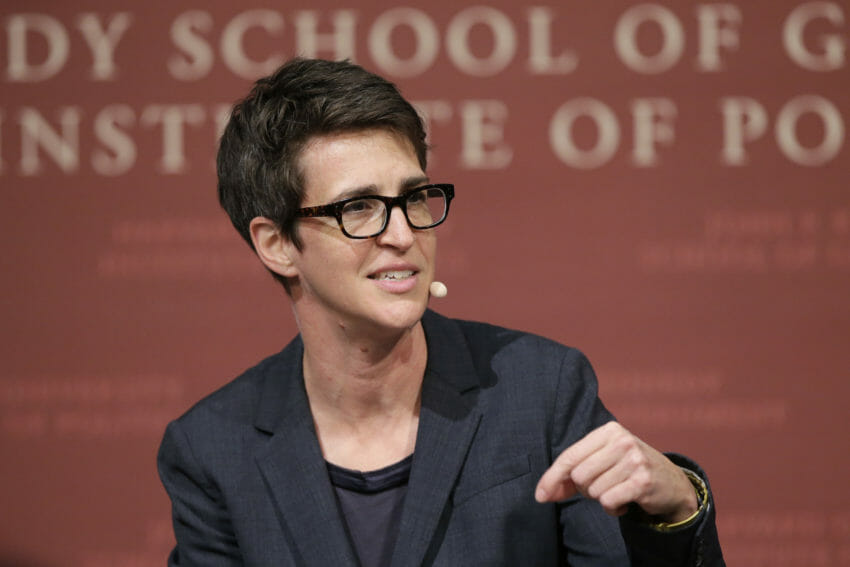
MSNBC television host Rachel Maddow moderates a panel at the John F. Kennedy School of Government in October 2017. (Steven Senne / AP
Earlier this month, the United States celebrated a dubious anniversary. On Oct. 7, 2001, President George W. Bush invaded Afghanistan, marking the beginning of Operation Enduring Freedom—a quagmire that continues to this day under the code name Operation Freedom’s Sentinel. The war is now the second longest in American history, next to Vietnam, and as Maj. Danny Sjursen noted in a recent essay for Truthdig, “teenagers born after 9/11 will begin to join the military and, eventually, fight” in its battles. Yet despite this, or perhaps because of it, the conflict remains out of sight and out of mind for an overwhelming majority of Americans.
Lyle Jeremy Rubin refuses to remain silent. A Ph.D. candidate, former U.S. Marine and member of About Face: Veterans Against the War, he contends that the public’s poor understanding of the conflict is matched only by that of the country’s political and media elite. Rubin has grown especially disillusioned with liberals and Democrats whose purportedly peaceful politics have proved to be anything but. As he tells Robert Scheer, “Celebrated commenters like Rachel Maddow and Lawrence O’Donnell fail to cover America’s ongoing wars and the roles some of their favorite guests have played in expanding them.”
In the latest episode of “Scheer Intelligence,” Rubin expounds on a range of topics including progressive media and the corrupting influence of arms dealing in U.S. foreign policy. “I mean we are by far the biggest arms dealer in the world,” he says. “And a lot of the enemies, the official enemies that our government has, [were] in one way or another created by these arms deals. … We’re making a lot of money by selling [Saudi Arabia] arms that are being used in a genocide in Yemen. And the discussion’s just nowhere to be found.”
Rubin also examines the recent murder of Washington Post writer Jamal Khashoggi, and how the Trump presidency has laid bare the true nature of the U.S.-Saudi relationship for all the world to see, voluntarily or not. “This is where I think Trump was right when he talked about why the United States wasn’t going to do much in response to the assassination of the Saudi Arabian journalist,” he continues. “There’s a lot of jobs on the line when it comes to these arms deals.”
Finally, Rubin explores what it means to be a patriot with an unabashed authoritarian in the Oval Office—one who regularly targets professional athletes for refusing to stand during the National Anthem: “Veteran friends I know, both on the left and the right … [are all] somewhat disgusted by the way that [they’re] used as political props.”
Listen to his interview with Robert Scheer below:
Robert Scheer
Editor in Chief
Robert Scheer, editor in chief of Truthdig, has built a reputation for strong social and political writing over his 30 years as a journalist. His columns appear in newspapers across the country, and his…
Robert Scheer
NEWS

Rachel Maddow, Surging MSNBC Host, Has Surprising Jewish Roots

Rachel Maddow, the liberal MSNBC host, comes from a family of practicing Catholics. But that’s not the whole story – she has one paternal Jewish grandparent from modern-day Lithuana.
Maddow, who now anchors one of the highest rated programs in cable news, has a hodgepodge of European heritage. Her mother is from Canada and mostly descends from English and Irish stock.
On her father’s side, her grandmother is of Dutch extraction – with her husband as the Jewish link in the chain, and also the source of the Maddow family name.
Maddow is of course an Anglicization, though - the original surname is said to have been “Medwedof.”
Maddow is coming off a great week – one of the first in which she beat Fox News in the 9 p.m. time slot when her show airs. The Stanford University alum and Rhodes scholar started on the network in 2008. She lives in New York with her partner Susan Mikula.
Contact Daniel J. Solomon at solomon@forward.com or on Twitter @DanielJSolomon


Soros


Soros & Zaharoff

OfferbeeldHet zou de titel kunnen zijn van een oud ‘TinTin’ verhaal, ‘Kuifje, en de kooplieden des doods; Soros en Zaharoff’. Sterreporter Kuifje en zijn hond Bobbie op avontuur in het politiek onrustige Zuid-Amerika waar hij verwikkelt raakt in het onoverzichtelijke verhaal van pro- en contra, van goud en olie, in strijd om macht en bezit, om delfstof en diefstal en van handelaren des doods.
Bijzonder genoeg is fictie en werkelijkheid nauw met elkaar verweven en is in het verhaal ‘Kuifje en het gebroken oor’ een directe link gelegd naar de illustere economische intrigant en agent-provocateur Basil Zaharoff.
Daarin heeft de als Manel Sahar (Basil Zaharoff)in het Joodse Ghetto van Wilkomir (Rusland) geboren ‘Koopman des Doods’ een gelijke rol als hij in werkelijkheid vertolkt en wordt hij letterlijk en figuurlijk zo neergezet als wat hij is, een over lijken gaand on-mens, a-moreel, on-ethisch, manipulatief en emotioneel infantiel. Hij vergaard miljoenen ten koste van miljoenen, is een belangrijke initiator en spil in tal van oorlogen tot aan WOII toe en draagt zorg voor levering van elk denkbaar vernietigingstuig aan elke strijdende partij. Als dank voor verdienste verleende het Engelse Empire hem de titel ‘Sir’ en stierf als een der rijkste mannen ter wereld in 1936, aan de vooravond van de Spaanse Revolutie, een massaslachting waarvan hij het dodelijke zaad had ingezaaid.
In 1930, zes jaar voor zijn dood, zag in het Hongaarse Budapest zijn opvolger het levenslicht. In het Joodse Ghetto werd Georg Soros als György Schwartz geboren. Een man, behept met gelijksoortige kwaliteiten als Zaharoff, een man van bijzonder geslepen kaliber, een herboren ‘Koopman des Doods’ die als beursspeculant en ten koste van miljoenen zichzelf met miljarden verrijkte. Een vermogen dat hij tot op vandaag op een schimmig misleidende en bedrieglijke wijze inzet om de wereld en haar bewoners te herscheppen tot een nieuw economisch wereldrijk waar wereldburgers tot slaven worden gedegradeerd om de machthebbers te dienen en te verrijken. Voor velen een on-voorstelbaar, niet voor te stellen gruwelscenario.
Het is de hand van Soros die de aarde bloedrood kleurt, het is zijn vehikel ‘Open Society Institute’ waarmee in de afgelopen decennia in meer dan 60 landen in het Midden Oosten, Centraal Azië, Oost Europa, (Zuid-) Afrika en Latijns Amerika de politiek ten nadele van de burgers is beïnvloed. De Oranje Revolutie in de Oekraïne en de Rozen Revolutie in Georgië zijn als OSI-wapenfeiten te noemen, de Arabische Lente waarin ten koste van ontelbaren de politieke situatie naar eigen gewin herschikt is, de huidige strijd in de Oekraïne, de machtsstrijd in Syrië, de onrust in Europa. Wapens, niet alleen in de vorm geschut of munitie maar ook in vorm van economische ontzetting, honger, ellende en maatschappij- en samenlevingen verstorende en destabiliserende migrantenstromen van vele miljoenen.
De door Soros zo bewonderde wetenschapsfilosoof Karl Popper waarschuwde met name voor dit soort wereldverbeteraars, individuen die andere en eigen voorstellingen en definities van het paradijs hebben en dit willen en zullen doordrukken ten koste van anderen:
Jeder Versuch, das Paradies auf Erden zu installieren, produziert die Hölle”.

Het Cynisme van The New York Times


Vandaag, zaterdag 27 oktober 2018 bericht de 'International Edition' van The New York Times breeduit op de voorpagina over wat het dagblad 'Saudi Arabia's tragic war' noemt, een genocidale oorlog waaraan de westerse mainstreammedia, met de Times voorop, nauwelijks enige aandacht aan besteedde. Waarom dan nu wel? The New York Times stelt het volgende:

The devastating war in Yemen has gotten more attention recently, as outrage over the killing of a Saudi dissident in Istanbul has turned a spotlight on Saudi actions  elsewhere. 


Wacht even, wat staat daar nu precies? Ik herhaal de formulering:

The devastating war in Yemen has gotten more attention recently, as outrage over the killing of a Saudi dissident in Istanbul has turned a spotlight on Saudi actions elsewhere.


Tja, ik heb het niet verkeerd gelezen. In al zijn morbiditeit laat The New York Times zijn geschoolde 'liberal urban elites' weten dat als Jamal Khashoggi niet aan stukken was gehakt door Saoedische huurmoordenaars, de Times geen 'schijnwerper' zou hebben gericht op de genocidale  bloedbaden die Saoedi Arabië al drie jaar lang in Yemen aanricht. Dit is de impliciet waarheid van de berichtgeving van de westerse corporate media. Het spreekt voor zich dat deze 'verklaring' geen echte verklaring is voor het verzwijgen van genocide. Het regime in Riyadh is de grootste afnemer van Britse en Amerikaanse wapens. Het is een miljardenhandel, en daarom zwegen mijn collega's van de commerciële media hierover. Al enige jaren staat Saoedi Arabië op de derde plaats van de 'Top 15 Defence Budgets' die jaarlijks door   de Stockholm International Peace Research Institute wordt opgesteld. Met bijna 70 miljard dollar in 2017 spendeerde het Saoedische koninklijke regime meer aan bewapening dan de Russische Federatie en bijvoorbeeld Duitsland, dat een schamele 44 miljard uitgeeft. Wat betreft het  Bruto Binnenlands Product torent Riydh met tien procent boven alle andere landen op aarde uit, meer dan vijf keer hoger dan dat van China. 

Het is vanwege deze handel dat The New York Times tot nu toe gezwegen heeft. De 'vrije pers' weet maar al te goed waarover zij wel en niet kan berichten, en wanneer. Wat is er nu dan veranderd? Wel, de haat tegen president Trump, die goed zaken deed met  de Saoedische koninklijke familie, is zo groot dat de liberals nu tijdelijk kritisch kunnen zijn over de Amerikaanse wapenverkopen. Tijdelijk, dat wel. Tot zij zelf weer aan de macht zijn, want tussen Trump en de Democraten bestaat geen wezenlijk verschil zodra het de buitenlandse politiek betreft. Het draait om grondstoffen en markten. Vandaar dat zowel Democratische als Republikeinse Congresleden al langere tijd bereid zijn om tenminste de helft van de Federale begroting, waarover zij kunnen beschikken, aan het machtige militair-industrieel complex besteden.

VPRO-journalist Chris Kijne prijst The New York Times nog steeds als ‘de beste krant van de wereld.’ Op zijn beurt beweerde de voormalige adjunct-hoofdredacteur van de Volkskrant, Arie Elshout, dat 'feit en commentaar nergens zo tastbaar [zijn] gescheiden als bij The New York Times.'


Amnesty International: YEMEN 2017/2018 'The Saudi Arabia-led coalition supporting the internationally recognized Yemeni government continued to bomb civilian infrastructure and carried out indiscriminate attacks, killing and injuring civilians.'


vrijdag 26 oktober 2018

Roel van Duijn en Psychiater Esther van Fenema

De interviewster van oud Provo en Kabouter Roel van Duijn in Café Weltschmerz was de viool spelende psychiater Esther van Fenema.  Nadat Roel van Duijn haar had verzekerd geen anarchist meer te zijn, maar nu van de macht eist dat zij ingrijpt door 'de weg' te 'wijzen naar de redding,' van de gehele mensheid, leek zij diep getroffen. Zo diep dat zij onmiddellijk Van Duijn een hart onder de riem stak door te verklaren:

wat ik heel bijzonder vind is dat je het vermogen hebt om je te ontwikkelen en je aan te passen aan inzichten die je in de loop van je leven hebt opgedaan. Dat kunnen niet heel veel mensen.  

Volledigheidshalve moet ik hierbij opmerken dat deze softe benadering van een draaikont als Roel van Duijn, die voorheen het 'klootjesvolk' had willen redden van het vernietigende conformisme, door ditzelfde 'klootjesvolk' veel meer geapprecieerd wordt dan de harde confrontatie van een kritische journalist als ik. Het poldermodel heeft onvermijdelijk tot geestelijke corruptie geleid onder een groot deel van de Nederlandse bevolking, inclusief de intelligentsia. 

Desondanks vrees ik dat de opmerking van psychiater Van Fenema als zouden 'niet heel veel mensen' zich kunnen 'aanpassen' aan nieuwe 'inzichten,' een verkeerde diagnose. De overgrote meerderheid van de massa doet niets anders dan zich juist permanent 'aanpassen' aan de overtuigingen van -- in dit geval -- de elite, 'inzichten' die het volk via de 'corporate media' elke dag weer tot vervelens toe worden ingepeperd. Esther van Fenema toonde zich een ware psychiater, die met het oog op haar inkomen en aanzien, het moet hebben van aanpassing aan de gangbare mores om de patient weer optimaal te kunnen herintegreren in de dwangmatige onverzadigbaarheid van de massamaatschappij. Niets bevredigt zo als het helpen van degene die 'de weg' is kwijtgeraakt. Vandaar ook dat de rol van goeroe en psychiater bij het D'66- en Groen Links-deel van de Nederlandse bevolking nog steeds zo hoog in aanzien staat. 

Toch blijft er een probleem bestaan: wat is er mis gegaan met Roel van Duijn? Hoe is zijn radicale omslag van extreem-links naar extreem-rechts te verklaren? Ik zeg met nadruk extreem-rechts, mede omdat de oud-anarchist nu pleit voor een gewapend conflict met de Russische Federatie. Hij is daarmee een 'loose cannon' geworden. Dat overal ter wereld de macht niet deugt, is algemeen bekend.  Ik deel dan ook de opvatting van Lord Acton, die in de tweede helft van de negentiende eeuw erop wees dat 'Every class is unfit to govern,' en wel omdat 'Power tends to corrupt, and absolute power corrupts absolutely.' 

De vraag is of  de corruptie van de westerse macht minder zal worden wanneer mainstream-opiniemakers, die pleiten voor een confrontatie met de macht in Rusland, hun zin krijgen? Ik denk van niet. Integendeel zelfs, het is algemeen bekend dat gewapende conflicten alleen maar tot nog meer corruptie leiden, vanwege het simpele feit dat een -- altijd -- chaotische oorlog onvermijdelijk tot 'absolute power' leidt van militairen en politici, en nogmaals: 'absolute power corrupts absolutely.' 

Vandaar dat ik het 100 procent oneens ben met Roel van Duijn wanneer deze gestoorde persoonlijkheid oproept de 'strijd' aan te gaan met Rusland en hij zonder enig bewijs al een week na het neerstorten van de MH17 strijdlustig in Trouw verklaarde: 

De harde werkelijkheid is dat wij ontkennende daders zullen moeten ontmaskeren, berechten en sanctioneren.

Het gaat nu om de bestrijding van een oorlogsmisdaad en het is tijd om alle beleefdheid te laten varen. Om te voorkomen dat zij nog veel meer onschuldige slachtoffers kunnen maken moeten wij alles op alles zetten om Oekraïne te steunen in zijn strijd tegen de moordenaars van onze kinderen, onze wetenschappelijke onderzoekers, onze vakantiegangers.

Nu is hun strijd onze strijd. 


In dezelfde Trouw kwam Roel van Duijn, donderdag 11 december 2014, met de volgende beschuldiging:

Westerse leiders reageren te tam op felheid Poetin

Opnieuw zonder enig concreet bewijs verklaarde de 'aangepaste' Roel van Duijn ditmaal dat Rusland 'oorlogspropaganda' bedrijft. Van Duijn suggereert dat Moskou uit is op een gewapend conflict met de NAVO, waarvan de lidstaten bij elkaar dertien keer meer aan zogeheten 'defensie' uitgeven dan Rusland. Hier betreden wij het rijk van de waanzin, waarin geen logica bestaat, en de wet van oorzaak en gevolg niet bestaat. Het dagblad Trouw en de rest van de westerse mainstream-pers steunt de waanzin alleen al door de gekte te publiceren. Letwel, vandaag bijna vier jaar later,  is er nog steeds geen rechterlijke uitspraak, en zijn er dus nog steeds geen onomstotelijke bewijzen dat Rusland de dader is van het neerhalen van dit verkeersvliegtuig. Tegelijkertijd zijn er talloze aanwijzingen die de aanname dat Rusland de dader is, weerleggen. Desondanks laat Trouw Roel van Duijn onweersproken verklaren dat de Russische 

propaganda zelfs [heeft] bereikt dat een flink deel van de Europeanen, tegen alle feiten in, meent dat de westerse media de arme Poetin demoniseren,

 alsof er dus al sprake is van keihard bewijsmateriaal dat de president van de Russische federatie persoonlijk verantwoordelijk is voor wat Roel van Duijn 'een oorlogsmisdaad' noemt.  Van Duijn stelt op hoge toon dat het Westen met zijn NAVO zou moeten 'voorkomen dat zij (de Russen. svh) nog veel meer onschuldige slachtoffers kunnen maken' en 'wij' dus 'alles op alles [moeten] zetten om Oekraïne te steunen in zijn strijd tegen de moordenaars van onze kinderen, onze wetenschappelijke onderzoekers, onze vakantiegangers.' De voormalige anarchist zet chauvinistische sentimenten in omdat hij, bij gebrek aan wettig en overtuigend bewijs, geen rationele argumenten voorhanden heeft. Wat ik als onafhankelijke buitenstaander zie is dat mijn gepensioneerde generatiegenoten die in de luwte van de Koude Oorlog een uiterst comfortabel leven hebben geleid, vandaag de dag proberen als het ware over hun graf heen te regeren door de basis te leggen voor een genocidale wereldoorlog, waarover de Duitse historicus Golo Mann zei: 

Wij kunnen geen andere wereldoorlog meer voeren. Oorlog is een verkeerd woord. Wij zouden het begrip de Derde Wereldoorlog moeten verbannen en in plaats daarvan apocalypse of holocaust moeten zeggen.

Kortom, wanneer Roel van Duijn in Trouw schrijft dat 'Ook minister Koenders de taak [heeft] steeds opnieuw Russische propaganda te ontmaskeren,' moet ik helaas constateren dat het manicheisch denken van de theosofisch geschoolde oud-Provo hem ervan heeft overtuigd dat het Westen in dit geval geen 'propaganda' bedrijft en dat er sprake is van goede staten en slechte staten en hij tot de goeden behoort. Ik ben het fundamenteel oneens met dit simplisme. Zeker wanneer Van Duijn ook nog eens spreekt van 

een steeds wonderlijker geloof in de 'diplomatie,'

waarmee hij impliciet twee dingen beweert, namelijk dat hier geen sprake mag zijn van 'diplomatie,' én dat in dit conflict het beroep doen op 'diplomatie' een 'steeds wonderlijker geloof' is. Kort samengevat: Roel van Duijn lijkt een beroep te doen op het aloude dogma van de Pruisische generaal Von Clausewitz dat 'Oorlog de voortzetting [is] van politiek met andere middelen,' en dat 'Der Krieg also ein Akt der Gewalt [ist], um den Gegner zur Erfüllung unseres Willens zu zwingen.' Het is in mijn ogen een primitieve opvatting die, weliswaar in achterbuurten, op militaire academies en in kringen van politici en de onderwereld geprezen wordt, maar die in de toekomst slechts onheil zal brengen voor miljarden burgers. Bekend is dat 

Civilians are now the target civilian fatalities in wartime have climbed from 5 per cent at the turn of the century... to more than 90 per cent in the wars of the 1990s. New weapons and patterns of conflict that include deliberate attacks against civilians are increasingly turning children into primary targets of war. 'Armed conflict kills and maims more children than soldiers,' notes a new United Nations report by Graça Machel, the UN Secretary-General's Expert on the Impact of Armed Conflict on Children.

Met andere woorden, mevrouw Van Fenema, ik vrees dat u niet door heeft gehad dat u met een man sprak die lijdt aan een  geestelijke stoornis, misschien wel een 'Narcissistic Personality Disorder (NPD),' zoals dit sinds 1980 in het handboek van psychiaters genoemd wordt.  Of in elk geval gaat hij gebukt onder een overdreven gevoel van eigenwaarde, dat een intense leegte verraadt, waardoor hij moeiteloos zijn uiterst linkse opvattingen kon inruilen voor een rechtse onverschilligheid. Roel van Duijn is een poseur met levensgevaarlijke opvattingen, die vanwege het feit dat hij met de stroom meedeint door u werd geprezen. 

Esther van Fenema, er bestaat een wezenlijk verschil tussen een interviewende kritische journalist en een beroeps-psychiater, 'een betaalde vriend,' zoals de auteur Steef Davidson mij eens vertelde. U laat de patiënt leeglopen in een poging hem of haar te kunnen 'helpen.' Daarentegen ben ik als beroeps-journalist niet allereerst en vooral geïnteresseerd in de persoonlijke stoornis van een geïnterviewde, maar in zijn of haar maatschappelijke betekenis. Ieder zijn vak. Ik zal het niet in mijn hoofd halen om de rol van psychiater te gaan spelen. De vraag is derhalve: waarom wilt u als psychiater de rol van journalist spelen? Ik vraag dit speciaal omdat u niet doorhad dat u een man interviewde die in zijn gekte het risico van een genocidale oorlog op de koop toe neemt. Zou u mij een antwoord hierop kunnen geven? Wij beiden nemen namelijk deel aan hetzelfde programma Café Weltschmerz. In afwachting van uw antwoord,
vriendelijke groet
Stan van Houcke
Amsterdam.  


Meer over Roel van Duyn's opvattingen: https://stanvanhoucke.blogspot.com/search?q=roel+van+duijn


                                         Stan van Houcke


How Western Politicians Have No Honor


Putin and Bolton

BREAKING! Putin Teases Bolton: Has Your Eagle Already Eaten All The Olives Leaving Only The Arrows?

https://www.youtube.com/watch?v=lSR_5qwjgbE 


Joods Zionistische Leugens

  Red Collective @RedCollectiveUK Don't take my word that Israel killed the majority of its own civilians on October 7th. Here's Is...