Zoeken in deze blog 🔎🔎

zaterdag 9 december 2017

De Nederlandse 'Russiagate'


De Nederlandse “Russiagate”gaat verderAfbeeldingsresultaat voor russiagate in the Netherlands Cartoon


Dachten we dat het zou stoppen? Nee het gaat gewoon verder. Het NRC en de NOS zijn de grootste verspreiders van propaganda over Rusland.
Gaat het niet om “schimmige”bewijzen bij de NOS over de MH-17, waar opeens de stem herkend is van een ex-generaal, toevallig was hij ook nog in Syrië, dat maakt het plaatje compleet natuurlijk. Nu zou zijn stem te horen zijn op “toonbanden”.
Één van de militairen die wordt gezocht in het onderzoek naar de ramp met de MH17 is waarschijnlijk de Russische generaal Nikolaj Fjodorovitsj Tkatsjov.
Tot die conclusie komt onderzoekscollectief Bellingcat na het beluisteren van opgenomen gesprekken en een analyse van zijn stem.
Bellingcat de verspreidier van nepnieuws in het Syrische conflict ik schreef er al eerder over!
Dan schrijft de Telegraaf dit:
Bellingcat is een journalistiek netwerk van burgers dat werd opgericht door de Brit Eliot Higgins. Op de website van Bellingcat staan video’s en geluidsfragmenten die het verhaal ondersteunen.

Als je op YouTube gaat kijken staat de video er gewoon op:
Met als Kanaal: De politie.
Daarna komt een hele uitleg over hoe zij de stem getraceerd hebben, met voice-over etc.. Werk van The Insider en Bellingcat.
Trek je eigen conclusie, volgens mij is het gewoon een verzamelbak van stemmen die moeten bewijzen dat deze generaal (al met pensioen) een “schuldige”is!

In het NOS journaal vertelde een journalist van The Insider dit verhaal, een website van Roman Dobrokhotov. Hij schrijft voor Al-Jazeera en noemt zichzelf de stem van “vrij” Rusland”:

Afbeeldingsresultaat voor roman dobrokhotov

10-11-2017  media

The Council of Europe heeft vandaag op de sluitingsdag van het World Forum for Democracy, de Democratic Innovation Award toegekend aan het Russische dagblad The Insider. De Council beloont hiermee expliciet de onafhankelijke onderzoeksjournalistiek in Rusland. Roman Dobrokhotov is hoofdredacteur van The Insider.
Het juryrapport: ‘The Insider is een onderzoekskrant die zijn lezers informatie wil verschaffen over de huidige politieke, economische en sociale situatie in Rusland, terwijl het ook democratische waarden promoot en licht werpt op kwesties die verband houden met mensenrechten en het maatschappelijk middenveld. Bovendien implementeert de Insider het “Antifake” -project, met als doel om systematisch nepnieuws in Russische media te ontmaskeren en het publiek te helpen relevante informatie te onderscheiden van vals nieuws en propaganda.
Conclusie: een verspreider van “nepnieuws”, betaald door de EU of onderscheiden met een “award” (wat hetzelfde is), want wat hij als nepnieuws aanmerkt, kan echt zijn, zolang er geen bewijzen zijn en in de MH-17 zijn er geen “harde”  bewijzen, als alleen de uitspraken van de Nederlandse regering, die op haar beurt de “bewijzen” in de doofpot stopt en de zaak van één kant belicht!
Gisterenavond (13.11.16), dacht ik naar een “onafhankelijke journalistieke documentaire”van de VPRO, te gaan kijken over “echte” burgerjournalisten. Maar al snel werd duidelijk, dat het weer een eenzijdige visie was, over een organisatie die Breitbart heet en eigenlijk een “tool” is van de westerse mediapropagandamachine (en politiek) om de oorlog(en) in Syrië en Irak te promoten, … Meer lezen over http://www.uitpers.be/artikel/2016/11/14/westerse-mediapropaganda-voor-oorlog/ Westerse mediapropaganda voor oorlog


De “Russiagate” gaat verder op het “nepnieuws” MSM van het NRC (al een onbetrouwbare partner tijdens de Syrië oorlog) lees het bericht van vandaag opNu.nl
Nederlandse media ook misleid door Russische nepaccounts op Twitter’ 
Volgens NRC gaat het in vijf gevallen om nepnieuws of misleidend nieuws. Deze informatie werd met vier tweets op het internet geplaatst door Russische accounts.
Het onderzoek is uitgevoerd op basis van informatie van Twitter. Het betreft een lijst van nepaccounts die vanuit het Internet Research Agency (IRA), een instituut dat aan de Russische overheid wordt gelinkt, de presidentsverkiezingen in de Verenigde Staten probeerden te beïnvloeden.
Sommige accounts waren door tienduizenden volgers en interactie met andere twitteraars lastig te onderscheiden van echte internetgebruikers, met als gevolg dat hun tweets door diverse Amerikaanse media en poltici werden verspreid. Inmiddels heeft Twitter de desbetreffende tweets en accounts offline gehaald. Powned citeerde volgens het onderzoek tussen september 2015 en september 2017 zevenmaal een nepaccount, meer dan de andere nieuws- en opiniesites. Powned wordt gevolgd door GeenStijl dat zes berichten afkomstig van Russische nepaccounts citeerde.
Volgens Twitter waren er ongeveer tweehonderd accounts actief die mogelijk gelinkt zijn aan een Russische beïnvloedingscampagne. Deze hadden als doel om sociale en politieke verdeeldheid te zaaien. Volgens het NRC-onderzoek is het onduidelijk of Rusland ook Nederlandstalige nepaccounts had.
Bron: https://www.nu.nl/media/5041751/nederlandse-media-misleid-russische-nepaccounts-twitter.html, NRC, NOS
https://www.theins.ru/

Joël Voordewind: Een Parlementaire Extremist

Stelt de ChristenUnie inderdaad de bijbel boven het recht?

Op de meeste dossiers geldt de ChristenUnie als pleitbezorger van de internationale rechtsorde. Uitzondering is het dossier-Israël/Palestina, waarbij een eigen interpretatie van de bijbel voorop wordt gesteld.
Joël Voordewind, Tweede Kamerlid voor de ChristenUnie.Website ChristenUnie 
Op dit moment voert The Rights Forum een campagne met betrekking tot de deelname van de ChristenUnie (CU) aan het nieuwe kabinet. De reden: de CU zou de bijbel en de eigen uitleg daarvan boven de rechtsorde stellen, en dat kan natuurlijk niet. 
Maar is dat echt waar? Springt niet juist de CU telkens in de bres voor het internationaal recht als het gaat om bijvoorbeeld het asiel- en migratievraagstuk, het VN-vluchtelingenverdrag, de mensenrechten, ontwikkelingssamenwerking, internationaal klimaatrecht of het Internationaal Strafhof? Komt Joël Voordewind als woordvoerder buitenland van de CU niet telkens op voor vervolgde christenen in islamitische landen, zich beroepend op het internationaal recht? 
Zeker, dat is allemaal waar, en daarvoor verdienen Voordewind en de CU veel respect. Niet voor niets werd Joël Voordewind in 2012 door de Evert Vermeer Stichting uitgeroepen tot ‘de eerlijkste politicus van het jaar’. Maar hij verdient deze titel niet wat betreft  het Midden-Oostendossier, waarop Voordewind zeer actief is. Bij dat onderwerp neemt Voordewinds uitleg van de bijbel – wat daarin volgens hem gezegd wordt over Israël – zodanig de overhand, dat de internationale rechtsorde stelselmatig moet wijken.
Ik weet dat uit eigen waarneming. In 2010 bracht ik met vertegenwoordigers van SIVMO en Sabeel NL een bezoek aan Voordewind om zijn aandacht te vragen voor de Palestijnse christenen, die kort daarvoor het Kairos-document hadden gepubliceerd. In dat gesprek liet Voordewind zich laatdunkend uit over VN-resoluties en noemde hij de Israëlische bezetting van de Palestijnse gebieden geen ‘bezetting’, maar ‘beheer’. 
Bovendien gaf hij te kennen in het geval van Israël de bijbel belangrijker te vinden dan het internationaal recht. Wij spraken er onze verbazing over uit dat een Tweede Kamerlid, dat gehouden is aan de Grondwet en het internationaal recht, een dergelijke uitspraak deed. Maar hij bleef erbij en zou het geen probleem vinden als we dit publiek bekend zouden maken.
Eerder dit jaar bevestigde Voordewind zijn standpunt tijdens een publiek debat over ‘Christendom, Israël en Palestina’, dat aan de vooravond van de Tweede Kamerverkiezingen door The Rights Forum werd georganiseerd (1 maart 2017, De Nieuwe Liefde, Amsterdam). Het debat werd gevoerd door Voordewind, Raymond Knops (buitenlandwoordvoerder CDA) en mijzelf. Toen ik Voordewind vroeg naar de verhouding tussen het internationaal recht en zijn uitleg van de bijbel, stelde hij dat – als het voortbestaan van de staat Israël in het geding is – voor hem de bijbel altijd belangrijker is. Vervolgens bleek tijdens de discussie dat voor hem zo goed als élke vorm van kritiek op de Israëlische politiek raakt aan het voortbestaan van Israël. Toen deze stellingname doordrong tot het publiek was de verbazing zichtbaar en voelbaar.
Dat Tweede Kamerlid Voordwind hiermee handelt in strijd met zijn ambtseed, mag duidelijk zijn. Bovendien staan zijn uitspraken haaks op het verkiezingsprogramma van de CU, waarin ‘inachtneming van internationale rechtsbeginselen’ als voorwaarde wordt gesteld voor het standpunt ten aanzien van Israël en de Palestijnen. Voordewind kan dit uitgangspunt al jaren negeren zonder door zijn partijleiding tot de orde te worden geroepen.
Nu heeft elke politicus het recht om op grond van het eigen geweten een andere opvatting uit te dragen dan nationale of internationale wetgeving. Op het terrein van kerk en geloof noemen we dat de ‘status confessionis’. Maar dan heb je wel de plicht om die keuze zo goed mogelijk uit te leggen, en zul je als politicus je ambt moeten neerleggen, omdat je de in eigen land geldende beginselen van recht en democratie op wezenlijke punten niet meer kunt uitdragen.
Tenslotte ligt er nog de vraag of Voordewind zich terecht kan beroepen op de bijbel als het gaat om de staat Israël en het Joodse volk als etnisch gegeven. Ik meen van niet. De belangrijkste bijbelpassages waarop christenen zoals Voordewind zich beroepen bij hun verdediging van de Israëlische bezettingspolitiek, staan in de brief van de apostel Paulus aan de christengemeente van Rome (Romeinen 9-11). Daarin maakt Paulus echter een duidelijk onderscheid tussen het etnische Israël en Israël als geloofsgemeenschap. Over Israël als geloofsgemeenschap spreekt Paulus positief en beloftevol. Maar over het Israël dat zichzelf primair en voornamelijk etnisch definieert, is Paulus buitengewoon kritisch (zie ook mijn brochure De muur is afgebroken).
Er kan voor een politieke partij niet zoiets bestaan als het gedeeltelijk respecteren van het internationaal recht: op het ene dossier wel, op het andere niet. Ook van de ChristenUnie mag worden verwacht dat ze zich zonder voorbehoud inzet voor – zoals het in de Grondwet heet – de bevordering van de internationale rechtsorde. De bronnen van die rechtsorde liggen historisch gezien voor een belangrijk deel in de bijbel en de joods-christelijke traditie. Voordewind heeft niet aangetoond dat het recht zoals dat voor Israël geldt daarmee strijdig is. Hij zal daarom een keus moet maken. Blijft hij toch bij zijn opvatting dat de bijbel in sommige gevallen boven het recht gaat, dan zal hij als Kamerlid moeten aftreden. Als hij tot een ander inzicht komt, is het zijn taak het internationaal recht ook ten aanzien van de Israëlische bezettingspolitiek krachtig tot gelding te laten komen.

Finally, the US reveals its Mideast bias, says Eric Margolis.

Trump’s Crusade

The US has maintained the fiction for decades of being an even-handed mediator between Israel and the Palestinians.  This week, President Donald Trump finally junked this tired, old canard by agreeing to move the US Embassy to Jerusalem from its current headquarters in Tel Aviv.
There was huge symbolism in this move that met with universal condemnation.   It means the US is abandoning any chance of a two-state solution, which was the original UN plan for Palestine. Henceforth, Palestinians will subsist in a Jewish unitary state as a powerless, restive underclass.  Washington is violating international law, the 1993 Oslo Accords, and countless UN resolutions.
Crusader Trump’s decision strongly suggests there will be no Palestinian state, no Palestinian capital in East Jerusalem, and no political hope for the region’s 5.5 million Palestinians refugees living precariously in Israel, the occupied West Bank, Gaza, Syria and Lebanon.
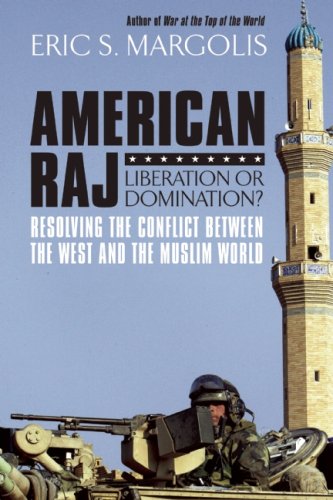
America’s president is a notorious Muslim-hater who has sought to bar people from the Islamic world from the United States.  Trump knows very little about the Mideast – which I call the ‘American Raj’ in my last book of the same name because of its resemblance to Britain’s imperial rule over India.
Trump is surrounded by ardent Greater Israel supporters in Washington and New York that include his immediate family, and so-called ‘advisors’ from the extreme far right.  Amazingly, his much ballyhooed speech last May in Saudi Arabia to assorted Arab potentates and vassals was actually written by a thirty-something ultra-Zionist right-winger from Santa Monica, California.
American Raj: America ...Eric MargolisBest Price: $14.94Buy New $60.00(as of 12:10 EST - Details)
Adding to the black comedy, Trump has commanded his young Jewish son-in-law, Jared Kushner, to forge a Mideast peace deal.  Kushner, a New York real estate executive, is a nice young man but he knows as much about the Mideast as I do about Papua New Guinea.
The ‘peace negotiations’ Kushner has launched are a cruel farce.  He and Trump expect a deal of some sort between America’s Mideast vassals – Saudi Arabia, the Gulf Emirates, Jordan, the brutal Egyptian dictatorship, and the medieval king of Morocco.
These powerless satraps can make all the ‘peace deals’ they like.  But the true parties who must be engaged are Israel, now governed by a very far right government, and the Palestinians, misrepresented by the corrupt Palestinian Authority (PLO) and nationalist Hamas, as well as splinter groups.  The PLO is pretty much a puppet of the US and Israel, run by the doddering old Mahmoud Abbas.  In the Mideast, only Turkey remains a truly independent Muslim nation that’s not under Washington’s thumb.
Even so, Abbas, other Palestinians and Arab leaders are all denouncing Trump and his bull in a China shop behavior.  Who cares?  Trump’s actions show just how divided and impotent the Arab world really is.
The Israelis know that their Arab neighbors can huff and puff all they like, but are powerless to do anything but riot in the streets and burn cars.  If anti-Israel riots become too violent, Israel has no compunctions about gunning down the demonstrators or blowing up their family homes.  Never has the Arab world shown itself so weak and timid.
Moreover, Israel’s new pals in Saudi Arabia have been stabbing Palestinians in the back for decades and secretly want to see them crushed.  The feudal Saudis fear and distrust the modern, educated Palestinians.  The same applies to Egypt’s brutish military dictatorship that now thrives on Saudi, Israeli and US money.
War at the Top of the ...Eric MargolisBest Price: $2.15Buy New $24.88(as of 08:25 EST - Details)
No one has bothered to consult with the Palestinians who have been marginalized, ignored or bombed for over half a century.  There will be no real peace without them.
But President Trump cares nothing about these irksome details.  He just wants a faux peace agreement adorned with his royal signature.  What really counts to Trump is winning American Jewish support in the next election and satisfying his vital evangelical Christian voter base.
America’s Christian far right, which comprises half of Republican voters, earnestly believes in Biblical prophesy that the Messiah cannot come until ancient Israel is reconstituted, the world’s Jews are ingathered to Greater Israel, the Messiah returns and non-believers perish in the final destruction of earth.
These folk are ardent ‘Christian Zionists’ who applaud Trump’s policies.  Most of their information about the outside comes from Christian evangelical publications and TV stations or, in the case of Trump, from Fox TV, another dedicated supporter of Greater Israel.
The Christian evangelists are the core of Trump’s support in rural and suburban America.  In fact, as Kevin Phillips wrote in his brilliant book “American Theocracy,” the Republicans have mostly become a rightwing religious party representing the less enlightened parts of America.   These fundamentalists must be very pleased that their good president Trump is speeding the arrival of the Messiah.

Zionist Extremism

The End of the Old Israel

How Netanyahu Has Transformed the Nation

Listen to Article
Israel—at least the largely secular and progressive version of Israel that once captured the world’s imagination—is over. Although that Israel was always in some ways a fantasy, the myth was at least grounded in reality. Today that reality has changed, and the country that has replaced it is profoundly different from the one its founders imagined almost 70 years ago. Since the last elections, in March 2015, a number of slow-moving trends have accelerated dramatically. Should they continue, they could soon render the country unrecognizable.
Already, the transformation has been dramatic. Israel’s current leaders—headed by Prime Minister Benjamin Netanyahu, who metamorphosed after the election from a risk-averse conservative into a right-wing radical—see democracy as synonymous with unchecked majority rule and have no patience for restraints such as judicial review or the protection of minorities. In their view, Israel is a Jewish state and a democratic state—in that order. Only Jews should enjoy full rights, while gentiles should be treated with suspicion. Extreme as it sounds, this belief is now widely held: a Pew public opinion survey published in March found that 79 percent of Jewish Israelis supported “preferential treatment” for Jews—a thinly veiled euphemism for discrimination against non-Jews.
Meanwhile, the two-state solution to the conflict with the Palestinians has been taken off the table, and Israel is steadily making its occupation of East Jerusalem and the West Bank permanent. Human rights groups and dissidents who dare criticize the occupation and expose its abuses are denounced by officials, and the government has sought to pass new laws restricting their activities. Arab-Jewish relations within the country have hit a low point, and Israel’s society is breaking down into its constituent tribes.
Netanyahu thrives on such tribalism, which serves his lifelong goal of replacing Israel’s traditional elite with one more in tune with his philosophy. The origins of all these changes predate the current prime minister, however. To truly under­stand them, one must look much further back in Israel’s history: to the country’s founding, in 1948.
THE OLD MAN AND THE NEW JEW
Modern Israel was created by a group of secular socialists led by David Ben-Gurion, who would become the state’s first prime minister. “The Old Man,” as he was known, sought to create a homeland for a new type of Jew: a warrior-pioneer who would plow the land with a gun on his back and then read poetry around a bonfire when the battle was won. (This “new Jew” was mythologized, most memorably, by Paul Newman in the film Exodus.) Although a civilian, Ben-Gurion was a martial leader. He oversaw the fledgling state’s victory in its War of Independence against Israel’s Arab neighbors and the Palestinians, most of whom were then exiled. And when the war was over, the Old Man oversaw the creation of the Israel Defense Forces (IDF), which he designed to serve as (among other things) the new country’s main tool for turning its polyglot Jewish immigrants into Hebrew-speaking citizens.
Ben-Gurion was a leftist but not a liberal. Following independence, he put Israel’s remaining Arab residents under martial law (a condition that lasted until 1966) and expropriated much of their land, which he gave to Jewish communities. His party, Mapai (the forerunner of Labor), controlled the economy and the distribution of jobs. Ben-Gurion and his cohort were almost all Ashkenazi (of eastern European origin), and they discriminated against the Sephardic Jews (known in Israel as the Mizrahim), who came from Arab states such as Iraq, Morocco, Tunisia, and Yemen. Ben-Gurion also failed to appreciate the power of religion, which he believed would wither away when confronted with secular modernity. He therefore allowed the Orthodox to preserve their educational autonomy under the new state—thereby ensuring and underwriting the creation of future generations of religious voters.
In recent years, as the Israeli public has shifted rightward, so has Netanyahu—which has allowed him to more openly indulge his true passions.
For all Ben-Gurion’s flaws, his achievements were enormous and should not be underestimated: he created one of the most developed states in the post­colonial world, with a world-class military, including a nuclear deterrent, and top scientific and technological institutions. His reliance on the IDF as a melting pot also worked well, effectively assimilating great numbers of new Israelis. This reliance on the military—along with its battlefield victories in 1948, 1956, and 1967—helped cement the centrality of the IDF in Israeli society. To this day, serving in the military’s more prestigious units is the surest way to get ahead in the country. The army has supplied many of the nation’s top leaders, from Yitzhak Rabin and Ezer Weizman to Ehud Barak and Ariel Sharon, and every chief of staff or intelligence head instantly becomes an unofficial candidate for high office on retirement.
The first major challenge to Ben-Gurion’s idea of Israel arrived on Yom Kippur in 1973, when Egypt and Syria launched a surprise attack that managed to catch the IDF unawares. Although Israel ultimately won the war, it suffered heavy losses, and the massive intelligence failure traumatized the nation. Like the United Kingdom after World War I, Israel emerged technically victorious but shorn of its sense of invincibility.
Less than four years later, Menachem Begin—the founder of Israel’s right wing—capitalized on this unhappiness and on Sephardic grievances to hand Labor its first-ever defeat at the polls. Taking power at the head of a new coalition called Likud (Unity), Begin forged an alliance with Israel’s religious parties, which felt more at home with a Sabbath-observing con­servative. To sweeten the deal, his government accelerated the building of Jewish settlements in the West Bank (which appealed to religious Zionists) and offered numerous concessions to the ultra-Orthodox, such as generous educational subsidies.
Begin was a conservative and nationalist. But the decades he’d spent in the opposition had taught him to respect dissent and debate. As prime minister, therefore, he always defended judicial independence, and he refrained from purging Labor loyalists from the top echelons of the civil service and the IDF. As a consequence, his revolution, important though it was, was only a partial one. Under Begin’s leadership, Israel’s old left-wing elite lost its cabinet seats. But it preserved much of its influence, holding on to top positions in powerful institutions such as the media and academia. And the Supreme Court remained stocked with justices who, while officially nonpartisan, nevertheless represented a liberal worldview of human and civil rights.
BIBI’S BAPTISM
Although Likud has governed Israel for most of the years since then, the left’s ongoing control over many other facets of life has given rise to a deep sense of resentment on the right. No one has felt that grievance more keenly than Netanyahu, who long dreamed of finishing Begin’s incomplete revolution. “Bibi,” as Netanyahu is known, first won the premiership in 1996, but it would take him decades to accomplish his goal.
Netanyahu’s initial election came shortly after the assassination of Rabin. The years prior to Rabin’s death had been dominated by the Oslo peace process between Israel and the Palestine Liberation Organization (PLO), and that same peace process would become the focus of his successor’s first term as well.
Netanyahu opposed Oslo from the very beginning. Then as now, he saw Israel as a Jewish community besieged by hostile Arabs and Muslims who wanted to destroy it. He considered the Arab-Israeli conflict a perpetual fact of life that could be managed but would never be resolved. The West—which, in his view, was anti-Semitic, indifferent, or both—couldn’t be counted on to help, and so Israel’s leaders were duty bound to prevent a second Holocaust through a combination of smart diplomacy and military prowess. And they couldn’t afford to worry about what the rest of the world thought of them. Indeed, one of Netanyahu’s main domestic selling points has always been his willingness to stand up to established powers, whether they take the form of the U.S. president or the UN General Assembly (where Netanyahu served as Israel’s representative from 1984 to 1988 and first caught his nation’s attention). Netanyahu loves lecturing gentiles in his perfect English, and much of the Israeli public loves these performances. He may go overboard at times—as when, last October, he suggested that Adolf Hitler had gotten the idea to kill Europe’s Jews from Amin al-Husseini, the grand mufti of Jerusalem during World War II. Historians of all stripes scoffed at the claim, but many ordinary Israelis were indifferent to its inaccuracy.
During his first term, Netanyahu connected his domestic and international agendas by blaming the leftism of Israel’s old elite for the country’s foreign policy mistakes. To prevent more missteps in the future, he borrowed a page from the U.S. conservative playbook and vowed to fight the groupthink at Israel’s universities and on its editorial boards—a way of thinking that, he argued, had led the country to Oslo. In a 1996 interview with the Haaretz columnist Ari Shavit, Netanyahu complained about his delegitimization “by the nomenklatura of the old regime,” adding that “the problem is that the intellectual structure of Israeli society is unbalanced.” He pledged to create new, more conserva­tive institutions to rewrite the national narrative.
But Netanyahu’s political inexperience worked against him. His tenure was rocked by controversy, from his reck­less provocations of the Palestinians and of Jordan to a scandal caused by his wife’s mistreatment of household employees. Israel’s old elites closed ranks, and, with the support of the Clinton administration, they forced Netanyahu into another deal with the Palestinian leader Yasir Arafat. The 1998 Wye River memorandum—the last formal agreement that Israel and the Palestinians have signed to this day—triggered early elections in May 1999, after several small, hard-right parties abandoned Netanyahu’s coalition in protest. Barak and the Labor Party emerged victorious.
Both Barak, a decorated former head of the IDF, and Sharon, who replaced Netanyahu at the helm of Likud and became prime minister himself in 2001, represented a return to the Ben-Gurion model of farmer turned soldier turned statesman. Their ascent thus restored the old order—at least temporarily—and made Netanyahu seem like a historical fluke.



Joods Zionistische Leugens

  Red Collective @RedCollectiveUK Don't take my word that Israel killed the majority of its own civilians on October 7th. Here's Is...