Robert Lipsyte, To Understand Where America Is Heading, Read Sports
Consider it strange. As a boy, I couldn’t have been more of a sports fan and the Brooklyn Dodgers were my special baseball team. (I could probably still tell you, position by position, the starting lineup of the 1956 Dodgers.) I remained a fervent fan when they left for Los Angeles and, a few years later in 1962, my first year in college, the New York Mets came to town. And yes, I was also a devoted fan of the football New York Giants (and can remember, as a kid, going to one of their games with my dad) and, by my late teens, the basketball New York Knicks.
So, consider it strange that today, so many decades later, I’m a fan of nothing and watch no sports whatsoever (unless I happen to be with my grandson and he’s watching a game). Today, I couldn’t tell you a single Mets, Knicks, or Giants player. Not one!
I suppose my version of sports, however grim, these days is Donald Trump (though I’m obviously anything but a fan)! Still, if you happen to read the news or watch it on TV, you can’t help but follow his every move — no matter that he’s anything but sporting — the way I once followed Peewee Reese, the Dodgers shortstop, Jackie Robinson, their second baseman, Gil Hodges at first, or Carl (“the Reading Rifle“) Furillo in right field. After all, what can’t we know about more or less every second of his existence, including that, in China recently, he ate a meal of “lobster in tomato soup, stewed seasonal vegetables, slow-cooked salmon in mustard sauce, pan-fried pork buns, and a pastry described as being shaped like a trumpet shell”?
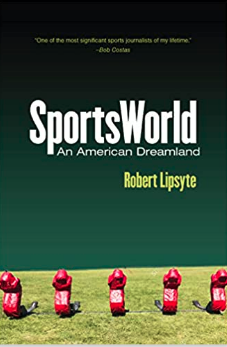
Of course, I’m no fan, but Forbes estimates that “our” president has a net worth of $6.5 billion. If I had to put him in the sports terms of my youth, I would say that he’s the equivalent (for me) of the New York Yankees, the extremely successful local sports team that I distinctly disliked. And with that $6.5 billion, as TomDispatch regular and former New York Times sportswriter Robert Lipsyte, author of SportsWorld: An American Dreamland, points out today, he fits all too well into a world of sports in which the owners of teams, if not all billionaires, tend to have fortunes that couldn’t be more grimly used, politically speaking. The Guardian, for instance, reported in 2024 that the owners of North American sports teams had “donated at least $132.1 [million] in federal elections since 2020, with nearly 95% of those contributions going to Republican campaigns.”
And with all of that in mind, let Lipsyte take you into a sports world where billionaires and sports have become eerily synonymous. Tom
A Short History of Sportswriting (from Bat Masterson to Shams Charania)
The Clues Are on the Billionaires’ Scorecards
When Chinese leaders claim that the American empire is in decline, I immediately assume their analysts are decoding dispatches from ESPN, The Athletic, and columnist Shams Charania. After all, it’s in sportswriting, I’ve come to think, that the songs of the canary in the all-American coal mine couldn’t be clearer. If the games we play and watch reflect our past and present lives, then the coverage and commentary about them may help predict our future.
American sportswriters have been cheerleaders for empire since the early twentieth century, when Bat Masterson decided that shooting people in Dodge City wasn’t fulfilling enough for a man of his talent and ambition. Yes, that Bat Masterson. He came East and, as a boxing columnist for the New York Morning Telegraph, became a new sheriff in the emerging industry I’ve come to call SportsWorld.
Opinionated and self-righteous, he was an early singer of those canary songs that, for the next hundred years, would both forecast and reflect Jock Culture’s impact on American life. The words might change, but the melody remained. The billionaires who now own and run sports were the robber barons of Bat’s time, and the gambling that helped fuel his Gilded Age is now institutionalized as the proud partner of all the major leagues (whatever the sport may be).
Writing this in the twilight of my own sportswriting career, I find it remarkably easy to trace a path from those early oligarchs to the robber barons who now run American sports, and from the early sports bettors who fixed the 1919 World Series to the FanDuel and DraftKings proposition bettors who are changing the climate of our games — and even perhaps to the Kalshi and Polymarket prediction market gamblerswhose wagers on wars may someday (if they haven’t already) help start them.
The major sports of Bat’s era were fiercely segregated expressions of the Jim Crow backlash that continued to fight a version of the Civil War. Keep in mind, for instance, that baseball, the anointed national pastime, was Whites Only until Jackie Robinsonjoined the Brooklyn Dodgers in 1947. Most White sportswriters had then stayed silent on the issue and so supported the racism of the owners who ran their clubs like plantations and of the White players who didn’t want any job competition from Negro Leaguers.
Black newspaper sportswriters and Lester “Red” Rodney, who wrote for the Communist Daily Worker and died in 2009 at the age of 98, were then counterpoints to the mainstream. He was one of the most outspoken advocates of racial desegregation in major league baseball. Early in his life, the focus on sports integration had been boxing, a sport that had gone to great lengths to ensure that a Black boxer would never become the world heavyweight champion (then considered a symbol of all-American manhood). When Jack Johnson took that crown in 1908, sportswriters, including such luminaries as novelist Jack London, called for “white hopes” to reclaim it. If Chinese spies had been on the job then, they would have noted this country’s overwhelming racism.
White (and Black) Positions
The National Football League’s color barrier was breached in 1946, but it was replaced by pro football’s version of Jim Crow, or “positional segregation.” Again, sportswriters tended to go along with the establishment dictum that roles like quarterback and center were for leaders and thinking men, and so reserved for Whites only. This delayed the appearance of the first starting Black quarterback until 1968. Meanwhile, Blacks were considered more fitted for the “natural” or “athletic” roles of defensive back and running back. Coaching, of course, is still a White man’s prerogative in a league whose rosters are now about 70% Black.
Sportswriters bring this up from time to time, but never in a sustained enough way to effect real change. And while sportswriters and players might seem like natural allies, they have generally been willing to go along to get along on their separate tracks, especially in shaky times. Sports journalists, of course, tend to work for the corporate media, often the broadcasters of sports events (if not for the media outlets of various sports leagues). Historically, pointing out discrimination is no road to success, since all the owners of sports teams belong to the same White billionaires’ club, ready to boycott activists. Athletes, with their typically short shelf lives, are wary of antagonizing the people who pay their salaries and might help employ them after their games are over.
All of that was pretty much set in the days of creation. Bat Masterson’s peers and spawn, the scriveners of the Roaring Twenties, were rewarded for “godding up” athletes as commercial celebrities in the booming new sports markets, particularly college football and the Olympic Games. The most famous of the early mythmakers was sports columnist Grantland Rice. In print, on radio, and by newsreel, he gilded the likes of home-run king Babe Ruth, boxer Jack Dempsey (also known as “the Manassa Mauler“), golfer Bobby Jones, and Notre Dame coach Knute Rockne, who ironically died in a 1931 plane crash on his way to work on a Hollywood movie.
While they erected a predominantly White male pantheon, those sportswriters insisted on proclaiming the righteousness, meritocracy, and character-building nature of their subject. Even the skeptics who snidely mocked the demigods when they failed did so in a way that maintained their importance as signifiers of the best in the best of all worlds.
When it came to the post-World War II generation of sportswriters, two spirited tabloid journalists, Jimmy Cannon and Dick Young, dominated. Cannon dubbed the Black heavyweight champion Joe Louis “a credit to his race, the human race” when that seemingly quaint phrase actually meant something in a Jim Crow world. He also mocked his fellow sportswriters as “the vaudevillians of journalism.”
Dick Young led those vaudevillians from the Olympus of the press box, where he and his companions dispensed lofty punditry all the way down to the sweaty locker rooms where they began to buttonhole athletes and coaches for quotes. Young also ran blind items in his gossipy New York Daily News columns that alluded to jock shenanigans on and off the field.
His cracking of the sports curtain presaged a 1950s and 1960s sports reporting populism that proved to be a turning point in Jock Culture, inspiring the “Chipmunks” (so labelled by Cannon for their constant press box chatter), a new breed of smart, more progressive young men (and they were still mostly men) who saw themselves as real journalists capable of being fair-minded, clear-eyed, humorous, and honest. Chief among them were Leonard Shecter and Larry Merchant of the New York Post, and Stan Isaacs of Newsday.
Business Models
That was about when I arrived on the scene in New York in 1957, during what came to be known as the Great Betrayal. Two of the three New York baseball teams, the Giants and the Brooklyn Dodgers, moved to California. That decision proved smart economically and it did finally make the national pastime truly national, but it also woke fans to the realization that, while sports might be sacred rites to them, they were businesses to their ever-wealthier owners.
At the time, sportswriters (except for those in New York who lost jobs because of the move) were not particularly emotionally disrupted by those moves because they knew that sports was, above all, a business, even if that was their own little secret — and a surprisingly corrupt business at that. After all, unmarked brown envelopes stuffed with cash were regularly handed out to sportswriters (along with free tickets to games and expensive Christmas presents).
I was lucky then to be working for the New York Times, which paid all my expenses. Most sportswriters, however, got their travel money and meal money from the teams or the promoters of the events they were covering — and an honest reportorial job could be considered an ungrateful act to be punished with loss of access (and cash).
In those days, players and reporters usually stayed at the same hotels on the road while traveling together on trains (and later chartered planes). Sportswriters often drank and night-owled with the players and coaches, but that easy access came with a price. We were all supposed to be on the same team. “Sports of the Times” columnist Arthur Daley referred to his newspaper colleagues all too accurately as “lodge brothers.” They were all male, all White, and (with the exception of a few athletic and journalistic superstars) pretty much in the same financial class. There was a community of interest and the fans were the rubes at the carnival.
When I first began covering the Yankees in the 1960s, Manager Ralph Houk took me aside to ask if I was going to be “a booster or a ripper.” He was not satisfied with my lame promise to be “fair-minded.” He coldly said, “We’re all in this together.”
But the expulsion of the scribes from that sweaty Eden had already begun. In 1958, it was reported that Houk, then a coach, had scuffled with pitcher Ryne Duren on the train coming back from winning the American League pennant. Such family squabbles, drunkenness, or screwing around had, in the past, rarely been reported. And even the New York Post‘s Leonard Shecter, like other reporters, initially turned a blind eye to what had happened. But a hint of the story by a cityside reporter on another paper made that position unsustainable. So, Shecter told his editors what he knew — that Duren, probably drunk, had gotten rowdy. Houk, while subduing him, had accidentally cut him over the eye with his World Series ring. The Post editors then blew the story into a wild melee with front-page and back-page headlines.
“With one dispatch,” wrote Alan Schwarz, 50 years later in the New York Times, “Shecter had violated a sacred code that had existed in the 100 years of newspaper coverage of baseball.”
A dozen years later, Shecter would do it again, although more mindfully. He had become a beacon of hard-nosed honesty, the curmudgeonly scourge of entitled jocks and sycophantic sportswriters. He persuaded a bright, politically progressive Yankee pitcher, Jim Bouton, to write an honest account of his life in the big leagues, which included a scene of Yankee star outfielder Mickey Mantle leading his teammates in “beaver-shooting” (hotel expeditions in search of naked female guests).
Bouton’s 1970 bestseller Ball Four would prove to be his valentine to baseball. It would enrage sportswriters because it exposed their Faustian bargain of silence for access as well as baseball officials because it broke open the world they thought they controlled. It fueled the coming decades of adversarial relations between sportswriters and their subjects and an internal rift between rippers and boosters.
Enter Ali
At the same time, television was, for the first time, giving athletes direct contact with their fans. They were no longer dependent on the pencil press as intermediaries. No athlete took greater advantage of that than boxing champion Muhammad Ali, perhaps the first athlete to take control of his own narrative.
Most of the senior scribes of the 1960s attacked Ali, first for his breezy lack of respect for their eminence, then for his pugilistic unorthodoxy (particularly the way he leaned back from punches rather than “slipped” them over his shoulders), and finally for his politics, especially for declaring himself a conscientious objector during the Vietnam War. While younger sportswriters (like me) were besotted by the early Ali, our elders like Cannon and “Red” Smith attacked him as unpatriotic and ungrateful for the opportunity to become rich and famous that America had offered a poor Black boy.
And that would prove to be a running theme (however subtly expressed) of the disapproval of all too many establishment sportswriters for those athletes labelled rebels — from Ali to Tommie Smith and John Carlos, who protested and demonstrated with Black power salutes at the 1968 Olympics, to Curt Flood’s failed attempt to unlock baseball’s reserve clause on player contracts, to San Francisco 49ers quarterback Colin Kaepernick taking a knee against racism and police brutality during a game.
If the reactions of most sportswriters to the activism of athletes were all too often unsupportive, their reaction to their more daring colleagues was disgracefully weak, particularly when an emerging cohort of women sportswriters tried to gain equal access to locker-rooms for post-game interviews. It took a 1978 lawsuit by Sports Illustrated‘s Melissa Ludtke to begin to truly open the doors that were already so open to their male equivalents.
It’s not even as if the boys had been too busy breaking two of the biggest stories of the late twentieth century, sports or non-sports, the use of performance-enhancing drugsand the epidemic of brain damage among football players. Actually, the boys were too busy yet again reinventing their craft, this time by using the Internet to imitate Bill Simmons, who taught them that sportswriting was not so much about covering games as expressing one’s own emotional reaction to those games.
I suspect my Chinese intelligence analysts were already moving beyond all of this to concentrate on the most consistent obsession of establishment sportswriters (as well as of the establishment itself): follow the money (and yes, we’re indeed talking about millions or even billions of dollars). After all, stories about the recent bonanza of endorsement money for college athletes and the scandals linked to the explosion of sports gambling sites proliferated and a new breed of “transactional” sportswriters like Shams Charania of ESPN, whom you met at the beginning of this ramble, were prepared to cover such things in our present billionaire world of sports (and, of course, nonsports).
Shams is himself one of the country’s highest-paid sportswriters because he can beat the opposition, sometimes by minutes, in reporting trades, salary disputes, and coaching changes. While he specializes in the National Basketball Association, he’s a model for the “analysts” and “insiders” throughout sports journalism today. Pumping their popularity is the insatiable need of gamblers for fresh information.
If my Chinese spies are any good, they understand that more than 100 years after Bat Masterson died writing about boxing, the clues extracted from sportswriting also pertain to the games our government is playing, and reading about sports is another way of understanding where our world is heading. The clues are no longer within the games, the players, or even the roar of the crowd. They are in the clubhouses of the billionaires who recently traveled with President Trump to China to grease the wheels for transactions to come, not to mention those who actually own the teams.
In Trump’s ballpark, it’s all in the deal.
Copyright 2026 Robert Lipsyte
Follow TomDispatch on Twitter and join us on Facebook. Check out the newest Dispatch Books, John Feffer’s new dystopian novel, Songlands (the final one in his Splinterlands series), Beverly Gologorsky’s novel Every Body Has a Story, and Tom Engelhardt’s A Nation Unmade by War, as well as Alfred McCoy’s In the Shadows of the American Century: The Rise and Decline of U.S. Global Power, John Dower’s The Violent American Century: War and Terror Since World War II, and Ann Jones’s They Were Soldiers: How the Wounded Return from America’s Wars: The Untold Story.
Geen opmerkingen:
Een reactie posten