Israel hits Lebanese World Heritage City, Sacred Shrines
By Sherine Al Shallah, UNSW Sydney
(The Conversation) – Cultural heritage is often treated as an unfortunate casualty of war. In reality, the destruction of significant historic sites is often a deliberate and calculated part of broader efforts to claim power and territory.
Recent attacks on cultural heritage in southern Lebanon show us why protecting historic monuments is important, and inseparable from protecting the communities connected to them.
Attacks on southern Lebanon have displaced more than one million people, including in the communities of Tyre, Nabatieh, Yaroun, Bint Jbeil, Khiam, and other border towns and villages.
This kind of displacement can irreversibly maim people’s cultural identities. It also further compromises historic sites, by depriving them of the care and craftsmanship of their communities.
Protecting southern Lebanon’s cultural heritage is an international concern. These sites hold outstanding universal value. Once destroyed, they cannot be brought back.
Beaufort Castle and Tyre
Lebanon has a total of 73 cultural sites inscribed in UNESCO’s list of Cultural Property under Enhanced Protection.
One of these is the 12th century Beaufort Castle. Having withstood several wars for more than 900 years since the Crusades, this castle is widely considered a significant cultural and historical property.
The castle was struck on May 27 and May 30, and has been strategically occupiedby Israeli forces since May 31. This occupation has increased the risk of vandalism and looting.
Attacks on the structure are a violation of Article 15 of Protocol II of the Hague Convention, which prohibits an occupying state from using cultural property to conceal or destroy historical evidence. Such attacks are also a war crime under Article 8(2)(b)(ix) of the Rome Statute of the International Criminal Court.
The UNESCO World Heritage-listed city of Tyre has also been attacked multiple times since March.
This Phoenician city was inscribed on the World Heritage List in 1984. Tyre is one of the oldest metropolises in the world, and is directly associated with the construction of the Temple of Solomon in Jerusalem.
The World Heritage-listed city was struck on May 27, June 7 and June 9.
Regarding the June 7 bombardment, Ali Badawi, the Ministry of Culture’s regional director of archaeological sites, said:
The amount of debris and damage at the site is high […] Some archaeological artefacts were damaged when rubble fell on them, as debris fell over a large area, impacting a large number of elements at the site – columns, capitals, column bases, mosaics.
Tyre is also home to the Al-Bass archaeological site, which includes a necropolis (city of the dead), a Roman hippodrome (chariot-racing stadium), and the remains of an ancient aqueduct.

Wikimedia, CC BY-SA
On March 6, an Israeli airstrike hit the entrance of the site, damaging the perimeter of the ancient Roman complex.
Another airstrike on May 26 landed about 180 meters from the hippodrome.
Citadel of Chamaa and other sites
The medieval Citadel of Chamaa (also spelled Shamaa) was severely damaged by Israeli force explosives and bulldozers between April and May 2026. It has lost at least three of its four domes.
This citadel, built in the 11th century, is also located within the Tyre district. It houses a shrine dedicated to Shamoun al-Safa (Simon Peter, or Saint Peter, in English). Shamoun al-Safa was one of the original disciples of Jesus Christ, and his shrine is venerated by both Christians and Muslims.

Wikimedia, CC BY-SA
Also in May, Israeli force bulldozers destroyed the Holy Savior Christian School in Yaroun. The Vatican’s newspaper L’Osservatore Romano, described the scene as:
mechanical shovels — instruments of destruction — operating within a ghost village.
According to Lebanon’s Directorate General of Antiquities, 20 heritage sites were damaged during Israeli attacks carried out from September to November 2024. Of these, nine were entirely demolished.
The damaged sites included the Ottoman souq of Nabatieh, the Church of St George in Derdghaya, and the mosque and church of Yaroun.
Israeli army demolished a monastery and a school in the Lebanese town of Yaroun
What can be done?
International humanitarian law is principled on the understanding that there are sacred sites, including cultural heritage sites, that must be protected from hostilities for the sake of those who care about them.
In regards to the destruction unfolding in Lebanon, there are some steps that can be taken.
UNESCO’s Committee for the Protection of Cultural Property in the Event of Armed Conflict could call a meeting to discuss appropriate sanctions in response to attacks on protected cultural property.
UNESCO should also announce a mission to assess the destruction in Lebanon (after securing immunity from attack).
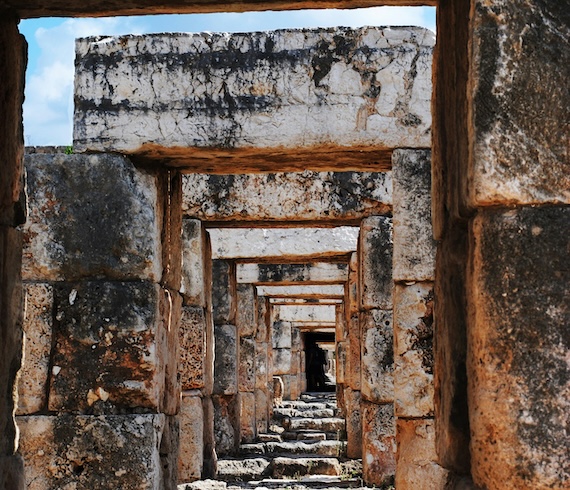
Photo of Tyre, Lebanon, by McKenna Arterbury on Unsplash
Finally, the Lebanese government should prepare a submission to the World Heritage Committee to request technical and funding assistance for damage to the World Heritage site of Tyre, as well as to the International Criminal Court, for attacks on Lebanon’s cultural property under Enhanced Protection.
The UNESCO Constitution opens with the declaration that:
since wars begin in the minds of men, it is in the minds of men that the defences of peace must be constructed.
The global community must condemn cultural heritage destruction wherever it occurs, as doing so respects the contribution of every culture to our shared humanity.
Sherine Al Shallah, Doctoral Researcher, Refugee Cultural Heritage and Connected Rights Protection | Affiliate, Kaldor Centre for International Refugee Law | Associate, Australian Human Rights Institute, UNSW Sydney
This article is republished from The Conversation under a Creative Commons license. Read the original article.


Conversation or conservation? Gaza's archeological heritage sites and the indifference of western institutions to their systematic destruction by the Zionist entity: Gaza’s cultural sites have been decimated. UNESCO’s muted response sets a dangerous precedent
BeantwoordenVerwijderenAls je de geschiedenis van iets uitwist begin je met een schone lei. Selectieve verontwaardiging en de etnische zuivering van historici die zich gedwongen met iets anders dienen bezig te houden dan 'het stenen tijdperk' ? : Memoricide op Wikipedia
BeantwoordenVerwijderen